
Nuthatch-Vanga
Hypositta corallirostris
Order: Passeriformes / Family: Vangidae

Wikimedia Commons
About the Nuthatch-Vanga
The Nuthatch-Vanga, scientifically known as Hypositta corallirostris, is a fascinating bird species endemic to Madagascar. This member of the Vangidae family is unique due to its specialized feeding habits and striking physical appearance. With its coral-colored bill, this bird is easily distinguishable among the dense tropical forests of Madagascar, primarily inhabiting the eastern and northern parts of the island. The Nuthatch-Vanga plays a significant role in the ecosystem by contributing to the control of insect populations, as it primarily feeds on insects found on tree bark and foliage. The bird's ecological role extends to aiding seed dispersal, as it occasionally consumes fruits and berries, thus supporting the regeneration of forest habitats. The Nuthatch-Vanga exhibits seasonal behaviors, with some variations in activity patterns during the breeding and non-breeding seasons. During the breeding season, focusing on nest-building and rearing young, the bird becomes more territorial, whereas in the non-breeding season, it may exhibit more social behaviors, including joining mixed-species flocks. The adaptability of the Nuthatch-Vanga to various forest environments, from lowland rainforests to montane forests, highlights its importance as a resilient species within Madagascar's biodiversity. Preservation of its habitat is crucial, as deforestation and habitat degradation pose significant threats to its population. Conservation efforts are underway to protect these forested areas, ensuring the Nuthatch-Vanga's continued survival and ecological contributions.
The Nuthatch-Vanga belongs to the family Vangidae, within the order Passeriformes. These birds typically live average 4-5 years, with a max recorded of 7 years..
How to Identify a Nuthatch-Vanga
The Nuthatch-Vanga exhibits a distinctive appearance that aids in its identification. Adults display a striking combination of slate-gray upperparts and white underparts, with a notable coral-colored bill that stands out against their plumage. Juvenile Nuthatch-Vangas tend to have a duller, more subdued coloration compared to adults, lacking the full vibrancy of the coral bill. Sexual dimorphism in this species is subtle, with males and females appearing similar, though males may have slightly more pronounced coloration during the breeding season. Confusion with similar species is minimized due to the unique bill color and shape, which sets the Nuthatch-Vanga apart from other birds in the region. The bird's flight silhouette is characterized by its swift, direct flight and relatively short wings, reminiscent of nuthatches, allowing for agile movement through its forest habitat. When perched, the Nuthatch-Vanga often adopts a horizontal stance on tree trunks, similar to woodpeckers, as it searches for food.
Having trouble telling birds apart? Upload a photo to our bird identification tool for an instant species match.
Nuthatch-Vanga Habitat and Range
Preferred Habitat
The Nuthatch-Vanga predominantly inhabits the lush tropical forests of Madagascar, thriving in both lowland rainforests and montane forests. These habitats provide the bird with ample foraging opportunities and nesting sites. It is primarily found at elevations ranging from sea level up to 2,000 meters, although it shows a preference for mid-elevation forests. Seasonal shifts in habitat do occur, with some populations moving to lower elevations during the wetter months to access more abundant food resources. Despite the increase in deforestation and habitat fragmentation, the Nuthatch-Vanga has shown some adaptability to secondary growth forests, although it remains less common in urbanized or highly disturbed areas. The bird's presence in rural environments is more typical, where intact forest stands offer the necessary resources for its survival and reproduction.
Geographic Range
The Nuthatch-Vanga's range is confined to the island of Madagascar, where it is a non-migratory, year-round resident. Its distribution is mostly concentrated in the eastern and northern regions of the island, with populations found in places like the Masoala Peninsula, Andasibe-Mantadia National Park, and the rainforests of Ranomafana. The bird's population density is highest in these forested areas, where the availability of food and suitable nesting sites supports stable populations. Unlike some other bird species, the Nuthatch-Vanga does not undertake long-distance migrations; instead, it may perform altitudinal movements within its range in response to seasonal changes in food availability. The bird's limited geographical range emphasizes the importance of localized conservation efforts to protect its habitats from the threats of deforestation and environmental degradation.
Want to know which birds visit your area? Browse our backyard birds by location guides for region-specific species lists.
What Does the Nuthatch-Vanga Eat?
The diet of the Nuthatch-Vanga primarily consists of insects and other small invertebrates, which it skillfully extracts from tree bark and foliage. This bird employs a distinctive foraging technique, reminiscent of nuthatches, by creeping along tree trunks and branches to probe crevices for hidden prey. Its coral-colored bill is perfectly adapted for this purpose, allowing it to access insects that other birds may overlook. During certain times of the year, particularly when insect abundance declines, the Nuthatch-Vanga supplements its diet with fruits and berries, which provide additional nutrients and energy. This opportunistic feeding behavior ensures the bird's survival even when primary food sources are scarce. The Nuthatch-Vanga's feeding schedule is typically diurnal, with peak foraging activity occurring during the early morning and late afternoon when insect activity is highest.
Nuthatch-Vanga Behavior and Social Structure
The Nuthatch-Vanga exhibits a range of behaviors that reflect its adaptability and ecological role. Socially, these birds often form small family groups, particularly outside the breeding season, and may join mixed-species flocks as they forage. While generally non-aggressive, the Nuthatch-Vanga shows territorial behavior during the breeding season, defending nesting sites from potential threats. Courtship displays involve vocalizations and aerial maneuvers, with males often presenting food to females as part of the bonding process. In response to predators, the Nuthatch-Vanga relies on its agility and keen awareness, often emitting alarm calls to alert conspecifics and nearby birds. Daily activity patterns are largely diurnal, with birds becoming most active during cooler parts of the day, foraging for food and engaging in social interactions. The adaptability of the Nuthatch-Vanga to various forest environments underscores its resilience, although habitat preservation remains crucial for its continued survival.
Nuthatch-Vanga Nesting and Reproduction
Nesting for the Nuthatch-Vanga is a well-coordinated effort, involving both male and female partners. They typically select sites in tree cavities or hollow trunks, which provide protection for eggs and young. The nests are constructed using a variety of materials, including twigs, leaves, and moss, bound together with spider webs for additional stability. Clutch sizes usually range from two to four eggs, with the female primarily responsible for incubation, which lasts about 14 to 16 days. During this period, the male plays a crucial role in providing food for the incubating female. After hatching, both parents participate in feeding the nestlings, which fledge approximately 18 to 21 days post-hatching. The Nuthatch-Vanga usually raises one brood per year, though in optimal conditions, a second brood is possible.
Nuthatch-Vanga Sounds and Vocalizations
The Nuthatch-Vanga's vocalizations are an integral part of its communication repertoire. Its primary song consists of a series of short, melodious notes that rise and fall in pitch, often described as a liquid, fluting sound. These songs, used primarily during the breeding season, serve to establish territory and attract mates. In addition to songs, the Nuthatch-Vanga emits sharp call notes that function as contact calls between individuals. Alarm calls are harsher and more insistent, alerting other birds to potential danger. The dawn chorus often features the Nuthatch-Vanga prominently, as its clear, ringing notes cut through the forest soundscape. Compared to other forest birds, its voice is distinctive yet blends harmoniously into the rich tapestry of Madagascar's wildlife sounds.
Interesting Facts About the Nuthatch-Vanga
- 1The Nuthatch-Vanga uses its coral-colored bill not only for foraging but also for intricate nest building.
- 2Despite its name, the Nuthatch-Vanga is more closely related to African vangas than to nuthatches.
- 3This bird is a master of mixed-species flocks, often foraging alongside warblers and other insectivores.
- 4The Nuthatch-Vanga is one of the few birds that can walk headfirst down tree trunks, a trait shared with true nuthatches.
- 5Its melodious song is a favorite among birdwatchers visiting Madagascar's eastern rainforests.
Nuthatch-Vanga Conservation Status
The Nuthatch-Vanga is currently listed as Least Concern by the IUCN, largely due to its stable population across Madagascar. However, ongoing threats such as habitat loss from deforestation and land conversion for agriculture pose significant risks. Conservation efforts focus on preserving Madagascar's remaining forest habitats, which are crucial for the survival of the Nuthatch-Vanga and countless other endemic species. Historical population trends indicate that while some local populations have declined due to habitat fragmentation, overall numbers have remained relatively stable. Continued monitoring and habitat protection are essential to ensure that this unique bird continues to thrive in its native range.
Other Vangidae Species
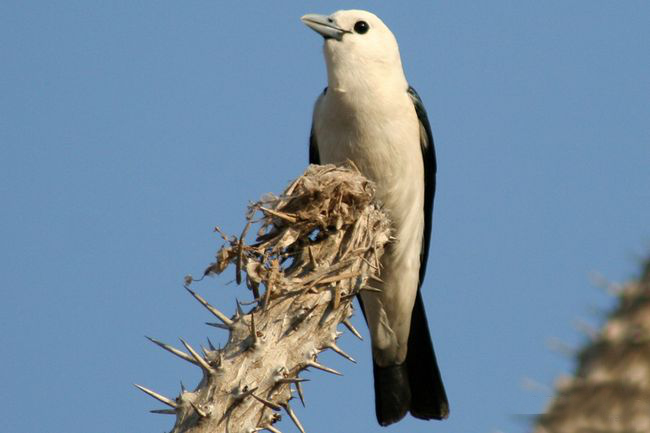


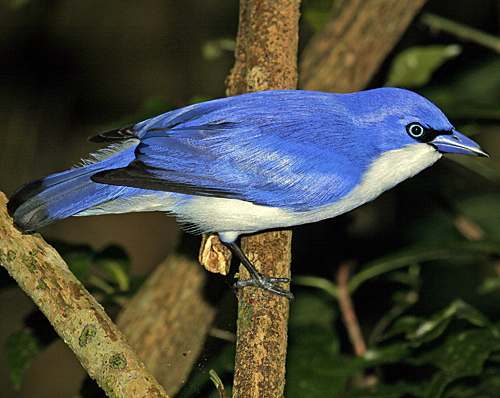
Birds Similar to the Nuthatch-Vanga
These species are often confused with the Nuthatch-Vanga due to similar appearance or overlapping range.
