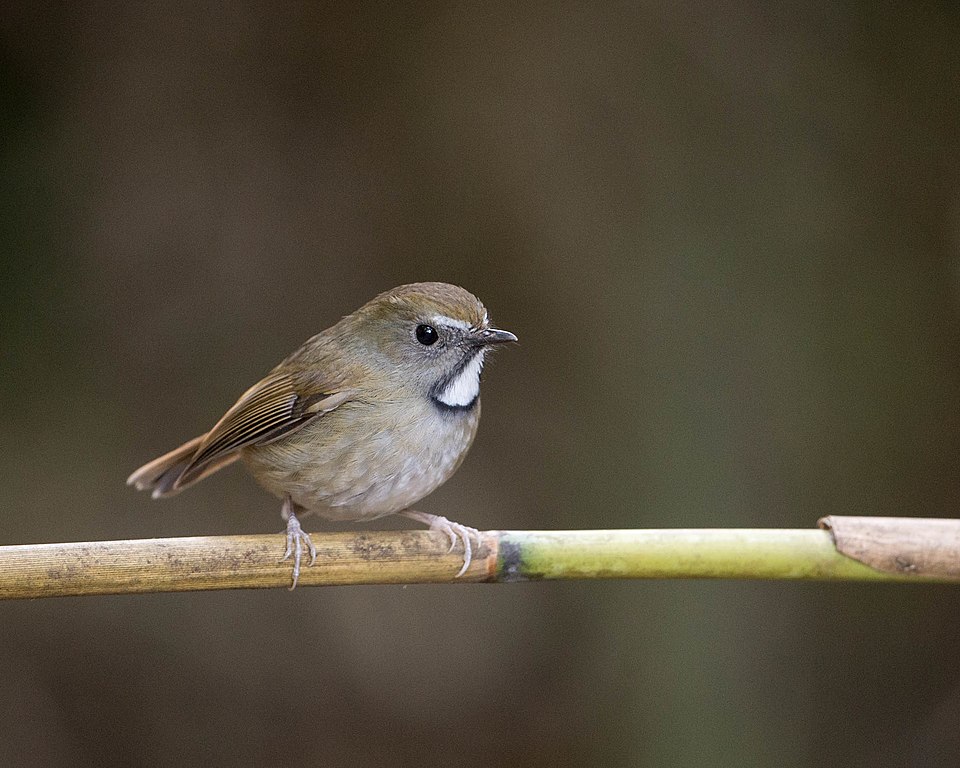
Olive-flanked Robin-Chat
Cossypha anomala
Order: Passeriformes / Family: Muscicapidae

Wikimedia Commons
About the Olive-flanked Robin-Chat
The Olive-flanked Robin-Chat, known scientifically as Cossypha anomala, is an intriguing species within the Muscicapidae family. This bird is predominantly found in the dense forests and woodlands of southeastern Africa, notably in countries such as Malawi, Mozambique, Tanzania, and Zambia. Its vibrant plumage and distinctive vocalizations make it a significant presence in its native habitat.
The Olive-flanked Robin-Chat plays an essential role in these ecosystems, primarily through seed dispersal and insect population control. Its diet consists largely of insects and fruits, which it consumes in various forest layers, contributing to both pest control and the propagation of plant species through seed dispersal. During the breeding season, this bird's behaviors shift as it engages in territorial defense and nesting.
In terms of ecological significance, the Olive-flanked Robin-Chat is an excellent indicator of forest health. Its presence suggests a rich, biodiverse environment because it thrives in undisturbed, mature woodlands. Seasonal behaviors include heightened territorial singing and elaborate courtship displays, primarily observed during the rainy season when breeding occurs. This period coincides with an abundance of food, supporting the energy demands of reproduction.
The Olive-flanked Robin-Chat belongs to the family Muscicapidae, within the order Passeriformes. These birds typically live average 4-6 years with a maximum recorded of 8 years..
How to Identify a Olive-flanked Robin-Chat
The Olive-flanked Robin-Chat is a medium-sized bird, measuring approximately 17 to 18 centimeters in length. Its most striking feature is the olive coloration on its flanks, which contrasts with its otherwise brown and gray plumage. The upperparts are a rich brown, while the underparts are lighter, with subtle gray hues on the chest. The bird's face exhibits a distinctive facial pattern with a grayish crown and a slight eye stripe.
Juvenile Olive-flanked Robin-Chats are slightly duller than adults, with less pronounced olive flanks and a more uniform brown coloration. Males and females appear similar in plumage, making it challenging to distinguish between sexes in the field. However, during the breeding season, males may exhibit slightly brighter colors and more frequent vocalizations.
Confusion with similar species such as the White-browed Robin-Chat can occur, but the Olive-flanked Robin-Chat's distinct olive flanks and lack of a prominent white brow are key differentiators. In flight, its rounded wings and short tail are evident, and when perched, it often holds an upright posture, occasionally flicking its wings or tail.
Having trouble telling birds apart? Upload a photo to our bird identification tool for an instant species match.
Olive-flanked Robin-Chat Habitat and Range
Preferred Habitat
The Olive-flanked Robin-Chat inhabits dense, moist woodlands and forest edges, with a particular affinity for areas with thick undergrowth. Its preferred habitat includes montane forests, where it is often found at elevations ranging from 800 to 2,400 meters. These birds are typically associated with regions that offer a mix of tree cover and open spaces for foraging.
Seasonal shifts in habitat are minimal for this species, although during the non-breeding season, they may venture into secondary growth areas or more open woodland regions. Urban presence is uncommon, as the Olive-flanked Robin-Chat favors natural, undisturbed environments. It is seen seldom in heavily human-populated areas, preferring the seclusion of forested landscapes.
Geographic Range
The Olive-flanked Robin-Chat is primarily found in southeastern Africa. Its range extends across several countries including Malawi, Mozambique, Tanzania, and Zambia. These regions provide the dense forest cover and undisturbed habitats that the species prefers.
During the breeding season, which aligns with the regional rainy season, the Olive-flanked Robin-Chat remains within these forests, as the abundance of food resources supports nesting activities. There is little evidence of long-distance migration; however, some altitudinal movement to lower elevations may occur during adverse weather conditions.
Population density tends to be higher in well-preserved forest areas, with notable concentrations in national parks and protected reserves where human disturbance is minimized. These regions serve as important refuges for maintaining stable populations of the Olive-flanked Robin-Chat.
Want to know which birds visit your area? Browse our backyard birds by location guides for region-specific species lists.
What Does the Olive-flanked Robin-Chat Eat?
The Olive-flanked Robin-Chat's diet primarily consists of insects, including beetles, ants, and caterpillars, which it gleans from leaf litter or captures in short flights. Additionally, it consumes a variety of fruits and berries, making it an omnivorous feeder. This diet shifts seasonally, with a greater emphasis on insects during the breeding season to meet the protein demands of raising young.
Foraging typically occurs in the understory or on the forest floor, where the Olive-flanked Robin-Chat uses its bill to turn over leaves and debris. Its feeding schedule is most active during the early morning and late afternoon, aligning with the peak activity times of its prey. Prey size is often small to medium, suitable for the bird's bill size and feeding technique. This varied diet plays a vital role in controlling insect populations and aiding in seed dispersal within its ecosystem.
Olive-flanked Robin-Chat Behavior and Social Structure
Socially, the Olive-flanked Robin-Chat is generally solitary or found in pairs, especially during the breeding season when it exhibits strong territorial behavior. Males engage in vigorous singing to establish and defend territory boundaries, often from prominent perches within their forest habitat. Courtship displays include a mix of vocalizations and physical displays such as wing flicking and tail fanning.
Flocking behavior is uncommon, although outside the breeding season, loose associations with other bird species may occur, particularly in mixed feeding flocks. The Olive-flanked Robin-Chat is diurnal, with activity patterns peaking in the early morning and late afternoon.
The bird's response to predators includes alarm calls and evasive flight into dense vegetation. Its daily routine involves a blend of feeding, preening, and territory patrols. Despite its usually solitary nature, the Olive-flanked Robin-Chat exhibits a complex array of behaviors that underline its adaptability within its preferred habitat.
Olive-flanked Robin-Chat Nesting and Reproduction
The Olive-flanked Robin-Chat constructs cup-shaped nests using materials such as twigs, grass, and dead leaves, often lined with finer materials for insulation. These nests are typically situated in dense shrubbery or low tree branches, providing concealment from predators.
Clutch size generally ranges from two to three eggs. The incubation period lasts approximately 14 to 16 days, with both parents sharing responsibilities in brooding and feeding the chicks. Fledging occurs around 12 to 14 days after hatching.
Parental roles are cooperative, with both adults actively involved in the care of the young. The Olive-flanked Robin-Chat may produce one to two broods per year, contingent on environmental conditions and food availability. Nest site selection is crucial, favoring locations that offer both protection and proximity to food sources.
Olive-flanked Robin-Chat Sounds and Vocalizations
The Olive-flanked Robin-Chat's primary song is a melodious series of rich, fluty notes that vary in pitch and tempo. This song is often delivered from a concealed perch within the forest, serving to establish territory and attract mates.
Call notes are softer, comprising short whistles and chirps used for communication between mates or signaling alarm. During the dawn chorus, the Olive-flanked Robin-Chat contributes to the vibrant symphony of the forest, its song carrying through the canopy with clarity and warmth.
Alarm calls are sharper and more insistent, alerting nearby individuals to potential threats. The bird's vocal repertoire is diverse, with each sound serving a specific behavioral function within its social and ecological context.
Interesting Facts About the Olive-flanked Robin-Chat
- 1The Olive-flanked Robin-Chat was first described scientifically in 1892, making it a well-documented species within the Muscicapidae family.
- 2Despite its name, the Olive-flanked Robin-Chat is not closely related to true robins, belonging instead to the Old World flycatcher family.
- 3This bird's song repertoire is highly varied, with individual males capable of producing dozens of unique song phrases.
- 4The Olive-flanked Robin-Chat exhibits a preference for montane habitats, often found at elevations where few other robin-chats venture.
- 5In its habitat, the Olive-flanked Robin-Chat plays a crucial role in seed dispersal, aiding in the propagation of various forest plant species.
- 6The species' distinctive olive flanks serve as a key identifier, helping birdwatchers distinguish it from other similar robin-chats.
- 7The Olive-flanked Robin-Chat is primarily non-migratory, remaining within its established territories year-round, adapting to seasonal changes in food availability.
Olive-flanked Robin-Chat Conservation Status
The IUCN currently lists the Olive-flanked Robin-Chat as Least Concern, with stable population trends across its range. Despite this, habitat loss due to deforestation poses a potential threat, particularly in regions where agricultural expansion and logging are prevalent. Conservation efforts focus on habitat preservation, with several protected areas established in key regions of its range. Historical population data suggest the Olive-flanked Robin-Chat has maintained stable numbers, benefiting from conservation initiatives aimed at preserving forest habitats. Ongoing monitoring and habitat management are crucial to ensuring the continued survival of this species in its native environments.