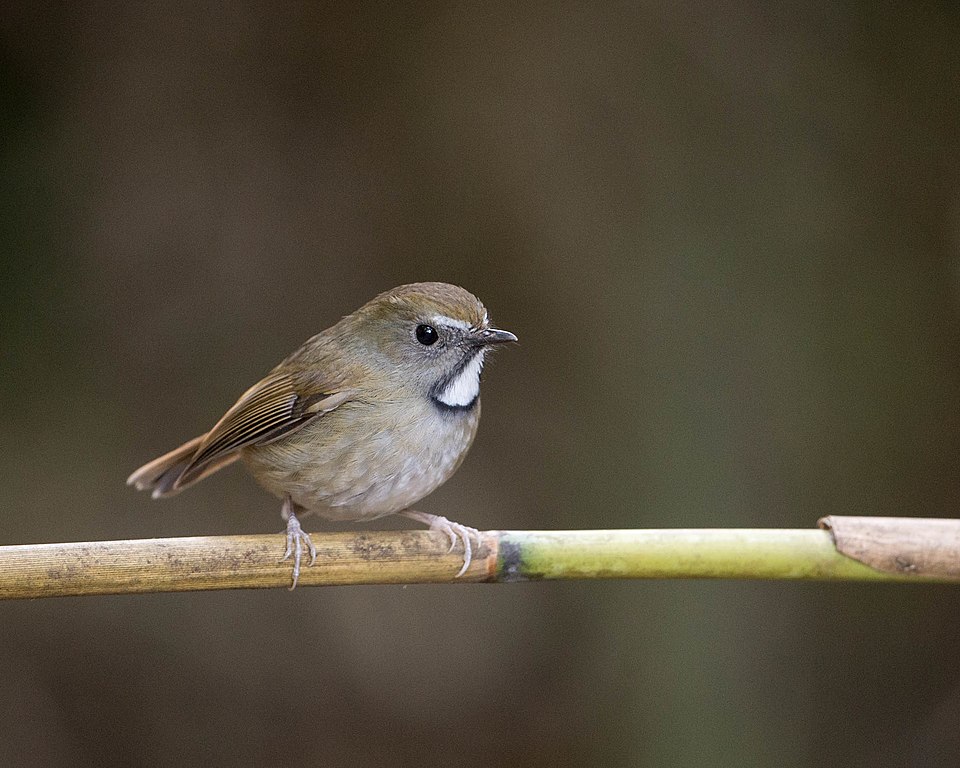
Pale Blue Flycatcher
Cyornis unicolor
Order: Passeriformes / Family: Muscicapidae

Wikimedia Commons
About the Pale Blue Flycatcher
The Pale Blue Flycatcher, scientifically known as Cyornis unicolor, is a captivating bird species found primarily in the dense forests of Southeast Asia. This medium-sized songbird belongs to the Muscicapidae family, a group characterized by their agile flycatching abilities and melodious songs. The Pale Blue Flycatcher plays a crucial role in forest ecosystems as both a predator of insects and a prey item for larger birds and mammals. Its presence indicates a healthy, biodiverse environment, as it thrives in regions with well-preserved natural habitats.
In terms of geographic distribution, the Pale Blue Flycatcher inhabits countries such as India, Nepal, Bhutan, and Bangladesh, extending its range into Myanmar, Thailand, and parts of China. It prefers subtropical or tropical moist lowland forests, often frequenting areas with dense canopy cover and abundant insect life. This species is known for its partial migratory behavior, with some populations moving to lower elevations during the cooler months to escape the harsh conditions of the Himalayan foothills.
Seasonally, the Pale Blue Flycatcher exhibits interesting behaviors, particularly during the breeding season, which typically spans from April to July. During this time, males become highly territorial, engaging in elaborate displays to attract females and defend their chosen nesting sites. Outside of the breeding season, these birds may be observed foraging solitarily or in mixed-species flocks, which offer increased protection against predators and enhanced foraging efficiency. This social behavior underscores the ecological importance of the Pale Blue Flycatcher as a connector within the avian community, facilitating interactions between different bird species and contributing to the overall health of the ecosystem.
The Pale Blue Flycatcher belongs to the family Muscicapidae, within the order Passeriformes. These birds typically live typically 4-6 years, with the oldest recorded at 8 years..
How to Identify a Pale Blue Flycatcher
The Pale Blue Flycatcher is instantly recognizable by its striking blue plumage, which lends the bird its common name. Adult males typically display a vibrant pale blue color on the upperparts, while the underparts are a lighter, washed-out blue or whitish hue. The throat and breast often exhibit a subtle gradient, blending smoothly into the belly. Females and juveniles, on the other hand, present a more subdued coloration, with grayish-blue upperparts and a paler, buffy underbelly, providing a degree of camouflage against the forest backdrop.
In terms of sexual dimorphism, males are distinctly more colorful than females, a common trait among flycatchers, which aids in mate attraction during the breeding season. The Pale Blue Flycatcher can sometimes be confused with similar species like the Tickell's Blue Flycatcher (Cyornis tickelliae), which shares a similar range. However, the Tickell's presents a more vibrant orange throat and breast, distinguishing it from the Pale Blue's uniform blue tones.
When in flight, the Pale Blue Flycatcher displays a characteristic agile and acrobatic silhouette. Its wings are relatively short and rounded, adapted for maneuvering through dense foliage as it hunts. When perched, the bird maintains an upright posture, occasionally flicking its wings and tail, a behavior typical of many flycatcher species.
Having trouble telling birds apart? Upload a photo to our bird identification tool for an instant species match.
Pale Blue Flycatcher Habitat and Range
Preferred Habitat
The Pale Blue Flycatcher thrives in subtropical and tropical moist lowland forests, where dense canopy cover provides both shelter and a rich insect diet. These birds are commonly found at elevations ranging from 200 to 1,800 meters, with a preference for undisturbed forest interiors. In regions like the Himalayan foothills and the Western Ghats, they are a common sight within the verdant, lush habitats.
During the winter months, some populations descend to lower altitudes, seeking milder climates and more abundant food sources. This altitudinal migration allows them to escape the colder temperatures of their breeding grounds. While they are predominantly forest dwellers, Pale Blue Flycatchers occasionally venture into nearby plantations and secondary growth areas, adapting to slightly altered landscapes as long as sufficient tree cover remains intact.
Unlike some other flycatchers, the Pale Blue Flycatcher does not typically inhabit urban areas, as it requires large expanses of natural habitat to support its foraging and breeding activities.
Geographic Range
The Pale Blue Flycatcher is primarily distributed across South and Southeast Asia. Its breeding range includes the lower Himalayas in northern India, extending through Nepal and Bhutan into Bangladesh. This range also covers parts of Myanmar and the southern regions of China, particularly in Yunnan and Sichuan provinces.
During non-breeding seasons, the Pale Blue Flycatcher may migrate to lower altitudes, particularly in the eastern parts of its range, such as Thailand and parts of Indochina, where it seeks milder climates. This migration pattern is not uniform across all populations, as some birds in more temperate regions may remain in their breeding areas year-round.
Population densities tend to be higher in areas with extensive forest cover, such as the Terai region of Nepal and the forested hills of Northeast India. The availability of suitable habitats plays a significant role in determining the distribution and density of this species across its range.
Want to know which birds visit your area? Browse our backyard birds by location guides for region-specific species lists.
What Does the Pale Blue Flycatcher Eat?
The Pale Blue Flycatcher's diet primarily consists of insects and other small invertebrates, which it catches with remarkable agility. Common prey items include beetles, flies, moths, and caterpillars, all of which are abundant in its forested habitat. During the breeding season, the demand for protein-rich food increases, as adults must provide for their growing chicks.
The flycatcher employs a 'sit-and-wait' foraging strategy, often perching quietly on a branch before darting out to snatch prey mid-air or off foliage. This method of foraging not only conserves energy but also allows the bird to exploit the vertical stratification of the forest, hunting at various levels depending on prey availability.
While insects form the bulk of their diet, Pale Blue Flycatchers may occasionally consume small fruits and berries, particularly during the non-breeding season when insects are less abundant. This dietary flexibility helps them adapt to seasonal changes in food availability.
Pale Blue Flycatcher Behavior and Social Structure
The Pale Blue Flycatcher exhibits fascinating social and territorial behaviors, particularly during the breeding season. Males become highly territorial, vocalizing frequently to establish and defend their territories from rivals. Their song serves both as an attraction to potential mates and a deterrent to competitors.
During courtship, males perform elaborate displays, which may involve wing flicking and tail spreading, to captivate the attention of females. Once paired, the flycatchers exhibit monogamous tendencies, with both parents sharing responsibilities such as nest building and chick rearing.
Outside the breeding season, the Pale Blue Flycatcher sometimes joins mixed-species foraging flocks, which can offer increased protection from predators and improved foraging success. These flocks often consist of various insectivorous birds that work together to flush out prey from the foliage.
Daily activity patterns of the Pale Blue Flycatcher are diurnal, with peak foraging activity occurring in the early morning and late afternoon. They typically rest during the hottest part of the day, conserving energy for the less favorable conditions.
Pale Blue Flycatcher Nesting and Reproduction
The Pale Blue Flycatcher builds its nest in a concealed location, often choosing a fork in a tree branch or a crevice in a tree trunk. The nest itself is a compact cup made of moss, lichen, and fine rootlets, providing both camouflage and insulation for the developing eggs.
A typical clutch consists of three to four eggs, which are incubated primarily by the female for about 12 to 14 days. During this period, the male may assist by bringing food to the nesting site and providing protection against potential predators.
Once hatched, the chicks remain in the nest for approximately two weeks before fledging. Both parents participate in feeding the chicks, ensuring a steady supply of insects to fuel their rapid growth. The Pale Blue Flycatcher typically raises one to two broods per season, depending on environmental conditions and food availability.
Pale Blue Flycatcher Sounds and Vocalizations
The Pale Blue Flycatcher's song is a delicate series of melodious whistles and trills, often described as a soft, sweet warble. This primary song, delivered by the male, serves both to attract a mate and to establish territorial boundaries. The rhythm and pitch of the song can vary slightly between individuals, adding a personal touch to each bird's vocal repertoire.
In addition to their song, Pale Blue Flycatchers produce a variety of call notes, including sharp 'chip' sounds used for communication between mates and to alert others of potential threats. Alarm calls are more rapid and harsh, serving as a warning to other birds about nearby predators.
During the dawn chorus, the Pale Blue Flycatcher is one of the early singers, contributing to the rich tapestry of sound that characterizes the awakening forest.
Interesting Facts About the Pale Blue Flycatcher
- 1The Pale Blue Flycatcher was first described by Edward Blyth in 1843, a notable figure in ornithology.
- 2Despite its name, the Pale Blue Flycatcher can exhibit a range of blue shades depending on light conditions and plumage wear.
- 3This flycatcher is monogamous, with pairs often forming strong bonds that last throughout the breeding season.
- 4The Pale Blue Flycatcher's diet shift to include more berries in winter highlights its adaptability to seasonal food changes.
- 5The bird's song, although sweet, is surprisingly loud, capable of carrying over long distances in dense forests.
- 6Pale Blue Flycatchers sometimes act as sentinels in mixed-species flocks, alerting others to predators.
- 7The species is an indicator of healthy forest ecosystems, thriving best in undisturbed habitats with rich biodiversity.
Pale Blue Flycatcher Conservation Status
The Pale Blue Flycatcher currently holds a status of Least Concern on the IUCN Red List, with a stable population trend. Despite this, the species faces threats from habitat loss due to deforestation and land conversion for agriculture, particularly in Southeast Asia. Conservation efforts for the Pale Blue Flycatcher focus on preserving its forest habitats through protected areas and sustainable land management practices. In countries like India and Nepal, initiatives to conserve forested regions have benefited the species by maintaining essential breeding and foraging grounds. While the current population appears stable, ongoing habitat destruction poses a long-term threat, highlighting the need for continued conservation measures to ensure the Pale Blue Flycatcher remains a common sight in its native forests.