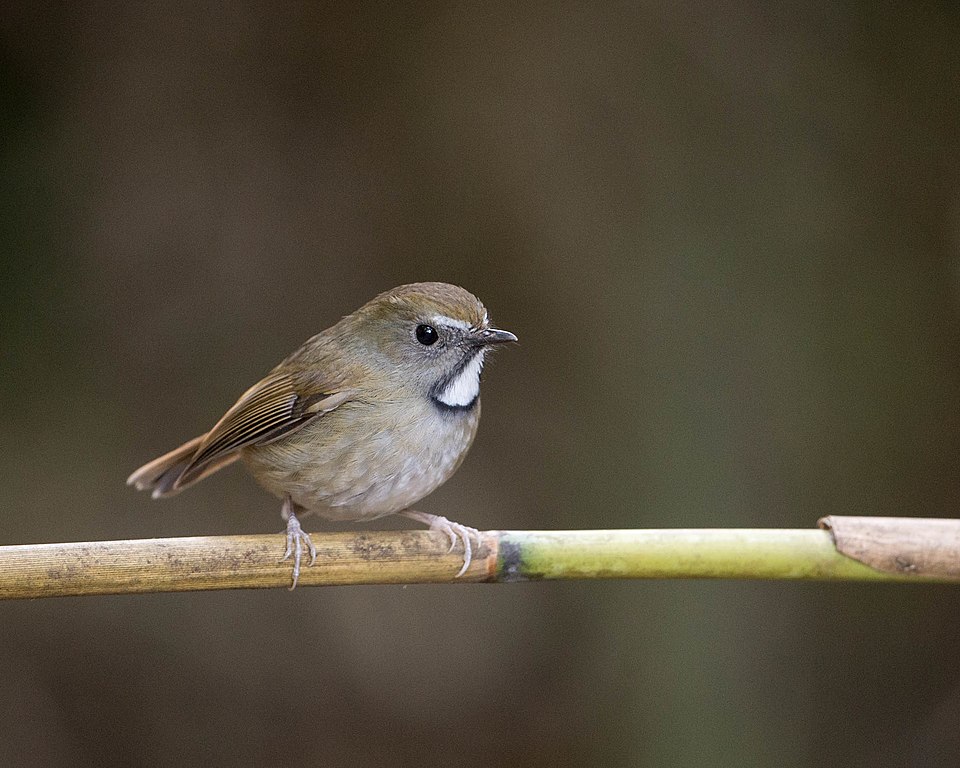
Pale Flycatcher
Bradornis pallidus
Order: Passeriformes / Family: Muscicapidae

Wikimedia Commons
About the Pale Flycatcher
The Pale Flycatcher, scientifically known as Bradornis pallidus, is a small passerine bird predominantly found across Sub-Saharan Africa. This bird is a member of the Muscicapidae family and showcases a subtle elegance with its muted plumage. Often overlooked due to its unassuming nature, the Pale Flycatcher plays a crucial role in controlling insect populations in its native habitats. It predominantly occupies woodlands and savannas, exhibiting a preference for regions with scattered trees and ample undergrowth. This bird's presence is notably significant in countries like Kenya, Tanzania, and South Africa, where it thrives in both protected reserves and lightly wooded agricultural areas. While the Pale Flycatcher is usually a resident bird, some populations engage in minor seasonal movements, particularly in response to the availability of food and water resources.
The significance of the Pale Flycatcher extends beyond its ecological role as an insectivore. It serves as an indicator species for the health of woodland ecosystems, as its presence often reflects the availability of an appropriate understory and the richness of insect life. During the breeding season, which varies slightly depending on the region, the Pale Flycatcher becomes more vocal, with males singing to establish territories and attract mates. These vocalizations, while not as melodious as some other songbirds, are an integral part of the woodland soundscape.
In terms of ecological interaction, the Pale Flycatcher is an integral part of the food web. Its diet primarily consists of insects, which it captures with agility and precision. This dietary preference helps manage insect populations, thereby maintaining ecological balance. The bird's adaptability to various woodland types, from moist forests to dry savannas, underscores its ecological versatility and resilience. As human activities continue to alter natural landscapes, the presence and adaptability of the Pale Flycatcher can provide insights into the broader impacts of habitat change across its range.
The Pale Flycatcher belongs to the family Muscicapidae, within the order Passeriformes. These birds typically live average 5 years, with a maximum recorded of 8 years..
How to Identify a Pale Flycatcher
The Pale Flycatcher is a modestly sized bird, measuring approximately 16-18 cm in length, with a wingspan that complements its streamlined body. Adult Pale Flycatchers are characterized by their gray-brown upperparts, which blend seamlessly with their pale underparts. This subdued color palette helps them remain inconspicuous in their wooded habitats. The wings and tail are slightly darker, providing subtle contrast.
Juvenile Pale Flycatchers bear a resemblance to adults but can be distinguished by their slightly mottled plumage, which provides some camouflage in the dappled light of the woodland. Males and females exhibit similar coloration, making them challenging to differentiate in the field. However, during the breeding season, males may appear slightly more vibrant due to hormonal changes that enhance feather condition.
In flight, the Pale Flycatcher displays a characteristic direct and fluttering flight pattern, often interspersed with brief glides. When perched, it maintains an upright posture, frequently flicking its wings and tail. This behavior, along with its drab plumage, distinguishes the Pale Flycatcher from other sympatric flycatcher species. While confusion with other members of the Muscicapidae family is possible, the Pale Flycatcher's lack of prominent markings and its specific habitat preferences aid in its identification.
Having trouble telling birds apart? Upload a photo to our bird identification tool for an instant species match.
Pale Flycatcher Habitat and Range
Preferred Habitat
The Pale Flycatcher typically inhabits a variety of woodland environments, ranging from dry savannas to riverine forests. It thrives in areas with scattered trees and dense undergrowth, which provide ample opportunities for foraging and nesting. In East Africa, for example, it can be observed in the acacia-dominated landscapes of the Serengeti and the miombo woodlands of Zambia.
This species is also adaptable to secondary growth and anthropogenic habitats, such as lightly wooded agricultural landscapes and gardens, where it can find suitable nesting sites and food sources. While it predominantly resides at lower elevations, the Pale Flycatcher can also be found at altitudes up to 2000 meters, particularly in regions where suitable habitat persists at higher elevations.
Seasonal habitat shifts are minimal, as the Pale Flycatcher tends to be a year-round resident. However, during dry spells, it may move short distances in search of better foraging grounds or water sources. Its presence in urban environments is limited, as it prefers the cover and resources provided by more natural settings.
Geographic Range
The Pale Flycatcher has a broad distribution across Sub-Saharan Africa. Its breeding range encompasses countries such as Kenya, Tanzania, Uganda, Zambia, and South Africa, where it is commonly found in suitable wooded habitats. In East Africa, it is a familiar sight in national parks and reserves, including the Serengeti and Kruger National Park.
While the Pale Flycatcher is primarily a resident species, local movements do occur, often influenced by seasonal changes in food availability and habitat conditions. During periods of drought or habitat disturbance, populations may shift to more favorable areas within their range.
Population density varies across its range, with the highest concentrations typically found in regions with a mix of woodland and open areas. These habitats support a rich diversity of insect life, which sustains the Pale Flycatcher's dietary needs. Despite its wide range, the species is not considered migratory, remaining within a consistent geographic area throughout the year.
Want to know which birds visit your area? Browse our backyard birds by location guides for region-specific species lists.
What Does the Pale Flycatcher Eat?
The diet of the Pale Flycatcher is primarily insectivorous, consisting of a variety of insects and other arthropods. Small flying insects, such as flies and beetles, form the core of its diet. The Pale Flycatcher employs a sit-and-wait foraging strategy, often perching quietly before darting out to snatch prey in mid-air. It also gleans insects from foliage and occasionally from the ground.
Seasonal diet changes are evident, with the bird's food choices reflecting the availability of prey during different times of the year. During the rainy season, when insect activity peaks, the Pale Flycatcher exploits this abundance by increasing its feeding activity.
Prey size typically ranges from small to medium-sized insects, allowing the bird to take advantage of a wide range of available prey. The Pale Flycatcher is most active during the cooler parts of the day, particularly in the early morning and late afternoon, when it can be observed actively hunting for insects to sustain its energy needs.
Pale Flycatcher Behavior and Social Structure
The Pale Flycatcher exhibits a solitary or paired social structure, with individuals or pairs maintaining territories that they defend from intruders. Territorial behavior is most pronounced during the breeding season, when males become more vocal and engage in displays to deter rivals and attract mates.
Courtship displays involve subtle movements and vocalizations, with males often performing aerial chases and presenting food to females as part of the bonding process. Flocking behavior is uncommon, as the species tends to maintain its independence outside the breeding context.
The Pale Flycatcher responds to predators with a mixture of alarm calls and evasive flight maneuvers. It remains vigilant, frequently scanning its surroundings from a perch. Daily activity patterns are influenced by temperature and prey availability, with peak activity occurring during the cooler hours of the day.
This bird demonstrates a measured approach to foraging, often sitting quietly before making quick, calculated moves to capture prey. Its behavior underscores a balance between energy conservation and the need for effective foraging, which is essential for survival in its natural habitat.
Pale Flycatcher Nesting and Reproduction
Pale Flycatchers typically construct cup-shaped nests using grass, leaves, and spider webs, which provide structural support. These nests are strategically placed in forks of trees or bushes, often well-hidden by foliage to protect them from predators.
The breeding season varies geographically, generally aligning with the availability of food resources. In East Africa, for instance, breeding may coincide with the onset of the rainy season. Clutch sizes typically range from two to four eggs, which are incubated by the female for approximately 14 days.
Both parents share responsibilities in feeding and caring for the chicks. Once hatched, the young remain in the nest for about two to three weeks before fledging. Parental roles are distinct, with the female primarily responsible for incubation and the male assisting with feeding duties.
The Pale Flycatcher often raises one or two broods per year, depending on environmental conditions and food availability. This reproductive strategy ensures that the species can sustain its population levels despite the challenges posed by its environment.
Pale Flycatcher Sounds and Vocalizations
The Pale Flycatcher's primary song consists of a series of soft, whistling notes that are repeated rhythmically. This song, while not particularly loud, serves as an important communication tool for establishing territories and attracting mates. The pitch is moderate, and the quality of the song can be described as somewhat plaintive.
In addition to its song, the Pale Flycatcher produces a variety of call notes, including short, sharp chirps and softer contact calls used between mates or family groups. Alarm calls are more urgent and are employed to warn of potential predators or intruders.
During the dawn chorus, the Pale Flycatcher contributes its voice to the collective sound of the woodland, although its calls may be overshadowed by more vociferous species. Despite this, its distinct calls are an integral part of the natural soundscape, providing clues to its presence even when the bird itself is not easily visible.
Interesting Facts About the Pale Flycatcher
- 1The Pale Flycatcher is an expert at aerial insect hunting, capturing prey mid-flight with remarkable agility.
- 2Despite its wide range, the Pale Flycatcher is often overlooked due to its subdued plumage and quiet demeanor.
- 3In some regions, the Pale Flycatcher participates in mixed-species foraging flocks, benefiting from the vigilance of other birds.
- 4The Pale Flycatcher's song, though not loud, plays a crucial role in territorial defense and mate attraction during the breeding season.
- 5This bird demonstrates a unique behavior of using spider webs to reinforce the structure of its nest, adding durability.
- 6The Pale Flycatcher often raises two broods per year, ensuring population stability in fluctuating environmental conditions.
- 7Its preference for woodland habitats with dense understory makes the Pale Flycatcher an important indicator of ecosystem health.
Pale Flycatcher Conservation Status
The Pale Flycatcher is currently listed as a species of Least Concern by the IUCN, with populations considered stable across much of its range. However, habitat loss due to agricultural expansion, deforestation, and human encroachment poses a potential threat to localized populations. Conservation efforts are focused on preserving woodland habitats and promoting sustainable land-use practices that support biodiversity. Protection of key habitats within national parks and reserves is crucial for maintaining healthy populations. Historically, the Pale Flycatcher has maintained a stable presence across its range, benefiting from its adaptability to a variety of woodland habitats. Continued monitoring of population trends and habitat conditions will be essential to ensure its long-term conservation.