
Peleng Leaf-Warbler
Phylloscopus suaramerdu
Order: Passeriformes / Family: Phylloscopidae

Wikimedia Commons
About the Peleng Leaf-Warbler
The Peleng Leaf-Warbler, Phylloscopus suaramerdu, is a small passerine bird that holds a special place in the vibrant ecosystems of Peleng Island, part of Indonesia's Banggai Archipelago. This bird is a member of the Phylloscopidae family, which encompasses a variety of leaf-warblers known for their distinctive songs and agile movements. The Peleng Leaf-Warbler is particularly significant due to its restricted range, being endemic to the island, which underscores its importance in the local biodiversity. These birds play a crucial ecological role as insectivores, helping control insect populations within their forested habitats. Their contribution to the ecosystem extends to their involvement in seed dispersal, albeit indirectly, as they influence the populations of insects that affect plant life.
In the lush montane and lowland forests of Peleng Island, the Peleng Leaf-Warbler thrives amidst a dense canopy of tropical foliage. Forests here provide a year-round haven for these birds, offering both sustenance and nesting sites. Although not migratory, the Peleng Leaf-Warbler exhibits seasonal behaviors, such as changes in foraging patterns and vocal activity, particularly noticeable during the breeding season. During this time, the males become more vocal, using their song as part of courtship displays and territorial defense. The bird's melodic song, characterized by a series of sweet, clear whistles, echoes through the canopy, reinforcing the bird's presence in its native habitat.
Furthermore, the Peleng Leaf-Warbler holds cultural significance for local communities, who often recognize its song as a harbinger of seasonal changes. Conservationists pay close attention to the species due to its limited range and potential vulnerability to habitat loss. The ongoing efforts to preserve the island's forests are crucial to ensuring the survival of this and other endemic species. As Peleng Island continues to face environmental pressures from logging and agricultural expansion, the Peleng Leaf-Warbler serves as a flagship species for conservation initiatives aiming to protect the island's unique biodiversity.
The Peleng Leaf-Warbler belongs to the family Phylloscopidae, within the order Passeriformes. These birds typically live estimated 3-5 years, though specific data is lacking..
How to Identify a Peleng Leaf-Warbler
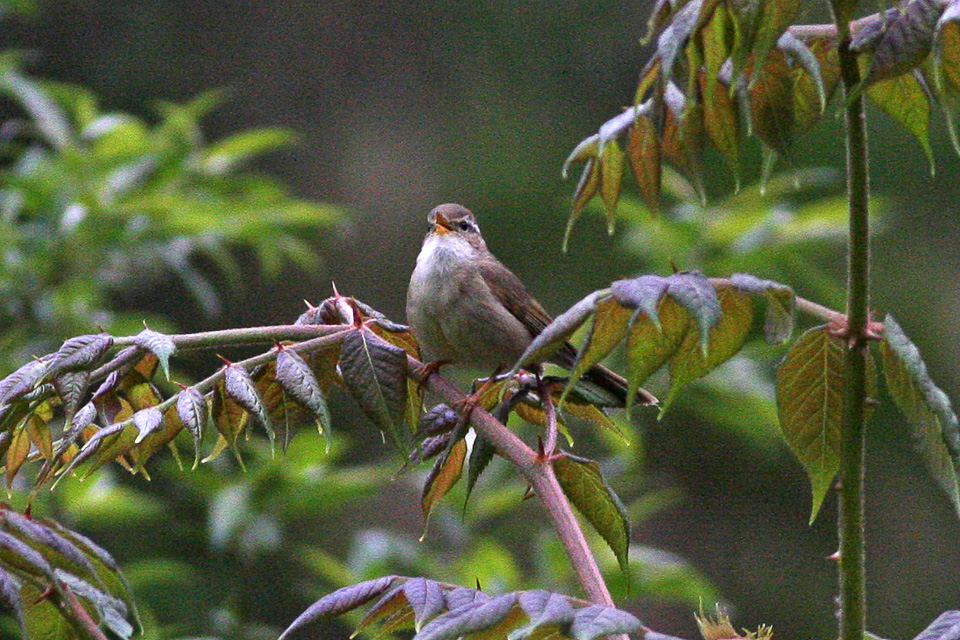
Identifying the Peleng Leaf-Warbler in the field requires careful attention to its distinct plumage and behavior. Adult birds display a striking green coloration across their dorsal side, blending seamlessly with the verdant foliage of their forest habitat. Their ventral side is a softer, more muted yellow, providing a subtle contrast. Unlike many other passerines, the Peleng Leaf-Warbler has relatively uniform plumage between males and females, making sex differentiation based solely on appearance challenging. Juveniles, however, can be distinguished by their slightly duller plumage and less defined markings. In flight, the Peleng Leaf-Warbler presents a compact silhouette with rapid wingbeats and a slightly undulating flight pattern, common among leaf-warblers.
When perched, the Peleng Leaf-Warbler often adopts a horizontal posture, with its tail slightly flicked upward. This characteristic posture aids birdwatchers in distinguishing it from similar species that may share its habitat. Confusion with other Phylloscopus species may occur, but the Peleng Leaf-Warbler's unique song and specific range on Peleng Island serve as reliable identification cues. Close observation of its behavior, such as its distinctive foraging method of gleaning insects from leaves, further aids in its identification.
Having trouble telling birds apart? Upload a photo to our bird identification tool for an instant species match.
Peleng Leaf-Warbler Habitat and Range
Preferred Habitat
The Peleng Leaf-Warbler thrives in the dense montane and lowland forests of Peleng Island, where the humid tropical climate supports rich biodiversity. These forests, characterized by towering trees and a thick understory, provide ideal conditions for the warbler's insectivorous diet and nesting habits. The bird is typically found at elevations ranging from sea level to about 1,500 meters, although it shows a preference for mid-elevation forests where insect prey is abundant. Unlike some other passerines, the Peleng Leaf-Warbler does not exhibit significant seasonal habitat shifts, maintaining a presence in these forested areas throughout the year. Urban presence is minimal, as the species relies heavily on undisturbed forest habitats.
Geographic Range
The Peleng Leaf-Warbler's range is highly restricted, confined solely to Peleng Island within the Banggai Archipelago of Indonesia. This limited distribution makes the species particularly vulnerable to habitat changes. There are no known migration patterns for this non-migratory bird, which remains on the island year-round. Population densities are highest in undisturbed forest areas, where the availability of food and nesting sites supports thriving populations. Conservation efforts focus on these key areas to mitigate the risks posed by habitat degradation and deforestation.
Want to know which birds visit your area? Browse our backyard birds by location guides for region-specific species lists.
What Does the Peleng Leaf-Warbler Eat?
As an insectivore, the Peleng Leaf-Warbler feeds primarily on a diet of small insects and arthropods, which it skillfully gleans from the leaves and branches of forest trees. The bird's diet includes caterpillars, beetles, and spiders, with occasional consumption of small fruits and seeds during periods of low insect availability. Foraging occurs throughout the day, with peak activity observed during the cooler morning and late afternoon hours. The Peleng Leaf-Warbler employs a variety of foraging techniques, including hover-gleaning and sallying, to capture prey of various sizes, typically ranging from 1-5 millimeters in length.
Peleng Leaf-Warbler Behavior and Social Structure
The Peleng Leaf-Warbler exhibits a range of behaviors that reflect its adaptation to the forest environment. Socially, it tends to be solitary or found in pairs, especially during the breeding season when males become more territorial. Courtship involves a combination of vocal displays and subtle physical posturing, with males singing persistently to attract females and establish territory. Flocking behavior is infrequent, although the bird may join mixed-species foraging flocks outside the breeding season to increase foraging efficiency and predator vigilance.
In response to potential threats, the Peleng Leaf-Warbler employs a series of alarm calls, alerting nearby birds to the presence of predators such as snakes or birds of prey. Daily activity patterns show a strong diurnal rhythm, with active foraging and vocalization occurring primarily from dawn to dusk. During the hottest parts of the day, the bird may seek shelter in the shaded understory, reducing its visibility and activity.
Peleng Leaf-Warbler Nesting and Reproduction
The nesting habits of the Peleng Leaf-Warbler are closely tied to the structure of its forest habitat. The bird builds cup-shaped nests using fine twigs, moss, and leaves, which it expertly weaves together to create a secure and camouflaged home. Nests are typically located in dense shrubbery or low trees, at heights ranging from 1 to 5 meters above the ground. The female usually lays a clutch of 2-4 eggs, which she incubates for approximately 12-14 days. Both parents participate in feeding the chicks, which fledge about 10-14 days after hatching. The species generally produces one brood per year, though favorable conditions may occasionally lead to a second.
Peleng Leaf-Warbler Sounds and Vocalizations
The Peleng Leaf-Warbler is renowned for its melodious song, which consists of a series of clear, sweet whistles delivered at a moderate tempo. This primary song serves both territorial and courtship purposes, often heard at dawn when birds are most vocal. In addition to its song, the Peleng Leaf-Warbler produces various call notes, including soft chips used for communication between individuals. Alarm calls, sharper and more urgent, alert others to the presence of predators. The bird's vocalizations, while distinct, can be compared to the more familiar songs of Eurasian warblers, yet with a unique tropical flourish.
Interesting Facts About the Peleng Leaf-Warbler
- 1The Peleng Leaf-Warbler is endemic to Peleng Island, making it one of the island's unique avian treasures.
- 2This warbler's song can be heard for over 100 meters, a testament to its powerful vocal cords.
- 3Despite its limited range, the Peleng Leaf-Warbler has adapted to a variety of forested habitats on the island.
- 4The species' preference for mid-elevation forests helps reduce competition with other insectivorous birds.
- 5Peleng Leaf-Warblers contribute to insect population control, playing a crucial role in their ecosystem.
- 6Their nests are often so well-camouflaged that even experienced birdwatchers find them challenging to spot.
- 7The name 'suaramerdu' translates to 'sweet voice' in Indonesian, a nod to its beautiful song.
Peleng Leaf-Warbler Conservation Status
Currently listed as Near Threatened by the IUCN, the Peleng Leaf-Warbler faces a decreasing population trend due to habitat loss from deforestation and land conversion for agriculture. Conservation efforts focus on safeguarding the remaining forest areas on Peleng Island and promoting sustainable land-use practices. Historical population declines correlate with increased human activity on the island, emphasizing the need for protected areas to ensure the survival of this and other endemic species. Ongoing research and monitoring aim to inform conservation strategies and raise awareness about the species' plight.
Other Phylloscopidae Species



Birds Similar to the Peleng Leaf-Warbler
These species are often confused with the Peleng Leaf-Warbler due to similar appearance or overlapping range.
