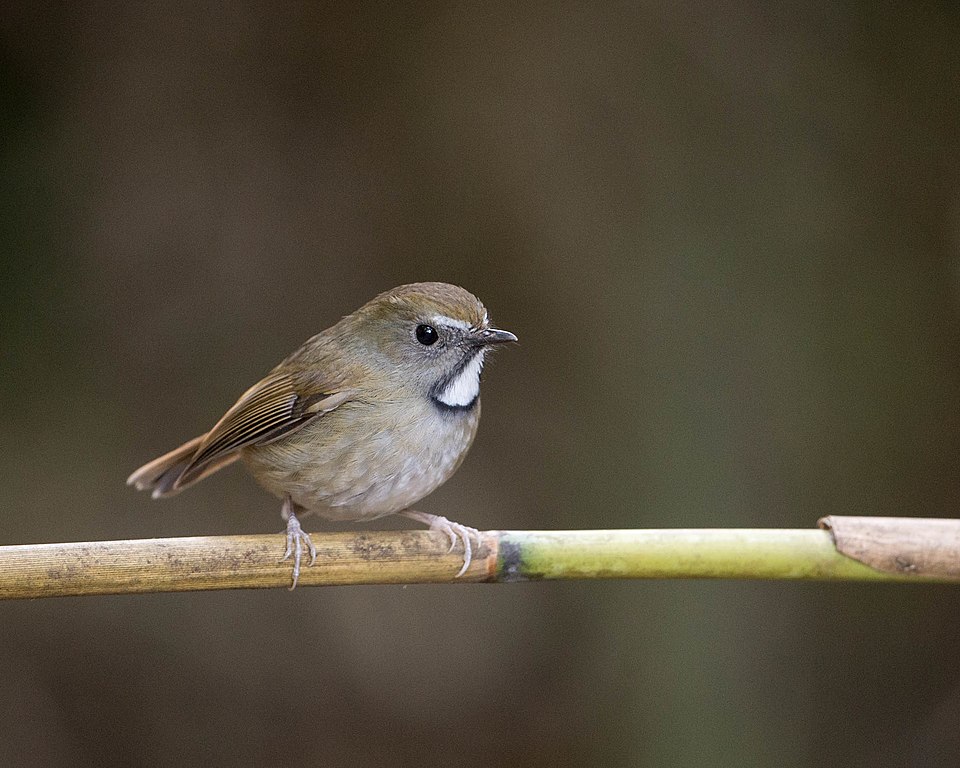
Philippine Magpie-Robin
Copsychus mindanensis
Order: Passeriformes / Family: Muscicapidae

Wikimedia Commons
About the Philippine Magpie-Robin
The Philippine Magpie-Robin (Copsychus mindanensis), a member of the Muscicapidae family, stands as a vital component of the avian diversity within the Philippines. Endemic to the archipelago, this species exhibits remarkable adaptability, inhabiting a variety of ecosystems from dense forests to suburban gardens. Its presence across the Philippine islands underscores its ecological significance, serving as both a predator of insects and a seed disperser. The Philippine Magpie-Robin is particularly prevalent in lowland areas, but can also be found in montane regions, demonstrating its ecological versatility. During the breeding season, which typically occurs from March to July, these birds engage in complex courtship displays characterized by elaborate songs and aerial maneuvers. This seasonal behavior not only ensures reproductive success but also contributes to the symphony of sounds that define the Philippine landscape. Beyond their ecological roles, these birds hold cultural significance for many Filipino communities, often featured in local folklore and traditional art. The Philippine Magpie-Robin's ability to thrive in various habitats, coupled with its melodious song, makes it a subject of interest for ornithologists and bird enthusiasts alike. Its role in controlling insect populations further highlights its importance in maintaining the ecological balance of its native regions. As urbanization encroaches on natural habitats, the Philippine Magpie-Robin's adaptability will be crucial in its continued survival, serving as a barometer of environmental health in the Philippines.
The Philippine Magpie-Robin belongs to the family Muscicapidae, within the order Passeriformes. These birds typically live average 5-8 years, with a maximum recorded of 10 years..
How to Identify a Philippine Magpie-Robin
The Philippine Magpie-Robin is easily recognized by its striking black and white plumage. Adult males display a glossy black head, back, and tail, contrasted with a bright white belly and undertail. Females, while similar in pattern, exhibit slightly duller tones with some grayish hues on the back. Juveniles resemble females but with a more muted coloration and mottled patterns on their breasts. This bird's size, approximately 19-24 centimeters in length, makes it a medium-sized songbird. In flight, the Philippine Magpie-Robin showcases a distinctive silhouette with its long tail and rounded wings. Perched, it maintains an upright posture, often flicking its tail up and down. Confusion may arise with the Oriental Magpie-Robin, but the latter typically has a more elongated body and different vocalizations. Observers can distinguish the Philippine Magpie-Robin by its unique song and the high contrast between its black and white plumage.
Having trouble telling birds apart? Upload a photo to our bird identification tool for an instant species match.
Philippine Magpie-Robin Habitat and Range
Preferred Habitat
The Philippine Magpie-Robin frequents a variety of habitats, from dense tropical forests to open woodlands and even suburban gardens. It thrives at elevations ranging from sea level to about 1,500 meters, demonstrating its adaptability. In urban areas, it often inhabits parks and gardens, taking advantage of human-altered landscapes. During the dry season, these birds may shift to wetter areas such as riverbanks and mangroves, although they generally prefer drier forested environments. Their presence in both rural and urban settings highlights their adaptability to diverse environmental conditions.
Geographic Range
The Philippine Magpie-Robin is endemic to the Philippines, where it inhabits most of the major islands, including Luzon, Mindanao, and Visayas. It does not engage in long-distance migration but may exhibit local movements in response to food availability and climatic conditions. The species is most abundant in the lowlands, but populations are also found in montane regions, where they occupy a variety of forest types. Although widely distributed across the archipelago, certain islands host denser populations, particularly where suitable habitats remain intact.
Want to know which birds visit your area? Browse our backyard birds by location guides for region-specific species lists.
What Does the Philippine Magpie-Robin Eat?
The diet of the Philippine Magpie-Robin primarily consists of insects, making it an effective natural pest controller. It forages both on the ground and in the understory, using a combination of hopping and short flights to locate prey. During the wet season, when insect abundance peaks, the bird may consume a larger proportion of beetles and caterpillars. In drier months, it supplements its diet with small fruits and seeds, showcasing its dietary adaptability. The Magpie-Robin often hunts during the early morning and late afternoon, avoiding the midday heat common in its tropical habitats.
Philippine Magpie-Robin Behavior and Social Structure
Socially, the Philippine Magpie-Robin is a solitary or paired bird, rarely forming large flocks. Territorial behavior is prominent during the breeding season, with males singing vigorously to defend their space. Courtship involves elaborate displays, including song battles and aerial chases. The species exhibits a strong response to predators, often mobbing intruders to protect their nests. Daily, they are most active during dawn and dusk, capitalizing on cooler temperatures. Their territorial songs serve multiple functions, from mate attraction to territory defense.
Philippine Magpie-Robin Nesting and Reproduction
The nesting habits of the Philippine Magpie-Robin involve constructing cup-shaped nests primarily from twigs, leaves, and grass. These nests are often built in tree forks or dense shrubbery, providing concealment from predators. A typical clutch size ranges from 2 to 4 eggs, with an incubation period lasting approximately 12 to 14 days. Both parents partake in feeding the young, although the female primarily incubates the eggs. Fledging occurs about two weeks post-hatching, with juveniles remaining under parental care for additional weeks. They typically raise one to two broods per year.
Philippine Magpie-Robin Sounds and Vocalizations
The Philippine Magpie-Robin is renowned for its rich and melodious song, characterized by a series of varied whistles, trills, and chirps. The rhythm is both complex and fluid, often lasting several seconds. Call notes are sharp and repetitive, used for communication between mates or signaling alarm. During the dawn chorus, their song stands out, providing a musical backdrop to the early hours. Compared to other robins, their vocalizations possess a unique timbre, making them a favorite among birdwatchers.
Interesting Facts About the Philippine Magpie-Robin
- 1The Philippine Magpie-Robin can produce a variety of up to 15 different song types, showcasing its vocal range.
- 2This bird plays a key role in controlling agricultural pests by consuming a wide array of insects.
- 3It is one of the few bird species that can thrive in both dense forests and urban gardens, demonstrating remarkable adaptability.
- 4The Philippine Magpie-Robin is known to engage in 'anting,' a behavior where it uses ants to clean its plumage.
- 5Despite its small size, the Philippine Magpie-Robin has a loud and complex song that can travel over long distances.
- 6During courtship, males perform aerial displays that can involve rapid flights and intricate maneuvers to impress females.
- 7This species is often featured in Filipino folklore and is considered a symbol of resilience and adaptability.
Philippine Magpie-Robin Conservation Status
Currently, the Philippine Magpie-Robin holds a status of 'Least Concern' on the IUCN Red List. However, habitat loss due to deforestation and urban expansion poses ongoing threats. Despite these challenges, the species has shown resilience, with stable population trends in many areas. Conservation efforts focus on habitat protection and sustainable land-use practices. Historically, populations have fluctuated, but their adaptability to altered landscapes offers hope for future stability.