
Philippine Shortwing
Brachypteryx poliogyna
Order: Passeriformes / Family: Muscicapidae

Wikimedia Commons
About the Philippine Shortwing
The Philippine Shortwing (Brachypteryx poliogyna) is a captivating songbird found exclusively in the Philippines, primarily on the islands of Luzon, Mindanao, and Leyte. This bird thrives in the dense and humid montane forests, typically at elevations ranging from 900 to 2,700 meters. The species plays a crucial ecological role as both a predator of small invertebrates and a seed disperser, contributing to forest regeneration. Its preference for lush undergrowth and inaccessible terrain makes it a challenging bird for even the most seasoned ornithologists to observe. The Philippine Shortwing's significance extends beyond its ecological contributions; it serves as an indicator species for the health of montane forest ecosystems, which are increasingly threatened by deforestation and habitat fragmentation. In Luzon's Cordillera Central and Sierra Madre mountain ranges, populations of the Philippine Shortwing have been relatively stable, thanks to the ongoing conservation efforts and protected areas. However, in other regions, such as Mindanao, habitat loss due to agricultural expansion poses a significant threat. This bird's elusive behavior, combined with its preference for high-elevation forests, has kept it somewhat insulated from direct human disturbances, although climate change remains a looming concern. Understanding the seasonal behaviors of the Philippine Shortwing can provide insights into its adaptability to environmental changes. During the breeding season, which typically spans from March to June, the bird becomes more vocal and visible as it seeks mates and establishes territories. Outside of this period, the Philippine Shortwing tends to remain quiet and secretive, blending seamlessly into its surroundings. This seasonal shift in behavior highlights the bird's adaptability and resilience in a rapidly changing world. The protection of its habitat is crucial not only for the survival of the Philippine Shortwing but also for the myriad of other species that share its environment.
The Philippine Shortwing belongs to the family Muscicapidae, within the order Passeriformes. These birds typically live average 5-6 years, with some individuals living up to 8 years..
How to Identify a Philippine Shortwing
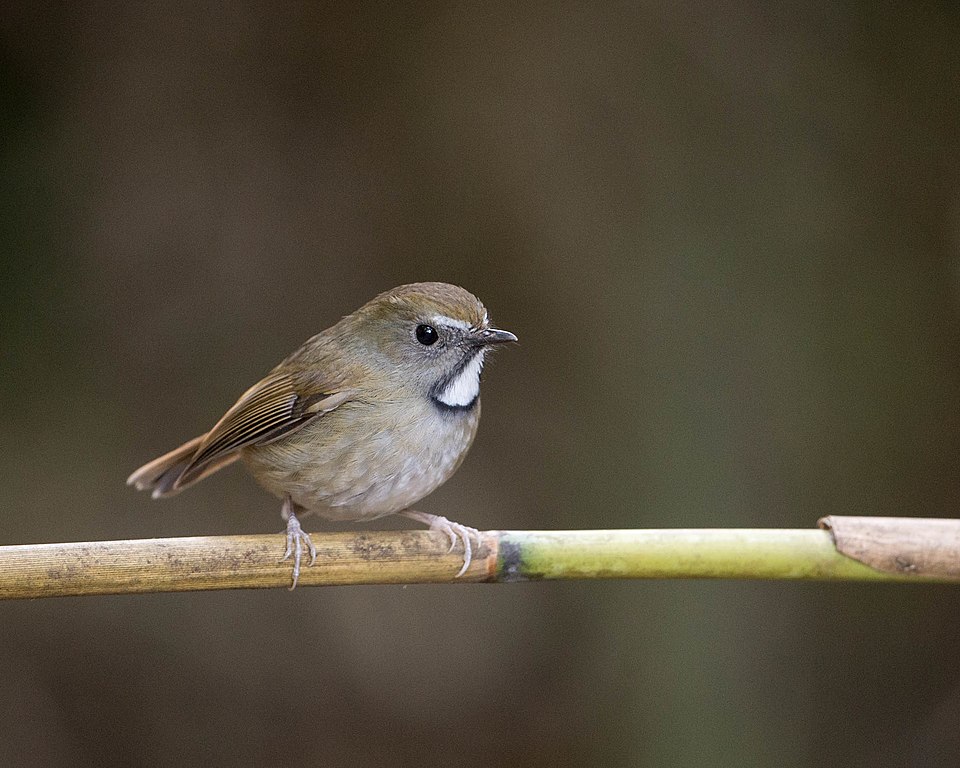
The Philippine Shortwing is a small, robust songbird with a length of approximately 14 centimeters. Adults possess a striking plumage characterized by a deep blue back and wings, contrasting sharply with a dark brown or black head and underparts. The short, rounded wings and a relatively long tail are distinctive features that aid in identification. Juvenile birds differ significantly, displaying mottled brown plumage that gradually transitions to the adult coloration as they mature. There is minimal sexual dimorphism in this species, with males and females appearing quite similar, though males may exhibit slightly more vibrant blue hues during the breeding season. When perched, the Philippine Shortwing often holds its tail slightly cocked and flicks it nervously, a behavior that can help distinguish it from similar species. In flight, its short, rounded wings give it a distinctive silhouette, with rapid, fluttering wingbeats. Confusion with other Brachypteryx species, such as the Luzon Shortwing, can occur, but the Philippine Shortwing's darker overall coloration and preference for higher altitudes usually set it apart.
Having trouble telling birds apart? Upload a photo to our bird identification tool for an instant species match.
Philippine Shortwing Habitat and Range
Preferred Habitat
The Philippine Shortwing primarily inhabits montane forests, where it favors dense undergrowth and forest edges. These habitats are typically located at elevations ranging from 900 to 2,700 meters. In Luzon, the bird is often found in the Cordillera Central and Sierra Madre ranges, while in Mindanao, it occupies the highlands of Mount Apo and surrounding areas. The bird generally avoids urbanized regions, thriving instead in pristine, undisturbed forests. Seasonal habitat shifts are minimal, as the Philippine Shortwing remains in montane environments year-round. However, some altitudinal movements may occur in response to food availability or climatic conditions. Despite its preference for remote, rugged terrain, the Philippine Shortwing can occasionally be found in secondary forests, provided there is sufficient undergrowth to offer cover and foraging opportunities.
Geographic Range
The Philippine Shortwing is endemic to the Philippines, with its range primarily restricted to the islands of Luzon, Mindanao, and Leyte. It is a resident species, demonstrating little to no migratory behavior. The highest population densities are observed in the Cordillera Central and Sierra Madre mountain ranges of Luzon, where the montane forests provide ideal habitat conditions. On Mindanao, the species is concentrated in the highlands of Mount Apo and other elevated areas. While the overall distribution is limited to specific regions within the Philippines, the Philippine Shortwing's population is relatively stable in well-protected areas. However, habitat loss and fragmentation in less protected regions pose significant threats to its range.
Want to know which birds visit your area? Browse our backyard birds by location guides for region-specific species lists.
What Does the Philippine Shortwing Eat?
The Philippine Shortwing primarily feeds on insects and small invertebrates, such as beetles, spiders, and caterpillars, which it gleans from the forest floor and low vegetation. Its diet occasionally includes small fruits and berries, which supplement its nutritional intake, especially during the breeding season when energy demands are higher. The bird employs a methodical foraging technique, often using its short, strong bill to probe leaf litter and underbrush in search of prey. Seasonal changes in diet are minimal, as the bird has adapted to the relatively stable food availability within its montane forest habitat. However, it may shift its diet slightly to incorporate more fruit during times of insect scarcity. The Philippine Shortwing typically forages during the early morning and late afternoon, taking advantage of cooler temperatures and reduced competition from other forest dwellers.
Philippine Shortwing Behavior and Social Structure
The Philippine Shortwing exhibits solitary behavior for most of the year, with individuals maintaining small territories that they defend vocally and physically when necessary. During the breeding season, which occurs from March to June, the bird becomes more social, engaging in courtship displays and forming pair bonds. Males perform aerial displays and sing to attract females, often using prominent perches within their territory. The Philippine Shortwing is a diurnal species, with peak activity occurring during the morning and late afternoon. It responds to predators with a combination of stealth and vocal alarm calls, alerting other birds to potential threats. Despite its secretive nature, the Philippine Shortwing displays a remarkable resilience to disturbances, often resuming normal activities shortly after a perceived threat has passed.
Philippine Shortwing Nesting and Reproduction
The Philippine Shortwing constructs its nest close to the ground, often in a sheltered location such as a crevice, the base of a tree, or in dense underbrush. The nest is a cup-shaped structure made of moss, leaves, and fine plant fibers, providing camouflage and protection for the eggs. A typical clutch consists of two to three eggs, which the female incubates for approximately 14 days. Both parents participate in feeding and caring for the chicks, which fledge about 14 to 16 days after hatching. The Philippine Shortwing generally raises one brood per year, although favorable conditions may occasionally allow for a second. Parental roles are shared, with both male and female contributing to nest building, incubation, and chick rearing.
Philippine Shortwing Sounds and Vocalizations
The primary song of the Philippine Shortwing is a melodious and varied series of whistles and trills, often delivered from a concealed perch within dense vegetation. Its song is characterized by a clear, high-pitched quality, sometimes reminiscent of a flute. The bird also produces a variety of call notes, including sharp, metallic chips used to communicate with mates and signal alarm. During the dawn chorus, the Philippine Shortwing's song is particularly prominent, contributing to the rich tapestry of sounds that define its montane forest habitat. Alarm calls are typically harsh and rapid, serving to alert other birds to the presence of predators.
Interesting Facts About the Philippine Shortwing
- 1The Philippine Shortwing's Latin name, Brachypteryx poliogyna, reflects its short-winged appearance, a characteristic feature of its genus.
- 2Despite its small size, the Philippine Shortwing has a surprisingly loud and melodious song that can be heard echoing through its montane forest habitat.
- 3The Philippine Shortwing plays a vital role in controlling insect populations within its ecosystem, acting as a natural pest control agent.
- 4This elusive bird often remains hidden in dense undergrowth, making it a rare sight even for experienced birdwatchers.
- 5The Philippine Shortwing is an indicator species for montane forest health, highlighting the importance of preserving its habitat for biodiversity.
- 6Seasonal changes in behavior make the Philippine Shortwing more observable during the breeding season, when it becomes more vocal and active.
- 7Its preference for high-elevation habitats provides some insulation from human disturbances, though climate change remains a significant threat.
Philippine Shortwing Conservation Status
The Philippine Shortwing is currently listed as Least Concern by the IUCN, with population trends considered stable in some parts of its range. However, ongoing threats such as deforestation, habitat fragmentation, and climate change pose significant challenges to its long-term survival. Conservation efforts focus on habitat protection, particularly in key areas like the Cordillera Central and Sierra Madre ranges. Historically, the species has maintained stable populations in protected areas, but increased conservation measures are necessary to ensure its continued survival in less protected regions. Public awareness and community involvement play crucial roles in supporting conservation initiatives and mitigating anthropogenic threats.
Other Muscicapidae Species


Birds Similar to the Philippine Shortwing
These species are often confused with the Philippine Shortwing due to similar appearance or overlapping range.

