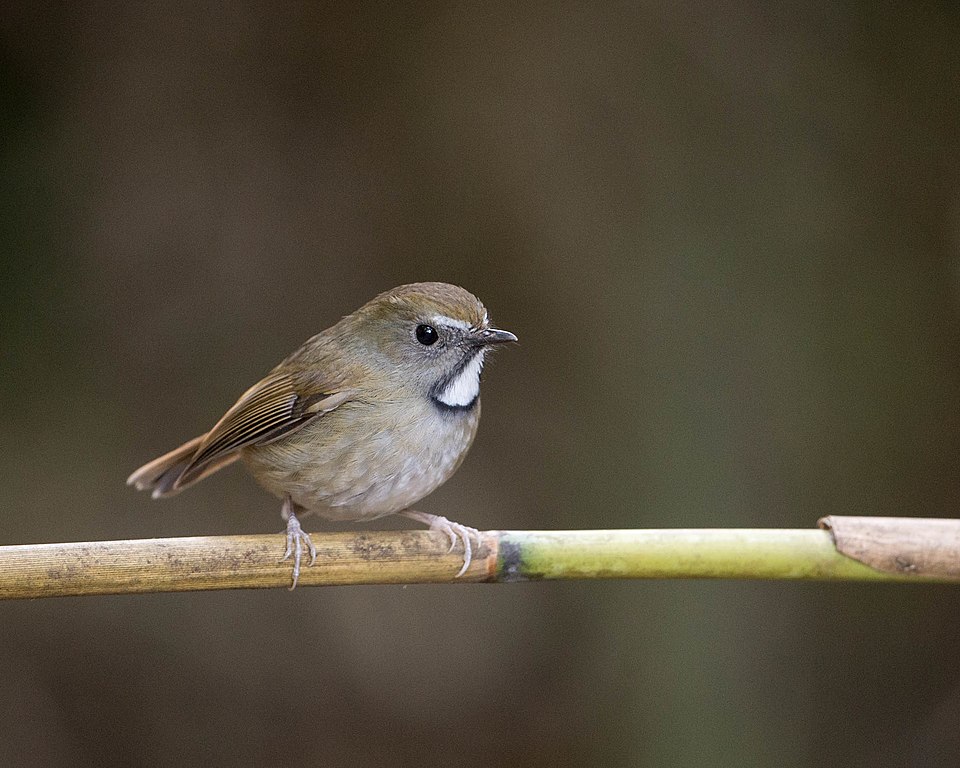
Pied Bushchat
Saxicola caprata
Order: Passeriformes / Family: Muscicapidae

Wikimedia Commons
About the Pied Bushchat
The Pied Bushchat, scientifically known as Saxicola caprata, is a small passerine bird belonging to the family Muscicapidae. It is widely recognized for its contrasting black and white plumage, making it easily identifiable in its natural habitats. This species plays an important ecological role as both a predator of insects and a prey item for larger birds. Its prevalence across varied environments reflects its adaptability and ecological significance.
Pied Bushchats occupy a diverse range of habitats, from grasslands to agricultural fields, and they can be found at various elevations ranging from the lowlands to the foothills of mountainous regions. Their range extends across South and Southeast Asia, including countries like India, Bangladesh, Nepal, and Indonesia. Notably, these birds have adapted well to human-altered landscapes, thriving in rural and semi-urban areas where open fields and scattered shrubs provide suitable foraging grounds.
Seasonally, the Pied Bushchat exhibits some migratory behavior, particularly in the northern parts of its range. These movements often correlate with changes in weather and food availability, although many populations remain resident year-round, especially in more temperate zones. This adaptability allows the species to exploit a wide variety of ecological niches, maintaining stable population numbers across its range.
Ecologically, the Pied Bushchat serves as an effective insect control agent, consuming a wide array of invertebrates. This dietary habit benefits agricultural communities by naturally reducing pest populations. The bird's presence in diverse habitats and its relatively stable numbers underscore its importance within local ecosystems, highlighting the need for conservation efforts to ensure its continued success in the wild.
The Pied Bushchat belongs to the family Muscicapidae, within the order Passeriformes. These birds typically live averages around 4-5 years in the wild..
How to Identify a Pied Bushchat
The Pied Bushchat is a small bird, measuring approximately 13 centimeters in length. Males are predominantly black, with a striking white patch on the rump and lower belly, which becomes conspicuous during flight. Their wings also feature white patches, enhancing their distinctive appearance. Females, on the other hand, exhibit a more subdued brown coloration on the upperparts with a lighter, buffy underbelly, providing effective camouflage among the vegetation.
Juvenile Pied Bushchats resemble females but display streaked patterns on their plumage, aiding in their identification during the early stages of life. This streaking gradually fades as they mature into adult plumage. When observing these birds in the field, the male's sharp contrast between black and white is a reliable diagnostic feature.
While the Pied Bushchat's unique coloration helps distinguish it from other species, it can occasionally be confused with the Siberian Stonechat or the European Stonechat, both of which exhibit similar behavior and habitat preferences. However, careful attention to the Pied Bushchat's distinctive white rump and underparts, in conjunction with its unique vocalizations, can aid birders in making accurate identifications.
Having trouble telling birds apart? Upload a photo to our bird identification tool for an instant species match.
Pied Bushchat Habitat and Range
Preferred Habitat
Pied Bushchats thrive in open habitats, particularly favoring grasslands, scrublands, and agricultural fields. These environments provide ample perching sites and abundant insect prey. They are commonly found at elevations from sea level to around 3000 meters, with a preference for lower altitudes in the northern extent of their range.
In addition to natural habitats, Pied Bushchats have adapted well to human-modified landscapes, such as roadside verges, gardens, and suburban parks. Their presence in urban and semi-urban areas is facilitated by their ability to exploit scattered vegetation and open spaces, where they can forage and nest successfully.
Seasonal habitat shifts occur in some populations, particularly those residing at higher elevations, which may migrate to lower altitudes during colder months. This seasonal movement ensures access to food resources year-round, demonstrating the species' adaptability to changing environmental conditions.
Geographic Range
The Pied Bushchat's range spans across South and Southeast Asia, with significant populations in countries such as India, Bangladesh, Nepal, and Sri Lanka. It also extends into parts of Southeast Asia, including Thailand and Indonesia. The species is well-adapted to a variety of climates and landscapes within this broad geographic range.
In terms of breeding, the bird is typically resident throughout its range, though some populations in the northern regions may exhibit migratory tendencies, moving to more temperate areas during the winter months. This movement is generally altitudinal rather than latitudinal, with birds descending from higher elevations to lower ones as temperatures drop.
Within its range, the Pied Bushchat is considered common and widespread, with population densities varying depending on habitat quality and availability. Agricultural areas, in particular, tend to support denser populations due to the abundance of foraging opportunities and suitable nesting sites.
Want to know which birds visit your area? Browse our backyard birds by location guides for region-specific species lists.
What Does the Pied Bushchat Eat?
The Pied Bushchat primarily feeds on insects, making it an important insectivore within its ecosystem. Its diet consists largely of beetles, grasshoppers, and other small invertebrates, which it captures through a combination of ground foraging and aerial sallying. This technique involves perching on a low branch or shrub and darting out to catch flying insects.
Seasonal variations in diet are noted, with the availability of different insect species influencing their feeding habits. During the breeding season, when energy demands are higher, Pied Bushchats may increase their intake of larger prey to meet nutritional requirements.
In addition to insects, these birds occasionally supplement their diet with small fruits and seeds, particularly during periods when insect prey is less abundant. This dietary flexibility allows the Pied Bushchat to adapt to varying food availability across different habitats and seasons, contributing to its widespread success.
Pied Bushchat Behavior and Social Structure
The Pied Bushchat exhibits distinct territorial behavior, often seen perched conspicuously on open branches or shrubs, where it can survey its surroundings for potential threats or mates. Males are particularly vocal during the breeding season, using song to defend their territory and attract females.
Courtship displays include fluttering flights and the presentation of food items to potential mates, reinforcing pair bonds and facilitating successful breeding. Once paired, Pied Bushchats are largely monogamous, maintaining territories that they defend vigorously against intruders.
Socially, they are generally solitary or found in pairs, although small family groups may form after the breeding season. These groups often disband as the birds establish individual territories. In response to predators, Pied Bushchats employ alarm calls and evasive maneuvers to protect themselves and their young.
Daily activity patterns involve active foraging during the cooler hours of the morning and late afternoon, with periods of rest or preening during the heat of midday. This behavior maximizes energy efficiency and reduces exposure to harsh environmental conditions.
Pied Bushchat Nesting and Reproduction
Pied Bushchats typically nest in low shrubs or grass tussocks, preferring sites that offer concealment from predators. The nest itself is a compact cup made of grass, twigs, and lined with finer materials such as feathers or hair to provide insulation and comfort for the eggs and chicks.
The breeding season extends from March to July, coinciding with the onset of the rainy season in many parts of its range, which ensures an abundance of insect prey for feeding nestlings. Clutches usually consist of 3-5 eggs, which the female incubates for about 12-14 days. During this period, the male plays a supportive role by providing food and defending the territory.
After hatching, both parents participate in feeding the chicks, which fledge approximately 14-16 days after hatching. The fledglings remain dependent on their parents for several weeks post-fledging, during which time they learn essential foraging and survival skills. Pied Bushchats often rear two broods per year, taking advantage of favorable conditions to maximize reproductive success.
Pied Bushchat Sounds and Vocalizations
The primary song of the Pied Bushchat is a series of melodious whistles and trills, characterized by a repetitive and rhythmic pattern. This song serves as a territorial marker and attracts potential mates during the breeding season. The bird's vocalizations are clear and carry well over open landscapes, aiding in communication over long distances.
In addition to its song, the Pied Bushchat produces a variety of call notes, including a sharp 'chack' sound used for alarm or when agitated. These calls are often repeated rapidly in succession when the bird perceives a threat, alerting other birds in the vicinity.
During the dawn chorus, male Pied Bushchats are particularly active in singing, using this time to reaffirm their territory boundaries and advertise their presence to nearby females. Compared to other common songbirds, the Pied Bushchat's vocalizations are distinctive for their clarity and repetitive nature, making them a recognizable feature of its behavior.
Interesting Facts About the Pied Bushchat
- 1Pied Bushchats are known for their territorial displays, often engaging in aerial 'fencing' with neighboring males.
- 2Despite their small size, Pied Bushchats can defend territories as large as 0.5 hectares during the breeding season.
- 3The species name 'caprata' refers to the male's cap-like black plumage, which is a key identification feature.
- 4Pied Bushchats have been observed using roadsides and open fields for nesting, showcasing their adaptability to human-altered landscapes.
- 5During the wet season, Pied Bushchats increase their insect prey intake by as much as 30%, taking advantage of the abundance of food.
- 6The species is often one of the first songbirds to start singing at dawn, making it a reliable timekeeper in its habitat.
- 7Pied Bushchats are capable of breeding twice a year, with some pairs attempting a third brood if conditions are favorable.
Pied Bushchat Conservation Status
The Pied Bushchat currently holds a status of Least Concern according to the IUCN Red List, with populations considered stable across much of its range. This stability can be attributed to the bird's adaptability to a wide range of habitats, including modified landscapes such as agricultural fields and urban areas. Despite this, certain localized threats exist, such as habitat destruction due to agricultural expansion and urban development. However, these threats have not significantly impacted the overall population trends. Conservation efforts focus on maintaining habitat diversity and protecting key breeding areas to ensure long-term stability. Historically, the Pied Bushchat has shown resilience to environmental changes, maintaining healthy population levels even as landscapes have transformed. Continued monitoring and habitat management will be essential to safeguard this species against potential future threats.