
Pipra europaea
Pipra europaea
Order: Passeriformes / Family: Pipridae
About the Pipra europaea
The Pipra europaea, or European Manakin, is a captivating bird found in the dense, humid forests of South America. This species belongs to the family Pipridae, a group renowned for its elaborate courtship rituals and vivid plumage. The European Manakin, despite its name, is actually native to the tropical regions of the Amazon Basin, spanning across countries such as Brazil, Peru, and Colombia. These birds are predominantly found in lowland rainforest environments where they play a crucial role in the ecosystem as seed dispersers. As frugivores, they contribute to the regeneration of forest vegetation by spreading seeds through their droppings. Their presence signifies the health and biodiversity of their habitat, making them an essential component of the ecological community. During the breeding season, male European Manakins perform intricate dances and vocalizations to attract females. These displays are not only a testament to their vital role in reproduction but also serve as a reflection of the rich biodiversity within their habitats. The Pipra europaea is a year-round resident of these regions, showing minimal migratory behavior, which allows for stable monitoring of its population dynamics. Despite the potential threats posed by deforestation and habitat fragmentation, this species has managed to maintain a stable population trend. Conservation efforts focus on protecting their habitat and understanding their ecological role in detail. Their vibrant presence in the lush forest undergrowth underscores the intricate web of life within the Amazon Basin, highlighting the importance of preserving such habitats.
The Pipra europaea belongs to the family Pipridae, within the order Passeriformes. These birds typically live N/A.
How to Identify a Pipra europaea
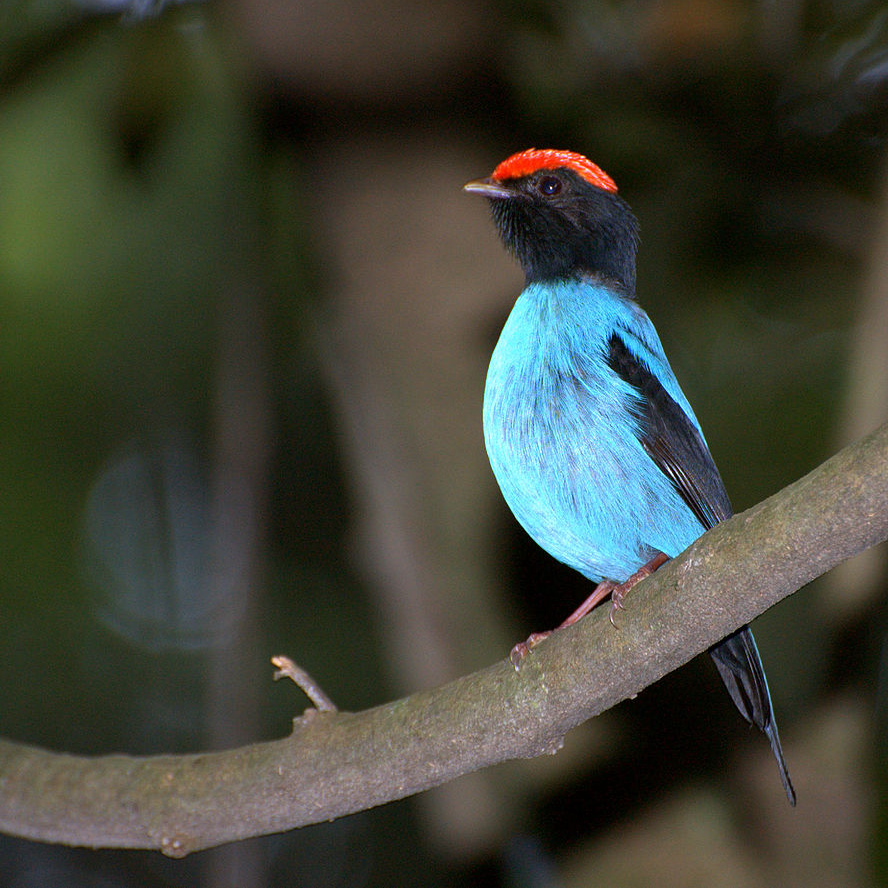
The European Manakin is a small bird, measuring around 10 centimeters in length, with males and females exhibiting distinct plumage differences. Adult males are particularly striking due to their bright red crowns, black upperparts, and contrasting white underparts. Their wings and tail are also black, providing a sharp contrast to their vibrant head. In comparison, females and juveniles are more subdued, displaying olive-green plumage with hints of yellow on the belly. This coloration provides excellent camouflage in the forest understory. One of the most distinguishing features of the Pipra europaea is its rounded head and short tail, combined with a sturdy, slightly curved bill adapted for fruit consumption. In flight, the European Manakin presents a compact silhouette with rapid, fluttering wing beats typical of the Pipridae family. When perched, they often hold a slightly hunched posture, accentuating their small size and distinctive head shape. While there are other manakin species with similar features, the vibrant red crown of the male European Manakin is a reliable field mark that sets it apart from other birds in its habitat.
Having trouble telling birds apart? Upload a photo to our bird identification tool for an instant species match.
Pipra europaea Habitat and Range
Preferred Habitat
Pipra europaea resides primarily in the tropical lowland rainforests of the Amazon Basin. They favor dense, humid understory environments where the canopy provides ample cover. These areas are rich in fruiting trees, which are critical for their diet. This bird is typically found at elevations ranging from sea level to about 1000 meters. The European Manakin shows a preference for intact forest regions, though they can occasionally be found in secondary growth forests. Unlike some other birds in the region, they do not usually venture into urban areas, remaining tied to the lush forest environments that provide their primary food sources and breeding grounds. During the wet season, they may move slightly within the forest to follow fruiting patterns, but they generally remain year-round in the same regions.
Geographic Range
The Pipra europaea's range primarily includes the Amazon Basin, with a presence noted in Brazil, Peru, Colombia, and parts of Ecuador. Within these countries, they are most commonly observed in the expansive lowland rainforests, particularly in areas where fruiting trees are abundant. They do not engage in long-distance migration, typically remaining within their home range throughout the year. This sedentary lifestyle facilitates consistent observations of their behavior and population dynamics. Population densities are highest in regions with undisturbed primary forests, where food resources are plentiful and predation pressures are balanced. Although not migratory, some local movements occur in response to seasonal changes in fruit availability.
Want to know which birds visit your area? Browse our backyard birds by location guides for region-specific species lists.
What Does the Pipra europaea Eat?
The European Manakin's diet primarily consists of a wide variety of fruits, which they adeptly pluck while hovering or perching. They favor small, fleshy fruits and are particularly drawn to those that are brightly colored, which suggests a reliance on visual cues for foraging. During the dry season, when fruit is scarcer, they may supplement their diet with small insects and arthropods, providing necessary protein. This opportunistic feeding behavior ensures they meet their nutritional needs year-round. Their foraging techniques involve short flights within the forest understory, a behavior that minimizes exposure to predators and allows efficient energy conservation. They typically feed during the cooler morning and late afternoon hours, aligning their activity with periods of higher fruit availability and reduced predation risk.
Pipra europaea Behavior and Social Structure
Pipra europaea displays fascinating social and territorial behaviors, particularly during the breeding season. Males are known for their elaborate courtship displays, which involve intricate dances, wing snaps, and vocalizations performed on specific display grounds known as leks. These lekking behaviors are crucial for attracting females and establishing dominance among males. Outside of the breeding season, European Manakins are relatively solitary, though they may form small groups when foraging. Territorial aggression is most noticeable during the mating season, as males defend their display areas fiercely. Their response to predators involves rapid escape flights to dense foliage, utilizing their agility and small size to evade capture. Daily activities are divided between foraging, preening, and resting, with peak activity occurring during the cooler parts of the day.
Pipra europaea Nesting and Reproduction
European Manakins build their nests in the dense understory of tropical forests, preferring sites well-concealed by foliage. The nest is a small, cup-like structure constructed primarily from leaves, twigs, and fine plant fibers, often lined with softer materials like moss or feathers. Females typically lay one to two eggs per clutch, which are incubated solely by the female for approximately 16 to 18 days. Nestlings remain in the nest for about 15 to 20 days before fledging. Parental care is primarily the responsibility of the female, who feeds and protects the chicks until they are independent. The species generally produces one to two broods per year, depending on environmental conditions and food availability.
Pipra europaea Sounds and Vocalizations
The primary song of the European Manakin is a series of sharp, high-pitched notes that rise in both pitch and speed, creating a distinctive 'tzeet-tzeet-tzeet' sound. These vocalizations are primarily used by males during courtship displays at leks, serving to attract females and establish territory. Their call notes, often heard as short 'pip' or 'tik' sounds, are used for communication between individuals. In alarm situations, they emit a rapid, chattering call that serves to alert others to the presence of potential threats. The dawn chorus in their habitat is marked by these lively and rhythmic songs, adding a vibrant auditory layer to the forest environment.
Interesting Facts About the Pipra europaea
- 1Male European Manakins can spend several hours a day performing courtship displays during the breeding season.
- 2The Pipra europaea is part of a family known for having some of the most complex courtship displays among birds.
- 3Despite their small size, European Manakins play a large role in seed dispersal, aiding in forest regeneration.
- 4They are one of over 60 species of manakins, many of which are known for their vivid coloration and unique behaviors.
- 5European Manakin males develop their striking red plumage at about two years of age, signaling maturity and readiness to breed.
Pipra europaea Conservation Status
The Pipra europaea is currently listed as Least Concern by the IUCN, with a stable population trend. Despite ongoing threats from habitat loss due to logging and agricultural expansion, they have managed to maintain viable populations in protected areas. Conservation efforts focus on preserving large tracts of primary rainforest, which are essential for their survival. Historically, their populations have fluctuated in response to habitat changes, but recent efforts to establish conservation zones have helped stabilize numbers. Continued monitoring and habitat protection are crucial to ensuring the long-term survival of this species.
Other Pipridae Species


Birds Similar to the Pipra europaea
These species are often confused with the Pipra europaea due to similar appearance or overlapping range.

