
Pipra pectoralis
Pipra pectoralis
Order: Passeriformes / Family: Pipridae
About the Pipra pectoralis
The Pipra pectoralis, commonly referred to as the Crimson-hooded Manakin, is a small passerine bird that belongs to the family Pipridae. This striking bird is primarily found in lowland tropical forests of northeastern South America, particularly in countries such as Venezuela, Guyana, Suriname, and northern Brazil. The Crimson-hooded Manakin plays a significant ecological role as a frugivore, aiding in seed dispersal which contributes to forest regeneration and biodiversity maintenance. Unlike many other birds, the Pipra pectoralis exhibits a relatively stable population trend, benefiting from the dense, humid forests that have remained relatively untouched in parts of its range.
The vibrant plumage of the male Crimson-hooded Manakin, with its bright red head and contrasting black body, makes it a favorite among bird watchers and ornithologists alike. This species is a classic example of sexual dimorphism, where males are far more visually striking than females, who sport a more subdued olive-green coloration. The striking appearance of the males plays a key role during courtship displays, where they perform elaborate dances and vocalizations to attract mates.
Ecologically, the Pipra pectoralis is important for its seed dispersal activities. By consuming a variety of fruits, this manakin helps maintain the plant diversity of its habitat, which in turn supports a wide array of other wildlife. Its presence in the ecosystem underscores the interconnectedness of tropical forest inhabitants. Despite its stable population, the Crimson-hooded Manakin remains vulnerable to habitat destruction, particularly from logging and agricultural expansion. Conservation efforts focused on protecting large tracts of forest habitat are crucial to ensuring the continued survival of this visually stunning species.
The Pipra pectoralis belongs to the family Pipridae, within the order Passeriformes. These birds typically live average 7 years, with a maximum recorded of 10 years.
How to Identify a Pipra pectoralis
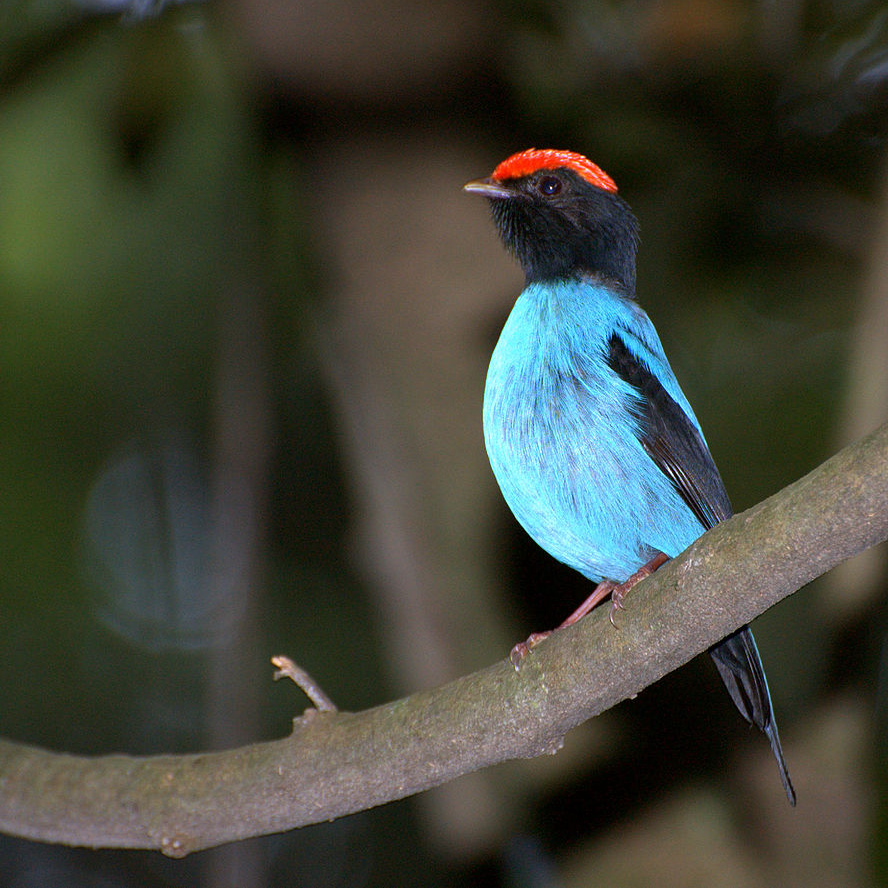
The Crimson-hooded Manakin, or Pipra pectoralis, presents a striking appearance, particularly in the males. Adult males are notable for their brilliant red head and nape, which starkly contrast with their glossy black bodies and wings. This coloration serves as a key identification mark in the field. Females and juveniles differ markedly, exhibiting a more muted olive-green plumage that provides effective camouflage in their dense forest environment.
In terms of physical structure, the male's vibrant coloration is complemented by a short, stout bill and relatively short wings and tail. The flight silhouette of the Crimson-hooded Manakin is compact, with a rapid, direct flight pattern typical of small passerines. When perched, they often sit upright, showcasing their distinct color contrast.
Confusion with other species primarily arises with other manakins that share overlapping ranges, such as the White-bearded Manakin. However, these species differ clearly in coloration and vocalizations. Observing the behavior and habitat, alongside the distinct plumage, can aid in confirming identification. The Crimson-hooded Manakin is rarely mistaken for other birds due to its unique and vibrant coloration.
Having trouble telling birds apart? Upload a photo to our bird identification tool for an instant species match.
Pipra pectoralis Habitat and Range
Preferred Habitat
Pipra pectoralis thrives in the lowland tropical forests of northeastern South America. These habitats include the evergreen forests of Venezuela, Guyana, Suriname, and northern Brazil. Within these regions, the bird prefers dense, humid forest interiors with a high canopy cover, which provides both food sources and protection from predators.
Typically found at elevations ranging from sea level to about 900 meters, the Crimson-hooded Manakin shows little seasonal habitat shift, remaining year-round within the dense forest. While predominantly a denizen of pristine forests, they can occasionally be spotted in secondary growth areas if the canopy remains sufficiently dense.
Urban presence is minimal, as this species avoids open, fragmented areas. Conservation of their natural forest habitat is vital, as these birds are highly dependent on intact ecosystems for survival. Their preference for dense forest interiors makes them less adaptable to disturbed habitats.
Geographic Range
The Crimson-hooded Manakin, or Pipra pectoralis, primarily inhabits northeastern South America. It is found in countries such as Venezuela, Guyana, Suriname, and northern Brazil. These regions provide the dense forest ecosystems vital for their survival and reproductive success.
This manakin is resident throughout its range, not undertaking significant migratory movements. Instead, it remains within its home range year-round, benefiting from the relatively stable climate and abundant resources provided by the forest.
Population densities of Pipra pectoralis are highest in undisturbed forest areas where the bird's preferred fruiting trees are plentiful. Human activities such as deforestation and habitat fragmentation can lead to localized declines, but where forest habitats remain intact, the species is relatively common.
Want to know which birds visit your area? Browse our backyard birds by location guides for region-specific species lists.
What Does the Pipra pectoralis Eat?
The diet of the Crimson-hooded Manakin primarily consists of fruits, making it an important frugivore in its ecosystem. Berries and small fruits from understory shrubs and trees dominate its diet, with the bird playing a crucial role in seed dispersal.
Seasonal changes in fruit availability influence its diet, though the consistent fruiting of many tropical forest plants ensures a steady food supply year-round. This manakin tends to forage solitarily or in small groups, often seen hopping between branches in search of ripe fruits.
While the focus is on fruits, they occasionally consume small insects, particularly during the breeding season when protein demands increase. This opportunistic feeding strategy ensures they meet their nutritional needs even when fruit supplies are temporarily low. Their foraging activity peaks during the early morning and late afternoon, aligning with periods of cooler temperatures and increased insect activity.
Pipra pectoralis Behavior and Social Structure
The social structure of the Crimson-hooded Manakin is characterized by a fascinating display of lekking behavior. Males gather in communal display areas, or leks, where they perform elaborate courtship displays involving complex dance routines and vocalizations to attract females. This behavior is a spectacle of bright plumage and synchronized movements, underscoring the importance of visual communication in this species.
Territorial behavior is minimal outside of the lek, with males focusing their energy on impressing females rather than defending territories. Females, meanwhile, evaluate males based on their displays, selecting mates based on performance and plumage quality.
Daily activity patterns reveal that the Crimson-hooded Manakin is most active during the cooler parts of the day, with foraging and display activities peaking in the morning and late afternoon. The species exhibits a strong reaction to predators, employing rapid, direct flight to dense cover when threatened. Flocking is rare outside the breeding season, with individuals typically seen alone or in small groups.
Pipra pectoralis Nesting and Reproduction
The Crimson-hooded Manakin builds its nest in the dense understory of its forest habitat. The nest is a small, cup-shaped structure constructed from twigs, leaves, and other plant materials, often bound together with spider silk for added stability.
Preferred nest sites are typically located in the fork of a tree or shrub, usually 1 to 3 meters above the ground. Such placement offers protection from ground predators while providing easy access to food sources.
The typical clutch size consists of two eggs, which the female incubates alone over a period of approximately 18-21 days. During this time, the male continues to participate in lekking activities, leaving the female responsible for all nesting duties.
Once hatched, the young are cared for by the female, who feeds them regurgitated fruits and insects. The fledging period lasts about 15-20 days, after which the juveniles become independent. The species generally has one brood per year, aligning with peak fruit availability.
Pipra pectoralis Sounds and Vocalizations
The vocal repertoire of the Crimson-hooded Manakin includes a primary song that is a series of high-pitched, rapid whistles, often described as sounding like the whirring of a spinning top. These calls are particularly prominent during lekking displays, where males use them to attract females and compete with other males.
Call notes outside the breeding season are less conspicuous, consisting of simple clicks and chirps. Alarm calls, used in response to predators, are sharp and abrupt, serving to alert nearby individuals.
During the dawn chorus, the Crimson-hooded Manakin's song blends with those of other forest birds, creating a symphony of sounds unique to tropical forests. Comparatively, its calls lack the melodic complexity found in many songbirds, instead relying on rhythm and persistence to communicate.
Interesting Facts About the Pipra pectoralis
- 1The Crimson-hooded Manakin performs complex courtship dances, a behavior known as lekking, where males gather and display to attract females.
- 2Despite their small size, these birds play a crucial role in seed dispersal, aiding forest regeneration and plant diversity.
- 3The vibrant red plumage of the male Crimson-hooded Manakin is a result of carotenoid pigments obtained from their fruit-based diet.
- 4Females choose mates based on their courtship displays, selecting males with the most impressive dances and brightest plumage.
- 5The species' reliance on intact forests makes it a valuable indicator of forest health and ecosystem stability.
- 6Crimson-hooded Manakins are one of the few bird species where males invest little in offspring care, focusing instead on mating displays.
- 7Their lekking behavior is so energetically demanding that males spend more time displaying than foraging during the breeding season.
Pipra pectoralis Conservation Status
The IUCN currently classifies the Crimson-hooded Manakin as Least Concern, reflecting a stable population despite localized threats. Habitat loss due to deforestation and agricultural expansion poses the primary threat to this species, as it relies heavily on intact forest ecosystems. Conservation efforts focus on protecting large expanses of forest in northeastern South America to ensure continued habitat availability. These efforts are crucial in regions experiencing rapid deforestation. Historically, the population of Pipra pectoralis has remained relatively stable due to the vast, undisturbed forest areas in its range. Continued efforts to monitor population trends and habitat health are essential to maintaining this status.
Other Pipridae Species


Birds Similar to the Pipra pectoralis
These species are often confused with the Pipra pectoralis due to similar appearance or overlapping range.
