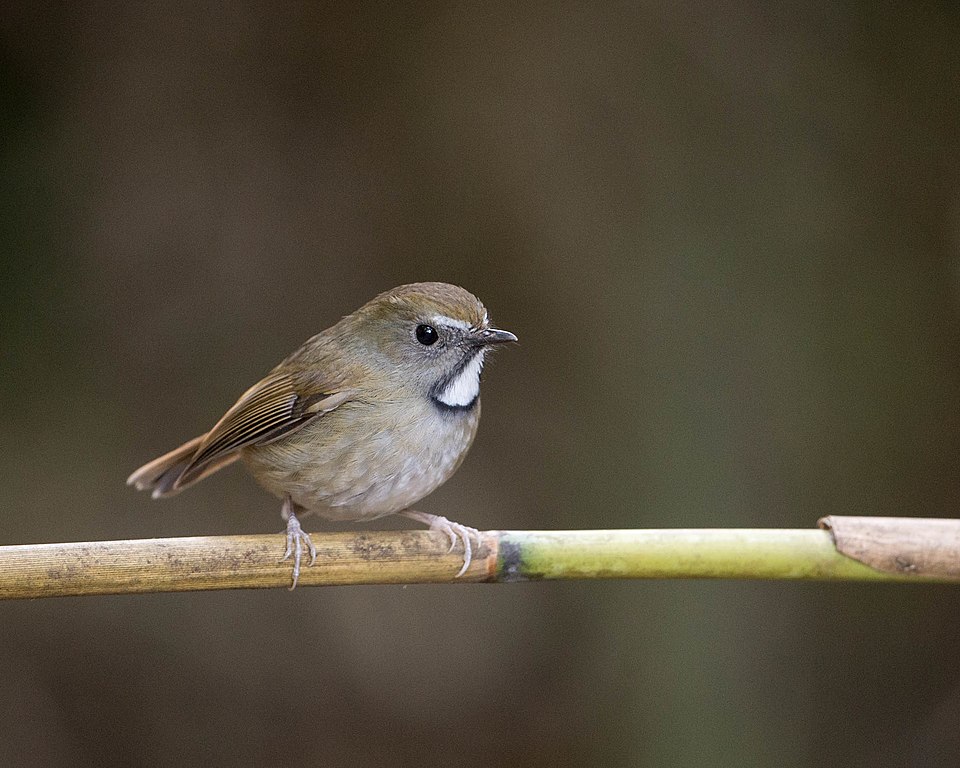
Red-breasted Wheatear
Oenanthe bottae
Order: Passeriformes / Family: Muscicapidae

Wikimedia Commons
About the Red-breasted Wheatear
The Red-breasted Wheatear, scientifically known as Oenanthe bottae, is a small passerine bird belonging to the family Muscicapidae. This species is particularly distinguished by its vibrant red breast, which sets it apart from other wheatears. The Red-breasted Wheatear is primarily found in the highland regions of northeastern Africa, with its range extending into parts of the Arabian Peninsula. It thrives in rocky outcrops and mountainous terrains, where it can often be seen perched prominently on rocks. Its presence in these regions underscores its adaptability to relatively arid environments, a trait that has allowed it to flourish where other birds might struggle. During the breeding season, which typically spans from March to July, the Red-breasted Wheatear becomes highly territorial. Males are known for their elaborate song displays, which serve to both attract mates and deter rivals. These displays are crucial during the early spring when competition for breeding sites is at its peak. Outside the breeding season, this wheatear may form small flocks, especially when foraging. The ecological role of the Red-breasted Wheatear is significant within its habitat. As a predator of insects, it helps to control populations of various arthropods, thus maintaining a balance in the ecosystem. It also serves as prey for larger birds of prey, making it an integral component of the food web in its native regions. The Red-breasted Wheatear's ability to inhabit and exploit the rocky highlands is a testament to its evolutionary success and resilience. Although not currently considered at risk of extinction, ongoing monitoring of its population is essential, particularly in areas where habitat loss could pose future challenges.
The Red-breasted Wheatear belongs to the family Muscicapidae, within the order Passeriformes. These birds typically live average 4 years with max recorded 7 years..
How to Identify a Red-breasted Wheatear
Identifying the Red-breasted Wheatear involves noting several distinctive features. Adults display a striking red chest contrasted with a pale gray back, a feature that is especially prominent in males during the breeding season. The wings and tail are darker, providing a contrast to the lighter body. The underparts are primarily white, which can be seen when the bird is in flight. Juveniles, on the other hand, exhibit a more subdued coloration, with less pronounced red on the breast and a generally mottled appearance. Both sexes have a similar wing structure, but the males are often more vibrant. In terms of size, the Red-breasted Wheatear measures about 14 to 15 cm in length, with a wingspan reaching 26 to 28 cm. When perched, this wheatear often adopts an upright, alert posture, making it easier to spot amid the rocks and shrubs of its habitat. Confusion with similar species, such as the Northern Wheatear, can occur, but the red breast of Oenanthe bottae is a key distinguishing feature. In flight, its silhouette is characterized by pointed wings and a relatively short tail, which aids in swift, agile movements.
Having trouble telling birds apart? Upload a photo to our bird identification tool for an instant species match.
Red-breasted Wheatear Habitat and Range
Preferred Habitat
The preferred habitat of the Red-breasted Wheatear includes rocky highlands and mountainous terrains. These areas provide ample perching spots and an abundance of insect prey. The bird can be found at elevations ranging from 1,500 to 3,000 meters, where it takes advantage of the varied terrain. It is most commonly associated with regions in Ethiopia, Eritrea, and parts of the Arabian Peninsula. Seasonal habitat shifts are minimal, as the Red-breasted Wheatear is largely sedentary, residing year-round in its chosen habitat. While it favors rocky and open landscapes, it can occasionally be found on the fringes of towns and villages, especially during the non-breeding season when it might venture into slightly more urbanized areas in search of food.
Geographic Range
The range of the Red-breasted Wheatear is largely confined to northeastern Africa, with its core population in Ethiopia and Eritrea. It is also found in smaller numbers on the Arabian Peninsula, particularly in Yemen and southwestern Saudi Arabia. Unlike many of its migratory relatives, this wheatear is mostly sedentary, remaining in its breeding range throughout the year. The highland regions where it resides are characterized by rocky outcrops and sparse vegetation, providing ideal conditions for both nesting and foraging. Population densities tend to be highest in areas where these environmental conditions are optimal, although the bird can be locally common in suitable habitats.
Want to know which birds visit your area? Browse our backyard birds by location guides for region-specific species lists.
What Does the Red-breasted Wheatear Eat?
The Red-breasted Wheatear primarily consumes a diet of insects, making it an adept insectivore. Beetles, ants, and small caterpillars form the bulk of its diet. During the breeding season, when insect availability peaks, it may also feed on spiders and other small arthropods. The wheatear employs a foraging technique characterized by short, sudden flights from a perch to capture prey on the ground or in the air. This behavior is facilitated by its agile flight and quick movements. While its diet remains consistent throughout the year, slight variations occur as it opportunistically feeds on whatever insects are most abundant in its environment. The bird typically forages during daylight hours, with peak feeding activity occurring in the early morning and late afternoon.
Red-breasted Wheatear Behavior and Social Structure
The Red-breasted Wheatear exhibits a range of behaviors that are both fascinating and indicative of its adaptation to its environment. This species is generally solitary or found in pairs, especially during the breeding season. Males establish and defend territories vigorously, often engaging in song displays and aerial chases to ward off intruders. Courtship displays are elaborate, involving both vocalizations and physical displays. Outside the breeding season, the wheatear may be observed in small, loose flocks, particularly when foraging. The bird's response to predators includes a rapid, erratic flight pattern designed to evade capture. Daily activity patterns show that the Red-breasted Wheatear is most active in the early morning and late afternoon, avoiding the heat of midday in its arid habitats.
Red-breasted Wheatear Nesting and Reproduction
The nesting habits of the Red-breasted Wheatear involve selecting a site that offers both protection and proximity to food sources. Nests are typically built in crevices or under rocks, using materials such as grass, twigs, and feathers. The female lays a clutch of 3 to 5 eggs, which she incubates for approximately 13 to 15 days. Both parents participate in feeding the chicks, which fledge about 15 to 18 days after hatching. The Red-breasted Wheatear generally produces one brood per year, although in optimal conditions, a second brood may be attempted. Parental roles are well-defined, with the female primarily responsible for incubation and the male assisting with feeding and territory defense.
Red-breasted Wheatear Sounds and Vocalizations
The Red-breasted Wheatear's primary song is a melodious series of whistles and trills, often delivered from a prominent perch. The rhythm is varied, with high-pitched notes interspersed with softer, melodic phrases. Call notes are sharp and distinctive, serving as a means of communication between mates or to alert others of potential threats. Alarm calls are more urgent and rapid, designed to warn of nearby predators. During the dawn chorus, the Red-breasted Wheatear's song can be heard resonating across its rocky habitat, adding to the vibrant soundscape of the early morning.
Interesting Facts About the Red-breasted Wheatear
- 1The Red-breasted Wheatear can often be seen perching on rocks, using its vantage point to spot insects below.
- 2Males of the species are known for their vibrant red plumage, which becomes most pronounced during the breeding season.
- 3Despite being primarily insectivorous, the Red-breasted Wheatear may occasionally consume small seeds.
- 4This wheatear's ability to thrive in arid, rocky environments highlights its adaptability as a species.
- 5The bird's song is a complex mix of whistles and trills, often used to establish territory and attract mates.
Red-breasted Wheatear Conservation Status
The Red-breasted Wheatear is currently listed as a species of Least Concern by the IUCN, with a stable population trend. Its wide distribution across suitable habitats in northeastern Africa and the Arabian Peninsula helps buffer it against localized threats. However, habitat degradation due to agricultural expansion and urban development poses potential risks. Conservation efforts focus on habitat protection and monitoring population trends to ensure that this species remains plentiful. Historically, the wheatear has maintained steady population levels, but ongoing vigilance is necessary to prevent future declines.