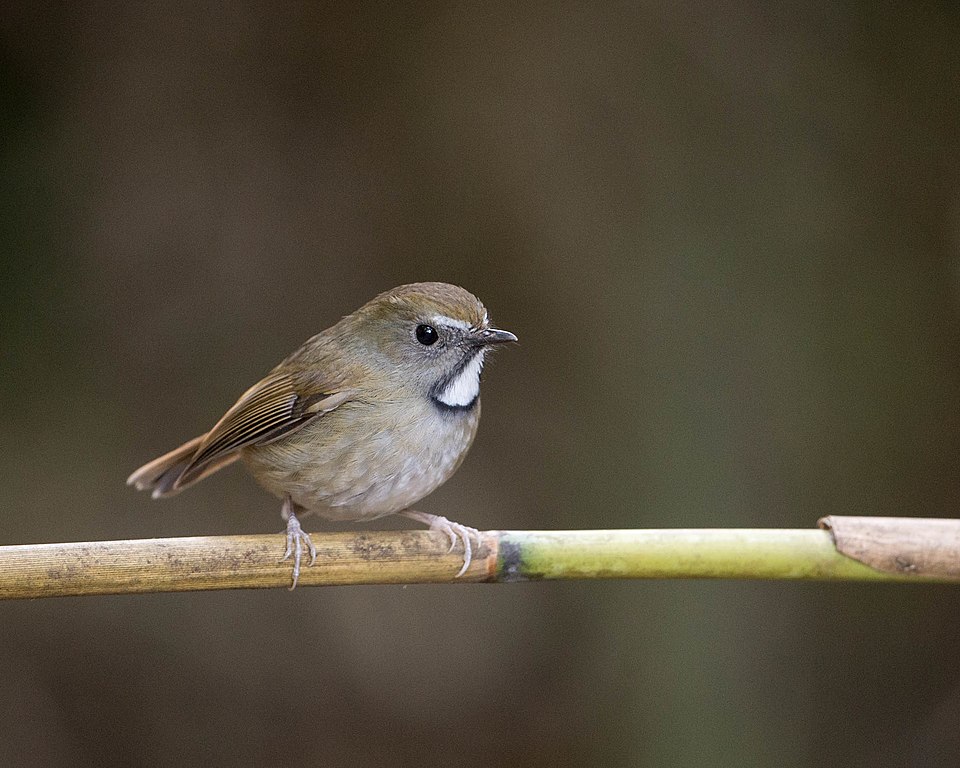
Red-flanked Bluetail
Tarsiger cyanurus
Order: Passeriformes / Family: Muscicapidae

Wikimedia Commons
About the Red-flanked Bluetail
The Red-flanked Bluetail, Tarsiger cyanurus, is a captivating member of the Muscicapidae family, celebrated for its striking appearance and enchanting presence across northern Eurasia. This small songbird, measuring about 13 to 14 centimeters in length, is instantly recognizable by its vibrant blue tail and wings, juxtaposed with bright orange-red flanks, lending it a distinctive and attractive plumage pattern. The Red-flanked Bluetail occupies an important ecological niche, serving as both predator and prey within its habitat. It plays a role in controlling insect populations while also being a vital food source for larger birds and mammals. This bird's presence is a marker of healthy, biodiverse ecosystems, often indicating well-preserved forest habitats. Found across the boreal forests of Siberia, this species breeds in coniferous woodlands, particularly favoring dense stands of spruce and birch. During the breeding season, which spans from May to July, the Red-flanked Bluetail is typically secretive and elusive, often heard before it is seen. Its song, a melodious series of sweet, fluting notes, echoes through the forest canopy, contributing to the soundscape of these northern habitats. As autumn approaches, the Red-flanked Bluetail embarks on a remarkable migratory journey, traveling south to wintering grounds in East and Southeast Asia. This migration, covering thousands of kilometers, sees the bird navigating a variety of landscapes, from open steppes to mountainous regions. Throughout its migratory corridor, the Red-flanked Bluetail adapts to various habitats, showcasing its ecological flexibility. While primarily associated with forested regions, it can also be found in open woodlands and scrub during migration, highlighting its adaptability. The Red-flanked Bluetail's ecological importance, striking appearance, and seasonal migrations make it a species of significant interest to ornithologists and birdwatchers alike. Its presence is not only a testament to the health of its natural habitats but also a reminder of the intricate web of life that sustains these ecosystems.
The Red-flanked Bluetail belongs to the family Muscicapidae, within the order Passeriformes. These birds typically live typically around 5 years with a maximum recorded of 10 years..
How to Identify a Red-flanked Bluetail
Identifying the Red-flanked Bluetail, Tarsiger cyanurus, involves noting several key field marks. Adult males boast a stunning blue coloration on the tail and wings, contrasted by the vivid orange-red flanks that give the bird its name. The rest of the body is primarily a soft grayish-brown, with a lighter underside. Females and juveniles, while less vivid, display a more subdued palette. Females have a duller blue on the tail and wings and a more muted orange on the flanks, often appearing grayish overall. Juveniles resemble females but lack the blue tones, featuring a mostly brown plumage with faint reddish hints on the flanks. The Red-flanked Bluetail can be confused with similar species such as the Bluethroat, but the latter has more extensive reddish underparts and a distinct throat patch. In flight, the Red-flanked Bluetail shows a compact silhouette with rounded wings and a slightly forked tail. When perched, it often holds its tail slightly cocked, a behavior characteristic of this species.
Having trouble telling birds apart? Upload a photo to our bird identification tool for an instant species match.
Red-flanked Bluetail Habitat and Range
Preferred Habitat
The Red-flanked Bluetail inhabits a range of forest types across Eurasia, with a preference for mature coniferous and mixed woodlands. It thrives in dense undergrowth where it finds ample cover and foraging opportunities. During the breeding season, it occupies boreal forests, often at elevations ranging from 500 to 2,000 meters, depending on the local geography. In winter, the species shifts to lower elevations, frequenting subtropical forests, bamboo thickets, and scrublands in East and Southeast Asia. It shows a remarkable adaptability, occasionally appearing in urban parks and gardens during migration.
Geographic Range
The breeding range of the Red-flanked Bluetail spans the vast boreal forests of northern Eurasia, predominantly across Siberia. It is a migratory species, traveling to wintering grounds in countries such as China, Japan, Korea, and parts of Southeast Asia, including Vietnam and Thailand. During migration, the Red-flanked Bluetail follows a southeasterly route, passing through Mongolia and northeastern China. Population density is highest in pristine forest areas of Siberia, while winter populations are concentrated in the subtropical regions of southern China and northern Vietnam.
Want to know which birds visit your area? Browse our backyard birds by location guides for region-specific species lists.
What Does the Red-flanked Bluetail Eat?
The diet of the Red-flanked Bluetail primarily consists of insects and other arthropods, which it actively forages from foliage and the forest floor. During the breeding season, it focuses on caterpillars, beetles, and spiders, providing a high-protein diet for its young. In winter, as insect availability decreases, the bird supplements its diet with berries and small fruits. Its foraging technique involves sallying from perches to catch flying insects or gleaning from leaves and branches. The Red-flanked Bluetail feeds throughout the day, with peaks in activity during early morning and late afternoon.
Red-flanked Bluetail Behavior and Social Structure
The Red-flanked Bluetail exhibits a solitary and territorial nature during the breeding season, with males establishing and defending territories through song and displays. Courtship involves males performing aerial displays and singing persistently to attract females. Once paired, the birds remain monogamous for the season. Outside the breeding period, the species becomes more social, often forming loose flocks during migration and in wintering areas. It responds to predators with alarm calls and evasive flight, seeking dense cover for protection. The Red-flanked Bluetail is diurnal, showing peak activity during dawn and dusk, a common trait among many forest-dwelling birds.
Red-flanked Bluetail Nesting and Reproduction
The nesting habits of the Red-flanked Bluetail involve constructing a cup-shaped nest, typically located on or near the ground. Nests are made from moss, grass, and leaves, lined with finer materials such as feathers and hair. Preferred nesting sites include dense thickets and sheltered spots near the base of trees. The clutch size ranges from four to six eggs, with an incubation period of about 12 to 14 days. Both parents participate in feeding the chicks, which fledge approximately two weeks after hatching. The species generally produces one brood per year, though in favorable conditions, a second brood may occur.
Red-flanked Bluetail Sounds and Vocalizations
The primary song of the Red-flanked Bluetail is a series of soft, melodious whistles, often described as fluting in quality. These phrases are repeated in a clear, rhythmic pattern, usually delivered from a concealed perch within the forest. Call notes include a short, sharp 'tick' or 'chuck' used in communication between mates or as an alarm signal. During the dawn chorus, the Red-flanked Bluetail contributes with its gentle, sweet song, adding to the symphony of forest sounds. Its vocalizations are reminiscent of those of the European Robin, though typically softer and less varied.
Interesting Facts About the Red-flanked Bluetail
- 1The Red-flanked Bluetail was once considered a rare vagrant in Western Europe but has been observed more frequently in recent years.
- 2Unlike many songbirds, the Red-flanked Bluetail does not form large flocks during migration, often traveling in small groups or alone.
- 3The species was formerly classified under the thrush family (Turdidae) before being reclassified as a member of the Muscicapidae family.
- 4A Red-flanked Bluetail can live for over ten years in the wild, a relatively long lifespan for a small passerine.
- 5The bird's striking coloration serves as camouflage in the dappled light of its forest habitat, helping it evade predators.
- 6Red-flanked Bluetails have been known to hybridize with closely related species, such as the Himalayan Bluetail, in overlapping regions.
- 7The species' migratory behavior is influenced by photoperiod, with daylight length signaling the onset of migration.
Red-flanked Bluetail Conservation Status
The Red-flanked Bluetail currently holds a conservation status of Least Concern according to the IUCN. The population trend appears stable, with no major declines reported across its range. Primary threats include habitat loss due to logging and land conversion, though large tracts of its breeding range remain relatively undisturbed. Conservation efforts focus on preserving forest habitats and monitoring population trends. Historically, this species has maintained a stable presence, adapting to changing landscapes across its range.