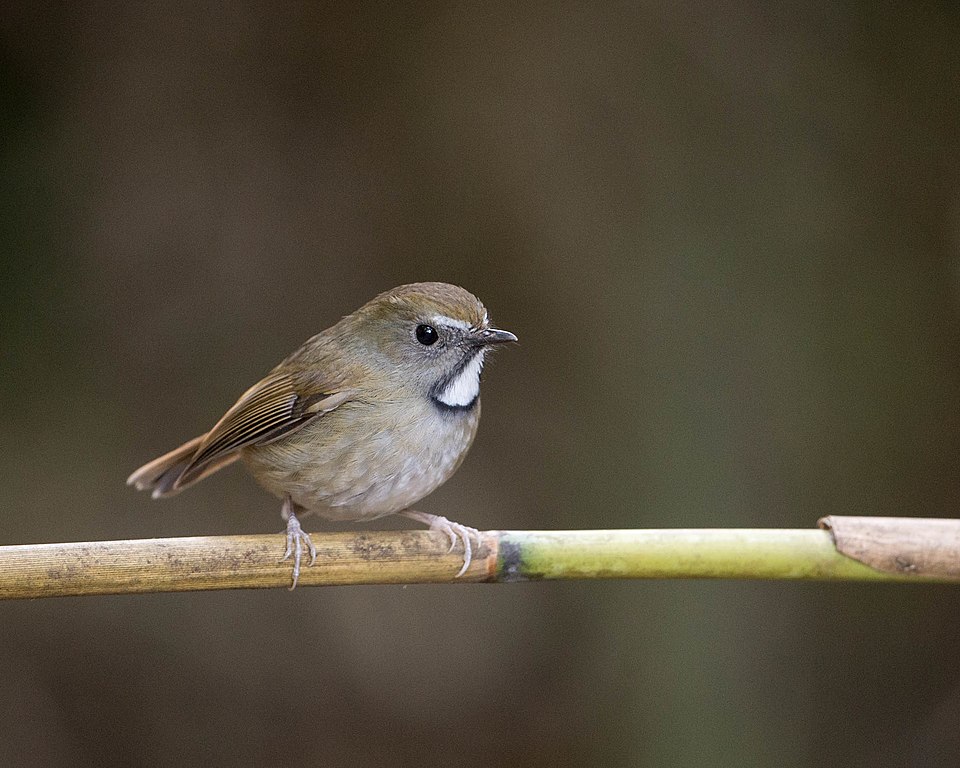
Red-rumped Wheatear
Oenanthe moesta
Order: Passeriformes / Family: Muscicapidae

Wikimedia Commons
About the Red-rumped Wheatear
The Red-rumped Wheatear (Oenanthe moesta) is a captivating member of the Muscicapidae family, displaying a remarkable adaptation to its arid and semi-arid environments. This species primarily occupies regions in North Africa, including countries such as Morocco, Algeria, and Tunisia, extending its range into some parts of the Middle East. The Red-rumped Wheatear plays a vital ecological role in these dry landscapes, participating in the control of insect populations and acting as a prey species for larger avian predators.
During the breeding season, which typically spans from March to July, the Red-rumped Wheatear is an active participant in the ecosystem, showcasing its adaptability to harsh desert climates. The bird is primarily sedentary, but some local movements occur in response to food availability and climatic conditions. The Red-rumped Wheatear's presence in these regions also contributes to the biodiversity of the area, supporting a complex web of life in the desert biome.
The species is notable for its ground-dwelling habits, favoring open, rocky terrain with sparse vegetation. This habitat preference allows it to efficiently forage for insects and other small invertebrates, which constitute the bulk of its diet. The Red-rumped Wheatear's ability to thrive in such an inhospitable environment underscores its evolutionary success and importance as a bioindicator for the health of arid ecosystems. Observing the Red-rumped Wheatear provides valuable insights into the dynamics of desert ecology and the interconnectedness of species within these regions.
The Red-rumped Wheatear belongs to the family Muscicapidae, within the order Passeriformes. These birds typically live average 4-6 years, with a maximum recorded of 8 years..
How to Identify a Red-rumped Wheatear
The Red-rumped Wheatear is a small passerine bird characterized by its striking plumage and distinctive markings. Adult males typically exhibit a pale sandy-brown coloration on the upperparts, with a contrasting white underbelly. The most distinguishing feature is the prominent red rump, which becomes particularly visible during flight. Males also display a black mask extending from the beak through the eyes, enhancing their striking appearance.
Females and juveniles differ slightly in appearance, with females showing a more subdued coloration and lacking the pronounced black mask found in males. Juveniles, on the other hand, tend to have a more mottled appearance as their plumage develops. Despite these differences, all age groups share the species' characteristic red rump.
In comparison to similar species, the Red-rumped Wheatear can be confused with the Northern Wheatear; however, the latter lacks the red rump and exhibits a more uniform coloration. In flight, the Red-rumped Wheatear's silhouette is slender, with rapid wingbeats and agile maneuvers, making it well-suited for its open desert habitat.
Having trouble telling birds apart? Upload a photo to our bird identification tool for an instant species match.
Red-rumped Wheatear Habitat and Range
Preferred Habitat
The Red-rumped Wheatear primarily inhabits arid and semi-arid regions, favoring open, rocky environments with sparse vegetation. It is commonly found in the foothills and low mountain ranges of North Africa. These areas provide the necessary resources for nesting and foraging while offering protection from predators. The species thrives at elevations ranging from sea level to approximately 1,500 meters, though it is more frequently observed in lower altitudes.
This wheatear shows a marked preference for habitats where it can easily spot and capture prey. It often selects territories that feature scattered rocks and patches of bare ground, which facilitate its ground-based hunting techniques. While generally avoiding densely vegetated areas, the Red-rumped Wheatear occasionally ventures into agricultural lands, particularly during the non-breeding season when food resources in its primary habitat become scarce.
Geographic Range
The Red-rumped Wheatear's range extends across parts of North Africa and the Middle East. It is predominantly resident in countries such as Morocco, Algeria, Tunisia, Libya, and Egypt. In the Middle East, its presence has been recorded in regions like Israel and Jordan. The species is largely sedentary, with populations remaining within their established territories throughout the year, although some local movements occur in response to environmental conditions.
Breeding populations are most concentrated in North Africa's arid and semi-arid regions. During the winter months, the Red-rumped Wheatear may move slightly to lower elevations or areas with more abundant food resources, though these movements are not considered true migrations. In terms of population density, the wheatear is more frequently encountered in open, rocky terrain where its preferred habitat conditions are met.
Want to know which birds visit your area? Browse our backyard birds by location guides for region-specific species lists.
What Does the Red-rumped Wheatear Eat?
The Red-rumped Wheatear primarily feeds on a diet of insects and other small invertebrates, which it adeptly captures through its ground-foraging behavior. Its diet consists mainly of ants, beetles, grasshoppers, and various larvae, reflecting its adaptation to the arid environments it inhabits. The bird's foraging technique is characterized by short flights from a perch or the ground to capture prey, often returning to the same spot to consume its catch.
Seasonal variations in diet occur as the availability of different prey items fluctuates with environmental conditions. During the breeding season, the demand for protein-rich food increases to support the growth of nestlings, prompting the wheatear to intensify its hunting efforts. The Red-rumped Wheatear is primarily diurnal in its feeding habits, with peak activity observed during the cooler morning and late afternoon hours.
Red-rumped Wheatear Behavior and Social Structure
The Red-rumped Wheatear exhibits a range of behaviors that reflect its adaptation to life in arid environments. It is a solitary and territorial bird, with pairs establishing and defending breeding territories during the nesting season. Territorial disputes are often resolved through visual displays and calls rather than physical confrontation.
Courtship displays in this species involve the male performing aerial acrobatics and vocalizations to attract a mate. Once paired, the bond between male and female is typically monogamous for the duration of the breeding season. Outside of the breeding period, the Red-rumped Wheatear remains largely solitary, although loose aggregations may form in areas with abundant food resources.
In response to predators, the Red-rumped Wheatear relies on its agility and speed, often taking flight at the first sign of danger. Its alertness and keen eyesight make it well-equipped to detect and evade potential threats. Daily activity patterns are influenced by temperature, with the bird being most active during cooler periods and seeking shade or shelter during the hottest parts of the day.
Red-rumped Wheatear Nesting and Reproduction
The Red-rumped Wheatear constructs its nest in natural crevices, often among rocks or in abandoned burrows. This choice of nesting site provides protection from predators and harsh environmental conditions. The nest itself is a simple structure composed of grasses, twigs, and other plant materials, lined with softer substances such as feathers or wool to provide comfort for the eggs and young.
A typical clutch consists of 3-5 eggs, which are incubated primarily by the female for a period of around 12-14 days. During this time, the male assists by providing food and guarding the territory. Once hatched, the fledglings remain in the nest for approximately 14-16 days, during which both parents participate in feeding and caring for the young.
The Red-rumped Wheatear generally produces one brood per year, although a second brood may be attempted if conditions are favorable. Parental roles are shared, with both sexes contributing to the success and survival of the offspring.
Red-rumped Wheatear Sounds and Vocalizations
The Red-rumped Wheatear's vocalizations are an integral part of its behavior, particularly during the breeding season. Its primary song is a melodious and rhythmic series of chirps and whistles, often delivered from a prominent perch. This song serves both to attract a mate and to establish territorial boundaries.
In addition to its song, the Red-rumped Wheatear produces a variety of call notes, including short, sharp 'chack' sounds used as contact calls between mates or to signal alarm. The bird is most vocal during the early morning and late afternoon, coinciding with peak activity periods. Its calls can be reminiscent of other wheatear species, though the Red-rumped Wheatear's song is typically more varied and complex in structure.
Interesting Facts About the Red-rumped Wheatear
- 1The Red-rumped Wheatear is named for its distinct red rump, a feature that is particularly noticeable during flight.
- 2This species is well-adapted to desert life, capable of withstanding temperatures that exceed 40 degrees Celsius.
- 3Unlike many passerines, the Red-rumped Wheatear often nests in crevices or burrows, providing protection from predators.
- 4The Red-rumped Wheatear's song is a complex series of notes that can be heard during courtship and territorial disputes.
- 5Despite its small size, the Red-rumped Wheatear is a formidable hunter of insects, using ground-based foraging techniques.
- 6The species is primarily sedentary, with only local movements, making it a reliable indicator of desert ecological health.
- 7In some regions, the Red-rumped Wheatear can be found at elevations up to 1,500 meters, often in rocky mountain foothills.
Red-rumped Wheatear Conservation Status
The conservation status of the Red-rumped Wheatear is currently listed as Least Concern by the IUCN. This classification reflects a stable population trend across its range, with no immediate threats that could result in a significant decline. However, habitat degradation due to agricultural expansion and climate change poses potential long-term risks. Conservation efforts focus on preserving the natural habitats that support the species and mitigating the impacts of human activities. Monitoring programs are in place to track population dynamics, ensuring early detection of any changes in status. Historical data indicate that the Red-rumped Wheatear has maintained stable numbers, largely due to its adaptability to a range of arid environments.