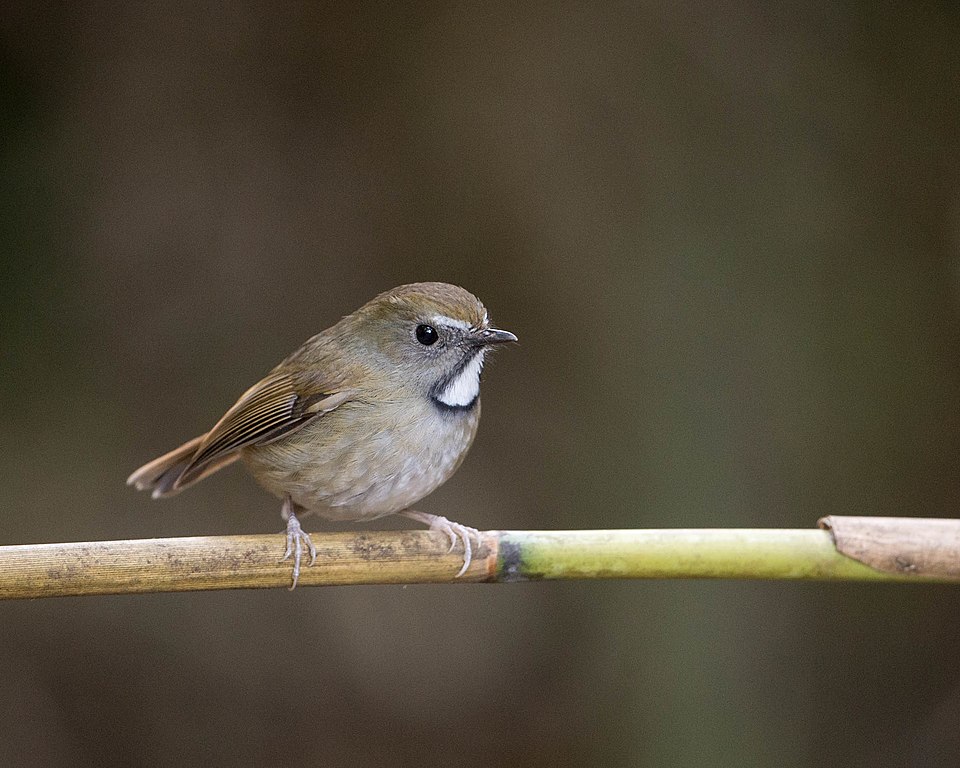
Red-tailed Wheatear
Oenanthe chrysopygia
Order: Passeriformes / Family: Muscicapidae

Wikimedia Commons
About the Red-tailed Wheatear
The Red-tailed Wheatear (Oenanthe chrysopygia) is a small passerine bird belonging to the Muscicapidae family. This species is primarily found in the arid and semi-arid regions of Central Asia, extending its range through the Middle East. Known for its adaptability to harsh environments, the Red-tailed Wheatear occupies rocky hillsides, desert plains, and sparsely vegetated mountain slopes. It plays a crucial role in these ecosystems by controlling insect populations, thus contributing to the ecological balance.
In terms of geographical distribution, the Red-tailed Wheatear is widely spread across countries like Iran, Afghanistan, Pakistan, and northern parts of India. Its range further extends into the Arabian Peninsula, with occasional sightings in more eastern locales. The bird's preference for dry, open habitats often brings it into proximity with human settlements, where it is seen perching on stone walls and rooftops.
The Red-tailed Wheatear is a migratory species, moving seasonally between breeding and wintering grounds. During the breeding season, it inhabits higher altitudes, taking advantage of the cooler climate and abundant insect prey. As winter approaches, it descends to lower elevations where temperatures are milder and food sources remain accessible. This altitudinal migration is a key aspect of its life cycle, ensuring survival in fluctuating environmental conditions.
Ecologically, the Red-tailed Wheatear acts as both a predator and a prey species. Its diet primarily consists of insects and small invertebrates, which it captures through agile foraging behavior. In turn, the wheatear falls prey to larger birds of prey, forming part of a complex food web. Its presence indicates a healthy ecosystem, where predator-prey interactions maintain the natural balance. The Red-tailed Wheatear's nesting habits, territorial behaviors, and adaptability make it a fascinating subject for ornithologists and bird enthusiasts alike.
The Red-tailed Wheatear belongs to the family Muscicapidae, within the order Passeriformes. These birds typically live average 3-5 years with max recorded 7 years..
How to Identify a Red-tailed Wheatear
The Red-tailed Wheatear is a small bird, measuring approximately 14-16 centimeters in length. Adult males and females exhibit subtle differences in plumage, with males typically displaying brighter tones. The upperparts are generally sandy brown, which provides excellent camouflage against rocky backgrounds. The most distinctive feature, as the name suggests, is the bird's red-tinted tail, which contrasts with its otherwise muted coloration.
Juvenile Red-tailed Wheatears resemble adults but tend to have more mottled plumage, aiding in camouflage. Both sexes possess a striking white supercilium, which is a notable field mark. This white stripe stands out against the darker crown and ear coverts, making the bird's head pattern distinct in the field.
In flight, the Red-tailed Wheatear can be identified by its characteristic tail pattern. When spread, the tail reveals a broad, dark terminal band against the reddish hue. This feature is particularly visible when the bird takes off or alights. Perching posture is upright and alert, often with the tail cocked slightly upward, which is typical of wheatears.
The Red-tailed Wheatear might be confused with other wheatear species, particularly the Eastern Black-eared Wheatear. However, its distinct tail coloration and overall paler body help differentiate it. Observers should note the bird's habitat preference and behavior, as these are reliable indicators when identifying wheatears in the field.
Having trouble telling birds apart? Upload a photo to our bird identification tool for an instant species match.
Red-tailed Wheatear Habitat and Range
Preferred Habitat
The Red-tailed Wheatear thrives in arid, rocky environments where vegetation is sparse. It commonly inhabits rocky hillsides, desert plains, and mountain slopes. This bird is often found at elevations ranging from 500 to 3000 meters, depending on the season.
During the breeding season, the Red-tailed Wheatear prefers higher altitudes where cooler temperatures prevail. These locations provide ample nesting sites and a rich supply of insects. In winter, the bird descends to lower altitudes, frequenting desert plains and open scrubland. This seasonal shift ensures access to food and milder conditions.
Though primarily associated with wild terrain, the Red-tailed Wheatear occasionally ventures into urban areas. It can be seen on the outskirts of towns, adapting to human-modified landscapes by nesting in stone walls and utilizing available food resources. Despite its adaptability, the species is less common in densely populated urban centers, favoring quieter, less disturbed habitats.
Geographic Range
The Red-tailed Wheatear's breeding range encompasses the rocky and mountainous regions of Central Asia, specifically in countries like Iran, Afghanistan, and parts of Pakistan. During the breeding season, the bird occupies higher altitudes to take advantage of cooler conditions and abundant insect prey.
As the seasons change, the Red-tailed Wheatear migrates to lower elevations, extending its range southward. In winter, it can be found across the Arabian Peninsula, including parts of Oman and the United Arab Emirates, as well as in the northern regions of India. These wintering grounds provide a stable environment with plentiful food resources during the colder months.
Migration corridors for the Red-tailed Wheatear often follow major mountain ridges and valleys, which offer safe passage between breeding and wintering habitats. Population density tends to be higher in areas where suitable terrain and climate conditions align, particularly in transitional zones between mountains and plains.
While the Red-tailed Wheatear is not considered rare, its population density can vary significantly depending on local habitat conditions. Observers are most likely to encounter this species in regions where rocky outcrops and open landscapes dominate the scenery.
Want to know which birds visit your area? Browse our backyard birds by location guides for region-specific species lists.
What Does the Red-tailed Wheatear Eat?
The Red-tailed Wheatear primarily feeds on insects and small invertebrates, employing a variety of foraging techniques to capture prey. It actively hunts by hopping along the ground, darting after insects with quick, agile movements. The bird's keen eyesight aids in detecting prey, which includes beetles, ants, and spiders.
Seasonal changes significantly influence the Red-tailed Wheatear's diet. During the breeding season, when insect populations are at their peak, the bird's diet consists almost entirely of insects. As the seasons shift and certain insect populations decline, the Red-tailed Wheatear may supplement its diet with berries and seeds, especially in winter.
The Red-tailed Wheatear typically forages during daylight hours, with peak activity occurring in the early morning and late afternoon. These periods align with the cooler parts of the day, allowing the bird to conserve energy while maximizing foraging efficiency.
Prey size varies, but the Red-tailed Wheatear generally targets insects small enough to be swallowed whole. Its foraging behavior is often observed in open areas where it can easily locate and pursue prey. The bird's adaptability in food selection and foraging strategy ensures its survival across diverse and often challenging habitats.
Red-tailed Wheatear Behavior and Social Structure
The Red-tailed Wheatear exhibits a range of behaviors that reflect its adaptability to arid environments. It is primarily a solitary bird, often seen alone or in pairs during the breeding season. Territorial behavior is pronounced, with males establishing and defending territories through vocal displays and physical presence.
Courtship displays among Red-tailed Wheatears involve males performing aerial acrobatics, displaying their brightly colored tails to potential mates. Songs play a critical role in courtship, with males singing from prominent perches to attract females and deter rivals. These displays reinforce pair bonds and establish breeding rights.
In response to predators, the Red-tailed Wheatear relies on its agility and cryptic plumage. When threatened, it may perform distraction displays, feigning injury to draw predators away from nests or fledglings. Flocking behavior is uncommon, though small groups may form during migration when resources are abundant.
Daily activity patterns are dictated by environmental conditions. The Red-tailed Wheatear is most active during cooler parts of the day, avoiding the intense midday heat. This schedule allows the bird to forage efficiently while minimizing energy expenditure. Despite its solitary nature, the Red-tailed Wheatear exhibits complex social interactions during the breeding season, reflecting its adaptability and resilience.
Red-tailed Wheatear Nesting and Reproduction
The nesting habits of the Red-tailed Wheatear are well-adapted to its harsh environment. It typically constructs its nest in crevices or small cavities within rocky outcrops. These locations provide protection from predators and extreme weather conditions.
Nests are small and cup-shaped, composed of grass, twigs, and other plant materials. The lining is often softer, using feathers or fine grass to provide warmth for the eggs. This construction ensures the eggs and chicks remain insulated from temperature fluctuations.
Clutch size generally ranges from three to five eggs, with incubation lasting approximately 12-14 days. Both parents participate in incubation, although females undertake the majority of this duty. Once hatched, chicks fledge in about 14-16 days, during which both parents contribute to feeding and protecting the young.
The Red-tailed Wheatear typically raises one brood per year, although in favorable conditions, a second brood is possible. Parental investment is significant, with both parents actively involved in raising the chicks, ensuring high survival rates in a challenging environment.
Red-tailed Wheatear Sounds and Vocalizations
The primary song of the Red-tailed Wheatear is a melodious series of whistles and trills, delivered with a rhythmic cadence. The song is often heard during the breeding season, as males sing from elevated perches to establish territories and attract mates.
Call notes are short and sharp, used for communication between mates and to alert others to potential danger. These calls vary in intensity and frequency, serving different purposes depending on the context.
Alarm calls are more abrupt and harsh, signaling the presence of predators. The Red-tailed Wheatear's alarm calls are an essential part of its survival strategy, alerting both mates and offspring to nearby threats.
During the dawn chorus, the Red-tailed Wheatear's song can be heard mingling with the vocalizations of other bird species. Its song stands out due to its clarity and persistence, providing a familiar and reassuring soundscape in its arid habitat.
Interesting Facts About the Red-tailed Wheatear
- 1The Red-tailed Wheatear's name comes from its distinctive red tail, a key feature in identifying the species.
- 2Despite being a small bird, the Red-tailed Wheatear can cover great distances during migration, traveling across continents.
- 3The species thrives in temperatures that can soar above 40°C, showcasing its remarkable adaptability to harsh climates.
- 4The Red-tailed Wheatear's song is an essential tool for territory defense and mate attraction, reflecting its complex social behavior.
- 5Nesting in rocky crevices provides protection from predators and harsh weather, highlighting the bird's ingenious nesting strategies.
- 6Red-tailed Wheatears use a variety of calls for different purposes, from mating to alerting others of danger, showcasing their communication skills.
- 7The Red-tailed Wheatear can be observed throughout a vast range, from Central Asia to the Arabian Peninsula, illustrating its widespread distribution.
Red-tailed Wheatear Conservation Status
The Red-tailed Wheatear is currently classified as Least Concern by the IUCN, indicating a stable population trend. Despite this status, the species faces several threats that could impact its future. Habitat loss due to agricultural expansion and urban development poses the most significant threat. These activities reduce available nesting and foraging sites, potentially leading to population declines in affected areas. Conservation efforts focus on habitat preservation and monitoring population trends. Protected areas and national parks within its range provide critical refuges for the Red-tailed Wheatear, safeguarding essential habitat from development. Historically, the Red-tailed Wheatear's population has shown resilience, maintaining stable numbers across its range. Continued conservation efforts and monitoring are crucial to ensure this species remains a thriving component of its arid ecosystems.