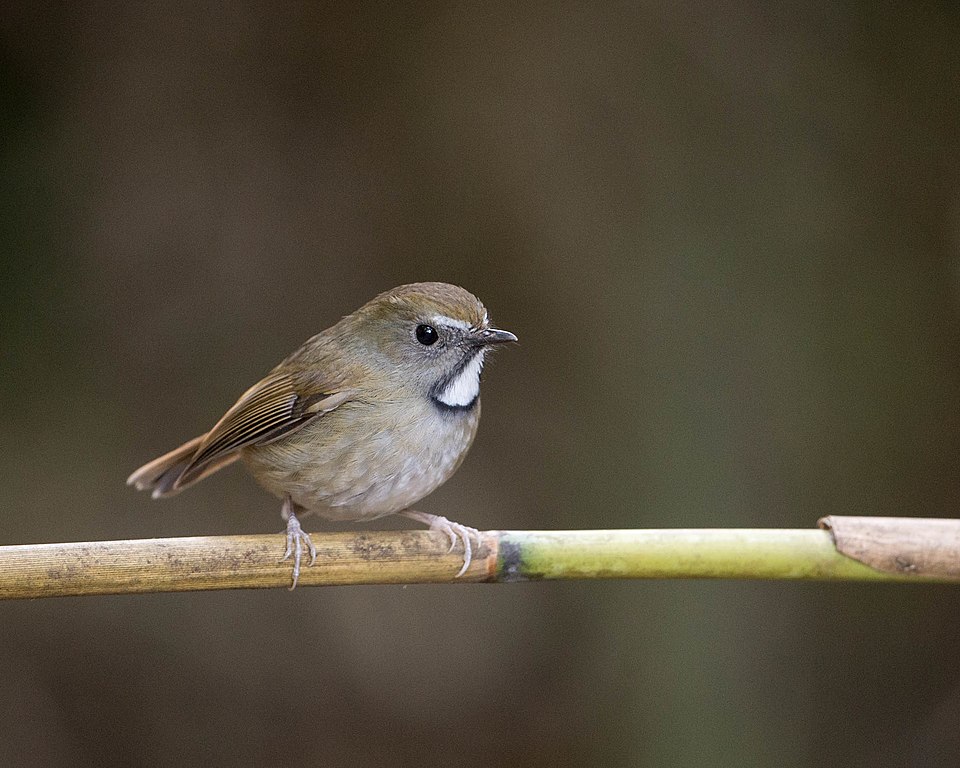
Red-throated Alethe
Chamaetylas poliophrys
Order: Passeriformes / Family: Muscicapidae

Wikimedia Commons
About the Red-throated Alethe
The Red-throated Alethe, scientifically known as Chamaetylas poliophrys, is a captivating bird species belonging to the family Muscicapidae. This bird is primarily found in the montane forests of East Africa, where its presence is often more heard than seen. The species thrives in the lush, dense undergrowth of forests, particularly favoring areas with abundant leaf litter and moist conditions. It is especially prevalent in countries such as Uganda, Rwanda, Burundi, and the Democratic Republic of the Congo. Unlike many other passerines, the Red-throated Alethe does not exhibit significant seasonal migrations but may engage in local movements to exploit food resources and suitable habitats. Ecologically, this species plays a vital role as an insectivore, helping to control insect populations within its forest ecosystem. The Red-throated Alethe's predilection for thick underbrush makes it an elusive subject for birdwatchers, but its distinctive vocalizations often betray its presence. This bird is best observed during its breeding season, which typically occurs during the onset of the rainy season when food is abundant and the forest is alive with activity. The bird’s role in the ecosystem extends beyond pest control, as it also contributes to seed dispersal and the maintenance of forest health. Its behaviors and adaptations are a testament to the intricate balance within its native habitats. The Red-throated Alethe is an indicator species for forest health, and its presence often signifies a well-preserved environment. Protecting this bird and its habitat is crucial for biodiversity conservation in the montane forests of East Africa.
The Red-throated Alethe belongs to the family Muscicapidae, within the order Passeriformes. These birds typically live 6 years with a maximum recorded of 9 years.
How to Identify a Red-throated Alethe
Identifying the Red-throated Alethe involves observing several key field marks. Adults are characterized by their vibrant red throats, a feature that is unmistakable against their otherwise olive-brown upperparts. The underparts are a soft gray, providing a subtle contrast to the striking throat coloration. Juveniles, in contrast, exhibit more subdued colors, lacking the vivid red of adults and possessing more mottled patterns on their underparts. There is little sexual dimorphism in this species; both males and females share similar plumage, which can complicate sex-specific identification in the field. Confusion with other species is possible, particularly with the White-tailed Alethe, but the absence of a white tail distinguishes the Red-throated Alethe. In flight, the bird displays a compact silhouette with rapid wingbeats, unlike the more leisurely flight of some sympatric thrushes. When perched, the Red-throated Alethe assumes a horizontal posture that aids in its inconspicuous presence within the forest underbrush. Observers should focus on the distinct red throat and the bird's secretive behavior when identifying this species.
Having trouble telling birds apart? Upload a photo to our bird identification tool for an instant species match.
Red-throated Alethe Habitat and Range
Preferred Habitat
The Red-throated Alethe inhabits the dense montane forests of East Africa, thriving in elevations ranging from 1,500 to 3,000 meters. These forests provide a rich tapestry of vegetation, from towering trees to thick ground cover, essential for the bird's foraging and nesting activities. The bird prefers areas with ample leaf litter, where it can forage for insects and other invertebrates. Seasonal habitat shifts are minimal, though during the dry season, the bird may move to areas with remaining moisture and food availability. The species is typically absent from urban environments, instead favoring undisturbed forests. While primarily a resident of montane forests, it may occasionally venture into adjacent forest edges or secondary growth areas, provided that sufficient cover and food resources are present.
Geographic Range
The range of the Red-throated Alethe is largely confined to the highland regions of East Africa. It breeds in the Albertine Rift montane forests, a biodiversity hotspot that spans western Uganda, eastern Democratic Republic of the Congo, Rwanda, and Burundi. Within these countries, the bird is most frequently encountered in protected areas such as Bwindi Impenetrable National Park in Uganda and Nyungwe Forest National Park in Rwanda. These regions serve as population density hotspots, where the species finds ideal conditions for breeding and foraging. While the Red-throated Alethe does not undertake long-distance migrations, it may engage in altitudinal movements to track food availability, especially during periods of scarcity. The bird's range is relatively stable, though habitat loss poses ongoing threats to its distribution.
Want to know which birds visit your area? Browse our backyard birds by location guides for region-specific species lists.
What Does the Red-throated Alethe Eat?
The diet of the Red-throated Alethe primarily consists of insects and other small invertebrates. Its foraging strategy involves meticulously searching through leaf litter and underbrush for beetles, ants, caterpillars, and spiders. This bird is also known to consume small fruits and berries, particularly when insect prey is less abundant. Seasonal changes in diet occur, with a greater reliance on fruits during the dry season when insects are less available. The Red-throated Alethe typically forages alone or in pairs, employing a methodical approach as it hops and flits through the forest floor. Prey size ranges from small insects to larger, soft-bodied invertebrates, and the bird's feeding schedule is largely diurnal, with peak activity occurring in the cooler hours of the morning.
Red-throated Alethe Behavior and Social Structure
The Red-throated Alethe exhibits a range of intriguing behaviors that reflect its adaptation to forest life. Socially, this bird is generally solitary or found in pairs, particularly during the breeding season when pairs establish territories. Territorial behavior is prominent, with males engaging in vocal displays and occasional physical confrontations to defend their breeding areas. Courtship involves a mix of vocal and visual displays, with males showcasing their red throats to attract females. Outside of the breeding season, the Red-throated Alethe may join mixed-species foraging flocks, a strategy that provides increased protection against predators. In response to threats, the bird employs a combination of alarm calls and evasive movements, often retreating to dense cover. Daily activity patterns are largely diurnal, with periods of rest interspersed with foraging bouts.
Red-throated Alethe Nesting and Reproduction
The nesting habits of the Red-throated Alethe are closely tied to the dense undergrowth of its montane forest habitat. Nests are typically constructed low in shrubs or on the ground, using a combination of leaves, twigs, moss, and other plant materials. The female primarily undertakes nest building, although the male may assist occasionally. Clutch size generally ranges from two to three eggs, which are incubated solely by the female over a period of approximately two weeks. Once hatched, the chicks remain in the nest for about 18-21 days before fledging. During this time, both parents share responsibilities in feeding and caring for the young. The Red-throated Alethe typically raises one brood per year, though favorable conditions may allow for a second.
Red-throated Alethe Sounds and Vocalizations
The primary song of the Red-throated Alethe is a series of melodious, fluty notes that rise and fall in pitch, often described as a 'wee-wee-woo-woo' sequence. These vocalizations are used primarily by males to establish territory and attract mates. Call notes are softer and include a sharp 'chip' or 'tchak' sound, often heard as birds communicate with each other. Alarm calls are more urgent, consisting of rapid, harsh notes that signal the presence of predators. During the dawn chorus, the song of the Red-throated Alethe contributes to the vibrant soundscape of the montane forest, its distinct melodies carrying through the dense underbrush.
Interesting Facts About the Red-throated Alethe
- 1The Red-throated Alethe is one of the few bird species that prefers to nest on the forest floor, an adaptation to dense undergrowth.
- 2This bird's vibrant red throat is not just for show; it plays a crucial role in territorial and courtship displays.
- 3Despite its bright coloration, the Red-throated Alethe remains elusive due to its preference for thick, shadowy forest underbrush.
- 4Research indicates that the Red-throated Alethe can adjust its breeding season to coincide with peak insect abundance.
- 5The bird's song, often described as fluty and melodious, serves as a key identifier for birdwatchers in dense forests.
- 6The Red-throated Alethe's habitat in the Albertine Rift is considered one of the most biodiverse regions in Africa.
- 7Although primarily insectivorous, the Red-throated Alethe supplements its diet with fruits during the dry season.
Red-throated Alethe Conservation Status
The Red-throated Alethe currently holds a status of Least Concern on the IUCN Red List, though its population trend is suspected to be decreasing. Primary threats to this species include habitat destruction due to logging, agriculture, and human encroachment. Conservation efforts focus on protecting and managing key forest habitats, particularly within protected areas like national parks. Historical population changes have not been extensively documented, but ongoing habitat fragmentation poses significant risks. Ensuring the preservation of montane forests is critical for maintaining stable populations of the Red-throated Alethe.