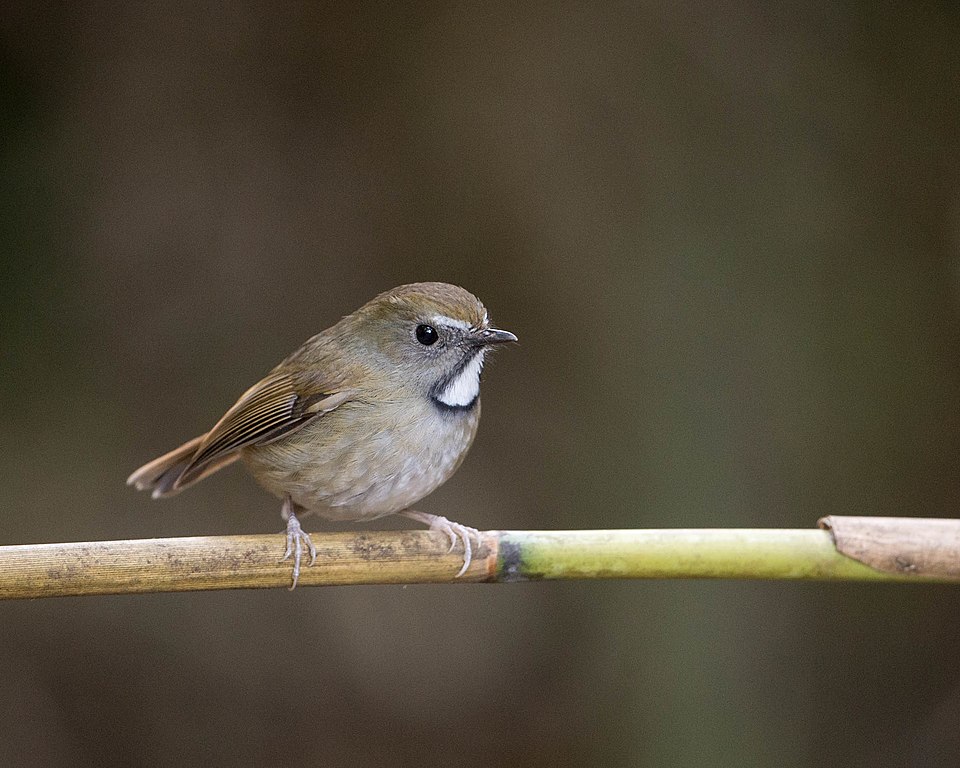
Rhinomyias brunneatus
Rhinomyias brunneatus
Order: Passeriformes / Family: Muscicapidae

Wikimedia Commons
About the Rhinomyias brunneatus
The Brown-streaked Flycatcher, scientifically known as Rhinomyias brunneatus, is a small passerine bird that belongs to the Muscicapidae family. This bird is predominantly found in Southeast Asia, particularly in countries like Malaysia, Thailand, and Indonesia. The species thrives in subtropical and tropical moist lowland forests, making it a crucial component of these biodiverse ecosystems. Its role as an insectivore helps control insect populations, maintaining a balance within its habitat. The Brown-streaked Flycatcher is often observed in dense undergrowth and forest edges, where it actively forages for insects and other small invertebrates. This bird is not only important for the ecological balance but also holds significance for birdwatchers and researchers studying forest ecosystems. Throughout the year, this flycatcher exhibits fairly sedentary behavior, with no major migrations, though some local movements may occur in response to food availability. During the breeding season, which typically extends from March to June, the Brown-streaked Flycatcher becomes more vocal and visible, engaging in territorial displays and courtship rituals. The species plays a significant role in the forest food web, not only as a predator of insects but also as prey for larger birds and mammals. Despite facing habitat loss due to deforestation, the Brown-streaked Flycatcher remains a widespread species across its range, adapting to secondary forests and disturbed habitats. Its ability to thrive in altered environments underscores its ecological resilience and importance in maintaining forest health. Conservation efforts continue to focus on preserving its natural habitats, ensuring the survival of this and many other forest-dependent species. As a key insectivore, the Brown-streaked Flycatcher contributes to the biological control of pest populations, underlining its ecological importance in tropical forest ecosystems.
The Rhinomyias brunneatus belongs to the family Muscicapidae, within the order Passeriformes. These birds typically live average 4-7 years with a max recorded of 10 years..
How to Identify a Rhinomyias brunneatus
The Brown-streaked Flycatcher, Rhinomyias brunneatus, exhibits distinct field marks that aid in its identification. Adults possess a predominantly brown plumage with subtle streaks across the head and back, providing effective camouflage in their woodland environment. The underparts are a lighter buff color, with a slightly paler throat. Juvenile birds resemble adults but may display more pronounced streaking and a slightly mottled appearance. There is little sexual dimorphism, with males and females appearing similar. Careful observation reveals that males might have a marginally brighter plumage, though this difference is subtle. Similar species, such as the Asian Brown Flycatcher, can cause confusion, but the Brown-streaked Flycatcher is distinguishable by its more pronounced streaking and slightly larger size. In flight, the bird exhibits a compact silhouette with a relatively short tail and rounded wings. When perched, it maintains an upright posture, often flicking its wings and tail as it surveys for prey. These behaviors, combined with its distinctive plumage, make the Brown-streaked Flycatcher identifiable to the keen observer.
Having trouble telling birds apart? Upload a photo to our bird identification tool for an instant species match.
Rhinomyias brunneatus Habitat and Range
Preferred Habitat
The Brown-streaked Flycatcher inhabits subtropical and tropical moist lowland forests, thriving in dense undergrowth and forest edges. It is often spotted in primary forests but can also adapt to secondary forests and disturbed habitats. This adaptability to various forest environments demonstrates its resilience to habitat changes. The species can be found from sea level up to elevations of about 1500 meters. Unlike some forest birds, it does not typically venture into urban areas, preferring the cover and food resources available in forested regions. Seasonal habitat shifts are minimal, as the bird remains in its preferred environments throughout the year.
Geographic Range
The Brown-streaked Flycatcher is primarily resident in Southeast Asia, with its range extending across Malaysia, Thailand, and Indonesia. It is a non-migratory species, maintaining a relatively stable presence in these regions year-round. The bird occupies a variety of forested environments within its range, from lowland forests to montane regions up to 1500 meters elevation. While it is widespread across these areas, population densities can vary, with higher concentrations typically found in well-preserved forest habitats. Despite its relatively limited geographical distribution, the species is not considered rare and is frequently encountered by local birdwatchers.
Want to know which birds visit your area? Browse our backyard birds by location guides for region-specific species lists.
What Does the Rhinomyias brunneatus Eat?
The Brown-streaked Flycatcher primarily feeds on insects and other small invertebrates, making it a crucial insectivore within its ecosystem. Its diet includes a variety of prey such as beetles, ants, and caterpillars, which it catches through a series of short sallies from a perch. During the wetter months, when insect populations peak, the flycatcher is particularly active, taking advantage of the increased food availability. The bird's foraging technique involves watchful perching, followed by quick, agile flights to snatch prey mid-air or from vegetation. This feeding strategy not only aids in pest control but also supports the bird's nutritional needs throughout the year.
Rhinomyias brunneatus Behavior and Social Structure
The Brown-streaked Flycatcher exhibits a solitary or paired social structure, especially during the breeding season. It is highly territorial, with males actively defending their breeding grounds through vocalizations and displays. Courtship involves a series of aerial displays and singing, with the male showcasing its agility and strength. Outside of the breeding season, the bird remains less conspicuous, focusing on foraging and avoiding predation. It is primarily diurnal, with peak activity during the early morning and late afternoon when insect prey is abundant. When faced with predators, the flycatcher relies on its camouflage and quick, darting flights to evade capture. Its behavior is characterized by a mix of vigilance and opportunistic feeding, adapting its daily patterns to the availability of resources and environmental conditions.
Rhinomyias brunneatus Nesting and Reproduction
The Brown-streaked Flycatcher constructs cup-shaped nests using a combination of plant fibers, moss, and leaves, often lined with finer materials for added insulation. These nests are typically located in the fork of a tree or shrub, providing concealment from predators. The species generally lays two to three eggs per clutch, with an incubation period of around 14 days. Both parents participate in feeding and caring for the young, which fledge approximately two weeks after hatching. The Brown-streaked Flycatcher typically raises one brood per year, although favorable conditions may occasionally allow for a second. Parental roles are shared, with both males and females contributing to nest building, incubation, and chick rearing.
Rhinomyias brunneatus Sounds and Vocalizations
The Brown-streaked Flycatcher's primary song is a series of melodious, high-pitched whistles, often delivered from a concealed perch within the forest canopy. The rhythm is somewhat irregular, with notes varying in pitch and quality, creating a distinctive and pleasant soundscape. In addition to its song, the bird produces sharp call notes used for communication between mates and as alarm signals to warn of potential threats. The flycatcher participates in the dawn chorus, contributing its song to the early morning symphony of the forest, making it a vital part of the acoustic environment.
Interesting Facts About the Rhinomyias brunneatus
- 1The Brown-streaked Flycatcher can catch insects mid-air with remarkable agility, showcasing its aerial prowess.
- 2Despite its name, the Brown-streaked Flycatcher often exhibits subtle plumage variations depending on the region.
- 3This species is known for its adaptive foraging techniques, adjusting strategies based on prey availability.
- 4Its song, a series of melodious whistles, contributes significantly to the dawn chorus of Southeast Asian forests.
- 5The species' ability to thrive in secondary forests highlights its adaptability to changing environments.
- 6The Brown-streaked Flycatcher plays a critical role in pest control, consuming a wide variety of insect prey.
- 7Breeding pairs of Brown-streaked Flycatchers often reuse nest sites, demonstrating site fidelity.
Rhinomyias brunneatus Conservation Status
The International Union for Conservation of Nature (IUCN) lists the Brown-streaked Flycatcher as a species of Least Concern, reflecting its stable population trend. However, habitat loss due to deforestation poses a significant threat, particularly in regions experiencing rapid agricultural expansion. Conservation efforts focus on preserving its natural habitat through the establishment of protected areas and sustainable land-use practices. Historically, the species has shown resilience to moderate habitat changes, but continued deforestation could jeopardize its long-term survival. Ongoing research and conservation initiatives aim to safeguard the habitats crucial for the flycatcher's future.