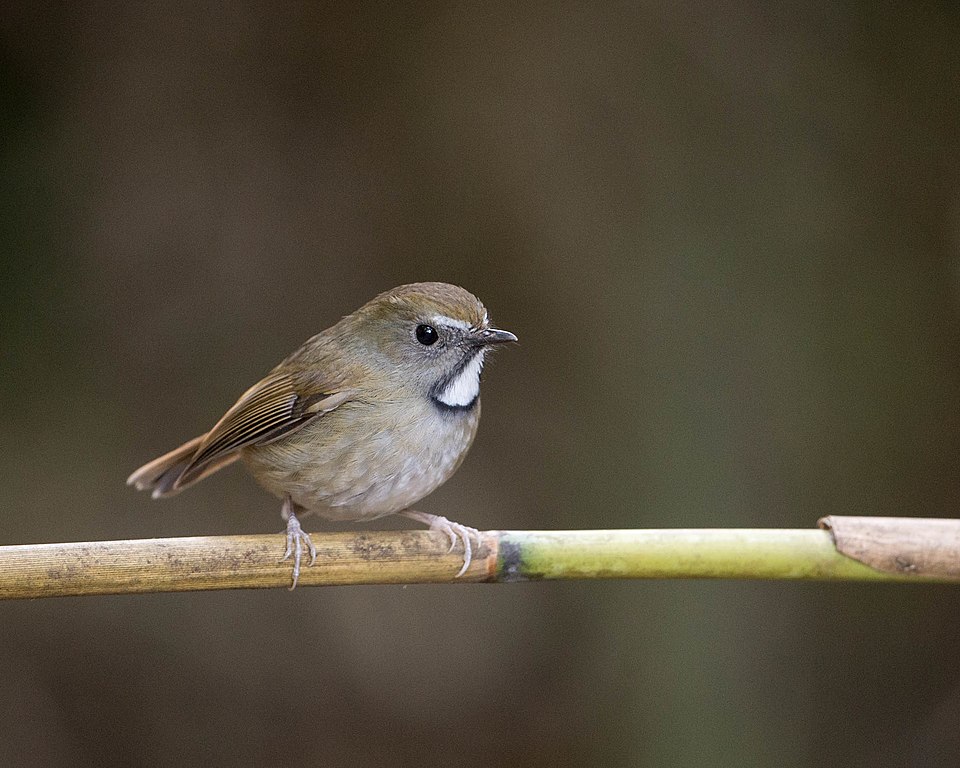
Rhinomyias olivaceus
Rhinomyias olivaceus
Order: Passeriformes / Family: Muscicapidae

Wikimedia Commons
About the Rhinomyias olivaceus
The Rhinomyias olivaceus, commonly known as the Olive-backed Flycatcher, inhabits the lush forests of the Philippines. As a member of the Muscicapidae family, it plays a critical role in the ecosystem by controlling insect populations. This flycatcher thrives in subtropical and tropical moist lowland forests, often favoring the dense understory where it can forage efficiently. Its presence is significant in maintaining the ecological balance by aiding in seed dispersal and pollination. The Olive-backed Flycatcher exhibits a seasonal behavior, with more pronounced activity during the breeding season when it becomes more vocal and visible. During non-breeding periods, it tends to be more secretive, blending seamlessly with its habitat. Found predominantly on the islands of Luzon, Mindanao, and several smaller islands, this species is an integral part of the rich avian diversity in these regions. As deforestation poses a threat to its habitat, conservation efforts are crucial to ensure its survival. The Olive-backed Flycatcher's adaptability to different forest types, including secondary growth and degraded habitats, highlights its resilience. However, continuous habitat loss could significantly impact its population. Birdwatchers often observe this species during the wet season, when it actively forages in search of insects. Although it is not a migratory bird, local movements within its range are common, particularly in response to changes in food availability. The Olive-backed Flycatcher is a testament to the vibrant biodiversity of the Philippines and underscores the importance of preserving these unique ecosystems. Its role as an insectivore contributes to the ecological health of the forests, making it a species of interest for both ornithologists and conservationists.
The Rhinomyias olivaceus belongs to the family Muscicapidae, within the order Passeriformes. These birds typically live typically lives 4-6 years, with some individuals reaching up to 8 years..
How to Identify a Rhinomyias olivaceus
The Olive-backed Flycatcher is a small, unobtrusive bird, typically measuring around 14 centimeters in length. Its olive-green upperparts provide excellent camouflage among the foliage, while the underparts are a paler, almost whitish olive, offering a subtle contrast. The species exhibits a distinctive eyering, which adds to its charm and makes it a bit easier to spot amidst the dense greenery. Juveniles may appear slightly duller, lacking the pronounced sheen of adults, and often exhibit faint streaking on their breasts. There is little sexual dimorphism in terms of plumage, with both males and females displaying similar coloration. The Olive-backed Flycatcher can be confused with other sympatric flycatchers such as the Grey-streaked Flycatcher, but its unique vocalizations and subtle olive hues set it apart. In flight, the bird's silhouette is compact, with wings that are relatively short and rounded, ideal for maneuvering through dense forest canopies. When perched, it often adopts an upright posture, frequently flicking its tail, a behavior characteristic of many flycatchers. This tail flicking, coupled with its distinctive call, aids birders in identifying the species even when visibility is poor.
Having trouble telling birds apart? Upload a photo to our bird identification tool for an instant species match.
Rhinomyias olivaceus Habitat and Range
Preferred Habitat
The Olive-backed Flycatcher primarily inhabits tropical and subtropical moist lowland forests, favoring regions with dense understory and abundant foliage. It is found at elevations ranging from sea level to about 1,500 meters, though it is most commonly observed in lowland areas. This bird adapts to secondary forests and degraded habitats as well, demonstrating a degree of flexibility in its habitat preferences. Unlike some species, the Olive-backed Flycatcher does not typically venture into urban environments, as it relies heavily on the forest's insect-rich ecosystem for survival. During the breeding season, it may move to slightly higher elevations where food resources are more abundant. Despite its adaptability, continuous habitat destruction poses a significant threat, making conservation of its natural habitat a priority.
Geographic Range
The Olive-backed Flycatcher is endemic to the Philippines, with its range predominantly encompassing the islands of Luzon, Mindanao, and several other smaller islands within the archipelago. It does not undertake long migrations, but it might exhibit altitudinal movements within its range in response to seasonal variations in food supply and habitat conditions. This species is generally more abundant in regions with extensive forest cover, such as the Sierra Madre mountain range on Luzon. Population densities are higher in areas with intact, old-growth forests, though it can also be found in secondary growth areas. While the Olive-backed Flycatcher does not occupy as wide a range as some other bird species, its presence in multiple islands underscores its adaptability to the varied habitats within the Philippines.
Want to know which birds visit your area? Browse our backyard birds by location guides for region-specific species lists.
What Does the Rhinomyias olivaceus Eat?
The Olive-backed Flycatcher primarily feeds on insects, playing a crucial role as an insectivore in its forest ecosystem. It employs a 'sit-and-wait' strategy, perching quietly before darting out to catch prey in mid-air or gleaning insects from foliage. Its diet consists mainly of small arthropods, including beetles, flies, and caterpillars. During the breeding season, when food demands are higher, the Olive-backed Flycatcher may expand its diet to include small fruits and seeds, aiding in seed dispersal. This opportunistic feeding behavior allows it to thrive even when preferred prey species are scarce. Observations suggest it is more active in foraging during the early morning and late afternoon, taking advantage of peak insect activity.
Rhinomyias olivaceus Behavior and Social Structure
The Olive-backed Flycatcher exhibits solitary behavior outside of the breeding season, often found alone or in pairs. During the breeding season, it becomes more territorial, with males establishing and defending nesting territories through vocal displays and physical presence. These birds are known for their distinctive song, which plays a role in mate attraction and territory defense. Courtship involves a series of vocal exchanges and subtle displays, with the male showcasing its plumage while engaging in aerial maneuvers. The species tends to be diurnal, with peak activity observed during cooler parts of the day. The Olive-backed Flycatcher is alert and responsive to potential threats, often retreating to dense cover at the first sign of predators. Its keen eyesight and agile flight make it adept at evading danger while navigating through its forest habitat.
Rhinomyias olivaceus Nesting and Reproduction
The Olive-backed Flycatcher constructs a cup-shaped nest, typically situated in the fork of a tree branch or among dense foliage to provide concealment from predators. The nest is made from a combination of plant materials such as grasses, leaves, and twigs, often lined with softer substances like feathers or moss for insulation. Clutch size varies, generally consisting of two to three eggs. The female primarily undertakes incubation duties, which last around 14 to 15 days, while the male may assist by providing food. After hatching, both parents contribute to feeding the nestlings, which fledge approximately 12 to 14 days post-hatching. The species generally raises one brood per year, although favorable conditions might allow for a second.
Rhinomyias olivaceus Sounds and Vocalizations
The Olive-backed Flycatcher's song is a melodious, repetitive series of clear, sweet notes that can be heard throughout its forest habitat, particularly during the breeding season. This song serves to establish territory and attract mates, characterized by a rhythmic pattern that rises and falls in pitch. Besides its primary song, the Olive-backed Flycatcher emits a variety of call notes, including sharp 'tic' or 'chip' sounds used for communication between mates and to signal alarm. During dawn and dusk, its calls become more frequent, contributing to the forest's dawn chorus. These vocalizations, while distinct, can sometimes be confused with those of similar flycatcher species.
Interesting Facts About the Rhinomyias olivaceus
- 1The Olive-backed Flycatcher is often mistaken for the more colorful flycatchers, despite its subtle plumage, due to its distinctive song.
- 2This species relies heavily on its keen eyesight to capture flying insects, often snatching them mid-air with precision.
- 3The Olive-backed Flycatcher plays a vital role in controlling insect populations, acting as a natural pest regulator in its ecosystem.
- 4Its adaptability to secondary growth forests has helped it survive in areas where primary forests have been lost.
- 5The Olive-backed Flycatcher's song can travel over 100 meters, allowing it to communicate effectively across dense forest landscapes.
- 6Unlike many birds, the Olive-backed Flycatcher does not migrate long distances, preferring to stay within its forested home range year-round.
- 7Birdwatchers prize sightings of the Olive-backed Flycatcher during the wet season, when its vocal activity peaks.
Rhinomyias olivaceus Conservation Status
The Olive-backed Flycatcher is currently listed as 'Least Concern' by the IUCN, but its population trend is declining due to habitat loss. Deforestation for agriculture and logging are the primary threats to its habitat. Conservation efforts focus on protecting intact forests and restoring degraded areas to support sustainable populations. Historically, the species was more widespread, but human activities have fragmented its range. Programs aimed at habitat preservation and reforestation are crucial for stabilizing its population. Despite the challenges, the Olive-backed Flycatcher's adaptability offers hope for its continued survival if conservation measures are effectively implemented.