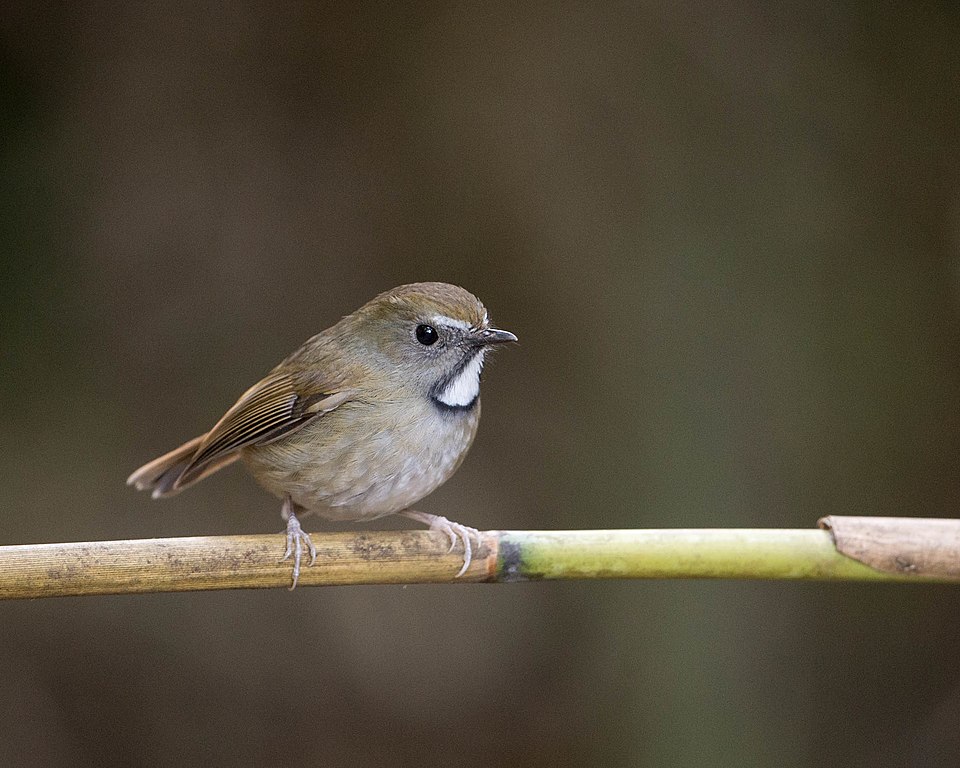
Rhyacornis fuliginosa
Rhyacornis fuliginosa
Order: Passeriformes / Family: Muscicapidae

Wikimedia Commons
About the Rhyacornis fuliginosa
The Plumbeous Water Redstart (Rhyacornis fuliginosa) is a charismatic small songbird belonging to the family Muscicapidae, widely recognized for its striking slate-blue coloration in males and its association with fast-flowing mountain streams and rivers. Found predominantly in Asia, the bird's range extends from the Himalayas through central China to Southeast Asia, including countries such as Nepal, Bhutan, India, and Myanmar. This species thrives in montane forests and near rocky streams, where it actively engages in its ecological role as an insectivore, contributing to the control of aquatic insect populations. Seasonal behaviors of the Plumbeous Water Redstart include altitudinal migrations, where they move to lower elevations during the harsh winter months. Their presence is often an indicator of healthy, unpolluted water systems, making them an important bioindicator species. These birds exhibit strong site fidelity to their breeding territories, often returning to the same sites annually. Their vivid coloration and energetic behavior in otherwise serene environments make them a favorite among birdwatchers and nature enthusiasts in the region. The species' adaptability to varying altitudes, ranging from 200 meters to over 4,000 meters, reflects its resilience and ecological versatility. The Plumbeous Water Redstart plays a crucial role in the biodiversity of riparian ecosystems, maintaining a delicate balance within its habitat. As a species, it showcases the intricate connections between avian life and aquatic ecosystems, highlighting the importance of conservation efforts focused on freshwater habitats. By maintaining the health of their habitats, these birds indirectly support diverse assemblages of flora and fauna that rely on similar environments, underlining their ecological significance.
The Rhyacornis fuliginosa belongs to the family Muscicapidae, within the order Passeriformes. These birds typically live typically around 5 years in the wild..
How to Identify a Rhyacornis fuliginosa
Adult male Plumbeous Water Redstarts are distinguished by their unmistakable slate-blue plumage, which covers their entire body, except for the contrasting rusty-orange tail. Females and juveniles differ significantly in appearance, with a more subdued gray-brown plumage and a paler, whitish underbelly, lacking the vibrant tail coloration. This sexual dimorphism aids in field identification, particularly during breeding seasons when both males and females are present. The species is compact and robust, averaging about 14 centimeters in length, with a short tail and rounded wings. When perched, the bird exhibits a characteristic tail bobbing behavior, often flicking its tail upwards, a trait that can be useful in distinguishing it from similar species like the White-capped Water Redstart. In flight, the Plumbeous Water Redstart's silhouette is compact with a rapid wingbeat pattern, reflecting its agility in navigating the turbulent environments it inhabits. The perching posture is often upright, with the bird frequently seen on rocks or branches close to water bodies, observing its surroundings intently. This behavior, combined with its unique coloration and habitat preference, makes the Plumbeous Water Redstart a relatively easy species to identify for both novice and experienced birders.
Having trouble telling birds apart? Upload a photo to our bird identification tool for an instant species match.
Rhyacornis fuliginosa Habitat and Range
Preferred Habitat
The Plumbeous Water Redstart primarily inhabits montane regions, favoring fast-flowing streams and rivers with rocky substrates. These birds are commonly found at elevations ranging from 200 meters to over 4,000 meters, with a significant presence in the rugged terrains of the Himalayas and other mountainous areas across their range. During winter, they may descend to lower altitudes, seeking milder climates and available food sources. Their preferred habitats include rocky stream banks, forested river valleys, and occasionally, human-altered landscapes such as tea plantations and agricultural fields adjacent to water bodies. Despite their adaptability, they generally avoid urban environments, relying on the pristine conditions of natural freshwater habitats to thrive. Seasonal habitat shifts are closely tied to water levels and food availability, demonstrating the species' ecological plasticity. Though primarily mountain dwellers, these birds can occasionally be spotted in lower elevation areas during migrations, reflecting their ability to exploit a variety of niches within their range.
Geographic Range
The Plumbeous Water Redstart's breeding range spans a broad swath of Asia, from the foothills of the Himalayas in northern India through Nepal, Bhutan, and into central and southern China. In the east, their range extends to the mountainous regions of Myanmar, Thailand, and northern Vietnam. During the winter months, these birds often migrate to lower elevations and southern latitudes, although some populations remain resident year-round in suitable habitats. Their presence is particularly dense in the eastern Himalayas and western China, where ideal habitats abound. While not typically a long-distance migrant, the species exhibits altitudinal movements in response to seasonal changes, seeking temperate conditions and adequate food supplies. Population density hotspots include the temperate forested river valleys and rocky streams of the Himalayas, where stable populations benefit from relatively undisturbed environments. Although their range is extensive, localized threats such as habitat destruction and water pollution could impact specific populations.
Want to know which birds visit your area? Browse our backyard birds by location guides for region-specific species lists.
What Does the Rhyacornis fuliginosa Eat?
The diet of the Plumbeous Water Redstart primarily consists of aquatic and terrestrial insects, which it adeptly captures through a combination of aerial sallies and ground foraging. Their primary food sources include various species of mayflies, stoneflies, and caddisflies, which are abundant in the fast-flowing streams they inhabit. During the breeding season, the increased energy demands lead to a more diverse diet that may incorporate small crustaceans and mollusks, supplementing their insectivorous intake. The species exhibits a keen ability to adjust its foraging behavior based on seasonal availability of prey, often seen actively hunting along water edges or darting through the air to snatch flying insects. They typically feed during daylight hours, with peak foraging activity observed in the early morning and late afternoon when insect activity is highest. The Plumbeous Water Redstart's reliance on aquatic insect populations underscores the importance of clean, unpolluted water bodies for their survival and the intricate link between avian and aquatic ecosystems.
Rhyacornis fuliginosa Behavior and Social Structure
The Plumbeous Water Redstart displays distinct territorial and social behaviors, often maintaining and defending breeding territories along streams and rivers. Males are particularly aggressive in their territorial defense, utilizing a combination of vocalizations and visual displays to deter intruders. During courtship, males perform elaborate aerial displays and present food items to potential mates, reinforcing pair bonds. The species is generally solitary or found in pairs, especially during the breeding season, but may form loose associations with other water-associated bird species outside of this period. Their response to predators involves a series of alarm calls and rapid evasive maneuvers, often seeking cover in dense vegetation or rocky crevices. Daily activity patterns are diurnal, with a pronounced increase in foraging and territory patrolling during the cooler morning and late afternoon hours. The species' ability to adapt its behavior to various environmental conditions reflects its ecological resilience and adaptability.
Rhyacornis fuliginosa Nesting and Reproduction
The Plumbeous Water Redstart constructs its nests in crevices of rocks or cliffs near flowing water, often utilizing natural cavities or ledges for protection. Nests are primarily composed of moss, grass, and rootlets, intricately woven to create a cup-shaped structure. The typical clutch size ranges from three to five eggs, with an incubation period of approximately 14 to 16 days. Both parents participate in incubation and are actively involved in feeding the chicks once hatched. The fledging timeline is about 16 to 18 days post-hatching, during which the young birds develop the skills necessary for independent survival. Plumbeous Water Redstarts typically produce one to two broods per year, depending on environmental conditions and food availability. The choice of nesting sites is critical for protection against predators and environmental elements, often limiting their breeding success to specific, suitable habitats.
Rhyacornis fuliginosa Sounds and Vocalizations
The primary song of the Plumbeous Water Redstart is a series of melodious whistles and trills, characterized by a rhythmic, repetitive pattern that resonates along the riverbanks they inhabit. This song serves both as a territorial marker and a courtship display, with males often singing from prominent perches. In addition to their primary song, they emit sharp call notes, often in response to disturbances or as part of their social interactions. Alarm calls are distinct and urgent, triggering alertness in nearby conspecifics. The species participates in a dawn chorus, where their vocal activity peaks, contributing to the acoustic landscape of their habitats. Their vocalizations, while not as elaborate as some passerines, are distinctive enough to aid in field identification, particularly in dense habitats where visual confirmation may be challenging.
Interesting Facts About the Rhyacornis fuliginosa
- 1Plumbeous Water Redstarts are named for their lead-colored plumage, with 'plumbeous' meaning leaden or slate gray.
- 2These birds are incredibly agile, often seen performing acrobatic maneuvers to catch insects mid-air over fast-flowing streams.
- 3The species' tail bobbing behavior is thought to be a form of communication or a method to flush out prey from hiding.
- 4Unlike many passerines, the Plumbeous Water Redstart often nests directly over water, taking advantage of natural rock formations.
- 5During courtship, males may present unique pebbles or food items to females as part of their mate attraction strategy.
- 6Despite their preference for remote mountain streams, Plumbeous Water Redstarts can adapt to human-altered landscapes where water conditions remain favorable.
- 7Their presence in a habitat is often a good indicator of environmental health, particularly the quality of freshwater ecosystems.
Rhyacornis fuliginosa Conservation Status
The Plumbeous Water Redstart currently holds a status of Least Concern on the IUCN Red List, with population trends considered stable across much of its range. However, localized threats such as habitat destruction, water pollution, and human encroachment pose potential risks. Conservation efforts primarily focus on preserving and restoring natural stream and river habitats, crucial for the species' survival. Historical population changes have been minimal, as the species appears relatively adaptable within its preferred environments. Nonetheless, continuous monitoring and habitat protection remain vital to ensure the long-term viability of their populations, particularly in areas experiencing rapid environmental change.