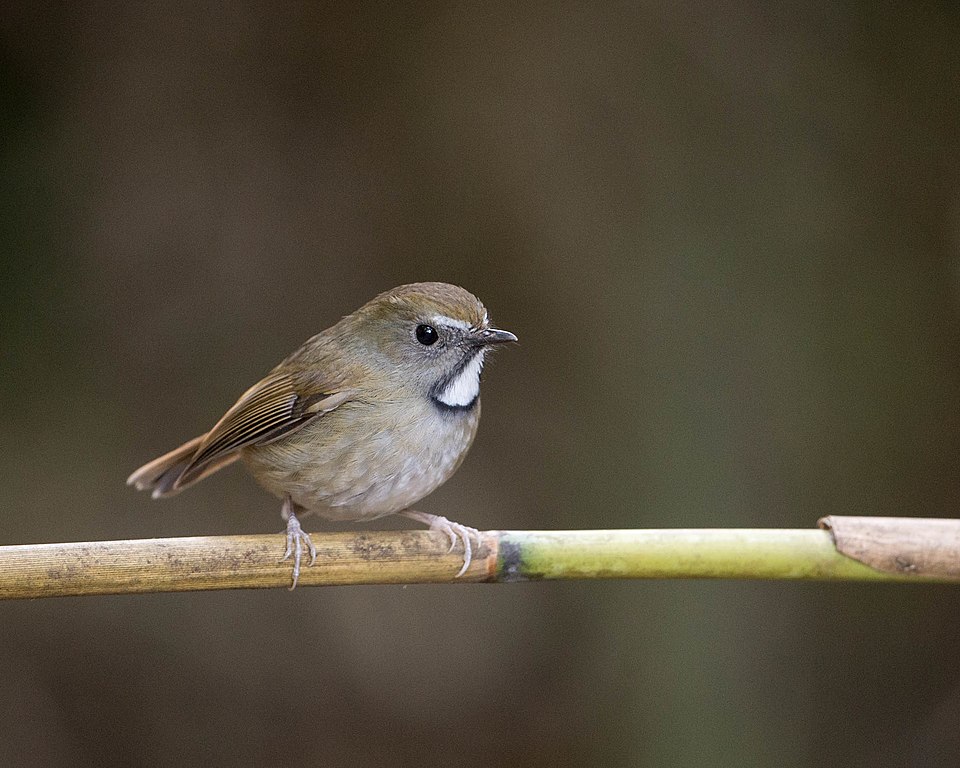
Rufous-backed Redstart
Phoenicurus erythronotus
Order: Passeriformes / Family: Muscicapidae

Wikimedia Commons
About the Rufous-backed Redstart
The Rufous-backed Redstart (Phoenicurus erythronotus) is a small, vividly colored passerine bird belonging to the Muscicapidae family. This species is most easily recognized by its distinctive rufous back, which contrasts sharply with its pale underparts and darker wings. An inhabitant of various Asian regions, the Rufous-backed Redstart thrives in diverse environments from dense forests to open scrublands. Its presence is especially pronounced in the mountainous areas of Central Asia, including countries like Kazakhstan, Uzbekistan, and parts of western China.
The ecological role of the Rufous-backed Redstart is significant, as it helps control insect populations, a primary component of its diet. This bird is an integral part of its ecosystem, acting as both a predator to numerous insects and prey to larger avian species, thus maintaining the balance in its natural habitat. The Rufous-backed Redstart's song, a series of clear, melodious notes, adds to the soundscape of its environment, indicating its presence and establishing territorial boundaries.
In terms of seasonal behavior, the Rufous-backed Redstart is largely migratory, breeding in higher altitudes during the spring and summer months before descending to lower elevations or migrating to more temperate regions for the winter. This altitudinal migration allows the species to exploit different habitats and resources throughout the year, enhancing its survival and reproductive success. The adaptability of the Rufous-backed Redstart to various environments and its vibrant presence make it a favorite among bird enthusiasts and an important subject of study for ornithologists.
The Rufous-backed Redstart belongs to the family Muscicapidae, within the order Passeriformes. These birds typically live typical lifespan is 5-6 years, with some individuals living up to 8 years..
How to Identify a Rufous-backed Redstart
The Rufous-backed Redstart is distinguished by its conspicuous rufous back and contrasting plumage. Adult males exhibit a bold rufous on the back and upper tail-coverts, while the wings and head are a darker slate-gray. The underparts are pale, often appearing white or light gray, providing a striking contrast to the rufous and dark upperparts. In females, the colors are more subdued, with a brownish-gray back and slightly paler underparts, yet they still retain the characteristic rufous hue, albeit less vibrant than in males. Juveniles resemble females but have more streaked and mottled plumage, aiding in camouflage.
In terms of similar species, the Rufous-backed Redstart can be confused with other redstarts, such as the Common Redstart. However, the Common Redstart lacks the vibrant rufous back and instead has a more uniformly gray upperpart. The flight silhouette of the Rufous-backed Redstart is compact, with a rapid wingbeat pattern, and it often flicks its tail, revealing the rufous upper tail-coverts. When perched, it maintains an upright posture, often favoring exposed branches or rocky outcrops from which it can launch to catch insects mid-air.
The distinct coloration and behavior of the Rufous-backed Redstart make it relatively easy to identify for both amateur and experienced birdwatchers. Observers should note the bird's habit of tail-flicking and its melodious song as additional identifying characteristics.
Having trouble telling birds apart? Upload a photo to our bird identification tool for an instant species match.
Rufous-backed Redstart Habitat and Range
Preferred Habitat
The Rufous-backed Redstart thrives in a variety of habitats, favoring open woodlands, forest edges, and scrublands. It is commonly found in mountainous regions, typically at elevations ranging from 1000 to 4000 meters. During the breeding season, it prefers high-altitude forests and alpine meadows, where it can find ample nesting sites and food resources.
In the winter, the Rufous-backed Redstart descends to lower altitudes, often inhabiting river valleys, agricultural fields, and urban parks. This seasonal shift allows the species to exploit different ecological niches, ensuring a steady food supply throughout the year. While the bird is more frequently observed in rural settings, it can adapt to urban environments, especially in areas with abundant green spaces and minimal human disturbance.
The Rufous-backed Redstart's ability to inhabit diverse environments, from dense forests to open scrubs and urban areas, demonstrates its ecological versatility. This adaptability makes it a common sight across its range, contributing to its widespread presence in suitable habitats.
Geographic Range
The Rufous-backed Redstart's range spans a broad swath of Central Asia, with its breeding grounds concentrated in countries such as Kazakhstan, Kyrgyzstan, Tajikistan, and parts of northern India and China. During the breeding season, it occupies high-altitude regions, often in mountainous terrains and alpine meadows.
As the seasons change, the Rufous-backed Redstart migrates to lower elevations, occupying wintering grounds that extend as far south as northern Pakistan, northern India, and occasionally into the plains of China. These migration paths include well-established corridors that take advantage of river valleys and mountain passes, allowing the birds to move efficiently between breeding and wintering areas.
Population density hotspots for the Rufous-backed Redstart are often located in areas with ideal breeding conditions, such as suitable nesting sites and abundant food resources. The species is known for its adaptability to different climates and terrains, which supports its widespread distribution across the region. Despite its extensive range, local populations can fluctuate based on environmental conditions and habitat availability.
Want to know which birds visit your area? Browse our backyard birds by location guides for region-specific species lists.
What Does the Rufous-backed Redstart Eat?
The Rufous-backed Redstart primarily feeds on a variety of insects, which constitute the major portion of its diet. Common prey items include beetles, caterpillars, and other small invertebrates. The bird employs a technique known as 'flycatching,' where it perches on a vantage point, scanning for movement before darting out to snatch insects mid-flight. This method is particularly effective in open habitats, where visibility is high.
During the breeding season, the diet of the Rufous-backed Redstart is heavily insectivorous, providing the necessary protein for raising its young. As the seasons change and certain insect populations decline, the bird may supplement its diet with small fruits and berries, particularly in autumn and winter. This dietary flexibility allows the species to adapt to varying food availability throughout the year.
The Rufous-backed Redstart is an opportunistic feeder, adjusting its foraging strategy and diet based on environmental conditions. This adaptability not only ensures its survival across diverse habitats but also supports its role in controlling insect populations, making it a valuable component of its ecosystem.
Rufous-backed Redstart Behavior and Social Structure
The Rufous-backed Redstart is known for its generally solitary nature, although it may occasionally be observed in pairs, especially during the breeding season. Males are territorial and will defend their chosen area vigorously, often using song to establish dominance and deter rivals.
During courtship, males display an elaborate series of flights and song sequences to attract females, showcasing their vibrant plumage and vocal abilities. This courtship behavior is critical in mate selection and successful reproduction. Once paired, both male and female contribute to nest building and chick rearing, although the female typically takes on the primary role of incubation.
The Rufous-backed Redstart’s daily activity patterns involve early morning and late afternoon foraging sessions, taking advantage of peak insect activity. In the presence of predators, these birds exhibit an alert posture and use alarm calls to warn conspecifics. The Rufous-backed Redstart's vigilance and territoriality ensure its survival, while its distinctive behaviors enhance its visibility and interest to birdwatchers.
Rufous-backed Redstart Nesting and Reproduction
The Rufous-backed Redstart typically constructs its nest in sheltered locations, such as rock crevices, tree hollows, or under overhangs. The nest is a cup-shaped structure, intricately woven from grass, twigs, and moss, often lined with softer materials like feathers for insulation.
The female lays a clutch of 3 to 5 eggs, which she incubates for approximately 12 to 14 days. During this period, the male may assist by providing food and guarding the nest site. Once hatched, the chicks are altricial, requiring extensive parental care. Both parents partake in feeding the young, bringing a steady supply of insects to the nest.
Fledging occurs around 14 to 16 days after hatching, with the young being dependent on parental guidance for a short time post-fledging. The Rufous-backed Redstart typically raises one to two broods per year, depending on environmental conditions and food availability. This breeding strategy allows the species to maximize reproductive success during favorable seasons.
Rufous-backed Redstart Sounds and Vocalizations
The Rufous-backed Redstart is renowned for its melodious song, characterized by a series of clear, descending notes with a rhythmic quality. The song is often delivered from a high perch, serving both to attract mates and to mark territory. Its call notes are sharp and distinctive, often described as 'cheep' or 'chee-weep' sounds, used to communicate with conspecifics and signal danger.
Alarm calls are more rapid and harsh, reflecting the urgency of potential threats. During the dawn chorus, the Rufous-backed Redstart contributes prominently with its song, adding to the rich acoustic environment of its habitat. The bird's vocalizations are an essential aspect of its behavior, facilitating social interactions and environmental awareness.
Interesting Facts About the Rufous-backed Redstart
- 1The Rufous-backed Redstart migrates altitudinally, moving from high-altitude breeding grounds to lower elevations in winter.
- 2This species is known for its distinctive tail-flicking behavior, which is thought to flush insects for easier capture.
- 3During courtship, males perform aerial displays, showcasing their vibrant plumage and singing abilities to attract females.
- 4The Rufous-backed Redstart's diet shifts seasonally, relying more on berries in winter when insects are less abundant.
- 5Despite being a solitary bird, the Rufous-backed Redstart can sometimes be seen in loose flocks during migration.
- 6Females are generally less colorful than males, a common trait among passerines to avoid predation during nesting.
- 7The Rufous-backed Redstart's melodious song contributes significantly to the dawn chorus in its habitat.
Rufous-backed Redstart Conservation Status
The Rufous-backed Redstart is currently listed as Least Concern by the IUCN, with a stable population trend. Despite its wide range, the species faces threats from habitat loss due to deforestation and agricultural expansion. Conservation efforts focus on preserving critical habitats, particularly in breeding areas, to ensure food supply and nesting sites. The historical population of the Rufous-backed Redstart appears to have been relatively stable, with no significant declines reported. However, ongoing monitoring is essential to detect any changes prompted by environmental pressures or human activities. Protecting the diverse habitats that support this species is crucial for its continued survival and ecological role.