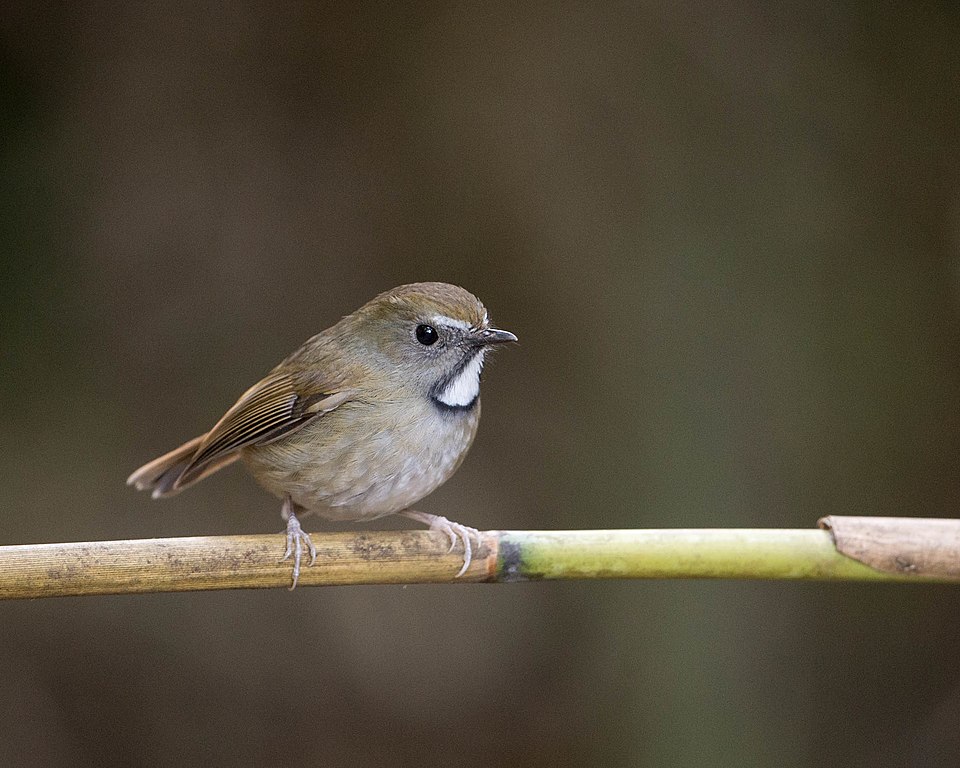
Rufous-bellied Niltava
Niltava sundara
Order: Passeriformes / Family: Muscicapidae

Wikimedia Commons
About the Rufous-bellied Niltava
The Rufous-bellied Niltava (Niltava sundara) is an emblematic species found in the dense, humid forests of South and Southeast Asia. This avian gem is particularly significant due to its vibrant plumage and melodious song, making it a favorite among birdwatchers and a critical component of the forest ecosystem. The Rufous-bellied Niltava plays a vital ecological role, primarily as an insectivore, controlling insect populations and thus maintaining the delicate balance of its habitat. This bird inhabits a range stretching from the Himalayan foothills, encompassing countries such as India, Nepal, Bhutan, and extending to Myanmar, Thailand, and Vietnam. It prefers subtropical or tropical moist montane forests, thriving in areas with dense vegetation and access to water sources.
During the breeding season, typically from March to July, the Rufous-bellied Niltava exhibits heightened territorial behavior. Males become particularly vocal during this period, singing to establish territories and attract mates. Their song is a series of melodious whistles, a characteristic feature that echoes through the forest canopy. Outside of the breeding season, these birds may be less conspicuous, often moving to lower elevations or denser parts of the forest in search of food.
The Rufous-bellied Niltava's presence in an ecosystem is an indicator of forest health. Its preference for dense, undisturbed habitats makes it particularly sensitive to deforestation and habitat degradation. Therefore, conservation of its habitat not only protects this stunning songbird but also preserves the biodiversity of the region. As forests face increasing pressures from human activities, understanding and preserving the natural habitats of the Rufous-bellied Niltava becomes ever more crucial.
The Rufous-bellied Niltava belongs to the family Muscicapidae, within the order Passeriformes. These birds typically live typically 5-7 years, with the longest recorded lifespan being 12 years..
How to Identify a Rufous-bellied Niltava
Adult Rufous-bellied Niltavas are unmistakable with their distinctive plumage. Males exhibit a brilliant combination of deep blue upperparts and a vibrant rufous-orange underbelly, with a contrasting dark blue-black throat. Females, however, are more subdued, with olive-brown upperparts and a paler, less pronounced rufous belly. Juvenile birds resemble females but often have more mottled and less defined colors.
In flight, the Rufous-bellied Niltava displays a compact silhouette with rapid, direct wingbeats. When perched, these birds often adopt an upright posture, showcasing their vivid coloration to maximum effect. The species can be confused with the Blue-fronted Redstart, but the latter lacks the Rufous-bellied Niltava's blue throat and has a more extensive orange on the breast.
The Rufous-bellied Niltava's size, about 15 cm in length, makes it a medium-sized passerine. Its striking color pattern is particularly useful for identification in the field, especially in the dim light of the forest understorey where it often resides.
Having trouble telling birds apart? Upload a photo to our bird identification tool for an instant species match.
Rufous-bellied Niltava Habitat and Range
Preferred Habitat
Rufous-bellied Niltavas favor subtropical or tropical moist montane forests, usually found at elevations ranging from 600 to 3000 meters. These habitats provide dense foliage and abundant insect life, crucial for their survival. They are typically associated with broadleaf forests, often near streams or other water bodies, where the microclimate remains cool and humid.
In some regions, Rufous-bellied Niltavas show a degree of adaptability, occasionally venturing into secondary forests or wooded areas in proximity to human settlements, though they are seldom found in urban environments. Seasonal habitat shifts are observed when these birds descend to lower altitudes during colder months, taking advantage of the milder conditions and different food resources available.
Geographic Range
The Rufous-bellied Niltava has a broad range across South and Southeast Asia. Its breeding range primarily includes the Himalayan region, with populations spread throughout northern India, Nepal, and Bhutan. During the winter, these birds may migrate to lower altitudes, inhabiting regions like the northeastern parts of India and extending into Myanmar and northern Thailand.
Despite their relatively wide range, Rufous-bellied Niltavas are more densely populated in areas with abundant forest cover. These birds are also found in parts of Vietnam and Laos, although less frequently. Migration corridors are not well defined, as the species typically makes altitudinal rather than long-distance migratory movements.
Want to know which birds visit your area? Browse our backyard birds by location guides for region-specific species lists.
What Does the Rufous-bellied Niltava Eat?
As primarily insectivorous birds, Rufous-bellied Niltavas feed on a variety of insects and other small invertebrates. Their diet includes beetles, caterpillars, and spiders, which they capture using a combination of flycatching and gleaning techniques. During the breeding season, when energy demands are higher, these birds may increase their intake of protein-rich prey.
Rufous-bellied Niltavas exhibit a flexible feeding strategy, adapting to seasonal changes in prey availability. Insects form the bulk of their diet year-round, but they may also consume berries and other small fruits when insects are less abundant. Foraging occurs mostly in the early morning and late afternoon, periods when insect activity is highest.
Rufous-bellied Niltava Behavior and Social Structure
Rufous-bellied Niltavas display a solitary or paired social structure, especially during the breeding season. Males establish territories through vocal displays and occasionally engage in physical confrontations to ward off rivals. Courtship involves a series of calls and displays, where males present food offerings to females, reinforcing pair bonds.
These birds exhibit territoriality, with both males and females actively defending their nesting sites. Outside the breeding season, Rufous-bellied Niltavas may be less territorial, sometimes joining mixed-species foraging flocks, which provides increased protection from predators. Their daily activity patterns are diurnal, with most feeding and social activities occurring during daylight hours.
When threatened, Rufous-bellied Niltavas typically rely on their agility to evade predators, retreating into dense vegetation. They also use alarm calls to alert nearby conspecifics of potential dangers.
Rufous-bellied Niltava Nesting and Reproduction
Rufous-bellied Niltavas construct cup-shaped nests using a variety of natural materials such as moss, grass, and roots, often lined with finer materials for insulation. These nests are typically located in crevices or on ledges of rocks, occasionally in tree hollows, providing shelter and protection from elements and predators.
The clutch size usually consists of 2-4 eggs, which are incubated primarily by the female for about 14-16 days. The male plays a supportive role, providing food to the incubating female. Once hatched, both parents participate in feeding the chicks. The fledging period lasts approximately 12-15 days, after which the young leave the nest but remain dependent on parental care for some time.
Rufous-bellied Niltavas typically raise one to two broods per year, depending on environmental conditions and food availability.
Rufous-bellied Niltava Sounds and Vocalizations
The primary song of the Rufous-bellied Niltava is a series of rich, melodious whistles that vary in pitch and rhythm. This song is both a territorial and a courtship display, often heard in the early morning hours as a part of the dawn chorus. Besides their song, these birds emit short, sharp call notes used to maintain contact between mates and alert others to potential threats.
Their alarm calls are harsher and more abrupt, serving as an effective warning to nearby conspecifics. The song of the Rufous-bellied Niltava, with its clear, flute-like quality, is a distinctive sound that resonates through the forest, often compared to the notes of a piccolo.
Interesting Facts About the Rufous-bellied Niltava
- 1Rufous-bellied Niltavas are known for their territorial songs, which can be heard over a kilometer away in dense forests.
- 2The name 'Niltava' is derived from a combination of the Hindi words 'nil' meaning blue and 'tava' meaning a bird, reflecting its striking plumage.
- 3These birds engage in a behavior called 'anting,' where they use ants to remove parasites from their feathers.
- 4Rufous-bellied Niltavas are more often heard than seen due to their preference for dense forest habitats.
- 5Despite their bright colors, Rufous-bellied Niltavas can be surprisingly difficult to spot against the forest canopy.
- 6The Rufous-bellied Niltava is often a target for bird photographers due to its vivid coloration and distinctive song.
- 7This species is a part of the Old World flycatcher family, known for their diverse range of vocalizations.
Rufous-bellied Niltava Conservation Status
Currently, the Rufous-bellied Niltava is classified as Least Concern by the IUCN. However, its population is experiencing a slow decline, primarily due to habitat loss from deforestation and land conversion for agriculture. Conservation efforts focus on habitat preservation and the protection of montane forests, which are crucial for its survival. Historically, the population of Rufous-bellied Niltavas has fluctuated with changes in forest cover across their range. Efforts to curb illegal logging and promote sustainable land use practices are critical in maintaining healthy populations of this species.