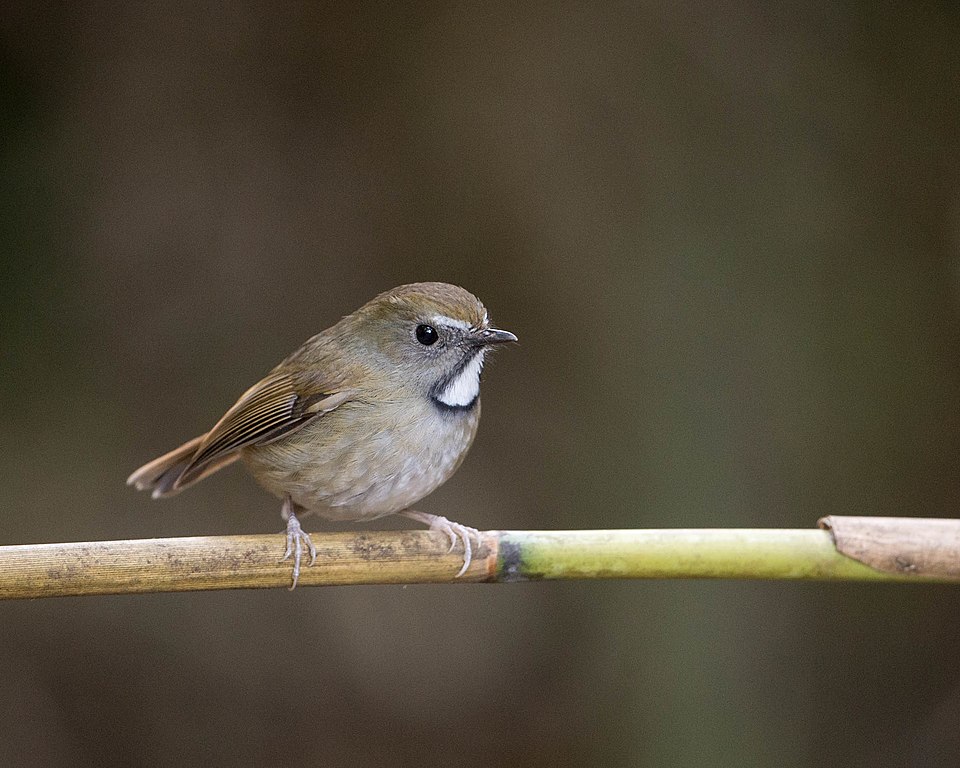
Rufous-chested Flycatcher
Ficedula dumetoria
Order: Passeriformes / Family: Muscicapidae

Wikimedia Commons
About the Rufous-chested Flycatcher
The Rufous-chested Flycatcher (Ficedula dumetoria) is a small songbird cherished by birdwatchers for its vibrant plumage and captivating presence. Belonging to the Muscicapidae family, this species is primarily found in Southeast Asian countries such as Malaysia and Indonesia. It inhabits lowland and montane forests, where its rich rufous chest and contrasting white belly create a striking visual signature.
This bird plays a crucial ecological role in its habitat by helping control insect populations, as it primarily feeds on a variety of small arthropods. Its presence indicates a healthy forest ecosystem. The Rufous-chested Flycatcher's presence in undisturbed primary forests signifies the vitality of these environments, making it a valuable species for conservationists aiming to protect biodiversity hotspots.
Seasonally, the Rufous-chested Flycatcher does not undergo extensive migrations, preferring to remain within its established territories. However, some local movements occur in response to food availability and climatic conditions. During the breeding season, which coincides with the rainy period, these flycatchers become more vocal and territorial, adding a lively dimension to the soundscape of their forest homes. Their behavior during this time of year underscores their adaptability and resilience, as they navigate the complexities of their environment to ensure successful reproduction.
Overall, the Rufous-chested Flycatcher is more than a visual delight; it is an integral part of the forest ecosystems in Southeast Asia, contributing to the delicate balance of these habitats. Its role extends beyond mere aesthetics, serving as both a predator of insects and a prey item for larger avian predators, thus participating actively in the food web.
The Rufous-chested Flycatcher belongs to the family Muscicapidae, within the order Passeriformes. These birds typically live average 5-7 years, with a maximum recorded of 10 years..
How to Identify a Rufous-chested Flycatcher
The Rufous-chested Flycatcher is best identified by its vibrant rufous breast and contrasting white underparts, a combination that stands out against the lush green of its forest habitat. Adult males are particularly striking, with a deep reddish-orange chest, which is more subdued in females. Males also have a darker head and upperparts, creating a stark contrast with their bright underparts.
Juvenile Rufous-chested Flycatchers exhibit a more muted coloration, often with streaks or spots on the breast that give a speckled appearance. This helps them blend into the forest understory, providing camouflage from predators during their vulnerable early life stages. Males and females of this species can be differentiated by the intensity of their rufous coloring, with females generally displaying a paler hue.
In flight, the Rufous-chested Flycatcher presents a compact silhouette with rapid wing beats. Its perching posture is characteristically upright, often observed when it is scanning for prey. When compared to similar species, such as the Little Pied Flycatcher, the Rufous-chested Flycatcher lacks the black and white plumage, helping to prevent misidentification. The distinctive rufous coloration and posture make it relatively easy to identify for those familiar with the bird’s habitat.
Having trouble telling birds apart? Upload a photo to our bird identification tool for an instant species match.
Rufous-chested Flycatcher Habitat and Range
Preferred Habitat
The Rufous-chested Flycatcher primarily inhabits dense, humid forests of Southeast Asia, thriving in both lowland rainforests and higher-elevation montane forests. In Malaysia and Borneo, these birds are commonly spotted in primary forests, which offer ample cover and abundant insect prey. They prefer areas with thick undergrowth and plenty of perching sites from which to hunt.
The elevation range for the Rufous-chested Flycatcher typically spans from sea level up to around 1500 meters, depending on the availability of suitable forest habitats. While they are predominantly found in undisturbed forests, they may occasionally venture into secondary growth or forest edges, especially when searching for food.
Unlike some bird species that adapt well to urban environments, the Rufous-chested Flycatcher remains largely tied to forested areas. This specialization means that it is less commonly encountered in urban or heavily altered landscapes, highlighting its preference for pristine natural habitats where it can maintain its ecological niche.
Geographic Range
The Rufous-chested Flycatcher is primarily found in Southeast Asia, with its range including the Malay Peninsula, the islands of Borneo and Sumatra, and parts of Indonesia. This bird's distribution is closely tied to the presence of suitable forest habitats, as it does not typically migrate long distances and instead remains in regions where food and nesting sites are plentiful.
Breeding populations of the Rufous-chested Flycatcher are concentrated in areas with dense forest cover. In Malaysia, it is most commonly found in the central and northern regions, where primary forests remain intact. In Indonesia, it inhabits both the large islands of Sumatra and Borneo, relying on the expansive forest coverage in these areas.
Population density hotspots for this species occur in regions where forest preservation is a priority, such as national parks and protected areas. As a non-migratory bird, the Rufous-chested Flycatcher does not follow traditional migration corridors, instead exhibiting local movements that are influenced by food availability and seasonal changes.
Want to know which birds visit your area? Browse our backyard birds by location guides for region-specific species lists.
What Does the Rufous-chested Flycatcher Eat?
The Rufous-chested Flycatcher primarily feeds on insects and other small arthropods, making it an important insectivore within its forest habitat. Its diet consists mainly of beetles, caterpillars, and spiders, which it catches using a combination of sit-and-wait tactics and aerial sallying.
During the rainy season, when insect activity peaks, the Rufous-chested Flycatcher exploits the abundance of prey, often foraging near the forest floor or among dense foliage. It uses its keen eyesight to detect movement before swooping down to snatch its prey in a quick, agile maneuver.
In times of reduced insect availability, this flycatcher may also consume small fruits or seeds, though such dietary shifts are not the norm. Its feeding schedule aligns with periods of high insect activity, typically in the early morning and late afternoon, allowing it to maximize foraging efficiency while avoiding the midday heat.
Rufous-chested Flycatcher Behavior and Social Structure
The Rufous-chested Flycatcher exhibits a solitary or paired lifestyle, especially during the breeding season, when its territorial instincts become pronounced. Males establish and defend territories through song and displays, often perching conspicuously to advertise their presence and deter rivals.
Courtship displays involve aerial chases and vocal exchanges, with males showcasing their vibrant plumage to attract females. Once a pair forms, they engage in cooperative nest-building and raising of young, with both parents participating in feeding the chicks.
This species generally avoids forming large flocks, preferring to maintain small family groups or remain solitary. When faced with predators, the Rufous-chested Flycatcher employs alarm calls and evasive flight maneuvers to escape danger. Its daily activity patterns revolve around foraging and territorial defense, with peak activity occurring in the cooler hours of the day.
Rufous-chested Flycatcher Nesting and Reproduction
The Rufous-chested Flycatcher constructs its nest in dense undergrowth or among the lower branches of trees, where it is well-hidden from predators. The nest is a cup-shaped structure made from twigs, grass, and leaves, often lined with softer materials for added insulation.
Preferred nesting sites include forks in branches or natural cavities, providing stability and protection from the elements. The female typically lays a clutch of 2 to 3 eggs, which she incubates for approximately 14 days while the male guards the territory and assists in feeding once the chicks hatch.
After hatching, the fledging period lasts around 12 to 15 days, during which both parents feed the young until they are ready to leave the nest. The Rufous-chested Flycatcher usually raises one brood per year, although in optimal conditions, a second brood may occur. Parental roles are well-defined, with both partners investing significant time and energy into ensuring the survival of their offspring.
Rufous-chested Flycatcher Sounds and Vocalizations
The Rufous-chested Flycatcher's song is a series of melodious, high-pitched whistles that can be heard resonating through the forest. The rhythm is typically fast-paced, with each note delivered in quick succession, creating a lively and cheerful soundscape.
In addition to its primary song, this bird produces a variety of call notes, often used for communication between mates or signaling alarm. These calls are usually short and sharp, serving as an early warning system against potential threats.
During the dawn chorus, the Rufous-chested Flycatcher is one of the first to sing, its song blending with the sounds of other forest birds to create a rich auditory tapestry. Comparing its song to a familiar sound, one might liken it to the tinkling of a small bell, both in pitch and clarity.
Interesting Facts About the Rufous-chested Flycatcher
- 1The Rufous-chested Flycatcher can catch insects mid-air with remarkable agility, a skill known as 'hawking.'
- 2Despite its name, the Rufous-chested Flycatcher does not migrate long distances, making it a resident species in its range.
- 3Males of the Rufous-chested Flycatcher species are known for their vibrant plumage used to attract mates during the breeding season.
- 4This flycatcher avoids heavily urbanized areas, preferring pristine forest habitats where it can hunt for insects effectively.
- 5The Rufous-chested Flycatcher's song is often one of the first sounds heard in the dawn chorus of Southeast Asian forests.
Rufous-chested Flycatcher Conservation Status
The Rufous-chested Flycatcher is currently listed as Least Concern by the IUCN, as its population remains stable across its range. However, ongoing threats such as deforestation and habitat degradation pose significant risks to its long-term survival. Conservation efforts focus on preserving the primary forests where this species thrives, emphasizing the importance of habitat protection in Southeast Asia. Initiatives include the establishment of protected areas and sustainable forest management practices. Historically, the Rufous-chested Flycatcher population has experienced fluctuations in response to habitat loss and fragmentation. Continued efforts to monitor and mitigate these threats are essential to ensuring the species' persistence in its native environments.