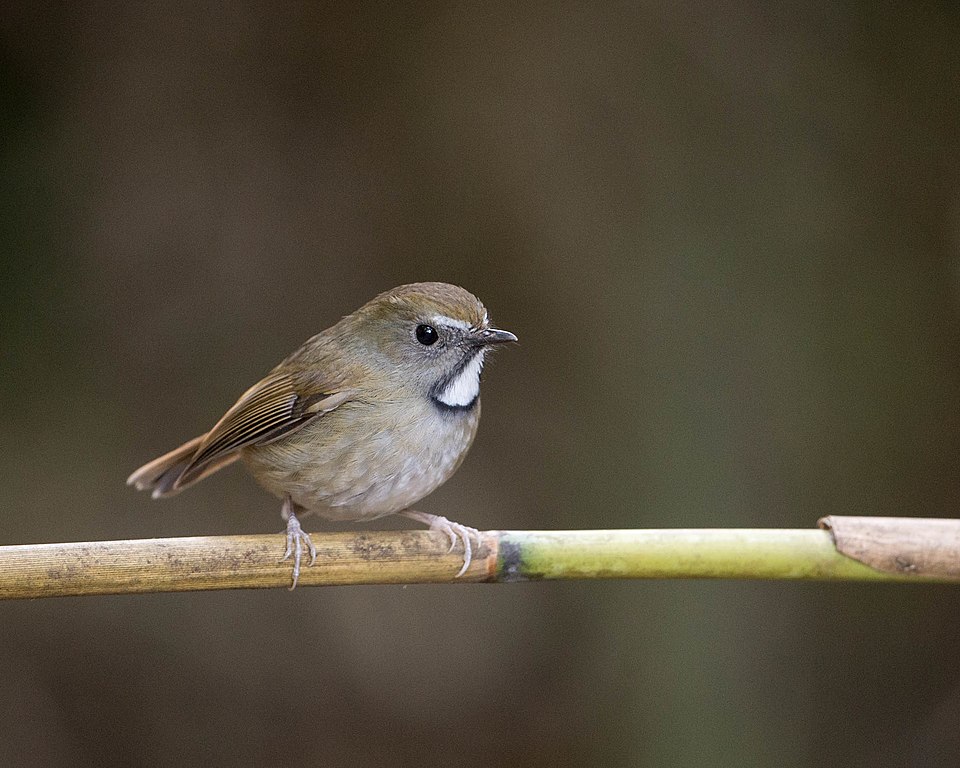
Rufous-gorgeted Flycatcher
Ficedula strophiata
Order: Passeriformes / Family: Muscicapidae

Wikimedia Commons
About the Rufous-gorgeted Flycatcher
The Rufous-gorgeted Flycatcher, Ficedula strophiata, is a small passerine bird belonging to the family Muscicapidae. This engaging species is notable for its vibrant rufous throat patch, which contrasts sharply against its generally duller body plumage. Found predominantly in the temperate and subtropical forests of South Asia, it thrives in regions such as the Himalayas, China, and Southeast Asia. Its presence is often an indicator of healthy forest ecosystems. This flycatcher plays a crucial role in controlling insect populations, thus aiding in maintaining ecological balance. During the breeding season, which generally spans from April to July, the Rufous-gorgeted Flycatcher becomes especially active and vocal. Males can be observed performing elaborate displays to attract females, often involving swift aerial maneuvers and vocal calls. In winter, populations tend to move to lower altitudes, although some remain resident in their breeding habitats if conditions permit. The Rufous-gorgeted Flycatcher is also a species of interest for birdwatchers due to its distinct appearance and charming behavior, contributing to the eco-tourism value of its native regions. The bird's adaptability to different altitudinal zones highlights its resilience, although it remains susceptible to habitat destruction and climate change, which threaten its long-term survival.
The Rufous-gorgeted Flycatcher belongs to the family Muscicapidae, within the order Passeriformes. These birds typically live typically 5-6 years, with some individuals reaching up to 8 years..
How to Identify a Rufous-gorgeted Flycatcher
The Rufous-gorgeted Flycatcher is easily recognizable by its small size and distinctive plumage. Adults typically measure around 13 centimeters in length. The male exhibits a striking rufous patch on the throat, which is the key feature for identification. This patch contrasts with the bird's grayish-blue upperparts and olive-brown wings and tail. The underparts are mostly white, but the sides carry a wash of buff. Females are generally duller, lacking the pronounced rufous throat patch and often having more muted colors overall. Juveniles appear similar to females but can be identified by their streaked underparts and lack of well-defined throat coloration. In flight, the Rufous-gorgeted Flycatcher presents a compact silhouette with rapid wingbeats. When perched, it often adopts an upright posture, frequently flicking its tail. While similar in appearance to some other flycatchers, the rufous throat patch of males is a reliable distinguishing feature. Close observation is advised to differentiate it from related species like the Red-throated Flycatcher, which lacks the specific throat coloration.
Having trouble telling birds apart? Upload a photo to our bird identification tool for an instant species match.
Rufous-gorgeted Flycatcher Habitat and Range
Preferred Habitat
The Rufous-gorgeted Flycatcher predominantly inhabits montane and submontane forests. It shows a preference for broad-leaved forests, coniferous woodlands, and mixed forests. In the Himalayas, they are commonly found at elevations ranging from 1,500 to 3,500 meters, descending to lower altitudes during the colder months. These flycatchers are adapted to forest interiors and edges, where dense undergrowth provides ample insect prey and suitable nesting sites. Although primarily associated with forested areas, they occasionally venture into wooded gardens and shrubby areas in rural settings. The species does not typically inhabit urban environments, maintaining its range to more natural and less disturbed areas.
Geographic Range
The Rufous-gorgeted Flycatcher's range spans across several Asian countries, making it a species synonymous with the montane regions of South and Southeast Asia. During the breeding season, it is primarily found in the Himalayas, stretching from northern Pakistan, through India, Nepal, Bhutan to the southwestern parts of China. In the winter months, many individuals migrate to lower altitudes within the Indian subcontinent, including the northeastern states of India and Bangladesh. Some may reach as far south as northern Thailand and Vietnam. While the species does not undertake long-distance migrations, these altitudinal movements ensure it remains within suitable habitat year-round. Population densities are highest in undisturbed forest areas, where their preferred habitats are most abundant.
Want to know which birds visit your area? Browse our backyard birds by location guides for region-specific species lists.
What Does the Rufous-gorgeted Flycatcher Eat?
The Rufous-gorgeted Flycatcher primarily feeds on insects, which it skillfully catches in mid-air using its agile flight. Its diet includes a variety of small arthropods, such as beetles, flies, and caterpillars. During the breeding season, when the demand for energy is high, it often supplements its diet with spiders and other soft-bodied insects. Foraging typically occurs in the lower to mid-levels of the forest canopy, where it employs a sit-and-wait strategy, perched quietly before darting out to snatch prey. This method of feeding is supplemented by occasional ground foraging, where it might pick insects from the leaf litter. In winter, when insect availability decreases, the flycatcher may also consume small quantities of berries and other soft fruits, utilizing whatever resources are available to sustain itself.
Rufous-gorgeted Flycatcher Behavior and Social Structure
The Rufous-gorgeted Flycatcher displays a range of interesting behaviors that are a delight to observe. Typically a solitary or paired bird, it maintains territories during the breeding season, with males becoming particularly vocal and active in defending their space. The male engages in a variety of courtship displays, including flaring its rufous throat patch and performing aerial chases to attract a mate. While generally not considered highly gregarious, outside the breeding season, loose flocks may form, often including other small insectivorous birds. This social behavior provides mutual benefits in terms of increased foraging efficiency and predator vigilance. The Rufous-gorgeted Flycatcher is diurnal, with peak activity observed during the early morning and late afternoon. When threatened by predators, it employs a mix of alarm calls and evasive flight to escape danger, often retreating deeper into the forest undergrowth.
Rufous-gorgeted Flycatcher Nesting and Reproduction
Nesting for the Rufous-gorgeted Flycatcher occurs primarily during the spring and early summer months, from April to July. The nest is typically situated in a well-concealed location, often in the fork of a tree or amidst dense shrubbery, providing protection from predators. Constructed by the female, the nest is an intricate cup made from moss, lichens, and grasses, lined with fine roots and feathers for insulation. A typical clutch consists of three to four eggs, which exhibit a pale coloration with subtle speckling. The female undertakes the majority of incubation duties, lasting approximately 13 to 15 days, while the male remains nearby to defend the territory and occasionally provide food. Once hatched, both parents take part in feeding the chicks, which fledge after about two weeks. The Rufous-gorgeted Flycatcher typically raises one brood per season, although in favorable conditions, a second brood may be attempted.
Rufous-gorgeted Flycatcher Sounds and Vocalizations
The Rufous-gorgeted Flycatcher is known for its melodious song, a series of clear, sweet whistles that carry through the forest. The primary song consists of a rhythmic sequence that rises and falls in pitch, often described as cheerful and pleasant. Call notes include a soft, short 'chip' that serves as a contact call between mates or family members. Alarm calls are sharper and more insistent, used to warn of potential threats. During the dawn chorus, the Rufous-gorgeted Flycatcher can be heard as one of the prominent contributors, its song blending harmoniously with the symphony of other forest birds. The quality of its song makes it a favorite among birdwatchers and nature enthusiasts.
Interesting Facts About the Rufous-gorgeted Flycatcher
- 1The Rufous-gorgeted Flycatcher is named for its unique throat patch, 'gorget' being an old term for throat armor.
- 2This flycatcher has a wide altitudinal range, from 1,500 to 3,500 meters, adapting well to mountain life.
- 3During breeding season, males can sing up to 200 times an hour to defend their territory and attract mates.
- 4The Rufous-gorgeted Flycatcher plays a crucial role in controlling forest insect populations, acting as a natural pest control.
- 5Despite its small size, this bird is a skilled predator, capable of catching insects mid-flight with remarkable agility.
Rufous-gorgeted Flycatcher Conservation Status
The Rufous-gorgeted Flycatcher is currently classified as Least Concern by the IUCN, with a stable population trend. Despite its favorable status, the species faces threats primarily from habitat loss due to deforestation and land conversion for agriculture. Conservation efforts focus on preserving forest habitats and maintaining the ecological integrity of the regions it inhabits. Protected areas in the Himalayas and Southeast Asia play a significant role in safeguarding its populations. Historical data suggests the population has remained relatively stable over recent decades, though continued vigilance is necessary to counteract potential threats from human activities.