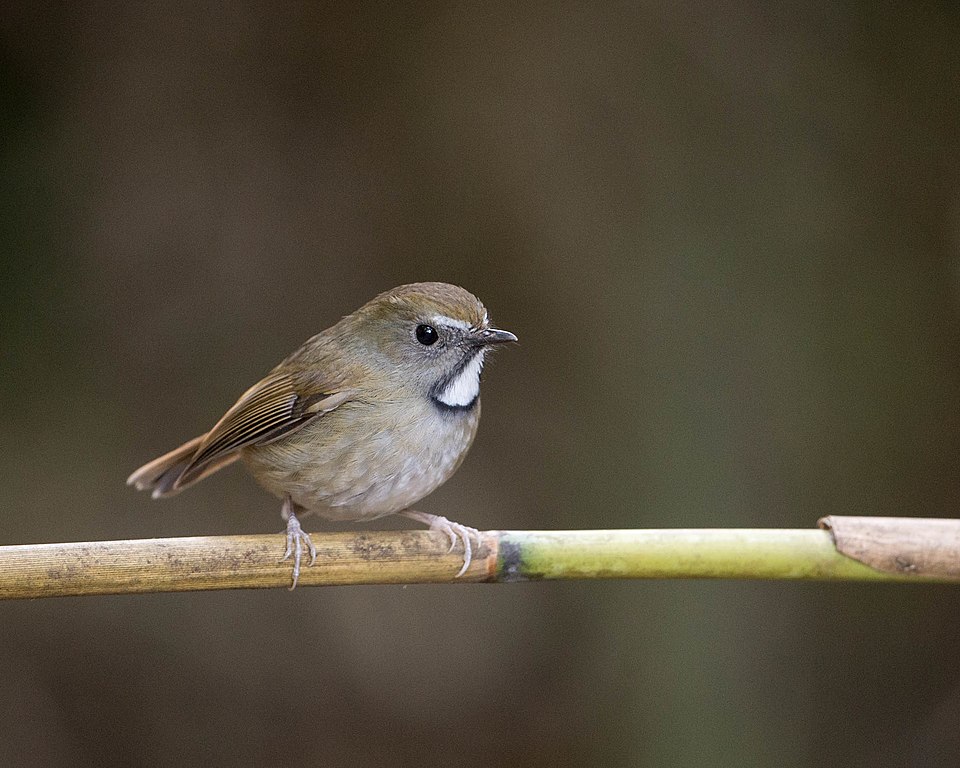
Rufous-tailed Jungle Flycatcher
Rhinomyias ruficauda
Order: Passeriformes / Family: Muscicapidae

Wikimedia Commons
About the Rufous-tailed Jungle Flycatcher
The Rufous-tailed Jungle Flycatcher (Rhinomyias ruficauda) is a small, discreet bird native to the lush, dense forests of Southeast Asia. This bird belongs to the Muscicapidae family, known for their adept insect-catching abilities. The flycatcher thrives in the subtropical and tropical moist lowland forests, particularly in regions like the Philippines and parts of Borneo. Its presence is an indicator of healthy, undisturbed forest ecosystems. The importance of this species extends beyond its ecological role as an insectivore; it also serves as a subject of interest in ornithological studies due to its unique behaviors and adaptations to forest life.
This species is primarily found in the understory of forests, where it employs its agility to catch flying insects, contributing to pest control in its habitat. The Rufous-tailed Jungle Flycatcher is non-migratory, residing year-round in its habitat, which makes it particularly vulnerable to deforestation and habitat loss. Seasonal behaviors include slight adjustments in feeding strategies, with a more varied diet during the breeding season to accommodate higher energy needs.
In terms of ecological significance, the Rufous-tailed Jungle Flycatcher plays a crucial role in maintaining the balance of insect populations, thus ensuring the health of the forest ecosystem. It is also an integral part of the avian community, interacting with other species through both competition and mutualism. Conservation of its habitat not only protects this species but also supports the broader biodiversity of the region. Efforts to study and preserve the Rufous-tailed Jungle Flycatcher contribute to our understanding of tropical forest ecosystems and the challenges they face.
The Rufous-tailed Jungle Flycatcher belongs to the family Muscicapidae, within the order Passeriformes. These birds typically live averages around 5 years with a maximum of 8 years recorded..
How to Identify a Rufous-tailed Jungle Flycatcher
The Rufous-tailed Jungle Flycatcher is a small bird, typically measuring about 13 to 15 cm in length. It is easily recognized by its eponymous rufous tail, which contrasts with its otherwise duller plumage. The upperparts are generally brown with a slight olive tint, while the underparts are lighter, often with a pale, buffy hue. The eyes are dark, and the bill is slender, suited to its insectivorous diet.
Adults of both sexes appear similar, though females might exhibit slightly duller tones compared to males. Juveniles can be distinguished by their spotted or streaked underparts, a feature that fades as they mature. The Rufous-tailed Jungle Flycatcher's flight silhouette is characterized by quick, flitting movements, and its perching posture is upright, often accompanied by tail flicking.
This flycatcher could be confused with other sympatric species such as the White-browed Jungle Flycatcher, but the latter can be distinguished by its prominent white brow and lack of rufous tail. Observing the tail and listening for its unique calls are reliable methods for proper identification.
Having trouble telling birds apart? Upload a photo to our bird identification tool for an instant species match.
Rufous-tailed Jungle Flycatcher Habitat and Range
Preferred Habitat
The Rufous-tailed Jungle Flycatcher inhabits dense, moist lowland forests, particularly favoring areas with thick understory vegetation. It thrives in the undisturbed forest environments of Southeast Asia, including regions such as the Philippines and Borneo. The bird is most commonly found at elevations ranging from sea level up to about 1,000 meters.
While primarily a resident of primary forests, it can occasionally be seen in secondary growth forests, especially where these connect to larger tracts of undisturbed forest. The species does not typically venture into urban areas, preferring the cover and resources provided by natural forests. Unlike many other birds, it does not exhibit significant seasonal shifts in habitat preference, maintaining its presence in the same forested areas year-round.
Geographic Range
The Rufous-tailed Jungle Flycatcher's range is largely restricted to Southeast Asia, with a particular concentration in the Philippines and parts of Borneo. This bird does not undertake long migrations, remaining within its tropical forest habitats throughout the year. Its distribution is patchy, primarily dependent on the availability of suitable forest environments.
In the Philippines, it is found on several islands, including Luzon and Mindanao, where dense forest cover supports its lifestyle. Borneo also provides a significant habitat, with the flycatcher inhabiting both the Malaysian and Indonesian parts of the island. Population densities tend to be higher in areas with extensive, intact forest tracts, where the bird can find both food and nesting sites.
While the bird is not migratory, it may exhibit some local movements in response to seasonal changes in food availability, particularly during breeding seasons when nutritional demands increase.
Want to know which birds visit your area? Browse our backyard birds by location guides for region-specific species lists.
What Does the Rufous-tailed Jungle Flycatcher Eat?
The primary diet of the Rufous-tailed Jungle Flycatcher consists of insects and other small arthropods. This bird employs a sit-and-wait foraging technique, perching quietly before darting out to snatch prey mid-air or picking it off leaves and branches. It favors a diverse range of insects, including flies, beetles, and caterpillars, which provide essential proteins and nutrients.
During the breeding season, the flycatcher may expand its diet to include more variety, possibly incorporating small fruits and berries when insects are less abundant. This flexibility allows it to meet the increased energy requirements associated with raising young.
Foraging occurs primarily in the early morning and late afternoon, capitalizing on peak insect activity. The bird's small size allows it to pursue smaller prey, often less than 1 cm in size, which it captures with precision and agility. Its feeding schedule is largely influenced by the availability of prey and the need to avoid midday heat, typical of its tropical environment.
Rufous-tailed Jungle Flycatcher Behavior and Social Structure
The Rufous-tailed Jungle Flycatcher is known for its solitary and territorial behavior. It establishes and defends a defined territory, particularly during the breeding season, which is crucial for attracting mates and ensuring sufficient resources for raising offspring. Males often engage in vocal displays and posturing to deter rivals and secure their territory.
Courtship displays are subtle, involving soft vocalizations and gentle movements to attract females. Once paired, the birds exhibit strong pair bonds, working cooperatively in nesting and rearing young. The flycatcher does not typically form flocks, preferring solitude or the company of its mate.
Its response to predators includes making alarm calls and employing evasive maneuvers. The Rufous-tailed Jungle Flycatcher is most active during the cooler parts of the day, engaging in feeding and territorial activities. It retreats to the dense foliage during the hottest hours, minimizing exposure to predators and harsh weather conditions.
Rufous-tailed Jungle Flycatcher Nesting and Reproduction
The Rufous-tailed Jungle Flycatcher constructs cup-shaped nests using a variety of natural materials such as grass, moss, and spider webs. These nests are usually well-hidden within dense vegetation, typically positioned in the fork of a tree or shrub, providing both concealment from predators and protection from environmental elements.
Clutch sizes generally range from two to three eggs, with both parents participating in incubation, which lasts approximately 14 days. The eggs are often pale with subtle speckling, blending well with the nest surroundings.
Once hatched, the young are altricial, requiring significant parental investment. Both male and female share in feeding and brooding the chicks, which fledge in about 15 to 18 days. The flycatcher typically raises one or two broods per year, depending on environmental conditions and resource availability.
Rufous-tailed Jungle Flycatcher Sounds and Vocalizations
The primary song of the Rufous-tailed Jungle Flycatcher is a soft, melodious series of notes, often described as a gentle warble. This song is characterized by a medium pitch and a consistent rhythm, serving both as a territorial marker and a call to mates.
In addition to its song, the flycatcher produces various call notes used in communication between mates or as alarm calls when predators are near. These calls are sharp and brief, easily distinguished from the more complex song.
The bird participates in the dawn chorus, a common behavior among tropical bird species, where its song contributes to the early morning symphony of the forest. This period of heightened vocal activity is critical for reinforcing territorial boundaries and initiating breeding interactions.
Interesting Facts About the Rufous-tailed Jungle Flycatcher
- 1Despite its modest size, the Rufous-tailed Jungle Flycatcher can catch insects in mid-air with remarkable agility.
- 2The bird's rufous tail is not only ornamental but also aids in communication and balance during flight.
- 3The Rufous-tailed Jungle Flycatcher is often used in studies to understand insect population dynamics in tropical forests.
- 4This species is primarily found in the Philippines, where it serves as an indicator of forest health.
- 5Unlike many flycatchers, the Rufous-tailed Jungle Flycatcher does not migrate, remaining in its tropical habitat year-round.
- 6The bird exhibits a unique foraging method, often remaining motionless before suddenly darting to catch prey.
- 7Though it sings primarily during the breeding season, the flycatcher's song is heard throughout the year in its habitat.
Rufous-tailed Jungle Flycatcher Conservation Status
The Rufous-tailed Jungle Flycatcher is currently classified as Least Concern by the IUCN, though its population is suspected to be in decline due to habitat loss and fragmentation. The primary threat to this species is deforestation, driven by agricultural expansion, logging, and urban development in Southeast Asia. Conservation efforts focus on preserving large tracts of primary forest, which are essential for the flycatcher's survival. Protected areas and national parks play a crucial role in safeguarding its habitat. Historical records indicate that the Rufous-tailed Jungle Flycatcher was once more widespread, but significant habitat loss over the past century has led to its current restricted range. Monitoring population trends and promoting sustainable land-use practices are vital steps in ensuring the long-term survival of this species. Conservation organizations continue to advocate for the protection of critical habitats and raise awareness about the ecological importance of preserving the rich biodiversity of Southeast Asia.