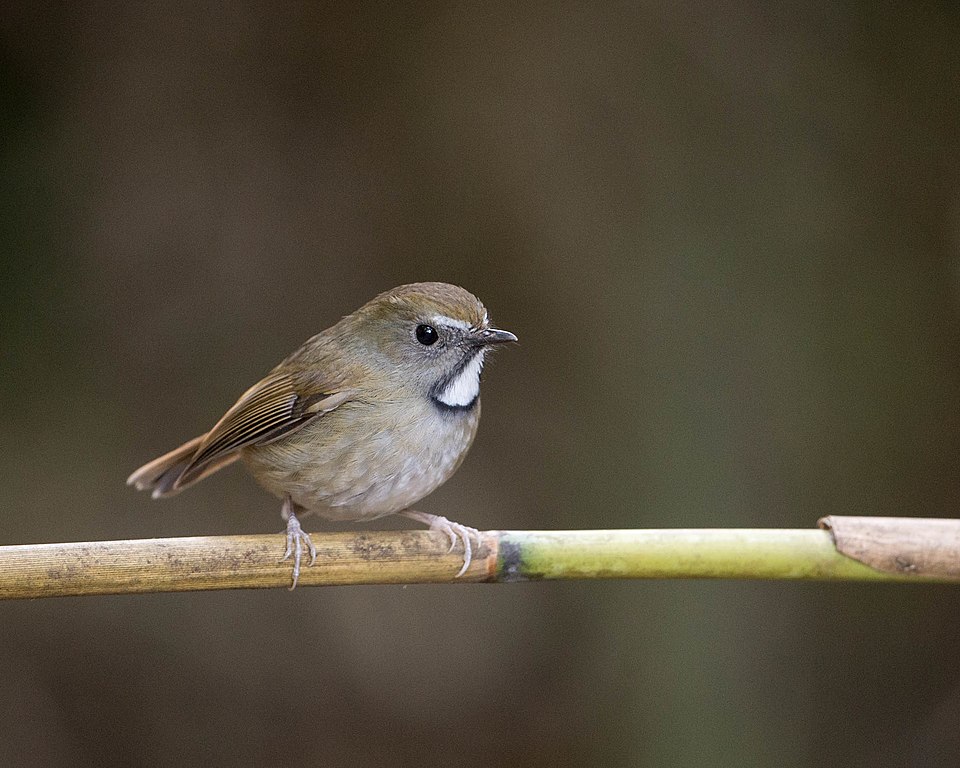
Rusty-bellied Shortwing
Brachypteryx hyperythra
Order: Passeriformes / Family: Muscicapidae

Wikimedia Commons
About the Rusty-bellied Shortwing
The Rusty-bellied Shortwing (Brachypteryx hyperythra) is a small, elusive bird primarily found in the dense undergrowth of the Himalayan forests. Its striking rusty-orange belly provides a flash of color amidst the moss-laden landscapes it inhabits. This shortwing is endemic to Asia, specifically within the eastern Himalayan range covering regions of northeastern India, Bhutan, and northern Myanmar. It thrives in subtropical or tropical moist montane forests, typically at elevations ranging from 1,800 to 3,400 meters.
As a member of the Muscicapidae family, the Rusty-bellied Shortwing plays a vital role in its ecosystem by controlling insect populations and aiding in seed dispersal. Its presence indicates a healthy forest environment, as it prefers pristine, undisturbed habitats. The shortwing's behavior patterns change with the seasons; during breeding, it becomes more vocal and territorial while it retreats into denser foliage during the non-breeding season. The bird's preference for thick underbrush provides it with ample cover from predators, making it a challenging species to observe in the wild.
In terms of ecological significance, the Rusty-bellied Shortwing contributes to maintaining the delicate balance of forest ecosystems. It is known to be a solitary bird, often foraging alone or in pairs. This species exhibits a high degree of site fidelity, often returning to the same breeding and foraging grounds annually. Despite its elusive nature, the Rusty-bellied Shortwing's melodious song can often be heard echoing through the forest, especially during dawn and dusk, marking its presence even when out of sight.
The Rusty-bellied Shortwing belongs to the family Muscicapidae, within the order Passeriformes. These birds typically live typically lives around 5-7 years in the wild..
How to Identify a Rusty-bellied Shortwing
The Rusty-bellied Shortwing is a small bird, measuring approximately 14-15 cm in length. Its most notable feature is its rusty-orange belly, which stands out against the otherwise dark blue and gray plumage. The head, back, and wings are a deep blue-gray, while the throat and breast are a lighter shade of bluish-gray, gradually blending into the rusty coloration of the belly. Males and females are similar in appearance, making them difficult to distinguish in the field. However, juveniles can be identified by their more muted, browner tones and lack of the vibrant belly seen in adults.
In flight, the Rusty-bellied Shortwing has a rapid, fluttering wingbeat, typical of a bird that prefers to remain close to the ground and within dense vegetation. When perched, it often adopts a horizontal posture, keeping its body parallel to the branch, which may aid in camouflage among the shadows and leaves.
Though it can be confused with similar species like the White-bellied Shortwing, the rusty belly of Brachypteryx hyperythra is a reliable distinguishing feature. Its song also serves as an identifying trait, characterized by a series of melodious whistles that set it apart from other forest dwellers.
Having trouble telling birds apart? Upload a photo to our bird identification tool for an instant species match.
Rusty-bellied Shortwing Habitat and Range
Preferred Habitat
The Rusty-bellied Shortwing is predominantly found in montane forests, favoring areas with dense undergrowth and abundant leaf litter. These environments provide the necessary cover and food resources for the bird. It typically resides at elevations between 1,800 and 3,400 meters, often in subtropical and tropical moist montane forests. Within these habitats, it seeks out areas with thick shrubbery and bamboo, where it can forage and nest.
During the breeding season, the Rusty-bellied Shortwing may be found slightly lower in elevation, moving to higher altitudes as the weather warms. It shows a strong preference for forests with ample moss and fallen logs, which support its foraging activities. Although it is primarily found in rural and remote forested areas, it may occasionally venture into the edges of human settlements if suitable habitat conditions exist.
The bird's reliance on pristine forest habitats makes it sensitive to habitat degradation, emphasizing the importance of conserving these areas to ensure the species' survival.
Geographic Range
The Rusty-bellied Shortwing's range is limited to the eastern Himalayas, a region that provides the specific climatic and habitat conditions it requires. It is found in northeastern India, particularly in the states of Arunachal Pradesh and Sikkim, extending into Bhutan and parts of northern Myanmar. Within this range, the bird occupies montane forests that are rich in undergrowth and have a cool, moist climate.
The species does not migrate long distances, but it may exhibit altitudinal movements in response to seasonal changes, moving to lower elevations during harsh winter months. This limited range, combined with its preference for specific habitats, makes the Rusty-bellied Shortwing a species of interest for conservationists. The population density is generally low, with the bird being more common in undisturbed forest areas.
Although not considered migratory, the Rusty-bellied Shortwing's movements are influenced by local weather patterns, and it remains within its restricted range throughout the year.
Want to know which birds visit your area? Browse our backyard birds by location guides for region-specific species lists.
What Does the Rusty-bellied Shortwing Eat?
The Rusty-bellied Shortwing primarily feeds on insects and other small invertebrates, which it forages for within the leaf litter and forest floor. Its diet includes beetles, ants, and caterpillars, as well as spiders and other arthropods. The bird uses a combination of visual cues and quick, darting movements to capture prey, often flipping over leaves and probing the ground with its beak.
In addition to insects, the Rusty-bellied Shortwing may consume small fruits and seeds, particularly during times when invertebrate prey is less abundant. This dietary flexibility helps it survive in the fluctuating conditions of its montane habitat. The bird typically forages alone or in pairs, maintaining a low profile to avoid predators.
Feeding activity peaks during the early morning and late afternoon, times when insects are more active and the forest floor is cooler. The Rusty-bellied Shortwing's foraging habits play a crucial role in controlling insect populations and aiding in seed dispersal within its ecosystem.
Rusty-bellied Shortwing Behavior and Social Structure
The Rusty-bellied Shortwing exhibits a solitary and secretive nature, often remaining hidden within dense underbrush. It is a territorial bird, especially during the breeding season, when males become more vocal and assertive. The bird's melodious song serves as a territorial marker and a means to attract mates, with males often singing from concealed perches within their territory.
Courtship displays are subtle and typically involve the male presenting food items to the female, accompanied by soft calls and mutual preening. The Rusty-bellied Shortwing does not form large flocks, preferring to associate with a mate or remain alone. Its response to predators includes remaining motionless or retreating deeper into cover.
The bird is most active during the early morning and late afternoon, aligning with its feeding schedule. It spends much of its time foraging among the forest floor and lower strata of the forest, where it can remain hidden from view while searching for food.
Rusty-bellied Shortwing Nesting and Reproduction
The Rusty-bellied Shortwing constructs its nest close to the ground, often within a sheltered crevice or under a dense bush. The nest is an open cup structure made from moss, leaves, and small twigs, providing camouflage and protection from the elements. Clutch size typically ranges from 2 to 4 eggs, which are pale with speckled markings.
The female primarily undertakes incubation, which lasts for about 14-16 days. During this period, the male may assist by providing food to the female. Once the eggs hatch, both parents participate in feeding the chicks, which fledge approximately 14-16 days after hatching. The fledglings remain dependent on the parents for a few weeks post-fledging, gradually learning to forage on their own.
The Rusty-bellied Shortwing generally raises one brood per year, although a second brood is possible if conditions are favorable. The bird's nesting habits underscore its preference for secluded, undisturbed habitats, which are essential for successful reproduction.
Rusty-bellied Shortwing Sounds and Vocalizations
The Rusty-bellied Shortwing is known for its rich, melodious song, which consists of a series of clear, whistled notes. The song is often described as flute-like, with a rhythm that is both soothing and intricate. These vocalizations serve as both a territorial call and an advertisement to potential mates.
Apart from its primary song, the Rusty-bellied Shortwing also produces a variety of call notes, including soft chips and trills used for communication between mates and to signal alarm. Alarm calls are sharper and more abrupt, often given in response to perceived threats.
The bird is most vocal during the early morning hours, contributing to the dawn chorus that characterizes its habitat. Its song, distinct and resonant, stands out amidst the sounds of the forest, providing a reliable auditory cue for birdwatchers and researchers alike.
Interesting Facts About the Rusty-bellied Shortwing
- 1The Rusty-bellied Shortwing's song can be heard up to 300 meters away in dense forest, making it easier to detect by sound than sight.
- 2Despite its small size, the Rusty-bellied Shortwing can consume insects nearly half its own body weight in a single day.
- 3This species was first described by British ornithologist Allan Octavian Hume in 1874, based on specimens from the Himalayas.
- 4The Rusty-bellied Shortwing prefers elevations where temperatures range from 10 to 20°C, showcasing its adaptation to cooler climates.
- 5Observations indicate that the Rusty-bellied Shortwing spends over 70% of its active time foraging close to the forest floor.
- 6The bird's preference for moss-laden habitats is so strong that nests are often constructed entirely from moss.
- 7During breeding season, males sing more frequently, with studies noting up to 50 songs per hour at peak times.
Rusty-bellied Shortwing Conservation Status
The Rusty-bellied Shortwing is currently listed as a species of Least Concern by the IUCN, but its population trend is decreasing due to habitat loss. The primary threats to its survival include deforestation and habitat degradation caused by logging, agriculture, and development within its range. Conservation efforts focus on preserving the montane forest habitats crucial for the species' survival. Protected areas within its range, such as national parks and wildlife sanctuaries, play a vital role in safeguarding these environments. Historical population data indicate that the Rusty-bellied Shortwing has experienced fluctuations in numbers, correlating with changes in land use and habitat quality. Continued conservation measures, including habitat restoration and legal protection of critical areas, are essential to prevent further decline and ensure the long-term viability of this unique songbird.