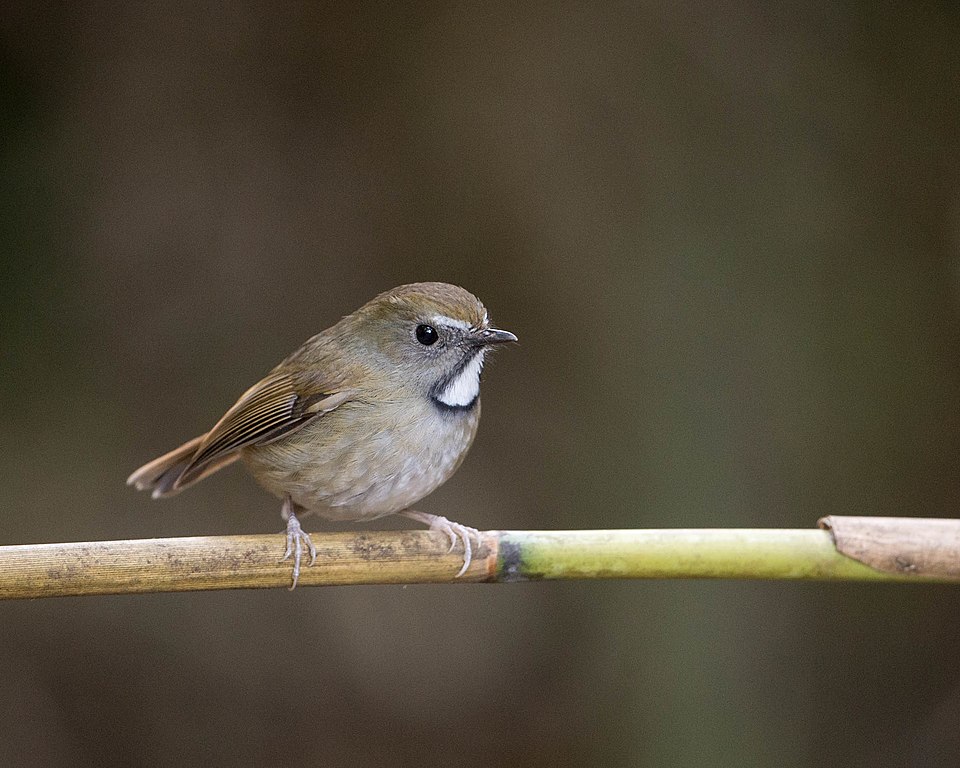
Shiny Whistling-Thrush
Myophonus melanurus
Order: Passeriformes / Family: Muscicapidae

Wikimedia Commons
About the Shiny Whistling-Thrush
The Shiny Whistling-Thrush (Myophonus melanurus) is a distinctive bird of the Muscicapidae family, known for its striking iridescent blue plumage and rich, melodious voice. Predominantly found in the montane forests of South and Southeast Asia, this bird inhabits regions ranging from the Western Ghats of India to the dense mountainous forests of Sri Lanka and the Malay Peninsula. Its presence is a testament to the rich biodiversity of these areas. This thrush plays a pivotal ecological role, acting as both a predator of various insects and small invertebrates and as a seed disperser, thus contributing to the forest's regeneration and health.
In the Western Ghats, the Shiny Whistling-Thrush thrives in moist deciduous forests and along streams, where its calls echo through the dense canopy. The bird's preference for such habitats highlights its reliance on high humidity and dense foliage, which provide ample food sources and nesting sites. Seasonal behaviors include altitudinal migrations, where during the breeding season, they ascend to higher elevations, taking advantage of the temperate climate and abundant food supply.
The Shiny Whistling-Thrush is of particular significance to local ecosystems due to its role in controlling insect populations. In regions like Sri Lanka's Sinharaja Forest Reserve, these birds serve as indicators of forest health, with their population numbers reflecting the overall biodiversity and ecological balance. Its adaptability to changing environments, alongside its ability to thrive in undisturbed forests, underscores its resilience, yet also highlights the importance of preserving these habitats.
Throughout the year, but especially during the monsoon season, the Shiny Whistling-Thrush can be observed engaging in courtship performances, characterized by complex vocalizations and displays of its shimmering feathers. As the seasons change, so do the bird's foraging habits, reflecting its adaptability to the availability of food resources. The Shiny Whistling-Thrush is not only a visual delight but also serves as a melodious reminder of the rich symphony of life in the Asian forests.
The Shiny Whistling-Thrush belongs to the family Muscicapidae, within the order Passeriformes. These birds typically live typically around 5-8 years, with some individuals reaching 10 years in the wild..
How to Identify a Shiny Whistling-Thrush
Adult Shiny Whistling-Thrushes are easily recognizable by their vibrant blue plumage, which shimmers with an iridescent quality, particularly under sunlight. The blue feathers cover most of their body, with subtle variations in shade around the head and wings. Their stout, slightly curved bill is adapted for their omnivorous diet and shows a contrasting dark hue. Juveniles, however, present a more muted appearance, with a combination of duller blue and brownish feathers, lacking the full iridescence of the adults.
Male and female Shiny Whistling-Thrushes exhibit minimal sexual dimorphism, making them challenging to differentiate in the field based solely on appearance. Both sexes share similar sizes and plumage, though males might occasionally display slightly brighter blues during the breeding season. In flight, their broad wings and moderately long tail give them a powerful silhouette, with steady, direct flight patterns typical of thrushes.
When perched, the Shiny Whistling-Thrush adopts an alert and upright posture, often bobbing its tail and flicking its wings. This behavior, coupled with its striking coloration, makes it difficult to confuse with other species. However, in poor lighting conditions, they might be mistaken for other dark-colored thrushes or magpies, though careful observation of their size and distinctive calls can aid in proper identification.
Having trouble telling birds apart? Upload a photo to our bird identification tool for an instant species match.
Shiny Whistling-Thrush Habitat and Range
Preferred Habitat
The Shiny Whistling-Thrush predominantly occupies moist, dense montane forests, favoring areas with abundant water sources such as streams and rivers. These habitats offer the bird both food and nesting sites. In the Western Ghats, they thrive at elevations ranging from 600 to 2,000 meters, where the environment remains humid and lush year-round. The bird's affinity for such habitats underscores its need for high humidity levels and dense foliage, which provide ample cover from predators.
During different seasons, the Shiny Whistling-Thrush may shift altitudinally, moving to higher elevations during the breeding season to take advantage of cooler temperatures and greater food availability. While primarily a resident of forested areas, it occasionally ventures into nearby cultivated lands and gardens, especially when in search of food, making it a familiar visitor in more rural settings.
The bird rarely inhabits urban environments but may be spotted in peri-urban areas where forest patches remain intact. Its presence in these areas underscores the importance of preserving natural habitats even in the face of expanding human settlements.
Geographic Range
The Shiny Whistling-Thrush is native to South and Southeast Asia, with its range spanning several countries, including India, Sri Lanka, and parts of the Malay Peninsula. In India, it is most commonly found in the Western Ghats, extending from Maharashtra down to Kerala and Tamil Nadu. In Sri Lanka, it inhabits the central highlands, particularly the Sinharaja Forest Reserve and Horton Plains National Park.
The bird's range does not significantly extend beyond these regions, as it favors the specific environmental conditions found in these montane forests. While it is primarily a resident species, it may undertake short-distance altitudinal migrations in response to seasonal changes, moving to higher elevations during the breeding season.
Within its range, the Shiny Whistling-Thrush is considered locally common, with certain areas like the Western Ghats serving as population density hotspots. Its presence is indicative of healthy forest ecosystems, making it a focal species for conservation efforts in these regions.
Want to know which birds visit your area? Browse our backyard birds by location guides for region-specific species lists.
What Does the Shiny Whistling-Thrush Eat?
The Shiny Whistling-Thrush maintains a diverse diet, primarily consisting of insects, small invertebrates, and a variety of fruits. Its insectivorous tendencies see it feeding on beetles, ants, and caterpillars, which it forages from leaf litter and undergrowth in the forest. Seasonal diet changes occur, with an increased reliance on fruits like berries during the monsoon season when insect availability declines.
This thrush employs a foraging technique characterized by probing and flipping over leaves and debris on the forest floor, using its stout bill to uncover hidden prey. Its diet also includes small amphibians and occasionally, seeds, highlighting its omnivorous nature and adaptability to available food sources.
The Shiny Whistling-Thrush typically feeds during the early morning and late afternoon, taking advantage of cooler temperatures and reduced competition. By maintaining a varied diet, the bird plays a crucial role in both pest control and seed dispersal within its ecosystem.
Shiny Whistling-Thrush Behavior and Social Structure
The Shiny Whistling-Thrush exhibits fascinating social and territorial behaviors. Typically, it maintains a solitary or paired existence, with pairs forming monogamous bonds during the breeding season. Territoriality is pronounced, with both males and females defending their chosen nesting sites aggressively. These birds often engage in vocal duets, using their melodious songs to assert dominance and reinforce pair bonds.
Courtship displays are intricate, involving synchronized singing and visual displays of their shimmering plumage, particularly by the males. These displays play a crucial role in mate selection and territory establishment. Outside the breeding season, the thrush may join small flocks, especially when foraging, but remains relatively independent.
In response to predators, the Shiny Whistling-Thrush employs alarm calls and evasive flight patterns, seeking cover in dense foliage to avoid detection. Its daily activity patterns include active foraging during dawn and dusk, with periods of rest during the hottest parts of the day, reflecting its adaptation to the temperate montane environments.
Shiny Whistling-Thrush Nesting and Reproduction
The Shiny Whistling-Thrush constructs its nest with great care, using a mix of twigs, moss, and leaves to form a cup-like structure. These nests are typically built in secluded locations, such as on rocky ledges or in dense vegetation near water sources, providing protection from predators and environmental elements.
Clutch size generally ranges from two to four eggs, with the female primarily responsible for incubation. The incubation period lasts approximately 14 to 16 days, during which the male assists by providing food to the nesting female. Once hatched, both parents partake in feeding the chicks, which fledge after about 15 to 18 days.
The Shiny Whistling-Thrush often raises two broods per year, taking advantage of the extended breeding season in its montane habitat. This reproductive strategy ensures the continuation of its population despite environmental challenges.
Shiny Whistling-Thrush Sounds and Vocalizations
The Shiny Whistling-Thrush is renowned for its clear and melodious song, characterized by a series of rich, flute-like notes delivered in a rhythmic pattern. This song varies in pitch and tempo, often starting with slow, deliberate notes that gradually increase in speed and complexity.
Apart from its primary song, the thrush emits a variety of call notes, including sharp, metallic 'chink' sounds used for communication between mates and as alarm calls. During the dawn chorus, its voice stands out, contributing to the symphony of sounds in the forest.
These vocalizations serve multiple functions, from attracting mates and defending territories to warning of nearby predators. The bird's song is both a tool for survival and a key characteristic that makes it a favorite among birdwatchers.
Interesting Facts About the Shiny Whistling-Thrush
- 1Despite their solitary nature, Shiny Whistling-Thrushes form lifelong pairs, showcasing strong monogamous bonds.
- 2Their iridescent blue plumage appears different under various lighting conditions, a result of structural coloration.
- 3This species can mimic the calls of other birds, adding complexity to its already impressive vocal repertoire.
- 4Juvenile Shiny Whistling-Thrushes undergo a significant plumage transformation, taking up to a year to acquire adult coloration.
- 5In some regions, these thrushes are believed to bring good luck, likely due to their striking appearance and melodious voice.
- 6During the breeding season, the male engages in an elaborate display of feathers and song to attract a mate.
- 7Their diet shifts significantly with the seasons, showcasing their adaptability to changing environmental conditions.
Shiny Whistling-Thrush Conservation Status
The Shiny Whistling-Thrush currently holds a status of Least Concern according to the IUCN Red List, reflecting a stable population trend. However, the primary threats to its habitat include deforestation and habitat fragmentation due to agricultural expansion and urban development. Conservation efforts focus on preserving its montane forest habitats, particularly in biodiversity hotspots like the Western Ghats and Sri Lanka's central highlands. Protected areas and national parks play a crucial role in safeguarding its environment, ensuring the thrush's continued presence in these regions. Historically, the Shiny Whistling-Thrush has faced challenges due to habitat destruction, but increased awareness and conservation initiatives have helped stabilize its populations. Continued efforts are essential to maintain this trajectory and protect the ecological integrity of its native forests.