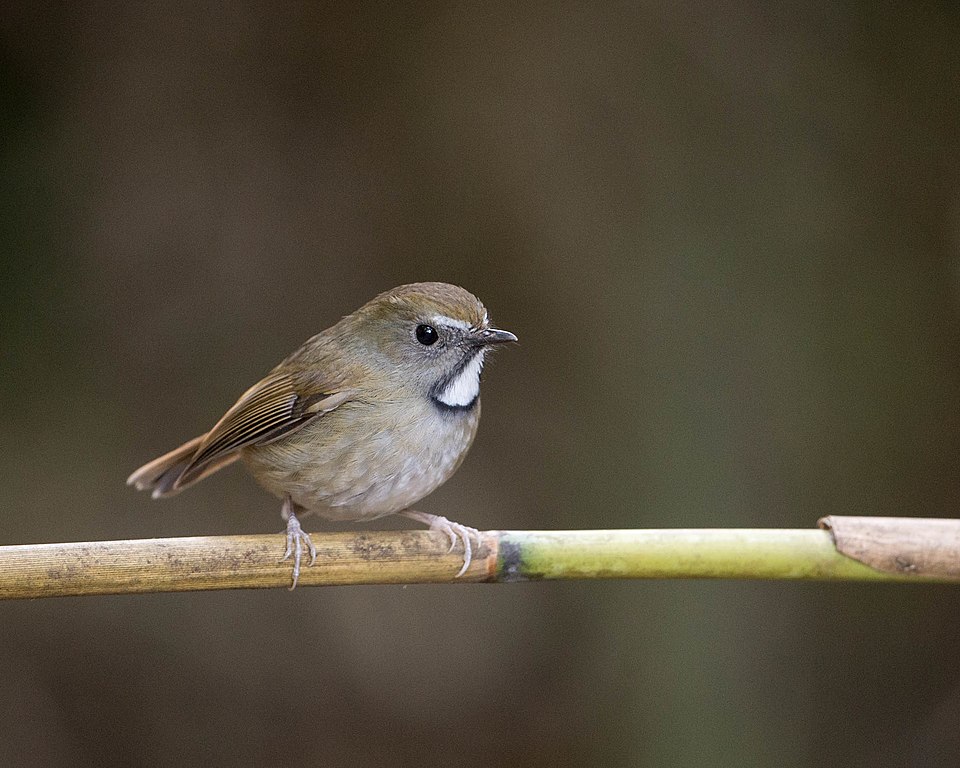
Siberian Rubythroat
Luscinia calliope
Order: Passeriformes / Family: Muscicapidae

Wikimedia Commons
About the Siberian Rubythroat
The Siberian Rubythroat, Luscinia calliope, is a captivating songbird found primarily in the boreal forests and thickets of Asia. This small passerine has garnered admiration for its vibrant plumage and enchanting vocalizations, making it a favorite among birdwatchers and ornithologists alike. Its distribution spans from eastern Russia through Mongolia, down to northern China, and into parts of Japan. During the breeding season, the Siberian Rubythroat inhabits dense undergrowth in coniferous and mixed forests, where its distinctive song can be heard resonating through the trees. This bird plays a significant ecological role as both a predator of insects and a prey species for larger birds and mammals. As autumn approaches, the Siberian Rubythroat migrates to warmer climates, primarily in Southeast Asia, including countries like Thailand, Vietnam, and Myanmar. This long-distance migration is a testament to the bird's resilience and adaptability. In its wintering grounds, the Siberian Rubythroat often takes refuge in bamboo groves, shrubby areas, and even urban gardens. Its ability to thrive in various habitats underscores its ecological versatility and importance. Seasonal behaviors of the Siberian Rubythroat are closely linked with its migratory patterns. In spring, males establish territories and attract mates through their rich, melodious songs and dynamic displays. As ground-nesters, they rely heavily on dense vegetation for protection. The Siberian Rubythroat contributes to the ecosystem by controlling insect populations, dispersing seeds, and providing food for predators. Its presence in various habitats reflects the health and diversity of these ecosystems. Understanding the Siberian Rubythroat's role within its environment offers valuable insights into the intricate balance of nature.
The Siberian Rubythroat belongs to the family Muscicapidae, within the order Passeriformes. These birds typically live average 5-6 years, with a maximum recorded of 9 years..
How to Identify a Siberian Rubythroat
The Siberian Rubythroat is a small songbird, measuring approximately 14-16 centimeters in length. Adult males are particularly striking, showcasing a vivid red throat patch that contrasts sharply with their white underparts and olive-brown upperparts. The red throat, bordered by a distinct white frame, is the primary field mark for males. Females and juveniles, however, lack this vibrant red coloration and instead display a more subdued buffy throat. Both sexes share a similar bill, short and slightly curved, adapted for insect foraging. In terms of flight silhouette, the Siberian Rubythroat exhibits a relatively short tail and rounded wings, which facilitate agile movements through dense vegetation. When perched, it often adopts an upright posture, flicking its tail and wings intermittently. Confusion may arise with species like the Bluethroat, which also possesses a colorful throat patch. However, the Bluethroat's blue coloration and different habitat preferences usually help distinguish the two. Observers should note the Siberian Rubythroat's behavior of skulking through thick underbrush, making visual confirmation a rewarding challenge.
Having trouble telling birds apart? Upload a photo to our bird identification tool for an instant species match.
Siberian Rubythroat Habitat and Range
Preferred Habitat
The Siberian Rubythroat thrives in a range of habitats, primarily favoring dense, low-lying vegetation in forested regions. During the breeding season, it typically inhabits the undergrowth of boreal and mixed forests, often at elevations ranging from 500 to 1500 meters. In these environments, the bird finds ample cover and food sources. As it migrates to its wintering grounds, the Siberian Rubythroat adapts to a variety of habitats, including bamboo thickets, shrublands, and even urban gardens. This adaptability allows it to exploit a wide range of ecological niches. Despite its preference for natural habitats, the Siberian Rubythroat occasionally appears in rural and suburban areas, particularly in regions where natural vegetation has been moderately disturbed. Its presence in such areas highlights its ability to adjust to varying degrees of habitat modification. Understanding its habitat preferences provides valuable insights into its ecology and conservation needs.
Geographic Range
The Siberian Rubythroat's breeding range spans across the vast expanse of eastern Russia, extending into Mongolia, northern China, and reaching the Japanese islands of Hokkaido and Honshu. During the non-breeding season, this migratory species embarks on a southward journey to Southeast Asia, where its wintering range includes Thailand, Vietnam, Myanmar, and Laos. The bird follows specific migration corridors that take it through key staging areas such as the Korean Peninsula and eastern China. Population density hotspots during the breeding season are often found in the dense taiga forests of Siberia, where suitable nesting habitat is abundant. In contrast, wintering populations concentrate in diverse habitats ranging from lowland forests to urban parks in Southeast Asia. This wide range underscores the Siberian Rubythroat's adaptability and the importance of conserving habitats across multiple countries to ensure its survival.
Want to know which birds visit your area? Browse our backyard birds by location guides for region-specific species lists.
What Does the Siberian Rubythroat Eat?
The Siberian Rubythroat predominantly feeds on a diet composed of insects and other small invertebrates. During the breeding season, it relies heavily on a rich supply of caterpillars, beetles, and spiders found within the dense forest undergrowth. This insectivorous diet supports the nutritional needs of both adults and their growing chicks. As the seasons change and it migrates to its wintering grounds, its diet becomes more varied. In addition to insects, the Siberian Rubythroat may consume berries and seeds, particularly in areas where insect availability decreases. Foraging techniques include ground gleaning and occasional sallying from low perches to catch prey. The bird typically forages alone or in pairs, maintaining a low profile within the underbrush. Its feeding schedule remains flexible, allowing it to take advantage of available food resources throughout the day.
Siberian Rubythroat Behavior and Social Structure
The Siberian Rubythroat exhibits a range of fascinating behaviors, particularly during the breeding season when males become highly territorial. Males defend their chosen territory with fervent song and display, often engaging in wing-fluttering and tail-fanning to deter rivals and attract potential mates. Courtship involves elaborate song displays and mutual preening between pairs. Throughout the breeding season, the Siberian Rubythroat remains vigilant, responding swiftly to potential predators with alarm calls and evasive maneuvers. Socially, this bird is primarily solitary or found in pairs, although it may occasionally join mixed-species flocks during migration. Daily activity patterns are largely diurnal, with peak foraging occurring in the early morning and late afternoon. Despite its generally reclusive nature, the Siberian Rubythroat becomes more conspicuous during the dawn and dusk hours when its melodious song can be heard echoing through the forest.
Siberian Rubythroat Nesting and Reproduction
The Siberian Rubythroat constructs its nest close to the ground, often hidden among dense vegetation. The nest is a cup-shaped structure woven from grass, leaves, and plant fibers, providing a secure environment for its eggs. Nesting sites are carefully chosen to ensure concealment from predators such as snakes and small mammals. The typical clutch size ranges from four to six eggs, which are incubated by the female for approximately 12 to 14 days. Once hatched, both parents participate in feeding and caring for the chicks. The fledging period lasts about 10 to 12 days, during which the chicks remain close to the nest, learning essential survival skills from their parents. The Siberian Rubythroat usually raises one brood per year, although in optimal conditions, a second brood may occur.
Siberian Rubythroat Sounds and Vocalizations
The primary song of the Siberian Rubythroat is a series of melodious, fluty notes that vary in pitch and rhythm. This song, often delivered from a concealed perch, serves both to attract mates and establish territory boundaries. In addition to its main song, the Siberian Rubythroat produces a range of call notes, including a sharp 'tack' sound used in communication between individuals. Alarm calls are more abrupt and harsh, designed to warn of potential threats. During the breeding season, the Siberian Rubythroat's song contributes to the dawn chorus, adding a rich, musical quality to the forest soundscape.
Interesting Facts About the Siberian Rubythroat
- 1The Siberian Rubythroat can migrate up to 5,000 kilometers between breeding and wintering grounds.
- 2This bird was once classified in the thrush family but is now recognized as part of the Old World flycatchers.
- 3The vivid red throat of males is a key feature during courtship, acting as a visual signal to attract females.
- 4The Siberian Rubythroat's song is often compared to the nightingale for its melodious and intricate quality.
- 5Researchers have observed Siberian Rubythroats using their tails as a balancing aid when foraging on uneven terrain.
- 6Though generally elusive, Siberian Rubythroats occasionally appear in urban gardens, offering birdwatchers a rare treat.
- 7The Siberian Rubythroat's ability to thrive in diverse habitats reflects its adaptability and ecological flexibility.
Siberian Rubythroat Conservation Status
The Siberian Rubythroat is currently listed as Least Concern on the IUCN Red List, with a stable population trend. Despite facing habitat loss due to deforestation and land conversion, this adaptable species has maintained a robust population across its range. Conservation efforts focus on preserving critical habitats, particularly breeding and wintering grounds in Asia. Initiatives to protect forested areas and implement sustainable land management practices are crucial for maintaining healthy populations. Historically, the Siberian Rubythroat has shown resilience in adapting to changing environmental conditions, a hopeful sign for its future persistence.