
Sickle-winged Chat
Emarginata sinuata
Order: Passeriformes / Family: Muscicapidae

Wikimedia Commons
About the Sickle-winged Chat
The Sickle-winged Chat, scientifically known as Emarginata sinuata, is a small passerine bird belonging to the Muscicapidae family. It inhabits the arid and semi-arid regions of southern Africa, showcasing remarkable adaptability to harsh environments. This bird is primarily found in countries such as South Africa, Namibia, and Botswana, thriving in open grasslands, rocky outcrops, and scrubby areas where vegetation is sparse. The Sickle-winged Chat plays a significant role in the ecosystem by controlling insect populations and dispersing seeds, contributing to the ecological balance of its habitat. During the breeding season, which typically occurs in the spring and early summer, the bird becomes more territorial-males are often seen perched prominently on rocks or low shrubs, singing to establish dominance and attract mates. Outside the breeding season, the Sickle-winged Chat is more solitary, although small family groups may remain together. Its ecological importance is underscored by its role as both predator and prey, influencing the dynamics of its environment. As a species adapted to variable climates, the Sickle-winged Chat exhibits resilience to seasonal changes. During periods of drought or extreme weather, it may shift its range in search of more hospitable areas, demonstrating a capacity for mobility and adaptability. This bird is an integral component of the avian community in southern Africa, contributing to the rich biodiversity of the region.
The Sickle-winged Chat belongs to the family Muscicapidae, within the order Passeriformes. These birds typically live average 4 years with max recorded 7 years.
How to Identify a Sickle-winged Chat
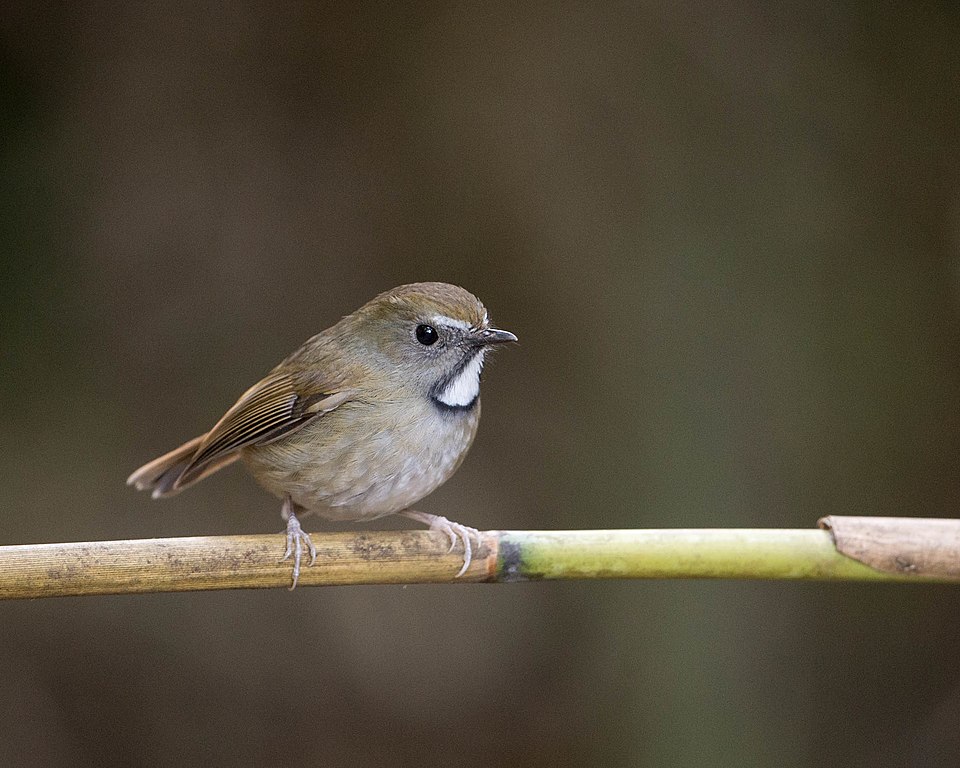
The Sickle-winged Chat displays a distinctive combination of field marks that make it relatively easy to identify. Adult males typically possess a brownish-gray plumage with a pale underbelly, and a striking sickle shape to their wings, which is particularly noticeable in flight. Females are similar in appearance but may have slightly duller tones. Juveniles resemble females but often have a more mottled appearance with streaks on their breast. When compared to other chats, the Sickle-winged Chat's wings are more pronouncedly curved, giving it its name. In flight, this curvature is a key identification feature-look for a silhouette that accentuates the wing shape. The bird's perching posture is characteristic as well; it often stands upright on rocks or low perches, providing a clear view of its surroundings. The Sickle-winged Chat can be confused with the Familiar Chat, but the latter lacks the distinctive wing shape and typically has a more uniform coloration. Observing these field marks is crucial for accurate identification, especially in areas where similar species coexist.
Having trouble telling birds apart? Upload a photo to our bird identification tool for an instant species match.
Sickle-winged Chat Habitat and Range
Preferred Habitat
The Sickle-winged Chat thrives in open, arid, and semi-arid environments. It is most commonly found in grasslands, rocky outcrops, and scrubby regions where vegetation is sparse. These habitats provide ample perching sites and open spaces for foraging. The bird is adapted to elevations ranging from sea level to about 2,000 meters. Seasonal habitat shifts occur in response to environmental conditions-during harsh winters or extended droughts, the Sickle-winged Chat may move to areas with more abundant resources. While it is mainly found in rural and wilderness areas, it occasionally ventures into the outskirts of urban regions, particularly where natural habitats interface with human settlements. This adaptability to various habitats underscores its resilience and versatility.
Geographic Range
The Sickle-winged Chat is endemic to southern Africa, with its range encompassing countries such as South Africa, Namibia, and Botswana. It is predominantly a resident species, showing localized movements rather than long-distance migrations. Within its range, the bird occupies a variety of habitats but is notably abundant in the Nama Karoo and the Kalahari Desert, where it exploits the sparse vegetation and open spaces. Population density is highest in regions where the landscape provides a mix of rocky terrain and scattered shrubs, which are ideal for its foraging and breeding needs. While not known for extensive migratory behavior, some altitudinal movements occur, particularly in response to seasonal shifts in resource availability.
Want to know which birds visit your area? Browse our backyard birds by location guides for region-specific species lists.
What Does the Sickle-winged Chat Eat?
The Sickle-winged Chat primarily feeds on insects, making it an insectivorous species. Its diet consists of ants, beetles, caterpillars, and grasshoppers, which it gleans from the ground or captures in short flights. Seasonal diet changes are noted, with an increased reliance on insects during the wet season when these are more abundant. The bird employs a foraging technique that involves hopping on the ground with keen observation, quickly darting to snatch prey. Occasionally, it supplements its diet with seeds and small fruits, especially during drier months when insects are scarce. The Sickle-winged Chat typically forages during the cooler parts of the day, such as early morning and late afternoon, to avoid the intense midday heat.
Sickle-winged Chat Behavior and Social Structure
The Sickle-winged Chat exhibits a range of interesting behaviors that reflect its adaptability and social structure. During breeding season, males become highly territorial, engaging in conspicuous singing from prominent perches to deter rivals and attract females. Courtship displays involve a combination of singing and aerial maneuvers, with the male showcasing its distinctive wing shape. Outside the breeding period, the Sickle-winged Chat tends to be more solitary or found in small family groups. It is generally non-aggressive toward other species, focusing on maintaining its territory. Flocking behavior is minimal, but during food scarcity, small groups may form around abundant resources. The bird's response to predators involves a combination of vocal alarms and evasive flights, utilizing its agile flight skills and acute awareness of its surroundings. Daily activity patterns are influenced by environmental conditions, with peak activity occurring during cooler hours to optimize foraging efficiency while minimizing exposure to predators and heat.
Sickle-winged Chat Nesting and Reproduction
The Sickle-winged Chat constructs its nest in a manner that maximizes protection and camouflage. Nests are typically placed on the ground or in low shrubs, using materials such as grass, twigs, and feathers to create a cup-shaped structure. The location is often chosen for its concealment from predators and exposure to sunlight. The typical clutch consists of 2 to 4 eggs, with incubation lasting around 12 to 14 days. Both parents participate in feeding the chicks, which fledge approximately 14 to 16 days after hatching. The Sickle-winged Chat may have two broods per year, particularly if environmental conditions are favorable. Parental roles are shared, with both males and females contributing to incubation and feeding duties, ensuring high survival rates for the offspring.
Sickle-winged Chat Sounds and Vocalizations
The Sickle-winged Chat's song consists of a series of melodious and varied notes, often delivered from a high perch. The rhythm is generally slow and deliberate, with a pitch that varies between medium and high. Its call notes are simple and sharp, used primarily for communication between pair members or alerting to potential threats. Alarm calls are more urgent and higher in pitch, serving as a warning to nearby birds. During the dawn chorus, the Sickle-winged Chat contributes with its clear and pleasant song, adding to the symphony of the early morning hours. The song is reminiscent of other chats but is distinguishable by its rhythmic complexity and tonal variation.
Interesting Facts About the Sickle-winged Chat
- 1The Sickle-winged Chat's distinctive wing shape is not just for show-it enhances its aerial agility during flight.
- 2Despite its preference for dry habitats, the Sickle-winged Chat can extract sufficient moisture from its insect prey to survive.
- 3During courtship, male Sickle-winged Chats perform complex aerial displays to impress females and establish territory.
- 4The Sickle-winged Chat is a fascinating study in adaptation, thriving in environments where few other bird species can.
- 5Its song, while pleasing to the human ear, serves critical roles in territory defense and mate attraction.
Sickle-winged Chat Conservation Status
The Sickle-winged Chat is currently listed as Least Concern by the IUCN, indicating a stable population trend. While not facing immediate threats, its habitat is susceptible to changes in land use, such as agriculture and urban expansion, which could impact its populations in the future. Conservation efforts focus on habitat preservation, ensuring that the arid and semi-arid regions it inhabits remain viable. Historically, the Sickle-winged Chat has maintained stable population numbers, thanks to its adaptability and the relatively intact nature of its preferred habitats. Ongoing monitoring and protective measures are essential to safeguard this species against potential future threats.
Other Muscicapidae Species


Birds Similar to the Sickle-winged Chat
These species are often confused with the Sickle-winged Chat due to similar appearance or overlapping range.

