
Sira Barbet
Capito fitzpatricki
Order: Piciformes / Family: Capitonidae

Wikimedia Commons
About the Sira Barbet
The Sira Barbet, scientifically known as Capito fitzpatricki, is a remarkable bird species endemic to the Cerros del Sira in central Peru. Discovered relatively recently, in 2008, this bird has piqued the interest of ornithologists and bird enthusiasts alike due to its unique evolution and isolated habitat. Found exclusively in the montane and cloud forests of the Sira range, this barbet plays an essential role in the local ecosystem. The Sira Barbet is a frugivore, primarily consuming a variety of fruits and berries, which aids in seed dispersal vital for forest regeneration. This particular region, characterized by its steep terrain and limited human encroachment, provides a sanctuary for the Sira Barbet. The bird thrives at elevations ranging from 1,100 to 1,500 meters, where it inhabits the upper canopy of the dense forest. Seasonal changes have a limited impact on the Sira Barbet's behavior due to the relatively stable climate of its montane home. However, during the wet season, which spans from October to April, the bird exhibits increased feeding activity and vocalizations, likely due to the abundance of fruit available during this time. The Sira Barbet's ecological role extends beyond seed dispersal. Its presence indicates a healthy, undisturbed forest environment, as it relies on mature, primary forests for its survival. Consequently, the conservation of this bird is closely linked to the protection of its habitat. As human activities, such as logging and agricultural expansion, threaten these pristine areas, the Sira Barbet serves as a crucial ambassador for the preservation of Peru's unique montane ecosystems. The discovery and ongoing study of the Sira Barbet underscore the importance of biodiversity research in unexplored regions. Each observation of this elusive bird contributes to our understanding of its life history and ecological needs, offering insights into the complexities of montane forest ecosystems. With continued conservation efforts and research, the Sira Barbet will remain a vibrant symbol of Peru's natural heritage.
The Sira Barbet belongs to the family Capitonidae, within the order Piciformes. These birds typically live estimated average is 4-6 years, but data is limited due to its recent discovery..
How to Identify a Sira Barbet
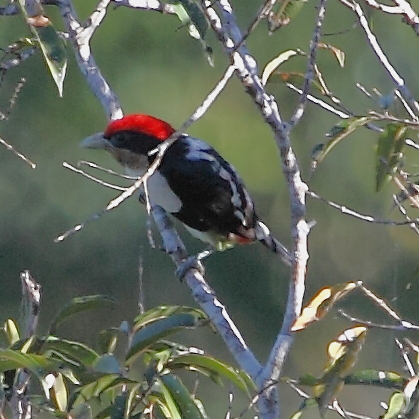
Identifying the Sira Barbet involves noting its vivid plumage and distinct size. Adult Sira Barbets showcase a remarkable blend of colors with a predominantly red head and breast, contrasted by a bright yellow belly. Their wings and back display a mix of green and black, offering excellent camouflage among the canopy. One of the key identifying features is the white throat, which sharply contrasts the red and yellow tones. Juveniles resemble adults but exhibit slightly duller colors, lacking the full intensity of the adult plumage. Males and females appear similar, which can make sex differentiation challenging without close observation. However, males tend to be marginally larger, a trait observed in many barbet species. When in flight, the Sira Barbet maintains a steady and direct path, with broad, rounded wings that aid in maneuvering through dense foliage. Perched, they exhibit a characteristic upright posture, often remaining motionless for extended periods as they scan for food. Despite its vibrant coloring, the Sira Barbet can be confused with other species within the Capitonidae family, particularly due to the overlapping ranges with other barbets. However, the unique combination of red, yellow, and green, along with its specific habitat, helps distinguish it from similar species.
Having trouble telling birds apart? Upload a photo to our bird identification tool for an instant species match.
Sira Barbet Habitat and Range
Preferred Habitat
The Sira Barbet inhabits montane and cloud forests, primarily within the Cerros del Sira mountain range in Peru. These forests are characterized by lush, dense canopy layers, offering the bird ample feeding and nesting opportunities. The Sira Barbet prefers elevations between 1,100 and 1,500 meters, where the microclimate remains relatively stable throughout the year. This elevation range provides a cool, humid environment essential for the fruit-bearing trees the barbet depends on. Unlike many bird species, the Sira Barbet does not exhibit notable seasonal habitat shifts, largely due to the consistent conditions provided by its montane home. While some bird species adapt to urban or agricultural environments, the Sira Barbet is strictly a forest dweller, relying on the undisturbed primary forests of the Sira range. The remote and rugged terrain of this habitat has protected the area from significant human impact, making it a crucial refuge for the Sira Barbet and other endemic wildlife.
Geographic Range
The Sira Barbet's range is extremely limited, confined to the Cerros del Sira in central Peru. This isolated mountain range is part of the larger Ucayali region, known for its biodiversity and endemism. Unlike many bird species with broader distributions, the Sira Barbet is not migratory, residing year-round within its montane forest habitat. Its restricted range makes it susceptible to habitat disturbances, though fortunately, the remoteness of the Cerros del Sira provides some protection from widespread human activities. Population density is highest within the forested areas of the Sira range at elevations of 1,100 to 1,500 meters, where the bird's ecological needs are met. While the Sira Barbet's range does not overlap significantly with other regions or countries, any future changes in land use or climate could impact its already limited distribution. Conservation efforts focus on maintaining the integrity of its habitat to ensure the survival of this unique bird species.
Want to know which birds visit your area? Browse our backyard birds by location guides for region-specific species lists.
What Does the Sira Barbet Eat?
The Sira Barbet primarily consumes a diet rich in fruits and berries, making it an essential frugivore within its ecosystem. The bird shows a preference for the fruits of fig trees, which are abundant in its montane habitat. This diet supports its role in seed dispersal, contributing to forest regeneration. During the wet season, the availability of ripe fruits increases, prompting the Sira Barbet to spend more time foraging and vocalizing. In addition to fruits, it occasionally supplements its diet with small insects, providing necessary protein. The Sira Barbet employs a methodical foraging technique, carefully inspecting foliage and branches for food. It uses its sturdy bill to pluck fruit and capture insects, demonstrating a level of adaptability to available resources. Feeding typically occurs during the early morning and late afternoon, coinciding with peak activity periods in the forest. This schedule allows the bird to avoid the midday heat while maximizing feeding opportunities.
Sira Barbet Behavior and Social Structure
The Sira Barbet exhibits a blend of solitary and social behaviors, typical of many barbet species. Most often observed alone or in pairs, the bird maintains a defined territory within its montane forest habitat. Territorial behavior includes vocal displays and occasional physical confrontations with intruding conspecifics. During courtship, the Sira Barbet performs unique displays that involve vocalizations and synchronized movements, strengthening pair bonds. Despite their solitary nature, Sira Barbets occasionally join mixed-species flocks, especially during foraging. This behavior likely increases feeding efficiency and offers protection from predators. The Sira Barbet's daily activity pattern involves active foraging sessions in the morning and late afternoon, with midday rest periods in the canopy's shade. Its response to predators involves a combination of camouflage, remaining motionless among the foliage, and alert calls to warn others. The Sira Barbet's behavior reflects its adaptation to the montane forest environment, where resource availability and predator presence dictate its daily rhythms.
Sira Barbet Nesting and Reproduction
Sira Barbets are cavity nesters, often utilizing natural hollows in tree trunks within their montane forest habitat. They sometimes excavate their own nest cavities using their robust bills, a task shared by both sexes. Preferred nesting sites are typically found at heights between 5 and 15 meters above the ground, providing protection from ground-based predators. The nest lining consists of wood chips and leaves, creating a comfortable environment for the eggs. A typical clutch consists of two to four eggs, which are incubated by both parents for about 15 days. Once hatched, the chicks remain in the nest for approximately three weeks before fledging. Parental roles include both parents feeding and caring for the young, ensuring a high level of parental investment. The Sira Barbet typically raises one brood per year, with nesting timing aligned to coincide with peak food availability during the wet season.
Sira Barbet Sounds and Vocalizations
The Sira Barbet's vocalizations are a key identifier in its dense montane forest habitat. Its primary song consists of a series of short, melodic notes delivered in rapid succession, resembling the sound of a distant bell. The pitch is moderately high, and the quality is clear and resonant. These vocalizations play a crucial role in territorial defense and mate attraction. In addition to its song, the Sira Barbet produces a variety of call notes, including sharp, single-note alarms used to alert others to potential threats. During the dawn chorus, its song stands out among other forest sounds, marking its presence in the early morning calm. The Sira Barbet's calls and songs are crucial for maintaining social bonds and establishing territory within the dense foliage of its montane environment.
Interesting Facts About the Sira Barbet
- 1The Sira Barbet was only discovered in 2008, highlighting the potential for new species in unexplored regions.
- 2Despite vibrant plumage, the Sira Barbet's camouflage is effective among the colorful forest canopy.
- 3Its restricted range within the Cerros del Sira makes it one of the most region-specific birds in Peru.
- 4The Sira Barbet's primary diet of figs helps maintain the health and diversity of its montane ecosystem.
- 5Both male and female Sira Barbets participate equally in nest construction and chick rearing duties.
- 6The bird's song is often described as bell-like, with clear, melodic notes that carry through the forest.
- 7Protection of the Sira Barbet's habitat supports countless other endemic species in the Cerros del Sira.
Sira Barbet Conservation Status
The Sira Barbet is currently listed as Near Threatened on the IUCN Red List, with a population trend considered stable but vulnerable to habitat loss. The primary threats to the species include deforestation and habitat fragmentation due to illegal logging and agricultural expansion within the Cerros del Sira. Conservation efforts focus on habitat protection, with parts of the Sira range designated as protected areas to safeguard the montane forests. Historical population changes remain difficult to assess due to the bird's recent discovery and limited range. Ongoing research and monitoring aim to provide more comprehensive data on population dynamics and threats. Collaborative conservation initiatives involve local communities and international organizations, emphasizing sustainable land use and biodiversity preservation to protect the Sira Barbet and its habitat.
Other Capitonidae Species


Birds Similar to the Sira Barbet
These species are often confused with the Sira Barbet due to similar appearance or overlapping range.