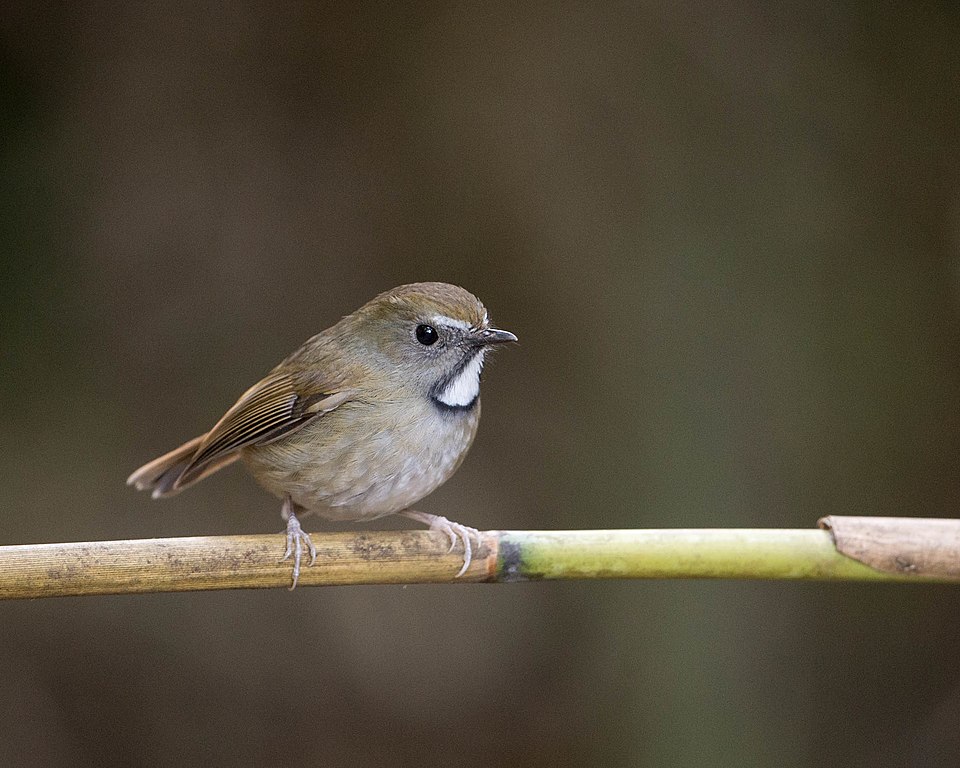
Slaty-backed Jungle Flycatcher
Rhinomyias goodfellowi
Order: Passeriformes / Family: Muscicapidae

Wikimedia Commons
About the Slaty-backed Jungle Flycatcher
The Slaty-backed Jungle Flycatcher, with the scientific name Rhinomyias goodfellowi, is a distinctive bird species belonging to the Muscicapidae family. This flycatcher is endemic to the Philippines, where it primarily inhabits the dense montane forests of Mindanao. Its ecological role is crucial, as it helps control insect populations through its diet. Despite its relatively inconspicuous presence, the Slaty-backed Jungle Flycatcher plays an integral part in the biodiversity of its natural habitat. It is often found in the understory of subtropical or tropical moist lowland forests, where dense foliage provides ample foraging opportunities and protection from predators. Seasonal movements are minimal, as the bird tends to remain in its established territory year-round, further emphasizing its integral role in the local ecosystem.
Its presence in these forests supports the intricate ecological balance, as it preys on insects that could otherwise become overabundant. By feeding on a diverse range of insects, the flycatcher helps maintain the health of the forest canopy and understory layers. The Slaty-backed Jungle Flycatcher is not just an insect controller; it also provides a food source for larger predators, linking various levels of the food web. As an indicator species, its population trends can reflect broader environmental changes within its habitat. The bird's preference for undisturbed forests highlights the importance of conservation efforts aimed at preserving these vital ecosystems.
Despite its vital ecological role, the Slaty-backed Jungle Flycatcher remains relatively under-studied, partly due to its elusive nature and the challenging terrain of its habitat. Conservation efforts focusing on habitat preservation are crucial for ensuring the survival of this species. The bird's role in seed dispersal, though not as prominent as its insect control function, also contributes to forest regeneration. Protecting the Slaty-backed Jungle Flycatcher means preserving the unique biodiversity of the Philippine montane forests. Its presence is a testament to the rich ecological complexity of these environments, underscoring the need for ongoing research and conservation initiatives.
The Slaty-backed Jungle Flycatcher belongs to the family Muscicapidae, within the order Passeriformes. These birds typically live average 5-7 years with a max recorded of 9 years..
How to Identify a Slaty-backed Jungle Flycatcher
The Slaty-backed Jungle Flycatcher is a small bird with a distinctive slate-gray coloration, making it relatively easy to identify in its natural habitat. Adults exhibit a uniform slate-gray plumage on their upperparts and underparts, with a slightly lighter tone on the belly. This coloration provides excellent camouflage among the shaded understory of the forests. The bird's eyes are dark and prominent, set against its sleek gray plumage. The bill is short and robust, perfectly adapted for insectivory, and the legs are dark. The differences between males and females are subtle, with females occasionally displaying a slightly browner tint to their plumage. Juveniles, however, present a stark contrast with their more mottled appearance, featuring a mix of gray and brown tones that gradually transition to the adult plumage as they mature.
In flight, the Slaty-backed Jungle Flycatcher maintains a compact silhouette, characterized by short wings and a relatively short tail. This silhouette is typical of forest-dwelling flycatchers that rely on agility rather than long-distance flight. The bird's perching posture is upright, often seen on low branches or vines. Its perching behavior is purposeful, as it frequently scans its surroundings for potential prey. Unlike some other flycatchers, this species does not exhibit pronounced sexual dimorphism, which can make field identification of gender challenging without close observation.
Similar species within its range include other jungle flycatchers, but the Slaty-backed Jungle Flycatcher's uniform gray coloration and lack of distinctive wing or tail markings help distinguish it from these relatives. Observers should take care to note the bird's habitat and behavior, as these can provide additional clues for accurate identification.
Having trouble telling birds apart? Upload a photo to our bird identification tool for an instant species match.
Slaty-backed Jungle Flycatcher Habitat and Range
Preferred Habitat
The habitat of the Slaty-backed Jungle Flycatcher is primarily confined to the montane forests of Mindanao in the Philippines. These forests are characterized by dense, humid conditions with a rich understory, providing the perfect environment for this elusive bird. The species thrives at elevations ranging from 1,000 to 2,400 meters, where the cooler temperatures and abundant foliage offer ideal foraging and breeding conditions.
Within these forests, the Slaty-backed Jungle Flycatcher shows a marked preference for undisturbed areas with a closed canopy. The bird is typically found in the lower strata of the forest, where it can effectively hunt for insects. This preference for dense, mature forests underscores the bird's reliance on these environments for survival. Seasonal habitat shifts are minimal, as the bird tends to remain within its established territory throughout the year.
The Slaty-backed Jungle Flycatcher's presence in urban or significantly altered landscapes is rare, as it does not adapt well to habitat fragmentation or deforestation. Its dependence on pristine forest conditions highlights the importance of conserving these natural habitats to ensure the species' continued existence.
Geographic Range
The Slaty-backed Jungle Flycatcher is endemic to the Philippines, specifically found on the island of Mindanao. It inhabits the montane forests of the island, where it is considered a resident species with no significant migratory movements. The bird's distribution is concentrated in the mountainous regions, with known populations in areas such as Mount Apo and Mount Kitanglad, which are renowned for their rich biodiversity.
Within its limited range, the Slaty-backed Jungle Flycatcher occupies specific altitudinal zones, generally between 1,000 and 2,400 meters. This narrow range reflects the bird's specialization for montane forest environments and its reliance on the unique ecological conditions found at these elevations. The flycatcher is not known to venture outside these regions, underscoring its vulnerability to habitat loss.
While the species does not exhibit long-distance migrations, it may undertake minor altitudinal movements in response to seasonal changes in food availability or weather conditions. Despite its restricted range, the Slaty-backed Jungle Flycatcher maintains localized populations in well-preserved forest areas, where it can exploit the abundant resources and favorable conditions.
Want to know which birds visit your area? Browse our backyard birds by location guides for region-specific species lists.
What Does the Slaty-backed Jungle Flycatcher Eat?
The diet of the Slaty-backed Jungle Flycatcher primarily consists of a wide variety of insects, which it captures with remarkable agility. Its foraging technique involves a combination of sallying from perches and gleaning from foliage, allowing it to exploit different layers of the forest. The bird's short, robust bill is well-suited for handling a range of insect prey, including beetles, caterpillars, and flies.
Seasonal changes in food availability may influence the flycatcher's diet, although the dense forest environment generally provides a consistent supply of insects year-round. The bird's feeding schedule is diurnal, with peak foraging activity occurring during the early morning and late afternoon when insect activity is high. During these times, the Slaty-backed Jungle Flycatcher can be observed actively scanning its surroundings and making short, acrobatic flights to capture prey.
While its primary diet is insectivorous, the bird may occasionally consume other small arthropods or invertebrates when available. The Slaty-backed Jungle Flycatcher's role as an insectivore is vital for controlling insect populations within its habitat, contributing to the overall health of the forest ecosystem.
Slaty-backed Jungle Flycatcher Behavior and Social Structure
The Slaty-backed Jungle Flycatcher's behavior reflects its adaptation to the dense montane forests of Mindanao. It displays a largely solitary lifestyle, often encountered alone or in pairs rather than in flocks. This behavior is typical of flycatchers that rely on stealth and agility to capture their insect prey.
Territorial behavior is evident, as individuals maintain and defend their preferred feeding and breeding territories against intruders. The bird's song, a series of melodious, clear notes, often serves as a territorial proclamation, echoing through the forest understory. During the breeding season, which generally coincides with the local wet season, territorial disputes may become more frequent as males vie for prime nesting sites.
Courtship displays in this species are subtle but can involve wing flicking and tail fanning, accompanied by soft vocalizations. The Slaty-backed Jungle Flycatcher is typically more active during the cooler parts of the day, such as early morning and late afternoon, aligning with peak insect activity. In response to predators, the bird relies on its cryptic plumage and is more likely to freeze than flee, blending into the forest shadows to avoid detection.
Slaty-backed Jungle Flycatcher Nesting and Reproduction
Nesting for the Slaty-backed Jungle Flycatcher typically takes place in the dense understory of its montane forest habitat. The nest is an open cup structure, meticulously constructed from fine plant materials, including grasses, moss, and rootlets, often bound together with spider silk for added strength.
Preferred nesting locations include low branches and forks in small trees or shrubs, where the nest can remain concealed from predators. Clutch size generally ranges from two to three eggs, which are pale with fine markings that provide some camouflage against the nest materials. The incubation period lasts approximately 14 to 16 days, with both parents sharing incubation duties, although the female does the majority.
After hatching, the chicks remain in the nest for about 14 to 18 days before fledging. During this time, both parents are actively involved in feeding and caring for the young. The Slaty-backed Jungle Flycatcher typically raises one brood per year, although favorable conditions may occasionally allow for a second. Parental roles are cooperative, with both adults contributing to the feeding and protection of the fledglings.
Slaty-backed Jungle Flycatcher Sounds and Vocalizations
The primary song of the Slaty-backed Jungle Flycatcher is a series of melodious, clear notes that can be heard echoing through the forest understory. The rhythm is steady, with a gentle rise and fall in pitch, creating a harmonious sound that stands out against the ambient forest noise. These songs are typically used for territorial defense and courtship purposes.
In addition to its song, the bird has a variety of call notes, including soft, short whistles and chirps used for communication between mates or signaling alarm. When threatened or disturbed, the flycatcher emits a harsher, more rapid series of notes to alert nearby conspecifics of potential danger.
The Slaty-backed Jungle Flycatcher participates in the dawn chorus, contributing its song to the symphony of sounds produced by the forest's avian inhabitants as they greet the new day. Its vocalizations, while not as complex as some songbirds, provide essential communication functions and contribute to the acoustic landscape of its habitat.
Interesting Facts About the Slaty-backed Jungle Flycatcher
- 1The Slaty-backed Jungle Flycatcher was first described in 1905 by the British ornithologist William Robert Ogilvie-Grant.
- 2This species is named after Walter Goodfellow, an English collector who gathered specimens from the Philippines in the early 1900s.
- 3The Slaty-backed Jungle Flycatcher is a member of the Muscicapidae family, which includes over 300 species of Old World flycatchers.
- 4Despite its limited range, the Slaty-backed Jungle Flycatcher's song can be heard up to 100 meters away in dense forest.
- 5The bird's diet consists almost entirely of insects, making it a key player in controlling forest insect populations.
- 6The Slaty-backed Jungle Flycatcher's camouflaged plumage allows it to remain undetected by both prey and predators in the forest.
- 7Its preference for mature forests highlights the importance of preserving old-growth habitats for biodiversity conservation.
Slaty-backed Jungle Flycatcher Conservation Status
The Slaty-backed Jungle Flycatcher currently holds a conservation status of 'Near Threatened' on the IUCN Red List. Its population trend is decreasing, primarily due to habitat loss caused by deforestation and land conversion for agriculture and development within its restricted range in Mindanao. Conservation efforts focus on preserving the remaining montane forest habitats and mitigating further deforestation. Protected areas, such as natural parks and reserves, play a critical role in conserving the species' habitat. Community-based conservation initiatives aim to engage local populations in sustainable land-use practices that benefit both the ecosystem and the flycatcher's survival. Historically, the population of the Slaty-backed Jungle Flycatcher has been higher, but increased human activity and environmental pressures have led to its decline. Conservationists emphasize the importance of ongoing habitat protection and restoration, coupled with further research to better understand the species' ecology and needs.