
Somali Crombec
Sylvietta isabellina
Order: Passeriformes / Family: Macrosphenidae

Wikimedia Commons
About the Somali Crombec
The Somali Crombec, scientifically known as Sylvietta isabellina, is a small passerine bird endemic to the Horn of Africa, particularly Somalia and parts of eastern Ethiopia. It belongs to the family Macrosphenidae and is a quintessential example of adaptation to arid environments. The bird's significance lies in its unique morphological traits, such as a notably short tail, which complements its nimble movements through thorny shrubs and low vegetation typical of its habitat. Observers often find the Somali Crombec in arid savannas and dry scrublands, where it plays an important ecological role by controlling insect populations. Its presence is vital for maintaining the ecological balance in these regions, as the bird primarily feeds on insects, thereby contributing to pest control and aiding in plant pollination indirectly. The Somali Crombec showcases fascinating seasonal behaviors, particularly during the breeding season when its song becomes a prominent feature of its environment. This songbird is most active during the early morning and late afternoon when temperatures are cooler. During the dry season, its role in its ecosystem becomes even more crucial, as it continues to feed on available insects, ensuring its survival and that of its offspring. Understanding the behavior and ecology of the Somali Crombec provides insight into the broader ecological health of the arid regions it inhabits, emphasizing its significance beyond just a single species. The bird's ability to thrive in harsh conditions exemplifies the resilience of avian species in challenging environments.
The Somali Crombec belongs to the family Macrosphenidae, within the order Passeriformes. These birds typically live average 5 years, with the oldest recorded at 8 years..
How to Identify a Somali Crombec
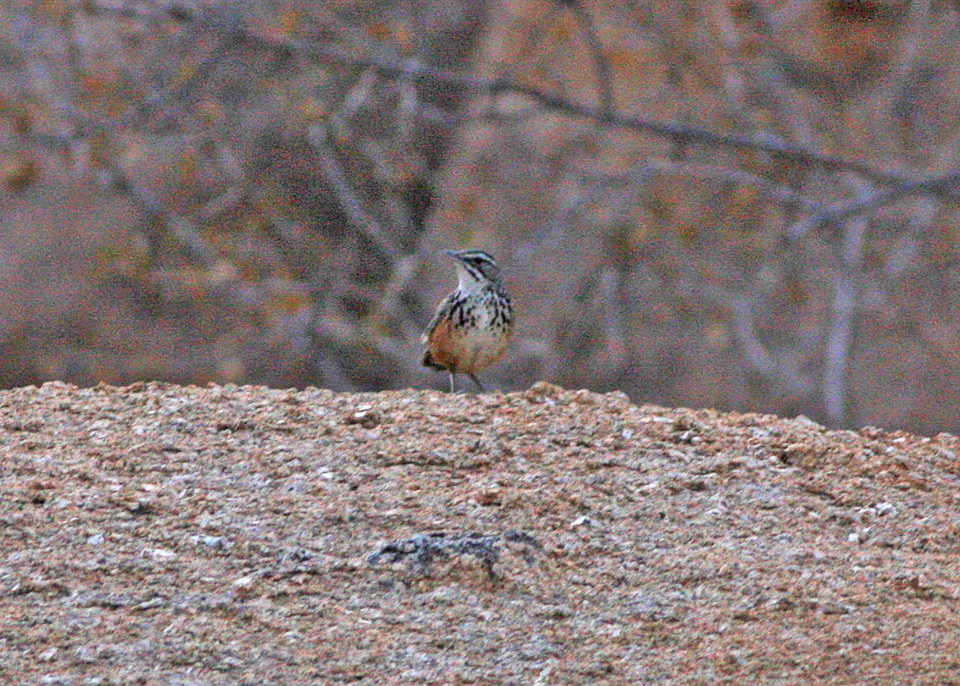
The Somali Crombec is a small bird, typically measuring around 10 cm in length, with its most distinctive feature being its extremely short, almost nonexistent tail. The plumage of the Somali Crombec is primarily grayish-brown on the upperparts, which provides excellent camouflage against the dry, dusty backgrounds of its habitat. Underparts are lighter, often exhibiting a pale gray to whitish hue. There is little sexual dimorphism in this species, meaning males and females appear similar, though males may have slightly brighter plumage during the breeding season. Juveniles resemble adults but with somewhat duller coloration. In terms of flight silhouette, the Somali Crombec is easily recognizable due to its compact size and rapid, fluttering flight pattern. Its perching posture is typically upright, often seen clinging to the sides of branches and twigs as it forages. Confusion with other species is minimal due to its unique morphology, although its coloration might cause it to blend with similar scrubland birds from a distance. However, the combination of its short tail and distinct song aids greatly in accurate identification.
Having trouble telling birds apart? Upload a photo to our bird identification tool for an instant species match.
Somali Crombec Habitat and Range
Preferred Habitat
The Somali Crombec thrives in arid and semi-arid environments, predominantly inhabiting dry scrublands and thorny savannas. It prefers areas with sparse vegetation where acacia and other drought-resistant plants dominate. The bird is typically found at elevations ranging from sea level up to 1,500 meters. While it is primarily associated with rural habitats, it occasionally ventures into the outskirts of urban areas where suitable vegetation persists. Seasonally, the Somali Crombec might show slight shifts in microhabitat preferences, moving closer to water sources during extreme dry spells. Despite these movements, the habitats it selects consistently offer dense cover and ample foraging opportunities, crucial for its survival in such challenging environments.
Geographic Range
The Somali Crombec's range is largely confined to the Horn of Africa, with core populations in Somalia and extending into eastern Ethiopia. It is a non-migratory species, maintaining a relatively stable presence within its range year-round. Within these regions, the bird's distribution is patchy, often occurring in localized areas where suitable habitat conditions exist. Population density hotspots are typically found in areas that provide a combination of adequate cover and food resources. Despite the bird's specialized habitat requirements, it is generally considered common within its range, although localized threats could affect certain populations.
Want to know which birds visit your area? Browse our backyard birds by location guides for region-specific species lists.
What Does the Somali Crombec Eat?
The diet of the Somali Crombec primarily consists of insects, which it adeptly forages from foliage and branches. Its feeding technique involves a combination of gleaning and probing, using its slender bill to extract prey from crevices and foliage. The bird predominantly consumes small insects such as beetles, ants, and caterpillars, with occasional consumption of spiders and other arthropods. Seasonal changes in diet are minimal, as it relies heavily on whatever insect prey is available. Foraging typically occurs during cooler parts of the day, with peaks in activity observed during early morning and late afternoon. The Somali Crombec's diet contributes significantly to its ecosystem role, as it helps control insect populations in its habitat.
Somali Crombec Behavior and Social Structure
The Somali Crombec exhibits a range of behaviors well-suited to its arid environments. It is primarily solitary or found in pairs, with a strong territorial instinct during the breeding season. Males engage in conspicuous singing displays to establish and defend territory, often perched atop prominent shrubs or trees. The bird's social structure is relatively simple, with monogamous pair bonds forming during the breeding season. Flocking behavior is uncommon, though small family groups might be observed post-breeding. In response to predators, the Somali Crombec relies on its cryptic coloration and swift, erratic flight to evade capture. Daily activity patterns revolve around foraging, with peaks corresponding to cooler temperatures at dawn and dusk. These behaviors underscore the bird's adaptability and survival strategies in challenging environments.
Somali Crombec Nesting and Reproduction
The Somali Crombec constructs simple cup-shaped nests, typically using grass, twigs, and soft plant fibers. Nests are often well-concealed within dense shrubbery or low trees, providing protection from predators and harsh weather. The typical clutch size ranges from 2 to 4 eggs, with an incubation period of approximately 12 to 14 days. Both parents share responsibilities in incubating the eggs and feeding the chicks post-hatching. Fledging occurs around 14 to 16 days after hatching, with young birds remaining under parental care for a short period thereafter. The species typically raises one or two broods per year, depending on environmental conditions and food availability.
Somali Crombec Sounds and Vocalizations
The primary song of the Somali Crombec is a melodious series of clear, high-pitched notes that carry well over the open landscapes it inhabits. These songs often serve as both territorial declarations and mating calls. Call notes are softer, consisting of short, repetitive chirps used for communication between paired birds. Alarm calls are sharp and urgent, alerting to potential threats. During the dawn chorus, the Somali Crombec's song is particularly prominent, adding to the acoustic landscape of its habitat. Its vocalizations are distinctive and serve as a key identification feature for birdwatchers.
Interesting Facts About the Somali Crombec
- 1The Somali Crombec is one of the few bird species with an almost nonexistent tail, an adaptation for navigating dense vegetation.
- 2Despite its small size, the Somali Crombec's song can be heard over 100 meters away, often used to establish territory.
- 3The bird's cryptic coloration allows it to blend seamlessly into its arid habitat, aiding in predator avoidance.
- 4During the breeding season, male Somali Crombecs sing tirelessly from dawn to dusk to attract mates.
- 5The Somali Crombec has a highly specialized diet, focusing almost exclusively on small insects and arthropods.
- 6Its short tail and compact body make the Somali Crombec exceptionally agile, allowing it to forage in tight spaces.
- 7The species is monogamous, with strong pair bonds forming during the breeding season that last until the chicks fledge.
Somali Crombec Conservation Status
Currently, the IUCN classifies the Somali Crombec as Least Concern due to its relatively stable population. However, specific threats include habitat degradation caused by overgrazing, deforestation, and human encroachment. Conservation efforts focus on habitat preservation and sustainable land management practices in the Horn of Africa. Historical data suggest that while local populations may fluctuate, overall numbers have remained relatively stable. Continuous monitoring and regional conservation initiatives remain crucial to ensure the long-term survival of this species.
Other Macrosphenidae Species


Birds Similar to the Somali Crombec
These species are often confused with the Somali Crombec due to similar appearance or overlapping range.

