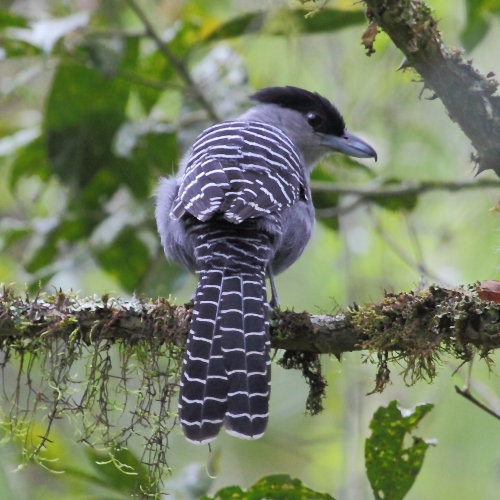
Spot-backed Antwren
Herpsilochmus dorsimaculatus
Order: Passeriformes / Family: Thamnophilidae

Wikimedia Commons
About the Spot-backed Antwren
The Spot-backed Antwren (Herpsilochmus dorsimaculatus) is a small passerine bird belonging to the Thamnophilidae family. This species is endemic to the lush rainforests of the Amazon Basin, particularly in Brazil and Peru. The bird's name derives from the distinctive white spots adorning its back, a key feature that sets it apart from other antwrens. Despite its small size, the Spot-backed Antwren plays a significant role in its ecosystem by controlling insect populations and contributing to the biodiversity of its habitat.
The Spot-backed Antwren inhabits the subtropical and tropical moist lowland forests, thriving in the dense undergrowth where it finds ample food and shelter. This bird is often seen in mixed-species flocks, a behavior that not only enhances foraging success but also offers protection from predators by increasing vigilance. The Spot-backed Antwren's ecological role is vital, as it helps maintain the intricate balance of the rainforest ecosystem. By preying on insects, it controls pest populations that could otherwise affect plant growth and health.
During the breeding season, the Spot-backed Antwren exhibits a marked increase in territorial behavior. Males become more vocal, using their songs to assert dominance and attract mates. The species typically breeds during the wet season when food resources are abundant. This seasonal behavior ensures that their chicks have access to a plentiful food supply, thus increasing their survival chances. The Spot-backed Antwren's presence in the Amazon's biodiverse environment highlights its importance as an indicator species for the health of tropical forest ecosystems.
The Spot-backed Antwren belongs to the family Thamnophilidae, within the order Passeriformes. These birds typically live average 5 years, with a maximum recorded of 8 years..
How to Identify a Spot-backed Antwren
The Spot-backed Antwren is a small bird, measuring approximately 11 to 12 cm in length and weighing around 10 grams. Adult males feature a striking plumage characterized by a black crown and nape, with their back covered in conspicuous white spots that give the bird its name. Their underparts are primarily gray, with a slightly paler throat and belly. In contrast, females boast a more subdued coloration, with warm brown tones replacing the black in males, yet they retain the distinctive spotted pattern on their back. Juveniles resemble females but with even duller tones and less pronounced spotting.
In the field, the Spot-backed Antwren can be distinguished from similar antwren species by its unique pattern of white spots on the back and its relatively small size. Its flight silhouette is characterized by rapid, direct movements with short bursts of flapping interspersed with glides. When perching, the Spot-backed Antwren typically holds its body horizontally and flicks its tail intermittently, a behavior that can help observers identify it among dense foliage.
Other antwren species can sometimes be confused with the Spot-backed Antwren; however, their plumage lacks the distinctive back spotting of Herpsilochmus dorsimaculatus. Birdwatchers should be attentive to these marks, along with the bird's vocalizations, to make a positive identification.
Having trouble telling birds apart? Upload a photo to our bird identification tool for an instant species match.
Spot-backed Antwren Habitat and Range
Preferred Habitat
The Spot-backed Antwren predominantly resides in the dense, humid lowland rainforests of the Amazon Basin. These forests provide the dense foliage and complex understory that the bird requires for foraging and nesting. Typically found below elevations of 1,000 meters, the bird prefers areas with a rich diversity of plant life, which supports a variety of insect prey.
The Spot-backed Antwren shows a marked preference for the interior parts of forests, avoiding open areas and forest edges. It is seldom found in secondary growth or urban environments, making it a bird largely associated with pristine forest habitats. Seasonal habitat shifts are minimal, as the bird remains a year-round resident of the rainforest, relying on the consistent tropical climate and abundant resources.
While the Spot-backed Antwren does not adapt well to urbanized areas, it can sometimes be found in rural settings where forest tracts remain intact. Conservation of these habitats is crucial for the bird's survival, as deforestation and habitat fragmentation pose significant threats.
Geographic Range
The Spot-backed Antwren is primarily found in the central and western parts of the Amazon Basin. Its range encompasses countries like Brazil, particularly in the states of Amazonas and Acre, as well as parts of eastern Peru. The bird does not migrate, making it a permanent resident of these tropical regions.
Within its range, the Spot-backed Antwren is most commonly observed in the dense, undisturbed rainforests that characterize the Amazon. It is less frequently encountered in regions where deforestation has significantly altered the landscape. Population density hotspots are typically located in protected areas and national parks where forest cover is preserved, such as the Amazon National Park in Brazil.
Despite its relatively restricted range, the Spot-backed Antwren's specialized habitat requirements mean it is not often encountered outside its preferred environment. This makes understanding and conserving its rainforest habitats critical to the bird's continued existence.
Want to know which birds visit your area? Browse our backyard birds by location guides for region-specific species lists.
What Does the Spot-backed Antwren Eat?
The Spot-backed Antwren's diet is primarily insectivorous, consisting mainly of ants, beetles, and other small arthropods. During the wet season, when insects are most plentiful, the bird's diet diversifies to include a wider array of invertebrates. The Spot-backed Antwren employs a foraging technique known as 'gleaning,' where it plucks prey from foliage and branches while moving methodically through the forest understory.
The bird's small size allows it to access narrow spaces and dense thickets, making it an effective predator of insects that reside in these microhabitats. Foraging usually occurs in the early morning and late afternoon when insect activity peaks, although it continues to feed throughout the day.
Occasionally, the Spot-backed Antwren may accompany mixed-species flocks, benefiting from the collective foraging efforts and increased vigilance against predators. This social behavior enhances its ability to locate and capture prey, particularly in areas where food is less abundant.
Spot-backed Antwren Behavior and Social Structure
The social structure of the Spot-backed Antwren is often centered around monogamous pairs that maintain territories within their rainforest habitat. Territorial behavior becomes more pronounced during the breeding season, as males use their vocalizations to ward off rivals and establish dominance. The Spot-backed Antwren is not known for forming large flocks but may participate in mixed-species flocks, particularly when foraging.
Courtship displays in the Spot-backed Antwren involve elaborate vocalizations and aerial displays, with males showcasing their agility and plumage to attract females. These displays are crucial for mate selection and successful breeding. Daily activity patterns of the Spot-backed Antwren revolve around foraging and territory maintenance, with peak activity occurring during the cooler parts of the day.
In response to predators, the Spot-backed Antwren relies on its cryptic plumage and quick movements to evade detection. It often uses dense foliage as cover, making it difficult for predators to capture. When threatened, the bird may emit alarm calls to alert other members of its species or nearby birds in mixed-species flocks, enhancing the collective awareness of potential threats.
Spot-backed Antwren Nesting and Reproduction
The Spot-backed Antwren constructs its nest in dense foliage, typically choosing locations concealed within the thick understory of its rainforest habitat. These nests are cup-shaped and crafted from fine plant materials such as mosses, leaves, and small twigs, providing a secure environment for eggs and chicks.
A typical clutch consists of two eggs, which the female incubates for a period of approximately 14 days. Both parents play active roles in raising the young, with the male assisting in feeding and defending the nest. The fledging period for the Spot-backed Antwren is relatively short, lasting around 12 to 14 days, after which the chicks leave the nest but continue to receive parental care until they are fully independent.
The species is capable of raising multiple broods per year, particularly during the wet season when food availability is high. This reproductive strategy maximizes the chances of offspring survival and contributes to the sustainability of the population within its habitat.
Spot-backed Antwren Sounds and Vocalizations
The primary song of the Spot-backed Antwren is characterized by a series of rapid, high-pitched notes that increase in tempo. This song serves as both a territorial proclamation and a mating call. In addition to its primary song, the bird produces various call notes that are used for communication within pairs or flocks.
Alarm calls are short, sharp, and high-pitched, designed to alert other birds to potential dangers. During the dawn chorus, the Spot-backed Antwren's vocalizations contribute to the rich tapestry of sounds that fill the rainforest, often beginning before first light and continuing into the early morning.
The bird's vocal repertoire is essential for its social structure and territorial interactions, allowing it to maintain contact with mates and deter intruders effectively.
Interesting Facts About the Spot-backed Antwren
- 1The Spot-backed Antwren is one of over 230 antbird species, a family known for its diversity and complexity.
- 2Male Spot-backed Antwrens use more than 10 different song types to communicate with rivals and mates.
- 3The bird's back spots provide camouflage, breaking up its outline among the dappled light of the forest.
- 4Spot-backed Antwrens are agile flyers, using their quick reflexes to navigate dense undergrowth efficiently.
- 5This species has a symbiotic relationship with mixed-species flocks, which improves foraging success.
- 6Despite their tropical habitat, Spot-backed Antwrens do not migrate, relying on stable rainforest conditions.
- 7Females are often responsible for selecting nesting sites, ensuring optimal conditions for rearing young.
Spot-backed Antwren Conservation Status
The International Union for Conservation of Nature (IUCN) currently lists the Spot-backed Antwren as a species of Least Concern, indicating a stable population trend. However, the primary threats to its habitat include deforestation and land conversion for agriculture, which could potentially impact its population if left unchecked. Efforts to conserve the bird's habitat focus on protecting large tracts of rainforest and promoting sustainable land-use practices. Designating protected areas and national parks has proven effective in safeguarding the ecosystems on which the Spot-backed Antwren and numerous other species depend. Historical population changes have been minor, but continued monitoring and habitat preservation are crucial to ensure the species remains secure. Conservation initiatives emphasize the importance of maintaining biodiversity within the Amazon Basin, with the Spot-backed Antwren serving as a flagship species for these efforts.