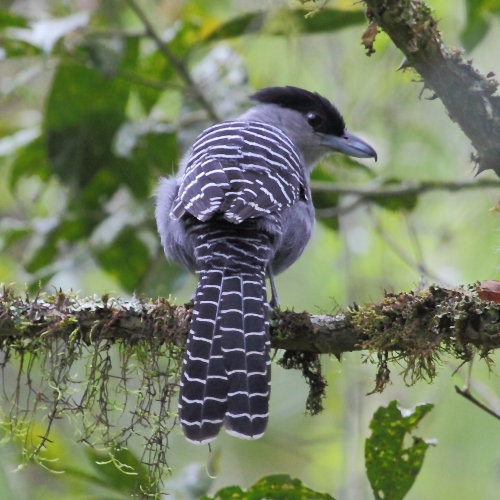
Spotted Antbird
Hylophylax naevioides
Order: Passeriformes / Family: Thamnophilidae

Wikimedia Commons
About the Spotted Antbird
The Spotted Antbird, scientifically known as Hylophylax naevioides, is a small yet captivating member of the Thamnophilidae family, endemic to the tropical rainforests of Central America. This bird inhabits primarily the lowland tropical forests stretching from southern Mexico through Central America, reaching into western Panama. Its presence is often marked by its unique foraging behavior, as it frequently follows columns of army ants, a strategy that aids in its diet by capturing fleeing insects. This ecological role places the Spotted Antbird as a vital part of the forest's food web, as it helps control insect populations and contributes to the biodiversity of its habitat. With its striking plumage, the Spotted Antbird is easily recognizable. Adults display a mix of black, white, and brown plumage, with distinctive spots on their underparts that provide effective camouflage against the forest floor. The males and females, although similar in size, exhibit sexual dimorphism, with males typically possessing more prominent black and white patterns, while females exhibit a more subdued coloration. This sexual dimorphism plays a crucial role during the breeding season, as it aids in mate selection. Seasonally, the Spotted Antbird's behaviors remain consistent, although its reproductive activities peak during the rainy season when food availability is at its highest. During this period, the bird becomes highly territorial, with both sexes defending their chosen nesting sites from intruding conspecifics. The ecological significance of the Spotted Antbird extends beyond its dietary habits. As a species adapted to lowland tropical forests, it serves as an indicator of forest health. Its reliance on dense understory vegetation and army ant swarms means that its presence often signifies a thriving ecosystem with robust biodiversity. However, this dependency also makes the Spotted Antbird susceptible to habitat degradation and deforestation, which pose significant threats to its population. Despite these challenges, this bird has managed to maintain stable populations across its range, although local declines have been observed in areas of significant habitat disturbance.
The Spotted Antbird belongs to the family Thamnophilidae, within the order Passeriformes. These birds typically live average 4-6 years with a maximum recorded of 8 years..
How to Identify a Spotted Antbird
The Spotted Antbird is a small bird, measuring approximately 12-13 cm in length and weighing around 20 grams. Its plumage is distinctively patterned, with a combination of black, white, and brown tones. The most striking feature is the series of white spots on its underparts, which stand out against its dark brown background. The back and wings are a rich, mottled brown, while the head is capped with a striking black crown. Males generally have more pronounced black and white contrasts than females, whose plumage tends toward a more muted palette. Juveniles resemble females but possess even duller and less defined markings, aiding them in blending seamlessly into the forest understory. In flight, the Spotted Antbird displays a short, rounded wing silhouette, characteristic of many forest-dwelling species. Its flight is typically short and fluttery, often confined to low-level trajectories through dense vegetation. When perching, the bird maintains an upright posture, frequently flicking its wings and tail, a behavior that serves to flush out insects or communicate with conspecifics. Compared to similar species, such as the Bicolored Antbird, which shares its habitat, the Spotted Antbird is distinguished by its unique spot pattern and overall darker appearance.
Having trouble telling birds apart? Upload a photo to our bird identification tool for an instant species match.
Spotted Antbird Habitat and Range
Preferred Habitat
The Spotted Antbird thrives in the humid, dense understory of lowland tropical forests, where it finds both shelter and sustenance. This species is predominantly found in forests at elevations ranging from sea level up to about 1,200 meters, although it is more commonly encountered below 1,000 meters. Within these habitats, the bird favors areas with thick foliage and a healthy population of army ants, which are crucial to its foraging strategy. While the Spotted Antbird is largely a forest specialist, its adaptability allows it to persist in secondary growth forests and, occasionally, in forest edges. However, it avoids urban environments, as it requires the specific ecological conditions present in mature forests. During the dry season, the bird remains in the same habitat, although it may shift its foraging patterns slightly to adjust to changes in prey availability. Its presence in these habitats underscores the importance of conserving tropical forests, as their degradation directly threatens the survival of this specialized bird.
Geographic Range
The Spotted Antbird's range is confined to the neotropical region, specifically within Central America. It breeds across a relatively narrow corridor that extends from the southern parts of Mexico, through Belize, Guatemala, Honduras, Nicaragua, Costa Rica, and into western Panama. This bird does not undertake long-distance migrations; instead, it is considered a sedentary species, residing within the same general area throughout the year. However, there may be some local movements within its range, possibly linked to seasonal changes in prey abundance or habitat conditions. Despite its broad range, the Spotted Antbird's preferred habitats are often fragmented and patchy due to deforestation and land conversion, leading to concentrated population pockets within suitable forested areas. Hotspots of population density include protected reserves in Costa Rica, such as the Osa Peninsula and Tortuguero National Park, where conservation efforts have maintained the integrity of its habitat. In these areas, the Spotted Antbird can be found in higher numbers, benefiting from the relatively undisturbed forest environments.
Want to know which birds visit your area? Browse our backyard birds by location guides for region-specific species lists.
What Does the Spotted Antbird Eat?
The diet of the Spotted Antbird is primarily insectivorous, with a particular reliance on insects and other arthropods that are flushed out by army ant swarms. This bird adopts a strategy known as 'ant-following,' where it positions itself strategically to capture prey disturbed by the advancing ants. The Spotted Antbird's diet includes a variety of insects, such as beetles, spiders, and caterpillars, as well as small reptiles and amphibians when available. During the wet season, when prey is more abundant, the bird may consume larger quantities and a greater diversity of food items. Its foraging technique involves quick, darting movements to snatch prey from the ground or low vegetation. The bird typically feeds during daylight hours, with peak activity occurring in the early morning and late afternoon, coinciding with the heightened activity of army ants. This feeding schedule helps the bird avoid the midday heat and take advantage of the most productive foraging times. This specialized diet makes the Spotted Antbird a crucial component of the forest ecosystem, as it helps control insect populations and contributes to the dynamic balance of the understory environment.
Spotted Antbird Behavior and Social Structure
The Spotted Antbird exhibits fascinating behavioral patterns centered largely around its ant-following habits. Socially, it tends to be solitary or found in pairs, especially during the breeding season when territorial displays are prominent. Both males and females engage in territory defense, using vocalizations and physical displays to ward off intruders. Courtship involves elaborate displays, where the male showcases his plumage and engages in feeding rituals to attract a mate. Once paired, Spotted Antbirds exhibit strong monogamous bonds, often seen foraging together and maintaining close contact through soft calls. This species is diurnal, with peak activity in the early morning and late afternoon, times that align with the daily movements of army ants. In response to predators, the Spotted Antbird relies on its cryptic plumage for camouflage, often freezing in place to blend into the forest floor. When threatened, it emits sharp alarm calls to alert nearby conspecifics. The bird's daily routine includes periods of foraging punctuated by bouts of preening and rest, usually in shaded, secluded spots. Its behavior is intricately tied to the health of its forest habitat, as changes in forest structure can influence its foraging efficiency and overall survival.
Spotted Antbird Nesting and Reproduction
The Spotted Antbird constructs cup-shaped nests that are well-hidden within the dense understory vegetation of tropical forests. These nests are typically positioned low to the ground, often less than a meter high, providing concealment from potential predators. The nest is crafted from a variety of materials, including leaves, twigs, and rootlets, and is lined with softer plant fibers to create a comfortable incubation environment. The breeding season coincides with the rainy season, maximizing the availability of food for the growing chicks. A typical clutch consists of two to three eggs, which are incubated by both parents for about 14-16 days. During this period, both male and female Spotted Antbirds share incubation duties and cooperate in defending the nest site. Once the eggs hatch, the chicks are fed by both parents and remain in the nest for approximately 10-12 days before fledging. Parental care continues even after fledging, with the adults guiding the young birds to foraging sites and teaching them essential survival skills. Typically, the Spotted Antbird raises one brood per year, although favorable conditions may occasionally allow for a second.
Spotted Antbird Sounds and Vocalizations
The vocal repertoire of the Spotted Antbird is distinctive, characterized by a series of sharp, melodious whistles and calls. Its primary song consists of a rhythmic sequence of clear, high-pitched notes that carry well through the dense forest understory. This song serves multiple purposes, including territory establishment and mate attraction. In addition to its primary song, the Spotted Antbird produces a variety of calls, including harsh, scolding notes that function as alarm signals. These alarm calls are particularly crucial when the bird perceives threats from predators or intruding conspecifics. During the dawn chorus, the Spotted Antbird's song blends with those of other forest species, creating a rich auditory tapestry that defines the tropical forest soundscape. Unlike some songbirds, it does not mimic other species, nor does it possess an extensive song repertoire, focusing instead on a few, well-defined vocalizations that serve its ecological needs.
Interesting Facts About the Spotted Antbird
- 1The Spotted Antbird follows army ant swarms to catch insects fleeing from the ants, a behavior known as ant-following.
- 2Despite its reliance on army ants, the Spotted Antbird does not consume the ants themselves, focusing instead on prey disturbed by their movement.
- 3The Spotted Antbird's distinctive spotted plumage provides excellent camouflage, helping it blend into the forest floor.
- 4While the Spotted Antbird is not migratory, it may move locally within its range in response to seasonal changes in prey availability.
- 5The Spotted Antbird contributes to the control of insect populations in its habitat, playing a crucial role in the ecosystem's balance.
- 6This bird is most active during the early morning and late afternoon, times that coincide with the peak activity of army ants.
- 7The Spotted Antbird's presence is often an indicator of a healthy, biodiverse forest ecosystem.
Spotted Antbird Conservation Status
The Spotted Antbird is currently classified as Least Concern by the IUCN, with population trends considered stable across much of its range. However, ongoing threats such as habitat loss and fragmentation due to deforestation pose significant risks to its habitat. Conservation efforts focus on preserving large tracts of undisturbed tropical forest, which are essential for maintaining its ecological niche. Protected areas and reserves in Central America play a crucial role in safeguarding these habitats. While the global population remains stable, localized declines have been reported in regions where deforestation rates are high. Historical population changes have been minimal, largely due to the bird's adaptability to moderately disturbed habitats. Continued monitoring and habitat conservation are essential to ensure the long-term survival of the Spotted Antbird.