
Sula Lorikeet
Saudareos flavoviridis
Order: Psittaciformes / Family: Psittaculidae

Wikimedia Commons
About the Sula Lorikeet
The Sula Lorikeet, or Saudareos flavoviridis, is a strikingly colorful bird belonging to the family Psittaculidae. This medium-sized parrot, native to the biodiversity-rich regions of Indonesia and the Philippines, is primarily found on the Sula Archipelago and other nearby islands. The lorikeet's vivid green plumage, accentuated by yellow and blue markings, makes it a remarkable sight in its natural habitat. These birds play a crucial role in their ecosystems as pollinators and seed dispersers, aiding in the health and regeneration of tropical forests. Their brush-tipped tongues, an adaptation for their nectar-based diet, facilitate the pollination of various flowering plants. As a species, the Sula Lorikeet is an indicator of forest health and biodiversity. Seasonal behaviors in the Sula Lorikeet include nomadic movements in search of food resources, particularly during the flowering seasons of native trees. These lorikeets are vocal and social, often seen flying in small flocks as they traverse the forest canopy. They contribute significantly to the ecological dynamics of their habitats by promoting plant diversity through their feeding and foraging activities. The Sula Lorikeet's presence in a region signifies a well-balanced ecosystem, and its conservation is essential for maintaining the ecological integrity of these tropical environments.
The Sula Lorikeet belongs to the family Psittaculidae, within the order Psittaciformes. These birds typically live average 10-15 years, with some living over 20 years in captivity..
How to Identify a Sula Lorikeet
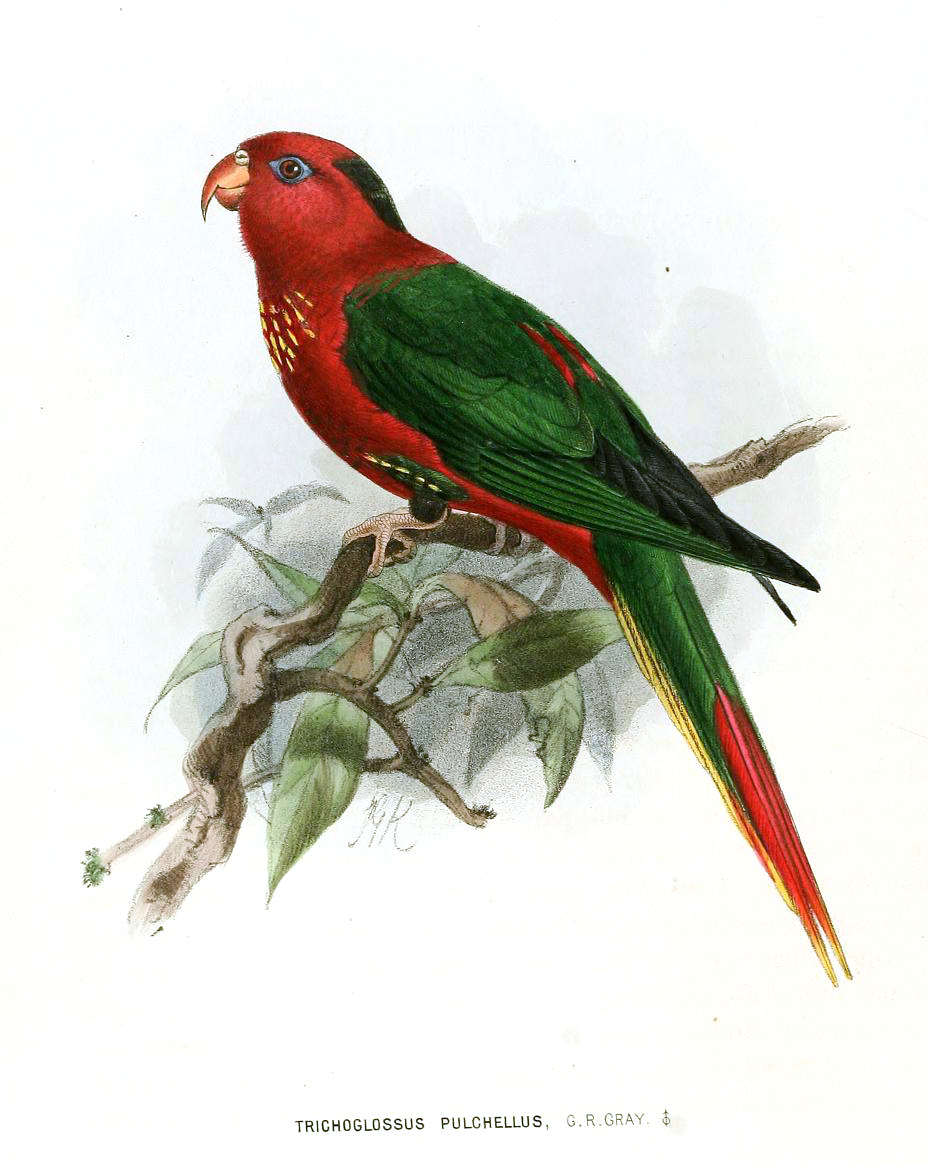
Adult Sula Lorikeets exhibit a predominantly green plumage, with distinctive yellow and blue patches on their wings and tail. Their underwings are a lighter, more yellowish-green, which can be seen during flight. Juvenile Sula Lorikeets have a similar coloration to adults but with slightly duller hues and less pronounced markings. Males and females are similar in appearance, making sexing challenging without behavioral observations or genetic testing. The lorikeet's flight silhouette is characterized by rapid, direct flight patterns with quick wingbeats, typical of many parrot species. When perched, the Sula Lorikeet maintains an upright posture, often engaging in preening or social interactions with other members of its flock. This can sometimes lead to confusion with similar lorikeet species in the region, such as the Blue-crowned Lorikeet, but the Sula Lorikeet's lack of a blue crown and overall greener appearance helps in distinguishing it.
Having trouble telling birds apart? Upload a photo to our bird identification tool for an instant species match.
Sula Lorikeet Habitat and Range
Preferred Habitat
The Sula Lorikeet thrives in tropical forest habitats, particularly in lowland and hill forests up to elevations of around 1,000 meters. It shows a preference for primary and secondary rainforests, where flowering trees are abundant. Seasonal habitat shifts occur as these birds move in search of blossoming trees, though they remain within forested areas. Urban presence is minimal, as the lorikeet primarily resides in more remote forest regions away from human disturbances. In their natural environment, these lorikeets can be found amid dense foliage where they forage and socialize in the canopy.
Geographic Range
The Sula Lorikeet's range is limited to several islands within Indonesia and the Philippines. Its breeding and primary habitat spans the Sula Archipelago, where it is considered a resident species. These islands include Taliabu, Mangole, and Sanana. The lorikeet's range does not extend far beyond these islands, making its distribution relatively restricted. The concentration of populations on these islands suggests specific adaptations to local ecological conditions. However, within this range, the Sula Lorikeet can be quite abundant, particularly in areas where flowering trees are plentiful.
Want to know which birds visit your area? Browse our backyard birds by location guides for region-specific species lists.
What Does the Sula Lorikeet Eat?
The diet of the Sula Lorikeet consists primarily of nectar and pollen, which they obtain using their specialized brush-tipped tongues. Their secondary food sources include fruits, seeds, and occasionally small insects. Seasonal changes in diet correspond to the availability of flowering plants, with peak nectar consumption occurring during the blooming periods of specific tree species. Foraging typically occurs in the early morning and late afternoon, when flowers are most productive. The lorikeet's ability to hover briefly aids in accessing nectar from a variety of floral structures. Their preference for certain plant species can influence local plant-pollinator dynamics, affecting the composition of the forest flora.
Sula Lorikeet Behavior and Social Structure
Sula Lorikeets are highly social birds, often observed in small flocks that can number up to 20 individuals. They exhibit territorial behavior during the breeding season, defending nesting sites and food resources from other lorikeets. Courtship displays include mutual preening and synchronized flight patterns, which strengthen pair bonds. Outside the breeding season, these lorikeets form larger flocks that enhance foraging efficiency and protection from predators. Their daily activity patterns include periods of intense feeding and social interaction, interspersed with rest and preening. In response to predators, Sula Lorikeets rely on their agility and speed, often taking refuge in dense foliage.
Sula Lorikeet Nesting and Reproduction
Sula Lorikeets nest in tree cavities, often selecting sites high in the forest canopy to avoid ground-dwelling predators. They line their nests with chewed wood, leaves, and other plant materials, creating a soft and secure environment for their young. A typical clutch consists of two to three eggs, which the female incubates for approximately 25 days. After hatching, both parents participate in feeding the chicks, which fledge after about eight weeks. The lorikeets generally raise one brood per year, but favorable conditions may allow for two broods. Parental care continues post-fledging, with juveniles remaining with the parents for several weeks.
Sula Lorikeet Sounds and Vocalizations
The primary vocalizations of the Sula Lorikeet include a series of high-pitched, rapid chattering notes that serve to maintain contact with flock members. Their call notes are sharp and distinct, often described as a rapid 'chit-chit-chit.' In alarm situations, they emit a louder, more insistent call to alert other flock members of potential threats. During the dawn chorus, these lorikeets contribute with a lively, melodic series of calls that resonate through the forest canopy. Their sounds are reminiscent of other lorikeets, yet they possess a unique rhythm and pitch that experienced birders can identify.
Interesting Facts About the Sula Lorikeet
- 1The Sula Lorikeet can consume up to 100 different flower species' nectar, showcasing its adaptability.
- 2Despite their vibrant colors, Sula Lorikeets blend well into the lush green canopies of their forest habitats.
- 3A Sula Lorikeet's lifespan in the wild can reach up to 15 years, provided it avoids predators and habitat threats.
- 4These lorikeets have a specially adapted tongue with a brush-like tip, allowing them to efficiently gather nectar.
- 5The Sula Lorikeet's wings can beat up to 50 times per second during rapid flight, aiding in quick maneuvers.
- 6Endemic to islands, the Sula Lorikeet demonstrates the unique evolutionary paths of isolated avian populations.
- 7Their bright plumage plays a role in mate selection, with more colorful individuals often being preferred by potential partners.
Sula Lorikeet Conservation Status
Currently, the Sula Lorikeet is listed as Least Concern by the IUCN, but its populations face potential threats from habitat loss due to deforestation and land conversion for agriculture. While population trends appear stable, ongoing habitat destruction could impact future numbers. Conservation efforts focus on preserving forest habitats and promoting sustainable land-use practices. Historical population changes have been minimal, but continued monitoring is necessary to ensure the species remains secure. Local conservation initiatives emphasize the importance of protecting the rich biodiversity of the Sula Archipelago, where these lorikeets play a vital ecological role.
Other Psittaculidae Species


Birds Similar to the Sula Lorikeet
These species are often confused with the Sula Lorikeet due to similar appearance or overlapping range.

