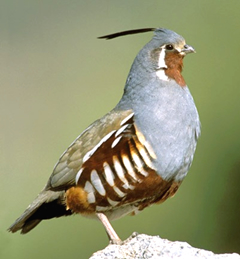
Tacarcuna Wood-Quail
Odontophorus dialeucos
Order: Galliformes / Family: Odontophoridae

Wikimedia Commons
About the Tacarcuna Wood-Quail
The Tacarcuna Wood-Quail (Odontophorus dialeucos) is a remarkable bird species found primarily in the dense forests of the Darién Gap, straddling the border of Panama and Colombia. This elusive bird, a member of the New World quail family, Odontophoridae, thrives in the humid, montane forests that characterize its range. The Tacarcuna Wood-Quail plays a significant ecological role as both a seed disperser and a prey species for larger predators, thus contributing to the biodiversity of its habitat. The bird's presence is indicative of intact forest ecosystems, as it prefers undisturbed areas with a rich understory. Unlike many other bird species, the Tacarcuna Wood-Quail does not migrate, which underscores the importance of its specific habitat for its survival.
The species is particularly significant due to its restricted range, limited primarily to the Tacarcuna Mountain Range. This area is known for its rich biodiversity and high endemism. The Tacarcuna Wood-Quail is considered a flagship species for conservation efforts in the region, often garnering attention from ornithologists and conservationists alike. Its survival is closely tied to the preservation of the forest environment, making it a focal point for habitat conservation initiatives.
Ecologically, the Tacarcuna Wood-Quail contributes to the health of the forest ecosystem. As a ground-dwelling bird, it forages in the leaf litter for seeds, fruits, and small invertebrates, aiding in seed dispersal and contributing to the natural regeneration of the forest. The bird's activities help maintain the ecological balance, supporting a diverse array of plant species. During the breeding season, which aligns with the wet season in its habitat, the quail engages in vocalizations and displays that enhance its role in the forest's soundscape.
The Tacarcuna Wood-Quail belongs to the family Odontophoridae, within the order Galliformes. These birds typically live average 4-6 years with a maximum recorded of 9 years..
How to Identify a Tacarcuna Wood-Quail
The Tacarcuna Wood-Quail is a medium-sized bird, measuring approximately 25-30 cm in length. Its plumage is striking, with a distinctive pattern that aids in identification. Adults exhibit a predominantly black and white coloration, with a bold black crown and face contrasted by a white throat and neck. The upperparts are mottled with shades of black and brown, providing excellent camouflage against the forest floor. The underparts are paler, with a pattern of fine barring that further enhances its cryptic appearance.
Juvenile Tacarcuna Wood-Quails are generally duller than the adults. They feature a more muted coloration, with less contrast between the black and white areas. This plumage helps them blend into their surroundings, offering protection from predators during their vulnerable early stages of life.
There is little sexual dimorphism in this species, with males and females appearing quite similar in plumage. However, males are slightly larger and may exhibit more vibrant coloration during the breeding season. The Tacarcuna Wood-Quail can be confused with other wood-quail species, but its distinctive black and white plumage and the specific geographic range help differentiate it. When in flight, the quail displays a rapid wingbeat pattern, although it is more commonly observed walking or running along the forest floor.
Having trouble telling birds apart? Upload a photo to our bird identification tool for an instant species match.
Tacarcuna Wood-Quail Habitat and Range
Preferred Habitat
The Tacarcuna Wood-Quail inhabits dense, humid montane forests, primarily within the Darien region. It thrives in areas with a well-developed understory and rich leaf litter, which provide ample foraging opportunities. The species is typically found at elevations ranging from 900 to 1800 meters, where the forest is characterized by a thick canopy and high humidity.
Seasonal habitat shifts are minimal for the Tacarcuna Wood-Quail, as it is a non-migratory bird. Its reliance on specific forest types makes it particularly vulnerable to habitat loss. Unlike more adaptable species, the Tacarcuna Wood-Quail does not frequent urban areas or open landscapes, instead preferring the cover and resources provided by untouched forest environments.
The bird's presence in rural and remote areas highlights the importance of conserving these habitats. Preservation of the Tacarcuna Wood-Quail's forest home is essential for maintaining not only the species itself but also the myriad other organisms that share its ecosystem.
Geographic Range
The Tacarcuna Wood-Quail's range is confined to the Tacarcuna Mountain Range, situated along the Panama-Colombia border. This area is part of the larger Darién Gap, a region renowned for its exceptional biodiversity and ecological importance. The quail's range is highly localized, with populations occurring primarily in the montane forests of eastern Panama and northwestern Colombia.
Within this limited range, the Tacarcuna Wood-Quail occupies specific forested areas, often those that remain undisturbed by human activity. Its population density is highest in habitats that provide ample cover and food resources, such as those with a dense understory and a rich variety of plant species. The bird's restricted range and habitat preferences make it particularly susceptible to environmental changes and habitat destruction.
Unlike many bird species, the Tacarcuna Wood-Quail does not engage in long-distance migrations. Instead, it remains within its range year-round, relying on the stable conditions provided by its montane forest home. This lack of migratory behavior further underscores the importance of protecting its specific range to ensure the species' continued survival.
Want to know which birds visit your area? Browse our backyard birds by location guides for region-specific species lists.
What Does the Tacarcuna Wood-Quail Eat?
The Tacarcuna Wood-Quail has a varied diet that includes a mix of plant and animal matter. Its primary food sources consist of seeds, fruits, and small invertebrates found within the leaf litter of its forest habitat. During the wet season, when fruits are more abundant, the quail's diet shifts to include a higher proportion of berries and other fleshy fruits.
Foraging typically occurs on the forest floor, where the quail uses its strong legs and claws to scratch through the leaf litter in search of food. This behavior not only aids in uncovering hidden food items but also plays a role in aerating the soil and promoting decomposition processes within the forest ecosystem.
The Tacarcuna Wood-Quail's diet may also include small insects and other invertebrates, particularly during the breeding season when the nutritional demands are higher. The quail usually forages in the early morning and late afternoon, taking advantage of cooler temperatures and reduced predator activity. This opportunistic feeding strategy allows it to exploit a variety of food sources throughout the year, contributing to its adaptability within its specific habitat.
Tacarcuna Wood-Quail Behavior and Social Structure
The Tacarcuna Wood-Quail exhibits a complex social structure, often forming small groups or coveys, which typically consist of family units. These groups are vital for foraging and provide protection from predators. The quail's territorial behavior is most pronounced during the breeding season, when males engage in vocal displays to establish and defend territories.
Courtship displays are an integral aspect of its breeding behavior, with males performing elaborate calls and postures to attract females. These displays often occur in dense underbrush, where visibility is limited but acoustic communication is effective. Once paired, the quail exhibits strong monogamous bonds, with both sexes participating in nesting and chick-rearing activities.
In response to predators, the Tacarcuna Wood-Quail relies on its cryptic plumage and knowledge of the forest terrain to evade capture. When threatened, it may remain motionless, blending into the forest floor, or it may burst into sudden flight, using rapid wingbeats to escape. Daily activity patterns include periods of foraging interspersed with rest and preening, typically in secluded areas that offer cover from potential threats.
Tacarcuna Wood-Quail Nesting and Reproduction
The Tacarcuna Wood-Quail builds its nests on the ground, typically choosing locations concealed by dense vegetation or fallen logs to provide protection from predators. The nest itself is a simple structure, often a shallow depression lined with leaves and other plant materials.
Clutch size for this species ranges from 4 to 8 eggs, with an incubation period lasting approximately 22 to 24 days. Both parents share the responsibility of incubating the eggs, with the female often taking the night shift while the male stands guard during the day.
Once hatched, the chicks are precocial, leaving the nest within hours and following their parents as they forage. The fledging period is relatively short, with young birds developing the ability to fly within a few weeks. Parental care continues throughout this time, with both parents involved in protecting and teaching the juveniles until they are capable of independence.
The Tacarcuna Wood-Quail typically raises one to two broods per year, depending on environmental conditions and food availability. This reproductive strategy, combined with their specific habitat requirements, emphasizes the need for stable and protected environments to support their life cycle.
Tacarcuna Wood-Quail Sounds and Vocalizations
The Tacarcuna Wood-Quail's primary vocalization is a series of resonant, rhythmic whistles, often described as a "whoop whoop" sound that echoes through its forest habitat. These calls serve multiple functions, from territorial defense to mate attraction during the breeding season.
In addition to the primary song, the quail uses a variety of call notes to communicate within the covey. These calls are generally softer and less conspicuous, functioning as contact calls between group members. Alarm calls are more abrupt and high-pitched, signaling the presence of potential threats to the group.
The dawn chorus includes a blend of these vocalizations, with males particularly active in calling throughout the early morning. The quail's calls are an essential component of the forest soundscape, contributing to the auditory identity of its habitat and offering cues to its presence for both mates and rivals.
Interesting Facts About the Tacarcuna Wood-Quail
- 1The Tacarcuna Wood-Quail is one of the few bird species endemic to the Darién region, highlighting its ecological uniqueness.
- 2Unlike many birds, the Tacarcuna Wood-Quail's incubation duties are shared equally by both parents, promoting strong pair bonds.
- 3Despite being a ground-dwelling species, the Tacarcuna Wood-Quail can burst into rapid flight when startled, demonstrating remarkable agility.
- 4This bird's diet includes a surprising variety of fruits, making it an important seed disperser within its ecosystem.
- 5The Tacarcuna Wood-Quail's vocalizations can carry over long distances in the dense forest, facilitating communication in low-visibility environments.
- 6The species' reliance on undisturbed montane forests makes it a key indicator species for the health of its habitat.
- 7Tacarcuna Wood-Quail coveys exhibit strong social structures, often remaining together throughout the year, unlike many other quail species.
Tacarcuna Wood-Quail Conservation Status
The Tacarcuna Wood-Quail is currently classified as Near Threatened on the IUCN Red List, with population trends indicating a decline due to habitat loss and fragmentation. The primary threats to the species include deforestation for agriculture and logging, which reduce the availability of suitable habitats. Conservation efforts focus on the preservation and protection of its montane forest habitats, often through the establishment of protected areas and reserves. These efforts aim to curb habitat destruction and promote sustainable land use practices that accommodate both human needs and biodiversity. Historically, the Tacarcuna Wood-Quail's population has fluctuated in response to changes in land use and forest cover. Maintaining and expanding protected areas within its range is crucial for reversing these trends and ensuring the species' long-term survival. Continued research and monitoring are necessary to better understand its ecological needs and to implement effective conservation strategies.