
Tawny-faced Quail
Rhynchortyx cinctus
Order: Galliformes / Family: Odontophoridae

Wikimedia Commons
About the Tawny-faced Quail
The Tawny-faced Quail (Rhynchortyx cinctus) is a striking bird found primarily in the lush, shaded understory of tropical forests. Native to Central and South America, this species thrives in regions characterized by high humidity and dense vegetation. Its range extends from Nicaragua through Panama and into northwestern South America, reaching as far as western Ecuador and northern Colombia. This quail plays a significant role in its ecosystem, primarily through seed dispersal, which contributes to forest regeneration. Being ground dwellers, Tawny-faced Quails prefer the cover of thick foliage where they forage for food, thus aiding in the control of insect populations and the distribution of plant seeds. These birds are particularly active during the rainy season when food is abundant, but they also adapt their foraging strategies during drier months to ensure survival.
Ecologically, the Tawny-faced Quail is a crucial part of the food web, serving as both predator and prey. By consuming a variety of seeds, fruits, and invertebrates, they help maintain the balance within their habitat. Their presence indicates a healthy forest environment, as they require intact ecosystems with minimal human disturbance to thrive. While they are not migratory, they may exhibit local movements in response to food availability and climatic conditions.
The Tawny-faced Quail's reliance on specific forest habitats highlights its vulnerability to deforestation and habitat degradation. These birds are more often heard than seen, owing to their secretive nature and preference for staying concealed in dense underbrush. Their characteristic calls often serve as the first indication of their presence to observant birders and researchers. Conservation of their habitat is critical, as it not only supports the Tawny-faced Quail but also a plethora of other species that contribute to the biodiversity of forest ecosystems.
The Tawny-faced Quail belongs to the family Odontophoridae, within the order Galliformes. These birds typically live typically 3-5 years in the wild, with some reaching up to 7 years..
How to Identify a Tawny-faced Quail
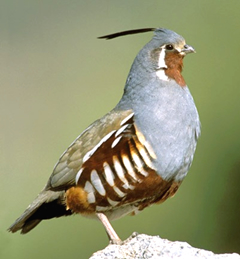
The Tawny-faced Quail is a small, robust bird with a distinctive appearance that aids in its identification. Adults exhibit warm brown upperparts and a paler underbelly, while their faces are marked with a rich tawny coloration, from which they derive their name. Males and females appear similar, though males may display slightly more vibrant hues. Juveniles resemble adults but typically present duller and more uniform plumage until they mature.
When observing Tawny-faced Quails in the field, birders should note their compact body structure and short tail, which are typical of ground-dwelling birds. Their legs are relatively long, aiding in their terrestrial lifestyle. In flight, they demonstrate a rapid, whirring motion, though they prefer running through underbrush to evade threats. This bird's posture when perched is often low and crouched, blending seamlessly with the forest floor.
Confusion may arise with other quail species, such as the Marbled Wood-Quail. However, the Tawny-faced Quail's distinctive facial coloring and smaller size can help differentiate it. Observers should rely on both visual cues and auditory signals, as their calls are a reliable method of detection in dense habitats.
Having trouble telling birds apart? Upload a photo to our bird identification tool for an instant species match.
Tawny-faced Quail Habitat and Range
Preferred Habitat
Tawny-faced Quails inhabit the humid lowland and montane forests of Central and South America, primarily at elevations ranging from sea level to 1,500 meters. They thrive in regions where dense understory provides ample cover and foraging opportunities. These birds are most commonly found in primary forests but can also persist in secondary growth areas if sufficient understory vegetation is available.
While they are primarily forest dwellers, Tawny-faced Quails have shown some adaptability to modified landscapes, provided that the essential structural components of dense foliage remain intact. Seasonal habitat shifts are generally linked to food availability rather than migration, as they are non-migratory birds. Urban presence is minimal due to their dependence on forest environments, though they may occasionally be observed in rural areas adjacent to forested regions.
Geographic Range
The Tawny-faced Quail's range spans the humid forests of Central America and extends into the northern reaches of South America. In Central America, they are found from southern Nicaragua through Costa Rica and Panama, where the dense rainforests provide ideal conditions. Their range continues into South America, particularly in the Chocó region, which encompasses parts of western Colombia and northwestern Ecuador.
These birds do not undertake long migrations but may engage in local movements within their range, primarily driven by changes in food availability or environmental conditions. Population density tends to be higher in undisturbed, mature forests where the undergrowth is thick and provides adequate cover.
Despite their wide range, the population density of Tawny-faced Quails can vary significantly, with some areas supporting higher densities due to favorable habitat conditions. They are generally absent from highly disturbed or deforested areas, underscoring the importance of intact forest ecosystems for their survival.
Want to know which birds visit your area? Browse our backyard birds by location guides for region-specific species lists.
What Does the Tawny-faced Quail Eat?
The Tawny-faced Quail exhibits a diverse diet that includes seeds, fruits, and small invertebrates. Their primary food sources consist of a variety of seeds and fruits that they forage from the forest floor, as well as insects and other invertebrates that provide essential protein.
Seasonal changes influence their diet, with a greater emphasis on fruits and insects during the wet season when these resources are more plentiful. During drier periods, they may rely more heavily on seeds and other more readily available food items. Their foraging behavior involves scratching at the leaf litter to uncover hidden morsels, a technique that helps them access a wider range of food sources.
Prey size varies, but they typically target small insects and larvae that they can easily manage. Tawny-faced Quails are diurnal, foraging primarily during the cooler hours of the morning and late afternoon to avoid the heat of the day, conserving energy and reducing exposure to predators.
Tawny-faced Quail Behavior and Social Structure
Tawny-faced Quails are known for their elusive and secretive nature. They prefer to remain hidden within the dense forest understory, a behavior that minimizes their exposure to predators. They exhibit a strong territorial instinct, with pairs or small family groups often defending their chosen area from intruders.
During the breeding season, the Tawny-faced Quail displays a range of courtship behaviors, including vocalizations and visual displays, to attract a mate. These quails form monogamous pairs that cooperate in raising their young. While they are primarily solitary or found in pairs, they may occasionally form small flocks outside of the breeding season, particularly when resources are abundant.
Their response to predators involves a combination of cryptic coloration and swift, low running through the underbrush, making them difficult to spot. Daily activity patterns include foraging during the cooler parts of the day and resting or taking cover during midday heat.
Tawny-faced Quail Nesting and Reproduction
Tawny-faced Quails construct nests that are simple yet effective, typically built on the ground amidst dense vegetation. These nests are shallow depressions lined with leaves and grass, providing a well-camouflaged site to protect their eggs from predators.
The female lays a clutch of 3 to 5 eggs, which are incubated for about 18 to 20 days. Both parents participate in incubation duties, with the female often taking the lead. Once hatched, the chicks are precocial, leaving the nest shortly after hatching to follow the parents in search of food.
Fledging occurs rapidly, with young birds gaining independence in a few weeks, though they remain with the parents for guidance and protection. Tawny-faced Quails typically produce one brood per year, though favorable conditions may occasionally allow for a second.
Tawny-faced Quail Sounds and Vocalizations
The Tawny-faced Quail's vocalizations are distinctive, consisting of a series of clear, whistled notes that often serve as a means of communication between pairs or family groups. These calls are frequently heard during the early morning and late afternoon, coinciding with their active periods. The primary call resembles a rising and falling series of whistles, often described as melodic yet plaintive.
In addition to their primary song, Tawny-faced Quails emit various call notes that serve as contact calls or alarms. Alarm calls tend to be sharper and more abrupt, designed to alert other quails to potential danger. Their vocalizations play a critical role in maintaining social bonds and coordinating movements within the dense forest environment.
Interesting Facts About the Tawny-faced Quail
- 1The Tawny-faced Quail is one of the few quail species native to the dense forests of Central and South America.
- 2Their vocalizations are most often heard during the cooler hours of the day, making them a challenge to observe.
- 3Despite their small size, Tawny-faced Quails play a significant role in seed dispersal within their forest habitats.
- 4These quails are known for their rapid and agile movements, preferring to run rather than fly when threatened.
- 5The dense underbrush of their habitats provides both cover from predators and a rich foraging ground for food.
- 6Tawny-faced Quails are largely monogamous, forming stable pairs that work together to raise their young.
- 7Their secretive nature and preference for dense forests make them a rewarding find for dedicated birdwatchers.
Tawny-faced Quail Conservation Status
Currently, the Tawny-faced Quail is classified as Least Concern by the IUCN, though its population trend is of concern due to ongoing habitat loss. Deforestation, driven by agriculture and urban expansion, poses the most significant threat to their natural habitats. Conservation efforts focus on preserving and restoring forested areas, particularly in regions where deforestation rates are high. Protected areas play a crucial role in safeguarding populations, though effective management and enforcement are essential to their success. Historically, the population of Tawny-faced Quails has fluctuated with changes in forest cover, emphasizing the need for continued conservation action. Raising awareness about the importance of forest conservation is vital to ensure the long-term survival of this and other forest-dependent species.
Other Odontophoridae Species


Birds Similar to the Tawny-faced Quail
These species are often confused with the Tawny-faced Quail due to similar appearance or overlapping range.

