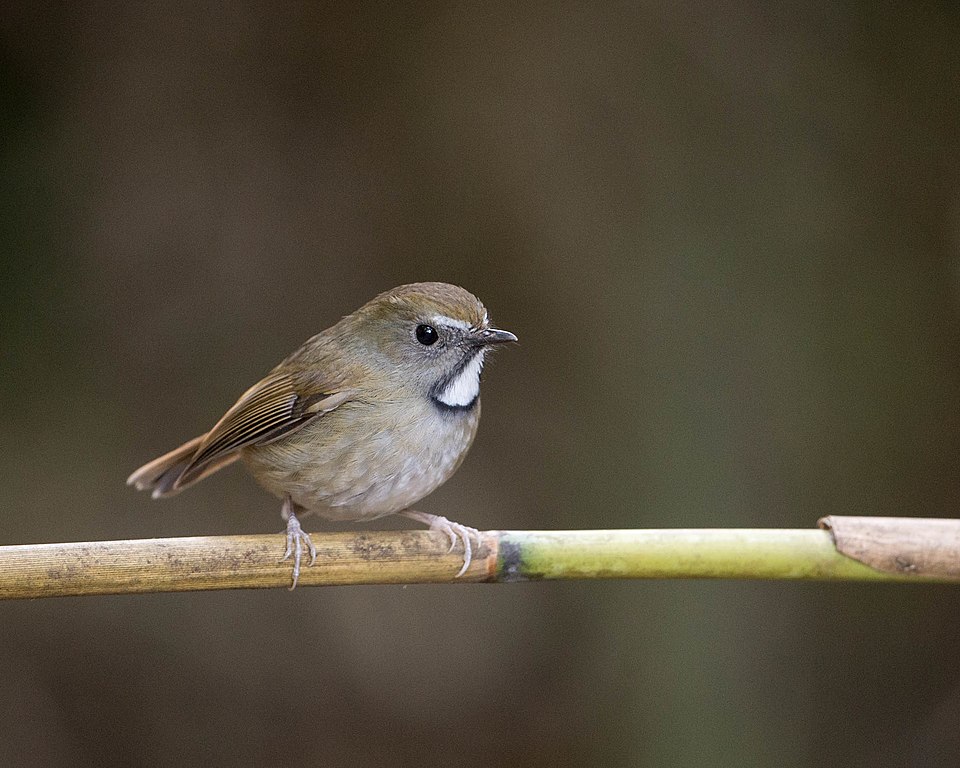
Tessmann's Flycatcher
Muscicapa tessmanni
Order: Passeriformes / Family: Muscicapidae

Wikimedia Commons
About the Tessmann's Flycatcher
Tessmann's Flycatcher, scientifically known as Muscicapa tessmanni, is a subtle yet intriguing member of the Muscicapidae family. It primarily inhabits the lowland forest regions of Central and West Africa. This bird is often found in countries such as Cameroon, Gabon, and the Republic of Congo, where it prefers dense forest undergrowth and edges, making it a somewhat elusive species. The Tessmann's Flycatcher plays an important role in its ecosystem as a predator of small insects, helping to control insect populations. Typically residing in humid, tropical forests, this flycatcher exhibits a preference for areas with abundant foliage and natural cover, which allows it to adeptly hunt for its prey. Seasonal behaviors of Tessmann's Flycatcher are subtle, with its activities largely revolving around the availability of food sources. Unlike some migratory flycatchers, Muscicapa tessmanni tends to remain in its tropical habitat year-round, benefiting from the relatively stable climate and food availability. During breeding seasons, this bird becomes more active, as it engages in courtship displays and territorial defense. In terms of ecological significance, Tessmann's Flycatcher contributes to the rich biodiversity of its forest habitats. Its presence indicates a healthy insect population, which is vital for maintaining the ecological balance. Despite its small size and muted colors, which often render it inconspicuous, the bird's role as an insectivore highlights its importance in these tropical ecosystems. Although not as widely known as some of its colorful relatives, Tessmann's Flycatcher is a fascinating subject for ornithologists and bird enthusiasts alike, offering insights into the complex dynamics of forest ecosystems.
The Tessmann's Flycatcher belongs to the family Muscicapidae, within the order Passeriformes. These birds typically live average 5 years with a maximum recorded of 8 years.
How to Identify a Tessmann's Flycatcher
Tessmann's Flycatcher can be identified by its modest brown and gray plumage, which provides excellent camouflage in its forested habitat. Adult birds typically display a uniform brown upperpart with subtle grayish tones, while their underparts are a lighter gray. This muted coloration allows the bird to blend seamlessly into the forest canopy. Juvenile Tessmann's Flycatchers exhibit a similar plumage pattern, though they may show faint streaking on the breast as well as slightly ruddier tones. Male and female Tessmann's Flycatchers are similar in appearance, making visual sex differentiation challenging without closer inspection or behavioral cues. In flight, Tessmann's Flycatcher presents a compact silhouette with a relatively short tail and rounded wings. When perched, it often holds itself upright, a characteristic posture of many flycatchers. This stance, combined with its alert demeanor, aids in spotting potential insect prey. Confusion with similar species could occur, particularly with other small brown flycatchers within its range. However, the subtle differences in plumage and habitat preference help in distinguishing Muscicapa tessmanni from its relatives.
Having trouble telling birds apart? Upload a photo to our bird identification tool for an instant species match.
Tessmann's Flycatcher Habitat and Range
Preferred Habitat
Tessmann's Flycatcher inhabits the dense, humid lowland forests of Central and West Africa. It shows a particular affinity for areas with thick undergrowth and forest edges, where it can find ample insect prey. This preference for dense woodland environments makes the flycatcher less common in more open or urban areas. The bird can be found at elevations ranging from sea level to about 1,500 meters. Unlike some species that shift habitats seasonally, Tessmann's Flycatcher remains in its tropical forest home year-round. The lack of significant seasonal habitat shifts is largely due to the constant availability of food in tropical forests. While it is more common in rural forested areas, this flycatcher does not typically venture into urban environments, as it relies on the natural cover and insect populations found in more pristine habitats.
Geographic Range
Tessmann's Flycatcher primarily resides within the tropical regions of Central and West Africa. Its range includes countries like Cameroon, Gabon, and the Republic of Congo, where it inhabits lowland forests. The bird does not engage in long-distance migrations, instead maintaining a relatively sedentary lifestyle within its home range. This species is generally found at lower elevations, up to about 1,500 meters, favoring the humid and dense forest environments that these regions provide. While the population density of Tessmann's Flycatcher is not precisely known, it is considered to be locally common within suitable habitats. However, its preference for dense forests makes it less visible and potentially subject to habitat degradation from deforestation.
Want to know which birds visit your area? Browse our backyard birds by location guides for region-specific species lists.
What Does the Tessmann's Flycatcher Eat?
The primary diet of Tessmann's Flycatcher consists of small insects, which it captures through agile flight maneuvers. These include flies, beetles, and other small arthropods that inhabit the forest understory. The bird employs a perch-and-sally technique, where it remains stationary on a branch before darting out to snatch passing insects. This method is both efficient and energy-conserving, allowing the flycatcher to capitalize on its keen eyesight and quick reflexes. Seasonal diet changes are minimal for Tessmann's Flycatcher, given the consistent availability of insect prey in its tropical habitat. Occasionally, it might supplement its diet with small fruits or berries, although this is not a primary food source. Feeding typically occurs during daylight hours, with heightened activity in the early morning and late afternoon when insect activity peaks.
Tessmann's Flycatcher Behavior and Social Structure
Tessmann's Flycatcher exhibits a solitary or paired social structure, particularly during the breeding season when it becomes more territorial. Males engage in modest courtship displays, often involving song and slight aerial acrobatics to attract a mate. Once paired, the birds maintain a territory, defending it from intruders with vocalizations and displays. Flocking behavior is uncommon in Tessmann's Flycatcher, as it tends to forage individually or in pairs. In response to predators, this flycatcher relies on its camouflage and swift flight to evade capture, often retreating to denser foliage for cover. Daily activity patterns are primarily diurnal, with peaks in foraging activity occurring during the cooler hours of the morning and late afternoon. Tessmann's Flycatcher is generally quiet and unobtrusive, making it a less conspicuous presence in the forest despite its active fly-catching behavior.
Tessmann's Flycatcher Nesting and Reproduction
The nesting habits of Tessmann's Flycatcher involve constructing a small, cup-shaped nest that is well-hidden within the dense foliage of its forest habitat. The nest is typically built from fine plant materials such as grasses, leaves, and spider silk, which provide both concealment and structural integrity. Preferred nesting locations include the fork of a tree branch or a dense bush, usually at a low to moderate height above the ground. Clutch size generally consists of two to three eggs, with both parents sharing the responsibilities of incubation and feeding. The incubation period lasts about 12 to 14 days, after which the eggs hatch. Fledging occurs approximately two weeks later, with both parents continuing to care for the young birds as they learn to fly and forage independently. Tessmann's Flycatcher typically raises one or two broods per year, depending on environmental conditions and food availability.
Tessmann's Flycatcher Sounds and Vocalizations
Tessmann's Flycatcher produces a soft, melodious song characterized by a series of pleasant, whistled notes. The rhythm is steady, with a gentle rise and fall in pitch, creating a soothing auditory presence in the forest. Call notes are short and modest, often used for communication between mates or as a territorial signal. Alarm calls are sharper and more insistent, alerting to potential threats. During the dawn chorus, Tessmann's Flycatcher's song may blend with the calls of other forest birds, contributing to the rich tapestry of sound in its habitat. Its vocalizations, while not particularly loud or prominent, are distinct enough to identify the species amidst the ambient noise of the forest.
Interesting Facts About the Tessmann's Flycatcher
- 1Tessmann's Flycatcher is named after Günther Tessmann, a German botanist known for his work in Africa.
- 2Despite its drab appearance, Tessmann's Flycatcher is highly adept at catching insects mid-air with precise agility.
- 3Tessmann's Flycatcher is a year-round resident of tropical forests, unlike many migratory flycatchers.
- 4This flycatcher has adapted to thrive in dense, humid forests, where its plumage offers excellent camouflage.
- 5Tessmann's Flycatcher rarely forms flocks, preferring a solitary or paired lifestyle, especially during breeding seasons.
Tessmann's Flycatcher Conservation Status
Tessmann's Flycatcher is currently listed as Least Concern by the IUCN, indicating a stable population trend. Nevertheless, the primary threat to this species is habitat loss due to deforestation and the degradation of tropical forests. Conservation efforts focus on preserving forest habitats and mitigating the impacts of logging and land conversion. Historical population changes have been relatively stable, although localized declines may have occurred in areas experiencing significant habitat destruction. Continued monitoring and habitat protection are crucial to ensuring the long-term survival of Tessmann's Flycatcher in its native range.