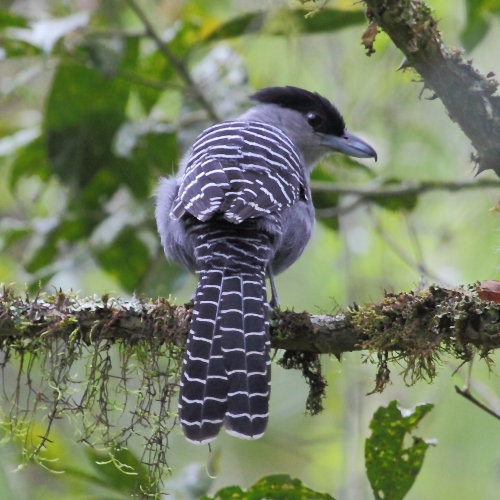
Thamnophilus rufus
Thamnophilus rufus
Order: Passeriformes / Family: Thamnophilidae
About the Thamnophilus rufus
The Rufous-capped Antshrike (Thamnophilus rufus) is a striking bird found in the dense understories of South American forests. It inhabits regions like the Amazon Basin and the Atlantic Forest, where it plays a significant ecological role as both predator and prey. This bird is an integral part of the tropical ecosystem, primarily due to its insectivorous diet, which helps control insect populations. Often heard before seen, its strong vocalizations echo through the forest, a testament to its territorial nature. Males and females are nearly identical, both sporting the signature rufous cap that gives the bird its common name. They are most active during the early morning and late afternoon, taking advantage of these cooler periods to forage. During the rainy season, Rufous-capped Antshrikes become particularly active, as the abundance of prey increases. Their presence in the forest is a clear indicator of a healthy, thriving ecosystem. The species is non-migratory, maintaining territories year-round, with slight shifts in range due to environmental pressures. As part of the Thamnophilidae family, the Rufous-capped Antshrike shares its habitat with a variety of other antbirds, each contributing uniquely to the biodiversity of their environments. Despite habitat destruction, this bird has shown resilience, adapting to secondary growth and fragmented landscapes. However, continued conservation efforts are necessary to ensure its habitat remains intact. The Rufous-capped Antshrike not only enriches the biodiversity of its habitat but also captivates birdwatchers and researchers with its elusive nature and distinctive calls. Its role in the ecosystem as both predator and prey highlights the interconnectedness of forest life, making it a species of interest for both ecological and conservation studies.
The Thamnophilus rufus belongs to the family Thamnophilidae, within the order Passeriformes. These birds typically live average 5 years, with a maximum recorded of 8 years..
How to Identify a Thamnophilus rufus
The Rufous-capped Antshrike features a distinctive rufous cap that is its most notable field mark. Adult males and females are similar, featuring grayish bodies with a slightly paler underbelly. Juveniles may appear duller but still exhibit the characteristic rufous cap. The bird's robust bill is another key identifying feature, adapted for its insectivorous diet. When perched, the Rufous-capped Antshrike maintains an upright posture, often flicking its wings and tail. In flight, the bird exhibits a quick, direct path, which is typical for small passerines in dense forest environments. Although it bears some resemblance to other antshrikes, the combination of its rufous cap and specific vocalizations aid in distinguishing it from similar species. The bird's calls and songs are often the first indicator of its presence, making auditory identification a reliable tool. Observers should note the bird's preference for mid to lower canopy levels, where it actively forages.
Having trouble telling birds apart? Upload a photo to our bird identification tool for an instant species match.
Thamnophilus rufus Habitat and Range
Preferred Habitat
The Rufous-capped Antshrike thrives in lowland tropical forests, particularly favoring dense understory environments. It is commonly found in both primary and secondary growth forests, demonstrating some adaptability to habitat changes. The bird is primarily located at elevations ranging from sea level to about 1000 meters. Its preference for thick vegetation provides necessary cover and abundant food sources. While it predominantly inhabits rural forested areas, it can also be found in forest fragments near urban edges, provided there is sufficient cover. During the wet season, these antshrikes may expand their territory slightly, following insect abundance. Their ability to adapt to secondary forests makes them more resilient to certain habitat changes, although large-scale deforestation remains a threat.
Geographic Range
The Rufous-capped Antshrike is native to South America, with its range extending through countries such as Brazil, Paraguay, and northern Argentina. It primarily resides within the Amazon Basin and the Atlantic Forest, regions known for their rich biodiversity. This bird is non-migratory, maintaining its range year-round, although minor seasonal movements occur in response to environmental changes. Population density is highest in undisturbed, mature forests, but they are also found in fragmented landscapes where secondary growth provides adequate habitat. Although primarily found in tropical regions, the species' range does not extend beyond these South American locales, making it an endemic species to this continent.
Want to know which birds visit your area? Browse our backyard birds by location guides for region-specific species lists.
What Does the Thamnophilus rufus Eat?
The Rufous-capped Antshrike has an insectivorous diet, feeding primarily on ants, beetles, and other small arthropods. During the wet season, when insects are more abundant, the bird's diet becomes more diverse, including caterpillars and spiders. The antshrike employs a methodical foraging technique, moving slowly through the undergrowth and using its strong bill to probe leaves and branches. It often joins mixed-species foraging flocks, capitalizing on the hunting success of other birds. Prey sizes typically range from small to medium insects, which are easily handled by their robust bill. Feeding occurs mainly during the cooler parts of the day, aligning with the bird's overall activity patterns.
Thamnophilus rufus Behavior and Social Structure
The Rufous-capped Antshrike is known for its solitary or pair-based social structure, rarely forming larger groups outside of foraging flocks. Territorial behavior is pronounced, with both males and females defending their space through vocalizations and displays. Courtship involves a series of calls and postures, with males sometimes offering food to females. Flocking is primarily observed during foraging, where the bird benefits from the collective vigilance of mixed-species groups. In response to predators, the Rufous-capped Antshrike relies on its cryptic plumage and dense habitat for concealment. Daily activities are centered around foraging and territorial defense, with peak activity occurring in the early morning and late afternoon.
Thamnophilus rufus Nesting and Reproduction
The Rufous-capped Antshrike builds its nest in dense shrubbery or low trees, often using leaves, twigs, and plant fibers. Nests are cup-shaped and well-concealed to protect from predators. The female typically lays two eggs per clutch, with both parents involved in incubation, which lasts about 14-16 days. After hatching, both parents feed the chicks, which fledge after approximately two weeks. This species usually has one brood per year, although in favorable conditions, a second brood may occur. Parental roles are shared, with both male and female contributing to feeding and protection of the young.
Thamnophilus rufus Sounds and Vocalizations
The primary song of the Rufous-capped Antshrike is a series of descending whistles, delivered with a clear, resonant quality. Call notes are sharp and piercing, used frequently during territorial disputes or to maintain contact with mates. Alarm calls are more abrupt and rapid, serving as a warning to potential threats. During the dawn chorus, their vocalizations contribute to the symphony of sounds typical of the tropical forest. The bird's song is reminiscent of other antshrikes but is distinguishable by its rhythm and pitch.
Interesting Facts About the Thamnophilus rufus
- 1The Rufous-capped Antshrike's name comes from the Latin 'rufus' meaning red or reddish, referring to its distinct cap color.
- 2Despite its common name, the Rufous-capped Antshrike is not closely related to true shrikes but belongs to the diverse antbird family.
- 3These birds can be quite elusive, often heard long before they are seen, thanks to their dense habitat preferences.
- 4The Rufous-capped Antshrike sometimes follows swarms of army ants, capturing insects flushed out by the ants' movement.
- 5Its vocal repertoire includes over five distinct calls, each serving a unique purpose in communication and territory defense.
- 6The Rufous-capped Antshrike is part of a larger group of birds known as 'thamnophilids,' which are specialized forest dwellers.
- 7Although primarily insectivorous, it occasionally consumes small fruits, adding variety to its diet during leaner times.
Thamnophilus rufus Conservation Status
Currently, the Rufous-capped Antshrike is listed as Least Concern by the IUCN. While the population trend remains stable, habitat destruction poses a significant threat. Deforestation for agriculture and urban expansion continues to reduce available habitat. Conservation efforts focus on preserving large tracts of tropical forest, essential for maintaining viable populations. Historical data suggests fluctuations in population size correlate closely with habitat availability, emphasizing the need for continued habitat protection.