
Tylas Vanga
Tylas eduardi
Order: Passeriformes / Family: Vangidae

Wikimedia Commons
About the Tylas Vanga
The Tylas Vanga, scientifically known as Tylas eduardi, resides exclusively in Madagascar, making it an endemic species of significant interest to ornithologists and conservationists. This bird belongs to the Vangidae family, which is notable for its diversity and evolutionary uniqueness. The Tylas Vanga primarily occupies the montane forests of eastern Madagascar, thriving in altitudinal ranges from 800 to 2,000 meters. These forests, rich in biodiversity, provide the necessary resources for the Tylas Vanga to sustain its population.
Ecologically, the Tylas Vanga plays a role as both predator and prey, contributing to the complex food web of Madagascar's forests. It feeds on a variety of insects and small arthropods, thus helping control insect populations. In turn, it serves as prey for larger avian predators. Its presence indicates a healthy forest ecosystem, as it relies on dense vegetation and a stable supply of prey.
The Tylas Vanga is active throughout the year, with some seasonal variations in behavior corresponding to the rainy and dry seasons. During the rainy season, from November to April, these birds are more active in breeding and foraging, taking advantage of the abundance of food. The dry season sees a slight decrease in these activities, though the Tylas Vanga remains a consistent presence in its habitat. Its adaptability to seasonal changes highlights its resilience, yet also underscores the potential threats from habitat alteration and climate change.
The Tylas Vanga belongs to the family Vangidae, within the order Passeriformes. These birds typically live typically 6-8 years, with some individuals living up to 12 years..
How to Identify a Tylas Vanga
The Tylas Vanga is a distinctive small bird, measuring approximately 17 centimeters in length. Adult Tylas Vangas display striking black and white plumage, with the head, back, and wings predominantly black, while the throat and underparts are white. The tail is relatively long and black, adding to its distinctive appearance. Females and males look similar, though females may exhibit slightly duller plumage. Juveniles can be identified by their lighter and more muted coloration.
In flight, the Tylas Vanga shows a characteristic silhouette with a broad, rounded wing shape and a relatively short tail compared to its body length. Its perching posture is upright and alert, often seen on branches in the mid to upper canopy. This bird's stark coloration can sometimes lead to confusion with other members of the Vangidae family, but its size and specific patterning help in differentiating it.
Compared to similar species, the Tylas Vanga's lack of any crest or distinctive facial markings sets it apart. Its behavior, often seen foraging in mixed-species flocks, can also aid in identification, as it frequently joins other small insectivorous birds in the canopy.
Having trouble telling birds apart? Upload a photo to our bird identification tool for an instant species match.
Tylas Vanga Habitat and Range
Preferred Habitat
The Tylas Vanga inhabits the montane rainforests of eastern Madagascar, favoring altitudes ranging from 800 to 2,000 meters. These forests are characterized by dense, humid vegetation, including a mix of tall trees, shrubs, and abundant undergrowth. The Tylas Vanga prefers areas with a rich supply of insects, primarily found in these lush environments.
In terms of habitat shifts, the Tylas Vanga remains primarily within forested regions year-round, showing little tendency to venture into more open or urban areas. Its dependency on forest habitat makes it particularly vulnerable to deforestation and habitat fragmentation. The preservation of these forest ecosystems is essential for the survival of the Tylas Vanga.
While not typically found in urban settings, the Tylas Vanga may occasionally be seen on the periphery of forested areas that border human developments. However, it remains largely absent from agricultural lands and heavily modified environments.
Geographic Range
The Tylas Vanga's range is strictly confined to Madagascar, where it occupies the eastern montane forests. Its range does not extend to the coastal lowlands or the western dry deciduous forests of the island. Within its range, the Tylas Vanga is relatively widespread, with population density hotspots in regions such as the Andasibe-Mantadia National Park and the Ranomafana National Park.
In terms of breeding range, the Tylas Vanga remains within its established montane forest territories year-round, as it does not migrate. The lack of migratory behavior is typical for many island endemics, given the isolated nature of their habitats.
Despite its limited range, the Tylas Vanga's population appears stable, provided that forest habitats remain intact. Conservation efforts focusing on protecting these crucial areas are vital for maintaining the Tylas Vanga's current distribution and abundance.
Want to know which birds visit your area? Browse our backyard birds by location guides for region-specific species lists.
What Does the Tylas Vanga Eat?
The diet of the Tylas Vanga primarily consists of insects and other small arthropods. It actively forages among the foliage, using its sharp beak to probe crevices and capture prey. The Tylas Vanga's foraging technique is methodical and deliberate, often involving hanging upside down or clambering through branches to reach hidden insects.
Seasonal changes influence its diet, with a greater variety of insects available during the rainy season. Beetles, caterpillars, and spiders form the core of its diet during this time. In the drier months, the Tylas Vanga may shift its focus to ants and other more readily available prey.
The Tylas Vanga is primarily a diurnal feeder, with peak foraging activity occurring in the early morning and late afternoon. This schedule allows it to avoid the hottest part of the day while taking advantage of the increased insect activity during cooler hours.
Tylas Vanga Behavior and Social Structure
Socially, the Tylas Vanga exhibits a degree of sociability uncommon in many bird species. It often participates in mixed-species foraging flocks, a behavior that enhances its foraging efficiency and provides increased protection against predators. By joining these flocks, the Tylas Vanga benefits from the vigilance of other birds, while also contributing to the collective search for food.
Territoriality is not strongly pronounced in the Tylas Vanga, as its cooperative behaviors suggest a more communal approach to resource sharing. During the breeding season, however, pairs may become more territorial, defending small areas from conspecifics.
Courtship displays in the Tylas Vanga involve vocalizations and aerial maneuvers, with males performing short flights to attract females. Once paired, they remain monogamous for the duration of the breeding season. In response to predators, the Tylas Vanga relies on alarm calls and flocking behaviors to deter threats. Its activity patterns are largely diurnal, with periods of increased activity in the morning and late afternoon.
Tylas Vanga Nesting and Reproduction
The Tylas Vanga constructs its nest in the mid to upper canopy, typically choosing a well-concealed location among dense foliage. The nest itself is cup-shaped, made from twigs, leaves, and other plant materials, often lined with softer substances like moss or feathers for insulation and comfort.
Clutch size generally consists of two to three eggs, which the female incubates over a period of approximately 14 to 16 days. During incubation, the male plays an active role in feeding the female and defending the nesting territory.
Post-hatching, both parents participate in feeding and caring for the chicks. The fledging period lasts around 15 to 18 days, after which the young begin to explore their surroundings while still relying on parents for food. Typically, the Tylas Vanga raises one brood per year, although in optimal conditions, a second brood may occur.
Tylas Vanga Sounds and Vocalizations
The Tylas Vanga's primary song is a series of melodious whistles, often described as clear and sweet, with a rhythmic pattern that repeats every few seconds. These vocalizations serve both to establish territory and to attract mates.
In addition to their song, Tylas Vangas produce a variety of call notes, including sharp chips and trills used in communication within flocks. Alarm calls are harsher, serving to warn others of potential threats.
During the dawn chorus, the Tylas Vanga's song contributes to the rich symphony of the forest, adding a distinctive yet harmonious element. Its vocalizations are reminiscent of certain thrushes, though with a lighter and more delicate quality.
Interesting Facts About the Tylas Vanga
- 1The Tylas Vanga is one of over a dozen vanga species uniquely adapted to Madagascar's diverse environments.
- 2Unlike many birds, Tylas Vangas are known to participate in mixed-species flocks, aiding in their foraging success.
- 3Tylas Vangas have a monogamous breeding system, with both parents actively involved in raising the young.
- 4Their cup-shaped nests are often well-hidden in the dense canopy, providing protection from predators.
- 5The Tylas Vanga's song is particularly prominent during the breeding season, serving to attract mates and establish territories.
- 6Despite being a forest specialist, the Tylas Vanga shows remarkable adaptability to seasonal changes within its habitat.
- 7The species' name, Tylas, is derived from an ancient term meaning 'to bind', possibly referring to its nest-building skills.
Tylas Vanga Conservation Status
The Tylas Vanga is currently listed as Least Concern by the IUCN, with a stable population trend. Despite its relatively secure status, habitat destruction poses a significant threat, particularly through deforestation for agriculture and logging. Conservation efforts focus on preserving Madagascar's montane forests and establishing protected areas. These efforts have been somewhat effective, but ongoing vigilance is necessary to address illegal logging and land conversion. Historically, the Tylas Vanga has maintained a stable population due to the inaccessibility of its preferred habitats. However, increasing human encroachment could alter this status if proactive measures are not maintained.
Other Vangidae Species
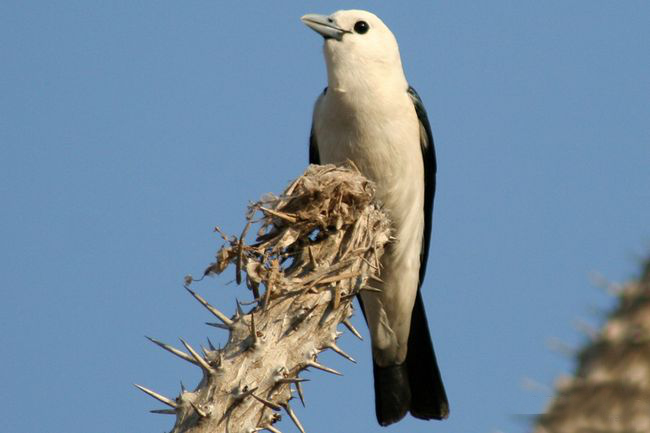


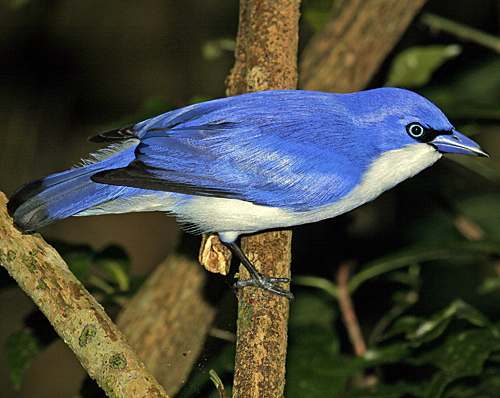
Birds Similar to the Tylas Vanga
These species are often confused with the Tylas Vanga due to similar appearance or overlapping range.

