
Tytler's Leaf Warbler
Phylloscopus tytleri
Order: Passeriformes / Family: Phylloscopidae

Wikimedia Commons
About the Tytler's Leaf Warbler
Tytler's Leaf Warbler (Phylloscopus tytleri), a member of the Phylloscopidae family, is a captivating small passerine bird that inhabits the forested and hilly regions of the Himalayas. This bird plays a vital role in its ecosystem, primarily through insect control. Often found in broadleaf and mixed forests, Tytler's Leaf Warbler is a key species for maintaining the ecological balance by consuming a wide range of insects, which helps manage pest populations in these biodiverse regions.
The significance of Tytler's Leaf Warbler extends beyond its ecological role. This bird serves as an important indicator of environmental health in its habitat. Its presence is often associated with undisturbed forest ecosystems, making it a subject of interest for conservationists monitoring the effects of habitat degradation and climate change. In terms of biodiversity, the warbler contributes to the rich mosaic of life forms that define the Himalayan bioregion.
The Tytler's Leaf Warbler exhibits varied behaviors throughout the year, influenced by its seasonal movements. During the breeding season, which occurs in summer months, the warbler occupies the high-altitude zones of the Himalayas. As winter approaches, it migrates to lower altitudes and sometimes to the plains of northern India, following the availability of food resources. This seasonal migration highlights the adaptability of Tytler's Leaf Warbler to changing environmental conditions, ensuring its survival across different habitats.
The species is particularly adapted to the montane and submontane forests, where it is often seen flitting among trees in search of food. The warbler's ecological role and seasonal behavior patterns make it an integral part of the Himalayan forest ecosystem, underlining the importance of preserving its natural habitat.
The Tytler's Leaf Warbler belongs to the family Phylloscopidae, within the order Passeriformes. These birds typically live average 2-3 years..
How to Identify a Tytler's Leaf Warbler
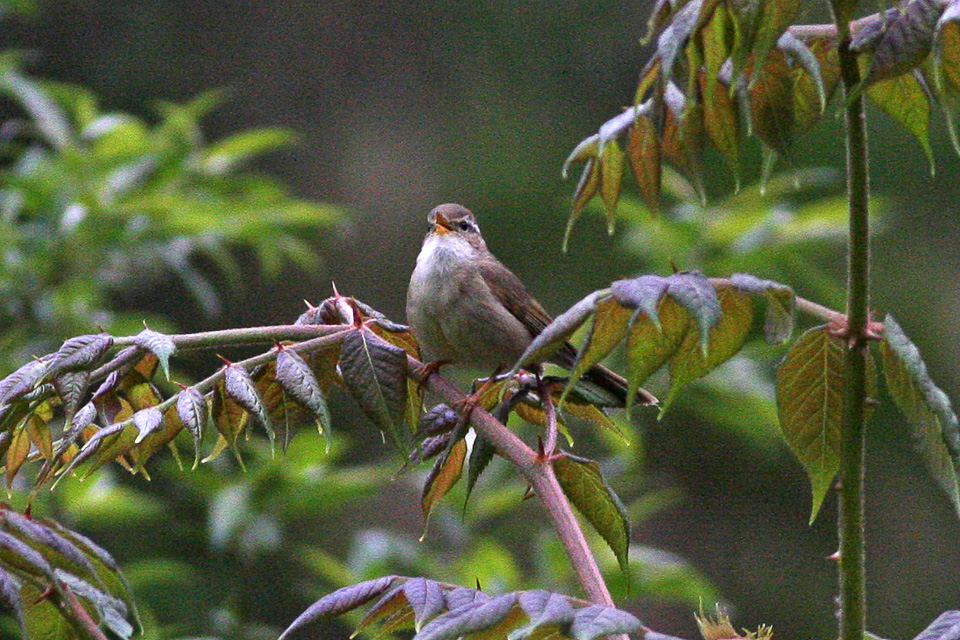
Tytler's Leaf Warbler is characterized by its small size and vibrant coloration. Adult plumage primarily exhibits bright green upperparts, which are complemented by a distinctly yellowish underside. This color contrast is one of the key field marks for identifying this species in its natural habitat. A prominent eye-stripe, usually whitish or pale yellow, runs from the beak to the back of the head, offering another visual cue for recognition.
Juvenile Tytler's Leaf Warblers resemble adults but tend to have more muted colors, with less pronounced markings. Sexual dimorphism is not prominent in this species, meaning males and females appear similar in plumage and size, making gender identification challenging in the field.
Confusion may arise with similar species such as the Greenish Warbler (Phylloscopus trochiloides), which shares a similar habitat and coloration. However, Tytler's Leaf Warbler can be distinguished by its more vibrant green tone and the distinctiveness of its eye-stripe. In flight, the warbler presents a compact silhouette, often darting quickly between trees with a characteristic flicking motion. When perched, it maintains an upright posture, often cocking its head to survey its surroundings, a behavior typical of Phylloscopidae.
Having trouble telling birds apart? Upload a photo to our bird identification tool for an instant species match.
Tytler's Leaf Warbler Habitat and Range
Preferred Habitat
Tytler's Leaf Warbler predominantly inhabits the montane and submontane forests of the Himalayas, favoring areas with dense canopy cover. These regions are typically characterized by a mix of broadleaf and coniferous trees, providing ample food sources and nesting sites.
The bird's elevation range during the breeding season spans from 1,500 to 3,800 meters, although it descends to lower altitudes in winter. This seasonal habitat shift is driven by changes in temperature and food availability, as the warbler seeks out milder climates and abundant insect life at lower elevations.
While primarily a forest dweller, Tytler's Leaf Warbler can sometimes be found in shrubby areas and forest edges. It avoids urban environments, preferring the tranquility and resources offered by rural and wilderness settings. Its presence in these habitats underscores the importance of conserving forested regions to ensure the survival of this and other forest-dependent species.
Geographic Range
Tytler's Leaf Warbler breeds across the high-altitude regions of the Himalayas, primarily in Nepal, Bhutan, and parts of northern India. The species' breeding range is defined by the availability of suitable forest habitats, which are critical for nesting and raising young.
During the non-breeding season, the warbler migrates to lower altitudes and can be found in the foothills of the Himalayas, as well as in the plains of northern India. These wintering grounds provide milder climatic conditions and plentiful food resources. Migration corridors often include forested valleys and riparian zones, which offer protection and sustenance during their journey.
The population density of Tytler's Leaf Warbler is generally higher in areas where its preferred habitat remains intact. Hotspots for observing this species include the Arunachal Pradesh region in India and the central Himalayan forests of Nepal. These areas offer ideal conditions for the warbler, supporting its population during both breeding and non-breeding seasons.
Want to know which birds visit your area? Browse our backyard birds by location guides for region-specific species lists.
What Does the Tytler's Leaf Warbler Eat?
The diet of Tytler's Leaf Warbler primarily consists of insects, making it an important insectivore in its habitat. The bird favors small insects such as caterpillars, aphids, and beetles, which are abundant in the dense foliage of its forest environment.
During the breeding season, the warbler's diet focuses on protein-rich insects to support the energy demands of nesting and raising young. As the seasons change, its diet may expand to include other small invertebrates, such as spiders and small crustaceans, which offer additional nutritional benefits.
Tytler's Leaf Warbler employs an active foraging technique, often seen flitting through tree branches and foliage in search of prey. It uses its sharp eyesight to spot and capture insects, sometimes snatching them mid-flight with agile maneuvers. This dynamic and energetic feeding behavior ensures the warbler can exploit various food sources throughout the year.
Tytler's Leaf Warbler Behavior and Social Structure
Tytler's Leaf Warbler exhibits a range of intriguing behaviors that reflect its adaptation to forest environments. This species tends to be solitary or found in pairs during the breeding season, displaying territorial behavior to protect its nesting area. Males often engage in song displays to establish and defend their territory, as well as to attract mates.
During non-breeding seasons, the warbler becomes more social, occasionally forming mixed-species flocks. These flocks offer protection against predators and increase foraging efficiency. The warbler's response to predators includes quick evasive flights and concealing itself within dense foliage, minimizing the risk of predation.
Daily activity patterns of Tytler's Leaf Warbler are diurnal, with peak activity occurring in the morning and late afternoon when insect prey is most active. The bird spends a significant portion of its day foraging, interspersed with periods of rest and preening. Its adaptability and behavioral strategies highlight its ability to thrive in varying forest conditions.
Tytler's Leaf Warbler Nesting and Reproduction
Tytler's Leaf Warbler constructs cup-shaped nests, typically made from grass, moss, and leaves, lined with finer materials like feathers and hair for insulation. These nests are strategically placed in dense shrubs or low tree branches, providing camouflage and protection from predators.
The preferred nesting sites are usually located within the forest, at elevations ranging from 1,500 to 3,800 meters. Clutch size generally ranges from three to five eggs, with the female primarily responsible for incubation, which lasts about 12 to 14 days.
Both parents participate in feeding the hatchlings, which fledge approximately 14 to 16 days after hatching. Tytler's Leaf Warbler typically raises one brood per year, although in optimal conditions, a second brood may occasionally be attempted. The shared parental duties ensure the young receive adequate care and are prepared for independent life in the forest.
Tytler's Leaf Warbler Sounds and Vocalizations
The primary song of Tytler's Leaf Warbler is a distinctive series of high-pitched, melodious notes, often described as a rapid trill. This song serves to establish territory and attract mates, resonating through the dense forest canopy.
Call notes of this species are sharp and short, used for communication between individuals or to signal alarm. In response to threats, the warbler may emit a series of quick, repeated notes that alert others to potential danger.
During the dawn chorus, Tytler's Leaf Warbler contributes to the symphony of the forest with its lively song. This vocal activity peaks in the early morning hours, coinciding with the start of its daily foraging activities. The warbler's distinct vocalizations are a hallmark of its presence in the Himalayan forests.
Interesting Facts About the Tytler's Leaf Warbler
- 1Tytler's Leaf Warbler was first described in the 19th century and named after the British ornithologist Colonel Robert Christopher Tytler.
- 2Despite its small size, Tytler's Leaf Warbler can cover vast distances during its seasonal migrations, showcasing its endurance and adaptability.
- 3The warbler's vibrant green plumage offers excellent camouflage among the lush foliage of its forest habitat, aiding in predator avoidance.
- 4Tytler's Leaf Warbler is known to participate in mixed-species flocks, benefiting from the collective vigilance and foraging efficiency these groups provide.
- 5Research suggests that the Tytler's Leaf Warbler's song is highly adapted to penetrate the dense forest canopy, facilitating communication over distance.
- 6This species plays a crucial role in controlling insect populations, contributing to the health of the forest ecosystems it inhabits.
- 7Tytler's Leaf Warbler has a unique foraging style, often seen hovering momentarily as it gleans insects from leaves and branches.
Tytler's Leaf Warbler Conservation Status
The International Union for Conservation of Nature (IUCN) currently classifies Tytler's Leaf Warbler as Least Concern, indicating a relatively stable population. However, ongoing habitat loss due to deforestation and land conversion poses a significant threat to its future. Conservation efforts focus on preserving the forested habitats essential for the warbler's survival. Initiatives include establishing protected areas and promoting sustainable forestry practices. Monitoring population trends helps gauge the effectiveness of these efforts, ensuring this species remains a vibrant part of the Himalayan ecosystem. Historically, Tytler's Leaf Warbler populations have remained resilient, but continuing threats necessitate vigilant conservation strategies. Protecting this species contributes to maintaining biodiversity and ecological balance in the regions it inhabits.
Other Phylloscopidae Species



Birds Similar to the Tytler's Leaf Warbler
These species are often confused with the Tytler's Leaf Warbler due to similar appearance or overlapping range.

