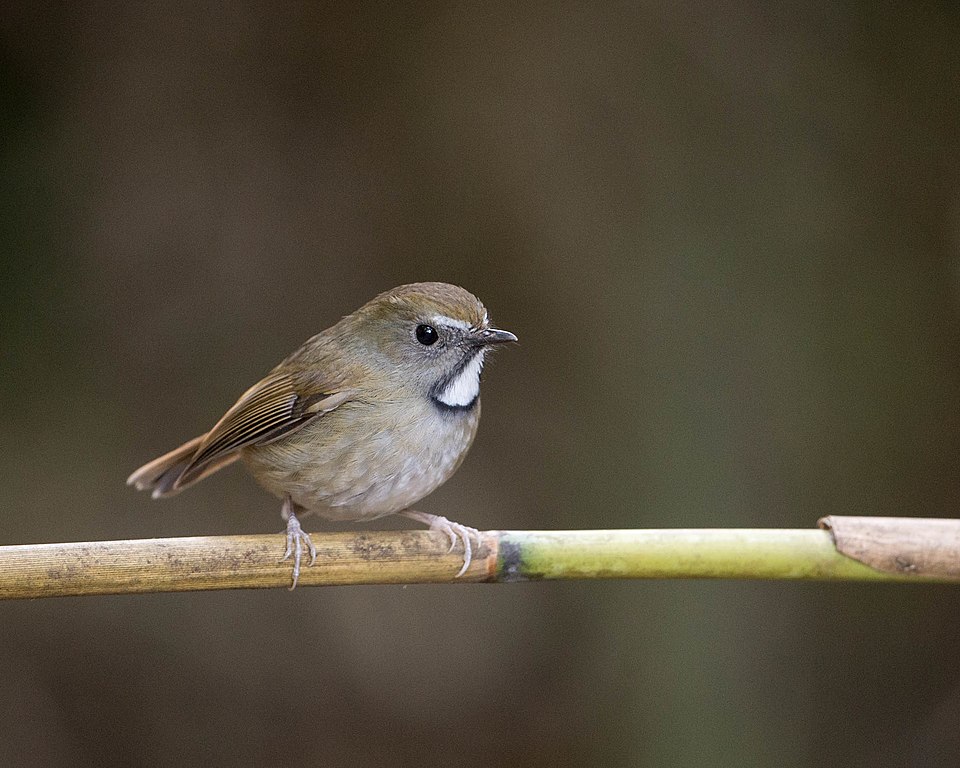
Vivid Niltava
Niltava vivida
Order: Passeriformes / Family: Muscicapidae

Wikimedia Commons
About the Vivid Niltava
The Vivid Niltava (Niltava vivida) is a captivating bird species belonging to the Muscicapidae family, frequenting the dense forested regions of Taiwan and southern China. Known for its vibrant blue and orange plumage, the male Vivid Niltava is especially mesmerizing, making it a favorite among birders and wildlife photographers. This bird plays an essential role in its ecosystem, primarily inhabiting subtropical and temperate forests.
During the breeding season, which generally spans from March to July, the Vivid Niltava displays heightened territorial and courtship activities. The males sing robustly to attract mates and defend their territory. Outside the breeding season, these birds may wander slightly in search of food but largely remain within their preferred forest habitats. Their presence serves as an indicator of healthy forest ecosystems.
Ecologically, the Vivid Niltava contributes to seed dispersal and insect population control. By consuming a variety of insects, they help maintain ecological balance. Their preference for specific forest types makes them vulnerable to habitat degradation, emphasizing the need for conservation efforts. Furthermore, their seasonal behaviors, like the increased vocalization during breeding, contribute to the biodiversity of soundscapes in their native regions.
The Vivid Niltava belongs to the family Muscicapidae, within the order Passeriformes. These birds typically live typically 5-7 years; the maximum recorded lifespan is 11 years..
How to Identify a Vivid Niltava
In the field, identifying the Vivid Niltava involves noting its distinctive coloration and size. Adult males boast a striking blue crown and upperparts, contrasted by rich orange underparts. Their throat is a deeper blue, creating a visually stunning appearance. Females are more subdued, with olive-brown upperparts and less vivid orange underparts, which helps them blend into their surroundings more effectively than males.
Juveniles resemble females but can be differentiated by their speckled plumage and less defined color contrasts. In flight, the Vivid Niltava exhibits a compact silhouette, with rapid wingbeats and a slightly undulating flight pattern. When perched, it often holds a low horizontal posture, making it less conspicuous despite its bright plumage.
Confusion may arise with similar species such as the Rufous-bellied Niltava, but the Vivid Niltava can be differentiated by its more intense blue coloration and geographical range. Observers should also note the bird's behavior, as its perching habits and flight patterns contribute to accurate identification.
Having trouble telling birds apart? Upload a photo to our bird identification tool for an instant species match.
Vivid Niltava Habitat and Range
Preferred Habitat
The Vivid Niltava thrives in subtropical and temperate forests, predominantly located at elevations ranging from 300 to 2000 meters. These birds prefer dense, moist woodland areas that provide ample cover and a rich supply of insect prey. In Taiwan, they are often found in the mixed broadleaf and coniferous forests that characterize the island's mountainous interior.
During seasonal shifts, the Vivid Niltava may exhibit slight altitudinal movements, seeking out lower elevations or different forest types as food availability changes. While primarily a forest dweller, it occasionally ventures into wooded urban parks and gardens, especially where natural forest habitats edge onto developed areas.
The Vivid Niltava's reliance on forest habitats makes it sensitive to deforestation and forest fragmentation. Conservation efforts focus on preserving these critical habitats to ensure the species' long-term survival.
Geographic Range
The Vivid Niltava is predominantly found in Taiwan and southern China, with its range extending into parts of Southeast Asia. In Taiwan, it occupies the central and northern forested mountain regions, making it a relatively common resident species. The bird's range in southern China includes provinces such as Fujian and Guangdong, where suitable forest habitats exist.
While the Vivid Niltava does not engage in long-distance migration, some populations may undertake altitudinal movements, descending to lower elevations during colder months or in response to food scarcity. This pattern is particularly evident in Taiwan, where elevation plays a critical role in habitat selection.
The population density of the Vivid Niltava tends to be higher in areas with extensive, undisturbed forests. Conservationists keep a close watch on these regions to monitor population trends and ensure the protection of this vibrant species.
Want to know which birds visit your area? Browse our backyard birds by location guides for region-specific species lists.
What Does the Vivid Niltava Eat?
The Vivid Niltava primarily feeds on insects, including a variety of beetles, caterpillars, and other arthropods. These birds employ a sit-and-wait foraging strategy, perching quietly before making swift, precise sallies to capture prey. Their diet may also include small fruits and seeds, particularly during the non-breeding season when insect abundance decreases.
Seasonal changes influence the Vivid Niltava's diet, with a noticeable shift toward more vegetative matter during colder months. This adaptability in diet helps sustain them when insect availability declines. The Vivid Niltava prefers foraging at lower to mid-level forest strata, often moving methodically through dense undergrowth and foliage.
Feeding activity peaks during the early morning and late afternoon, aligning with periods of increased insect activity. This schedule maximizes foraging efficiency and allows for conservation of energy during the hotter parts of the day.
Vivid Niltava Behavior and Social Structure
The Vivid Niltava exhibits intriguing social and territorial behaviors, especially during the breeding season. Males are highly territorial, using their vibrant plumage and melodious songs to assert dominance and attract mates. Courtship displays involve the male fluttering his wings and presenting food offerings to the female.
Outside the breeding season, Vivid Niltavas may become less territorial, sometimes forming loose flocks with other small insectivorous birds, which can aid in foraging efficiency. These birds display a mix of solitary and social behaviors, adapting to environmental conditions and food availability.
Upon encountering predators, such as snakes or larger birds, Vivid Niltavas often employ alarm calls and evasive maneuvers, seeking cover in dense foliage. Daily activity peaks during cooler morning and late afternoon hours, with periods of rest during midday when temperatures rise.
Vivid Niltava Nesting and Reproduction
The nesting habits of the Vivid Niltava are characterized by their preference for well-concealed sites. Typically, the female constructs the nest, using moss, leaves, and twigs to create a cup-shaped structure. These nests are often placed in tree cavities or dense shrubbery, offering protection from predators and environmental elements.
A typical clutch consists of 3-5 eggs, with an incubation period lasting around 12-14 days. Both parents participate in feeding the chicks, although the female undertakes most of the incubation duties. Fledging occurs approximately 15-17 days after hatching, with young birds staying in the nest longer if food is plentiful.
The Vivid Niltava usually raises one brood per year, though favorable conditions may allow for a second. Parental care extends beyond fledging, with adults continuing to feed and protect the young as they learn to forage independently.
Vivid Niltava Sounds and Vocalizations
The Vivid Niltava's song is a rich, melodious warble, characterized by a series of clear, fluting notes that rise and fall in pitch. This song is most often heard during the breeding season, serving both to attract mates and delineate territory boundaries.
Call notes are sharp and penetrating, often used to communicate with mates or signal alarm. These calls can vary from short, repetitive 'chip' sounds to more complex sequences.
The dawn chorus of the Vivid Niltava is a spectacular auditory event, with males often singing from prominent perches to maximize the reach of their calls. The sound carries well through the forest, adding a distinctive layer to the morning soundscape.
Interesting Facts About the Vivid Niltava
- 1The Vivid Niltava exhibits a remarkable sexual dimorphism, with males displaying much brighter plumage than females.
- 2Despite its striking appearance, the Vivid Niltava can be surprisingly elusive, relying on dense forests for cover.
- 3The species name 'vivida' highlights the vivid coloration of the bird, particularly the male's electric blue feathers.
- 4Vivid Niltavas are known to participate in mixed-species flocks, enhancing their foraging success.
- 5The melodious song of the Vivid Niltava is a quintessential sound of Taiwan's mountain forests.
- 6Vivid Niltavas often use old tree cavities for nesting, demonstrating adaptability in nest site selection.
- 7The bird's diet shifts seasonally, showing a preference for fruits when insects are less abundant.
Vivid Niltava Conservation Status
Listed as Least Concern by the IUCN, the Vivid Niltava maintains a stable population, though habitat loss poses a significant threat. Deforestation and agricultural expansion in Taiwan and southern China threaten their forest habitats. Conservation efforts focus on preserving these environments and mitigating habitat fragmentation. Historically, population numbers have fluctuated with changes in land use and forest management practices. Recent conservation initiatives, such as protected areas and reforestation projects, aim to stabilize and potentially increase populations. While current threats are manageable, continuous monitoring and proactive habitat protection are vital to ensure the Vivid Niltava's long-term survival.