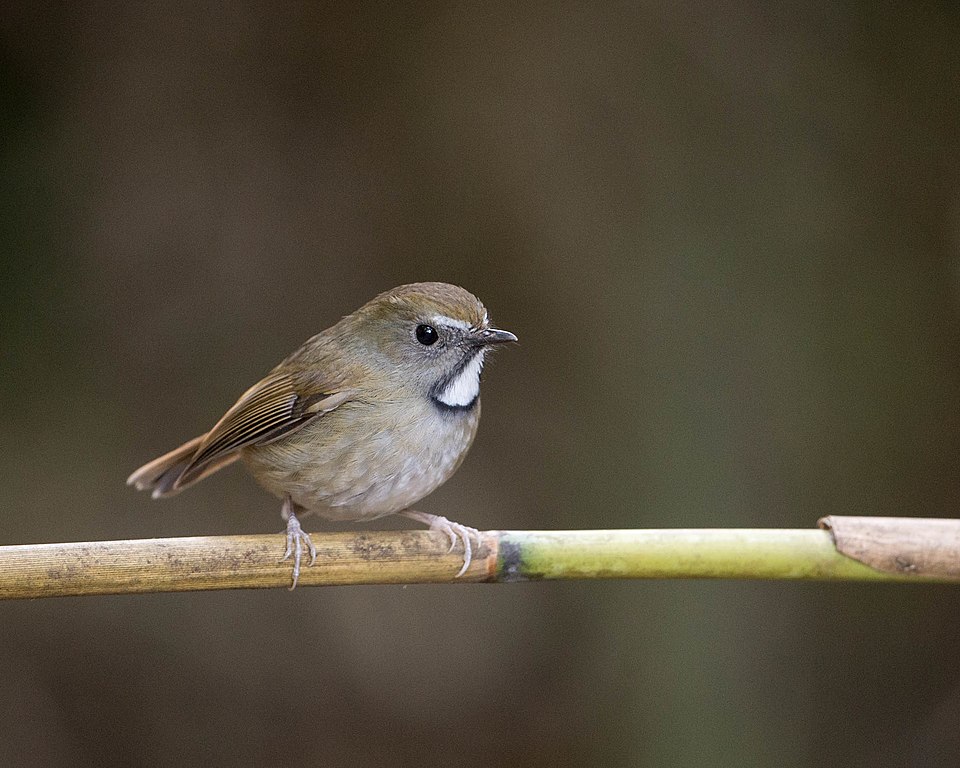
White-bellied Robin-Chat
Cossyphicula roberti
Order: Passeriformes / Family: Muscicapidae

Wikimedia Commons
About the White-bellied Robin-Chat
The White-bellied Robin-Chat, scientifically known as Cossyphicula roberti, is an intriguing member of the Muscicapidae family found predominantly in central Africa. This bird is especially prevalent in the montane regions of Cameroon and Nigeria, where it thrives in the lush, humid conditions of tropical montane forests. Its presence in these biodiverse regions underscores its role as an integral part of the local ecosystem. The White-bellied Robin-Chat plays a significant role in controlling insect populations, thus maintaining the ecological balance. It demonstrates a remarkable adaptability to seasonal variations, shifting slightly in elevation as it seeks optimal conditions for feeding and breeding. During the breeding season, usually from April to June, this robin-chat becomes more conspicuous, its activities more centered around nest sites. Outside of breeding, it is often found foraging low in the forest understory, its behavior subtly altering with the seasonal availability of food sources. As a species adapted to dense, moist forest environments, the White-bellied Robin-Chat is a key indicator of forest health in its range. Conservation efforts are crucial in these regions, as habitat loss and fragmentation pose significant threats to its continued survival. Its presence in these forests aids in dispersing seeds and controlling insect populations, thereby contributing to the overall biodiversity and health of its habitat. The White-bellied Robin-Chat's ability to adapt to slight habitat changes yet remain within its preferred forest environment speaks to its evolutionary success and ecological importance.
The White-bellied Robin-Chat belongs to the family Muscicapidae, within the order Passeriformes. These birds typically live average 5 years, with a maximum recorded of 9 years..
How to Identify a White-bellied Robin-Chat
The White-bellied Robin-Chat is a small, unobtrusive bird that can be challenging to spot due to its preference for dense underbrush. Adults showcase a striking contrast between their white underparts and the dark, soot-colored upperparts. The head and back are primarily dark gray, creating a seamless blend with its forested surroundings. Juveniles, in contrast, display a more muted and mottled appearance, lacking the stark white belly of the adults. This difference in plumage helps reduce their visibility to predators during their vulnerable early stages. Males and females are similar in appearance, making sex differentiation in the field difficult without close observation. In terms of similar species, the White-bellied Robin-Chat can be confused with other robin-chats or nightingales. However, its unique white belly and preference for specific montane habitats assist in proper identification. The bird adopts an upright posture when perching, often flicking its wings and tail, a behavior that can be a helpful field mark.
Having trouble telling birds apart? Upload a photo to our bird identification tool for an instant species match.
White-bellied Robin-Chat Habitat and Range
Preferred Habitat
The White-bellied Robin-Chat inhabits the tropical montane forests of central Africa, notably in the highlands of Cameroon and Nigeria. It prefers elevations between 1,500 and 3,000 meters, where the dense canopy and rich undergrowth provide ample cover and foraging opportunities. Within these forests, it favors areas with thick vegetation, particularly along streams or in ravines where moisture levels remain high. Seasonal shifts may see the bird moving slightly in elevation or seeking denser cover during periods of human activity or weather changes. While it is not commonly found in urbanized areas, occasional sightings occur in forested parks or large gardens that mimic its natural habitat.
Geographic Range
The range of the White-bellied Robin-Chat is primarily confined to the highland forests of western Cameroon and southeastern Nigeria. It is a resident species, meaning it does not undertake long migrations but may exhibit altitudinal movements in response to seasonal climatic changes. These shifts are often minor, with the birds remaining within the same general geographic area year-round. In these regions, the population density is higher in undisturbed forest areas, where the habitat provides the necessary resources for feeding and breeding. Conservation of these forest areas is critical to maintaining stable populations of the species.
Want to know which birds visit your area? Browse our backyard birds by location guides for region-specific species lists.
What Does the White-bellied Robin-Chat Eat?
The diet of the White-bellied Robin-Chat is primarily insectivorous, consisting mainly of beetles, ants, and other small invertebrates found within the moist forest floor and undergrowth. During the wetter months, when insect populations peak, the robin-chat's diet becomes more diverse, incorporating a wider range of insects. It forages by hopping on the forest floor, using its beak to turn over leaves and debris in search of prey. Occasionally, it may consume small fruits or seeds, particularly in the dry season when insect availability decreases. The bird typically feeds during the early morning and late afternoon, taking advantage of cooler temperatures and increased insect activity.
White-bellied Robin-Chat Behavior and Social Structure
The White-bellied Robin-Chat is generally a solitary bird, although it may be seen in pairs during the breeding season. It is territorial, often defending its chosen area vigorously against intruders. Males are known for their vocal displays, which serve to attract mates and establish territorial boundaries. These displays are particularly prominent during the early mornings and late afternoons. The bird's daily activities revolve around foraging, with peak activity occurring during the cooler parts of the day. In response to predators, the White-bellied Robin-Chat employs a series of alarm calls and erratic flight patterns to confuse and evade threats. Though not typically migratory, its altitudinal movements reflect a degree of adaptability to environmental changes and resource availability.
White-bellied Robin-Chat Nesting and Reproduction
The White-bellied Robin-Chat builds its nest low in dense underbrush or on a bank, using a variety of materials such as twigs, leaves, and moss. The nest is cup-shaped, offering a secure environment for the eggs and eventual chicks. A typical clutch consists of 2 to 3 eggs, which the female incubates for about 14 to 16 days. During this period, the male often assists by providing food and guarding the nest area. Once hatched, the chicks remain in the nest for approximately 14 days, during which both parents participate in feeding and caring for the young. The species typically raises one brood per year, although in optimal conditions, a second brood may occur.
White-bellied Robin-Chat Sounds and Vocalizations
The primary song of the White-bellied Robin-Chat is a melodious series of whistled notes, often delivered from a concealed perch within the forest. The rhythm is slow and deliberate, with a clear, flute-like quality that carries well through the dense foliage. Besides its song, the bird produces a variety of call notes, including sharp 'chik' sounds used as contact calls between individuals. Alarm calls are harsher and more rapid, serving as alerts to nearby threats. During the dawn chorus, this robin-chat is particularly vocal, its song contributing to the morning symphony of forest sounds.
Interesting Facts About the White-bellied Robin-Chat
- 1The White-bellied Robin-Chat is endemic to central Africa, found only in select montane regions of Cameroon and Nigeria.
- 2Despite its striking appearance, the White-bellied Robin-Chat is often overlooked due to its secretive nature and preference for dense underbrush.
- 3This bird plays a crucial ecological role by controlling insect populations and aiding in seed dispersal within its forest habitat.
- 4The White-bellied Robin-Chat's song is often compared to the sound of a flute, with its clear, melodious notes resonating through the forest.
- 5Unlike many birds, the White-bellied Robin-Chat does not migrate long distances, instead making slight altitudinal shifts in response to seasonal changes.
- 6Both male and female White-bellied Robin-Chats participate in feeding their young, showcasing a cooperative breeding strategy.
- 7The species' preference for montane forests makes it an important indicator of forest health and biodiversity in its range.
White-bellied Robin-Chat Conservation Status
Currently, the White-bellied Robin-Chat is classified as Least Concern by the IUCN, although its population trend is somewhat uncertain due to ongoing habitat loss. The primary threats to its survival include deforestation for agriculture and timber, which reduce the availability of suitable habitats. Conservation efforts focus on preserving the montane forest regions where it resides, with some areas benefiting from protected status. Historically, the population has remained relatively stable, but continuous monitoring is essential to ensure this trend persists.