
White-browed Scrub Robin
Erythropygia leucophrys
Order: Passeriformes / Family: Muscicapidae

Wikimedia Commons
About the White-browed Scrub Robin
The White-browed Scrub Robin (Erythropygia leucophrys) is a small yet striking bird belonging to the Muscicapidae family. This species is particularly notable for its distinctive white supercilium that contrasts sharply with its otherwise muted plumage. Found primarily in sub-Saharan Africa, the White-browed Scrub Robin thrives in a variety of habitats, including dry savannas, open woodlands, and scrublands. Its presence is an indicator of healthy ecosystems, as it plays a crucial role in controlling insect populations. The bird is widely distributed across countries such as South Africa, Botswana, Zimbabwe, and Zambia. In these regions, it is typically observed throughout the year, although some local populations may exhibit slight altitudinal migratory patterns in response to seasonal changes in food availability. This species is adept at exploiting diverse environments, making it a resilient survivor in both natural and semi-urban landscapes. The White-browed Scrub Robin is an integral part of the avian community, contributing to the dynamic ecological balance. It engages in seasonal breeding, typically during the wet season when insect abundance is at its peak, providing ample food resources for raising young. The bird has adapted well to human-altered landscapes, often seen in gardens and parks, where it delights bird enthusiasts with its cheerful and melodious song. Its adaptability and widespread presence make it a familiar and cherished bird across its range.
The White-browed Scrub Robin belongs to the family Muscicapidae, within the order Passeriformes. These birds typically live 5-8 years, with a maximum recorded of 12 years.
How to Identify a White-browed Scrub Robin
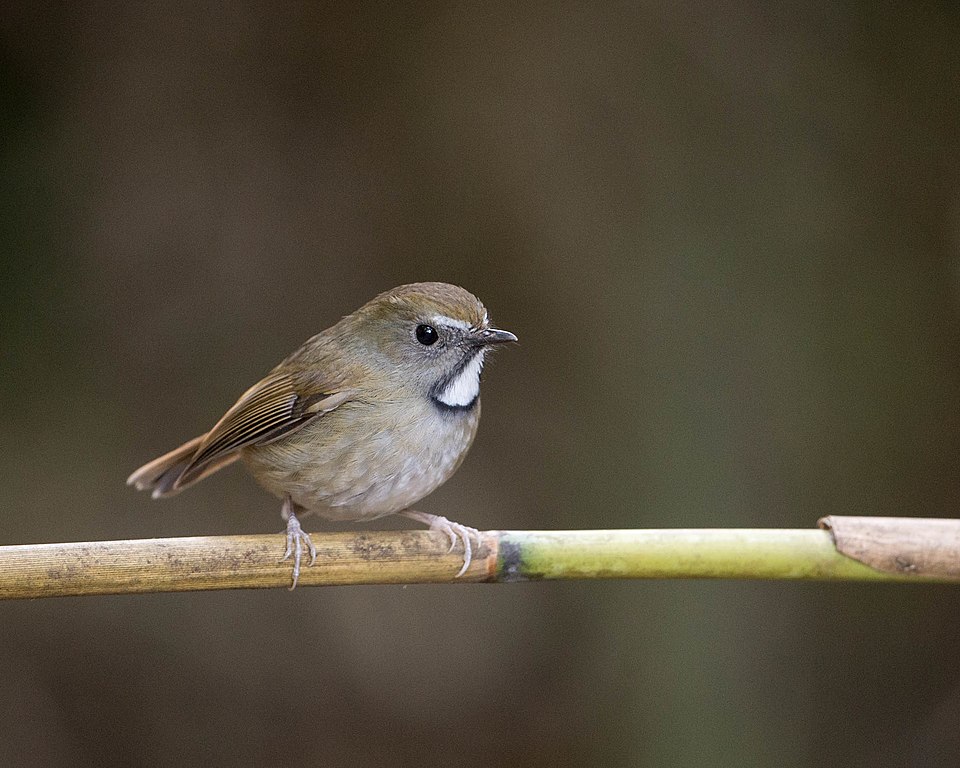
The White-browed Scrub Robin is easily recognized by its prominent white eyebrow, or supercilium, which stands out against its otherwise subdued coloration. Adults exhibit a warm brown upper body with faint streaks, while the underparts are pale with darker spots on the breast. The under tail coverts and rump are a distinctive rufous, which helps to differentiate it from similar species. Juveniles resemble adults but have a more mottled appearance, with less distinct facial markings. There is little sexual dimorphism, with males and females looking quite similar, although males may have slightly more vibrant plumage. In flight, the bird's rufous tail feathers are conspicuous. When perched, the White-browed Scrub Robin often exhibits a characteristic upright posture, frequently flicking its tail up and down. This behavior, combined with its unique vocalizations, aids in identification.
Having trouble telling birds apart? Upload a photo to our bird identification tool for an instant species match.
White-browed Scrub Robin Habitat and Range
Preferred Habitat
The White-browed Scrub Robin occupies a range of habitats, predominantly preferring open woodlands, savannas, and scrublands. It is commonly found at elevations from sea level up to 2000 meters. This adaptability allows it to thrive in both rural and semi-urban environments, including gardens and parks. Seasonal shifts in habitat usage may occur, with some populations moving to lower elevations during colder months. Despite its adaptability, the species is less frequently found in dense forests or arid deserts, preferring areas where vegetation offers both cover and ample foraging opportunities.
Geographic Range
This species is widespread across sub-Saharan Africa, with its range extending from southern Somalia and Ethiopia in the north to South Africa in the south. It is a resident breeder in countries like Kenya, Tanzania, Malawi, and Mozambique. The White-browed Scrub Robin does not undertake long-distance migrations, but some populations may exhibit local movements, especially in response to seasonal changes in food availability. Regions such as the Okavango Delta in Botswana and the grasslands of Zimbabwe are hotspots for this species, where it is commonly observed throughout the year.
Want to know which birds visit your area? Browse our backyard birds by location guides for region-specific species lists.
What Does the White-browed Scrub Robin Eat?
The White-browed Scrub Robin primarily feeds on insects, including beetles, ants, and termites. During the wet season, when insects are abundant, it forages actively in the leaf litter and low vegetation. The bird employs a gleaning technique, picking prey off surfaces with precision. Its diet may also include spiders and small invertebrates. In the dry season, when insect availability declines, the robin may expand its diet to include plant matter such as seeds and fruits, showcasing its adaptability to varying food resources. The bird typically forages alone or in pairs, and its feeding activity peaks during the cooler parts of the day, early morning and late afternoon.
White-browed Scrub Robin Behavior and Social Structure
The White-browed Scrub Robin is a territorial and solitary bird, often seen alone or in pairs, especially during the breeding season. Males are known for their vigorous defense of territories, using songs and aggressive displays to ward off intruders. Courtship involves elaborate displays, where the male fans its tail and performs aerial acrobatics to attract a mate. The species is diurnal, with peak activity occurring in the morning and late afternoon. While not forming large flocks, individuals may join mixed-species foraging groups outside the breeding season. The bird's response to predators is to retreat into dense vegetation, using its cryptic plumage as camouflage.
White-browed Scrub Robin Nesting and Reproduction
The White-browed Scrub Robin builds a cup-shaped nest, primarily using grasses, leaves, and spider webs. Nests are typically located in low shrubs or small trees, well-concealed to avoid predators. Clutch size ranges from 2 to 4 eggs, which are incubated by the female for about 13 to 15 days. Both parents participate in feeding the chicks, which fledge approximately 14 to 16 days after hatching. The species may produce multiple broods per year, especially in optimal conditions with abundant food resources. Nesting success rates are influenced by predation and environmental factors.
White-browed Scrub Robin Sounds and Vocalizations
The White-browed Scrub Robin is renowned for its rich and melodious song, a series of clear, whistled phrases repeated in rapid succession. The song is often heard at dawn and dusk, serving as a territorial proclamation. The bird also produces a variety of call notes, including sharp 'tseep' sounds used in communication between mates or as an alarm signal. These vocalizations are characteristic of the robin and can be distinguished from other species by their clarity and rhythmic quality.
Interesting Facts About the White-browed Scrub Robin
- 1The White-browed Scrub Robin is known for its complex song repertoire, featuring over 20 distinct phrases.
- 2It is one of the few species that can thrive equally well in natural and urban environments, demonstrating remarkable adaptability.
- 3The bird's lifespan in the wild averages 4 to 6 years, with some individuals reaching up to 8 years.
- 4During the breeding season, males engage in dramatic aerial displays to attract females, showcasing their agility.
- 5White-browed Scrub Robins play a vital role in controlling insect populations, acting as natural pest regulators.
- 6The species exhibits a fascinating behavior of tail-flicking while foraging, which may help flush out hidden prey.
- 7Its distinctive white eyebrow makes it easily recognizable, even among dense foliage, aiding birders in identification.
White-browed Scrub Robin Conservation Status
The White-browed Scrub Robin is currently listed as a species of Least Concern by the IUCN, with stable population trends across its range. While habitat loss due to agricultural expansion poses a potential threat, this adaptable species has shown resilience by thriving in modified landscapes. Conservation efforts focus on maintaining habitat quality and promoting sustainable land use practices. Historical data indicate stable populations, with localized fluctuations linked to environmental changes.
Other Muscicapidae Species


Birds Similar to the White-browed Scrub Robin
These species are often confused with the White-browed Scrub Robin due to similar appearance or overlapping range.

