
White-crowned Cliff Chat
Thamnolaea coronata
Order: Passeriformes / Family: Muscicapidae

Wikimedia Commons
About the White-crowned Cliff Chat
The White-crowned Cliff Chat (Thamnolaea coronata) is a distinctive bird belonging to the Muscicapidae family, noted for its striking white crown that contrasts with its jet-black body. This bird is native to rocky terrains across sub-Saharan Africa, where it plays a crucial role in the ecosystem as both a predator of insects and a prey species for larger animals. The White-crowned Cliff Chat is particularly prominent in countries like Ethiopia, Kenya, and Tanzania, where it inhabits cliffs, rocky outcrops, and even the walls of gorges.
In these African regions, the White-crowned Cliff Chat occupies an ecological niche that benefits from its adept foraging skills. By consuming a variety of insects, the chat helps control insect populations, positively impacting local agriculture and natural vegetation. Its presence in these ecosystems also serves as an indicator of environmental health, as it relies on clean, unspoiled habitats.
Seasonally, the White-crowned Cliff Chat exhibits some localized movements, usually in response to food availability. It remains relatively sedentary compared to many other songbirds, with no extensive migratory behavior. These seasonal movements are driven primarily by shifts in insect populations rather than drastic changes in weather, due to its equatorial distribution.
The bird's role extends beyond its ecological contributions; it also holds cultural significance in various African communities. Its vivid appearance and melodious song have earned it a place in local folklore, where it is sometimes seen as a symbol of agility and survival. Conservationists value the White-crowned Cliff Chat for its role in maintaining the balance of its natural habitat, making it a subject of interest for efforts aimed at preserving biodiversity in Africa.
The White-crowned Cliff Chat belongs to the family Muscicapidae, within the order Passeriformes. These birds typically live average 5-8 years with a maximum recorded of 12 years..
How to Identify a White-crowned Cliff Chat
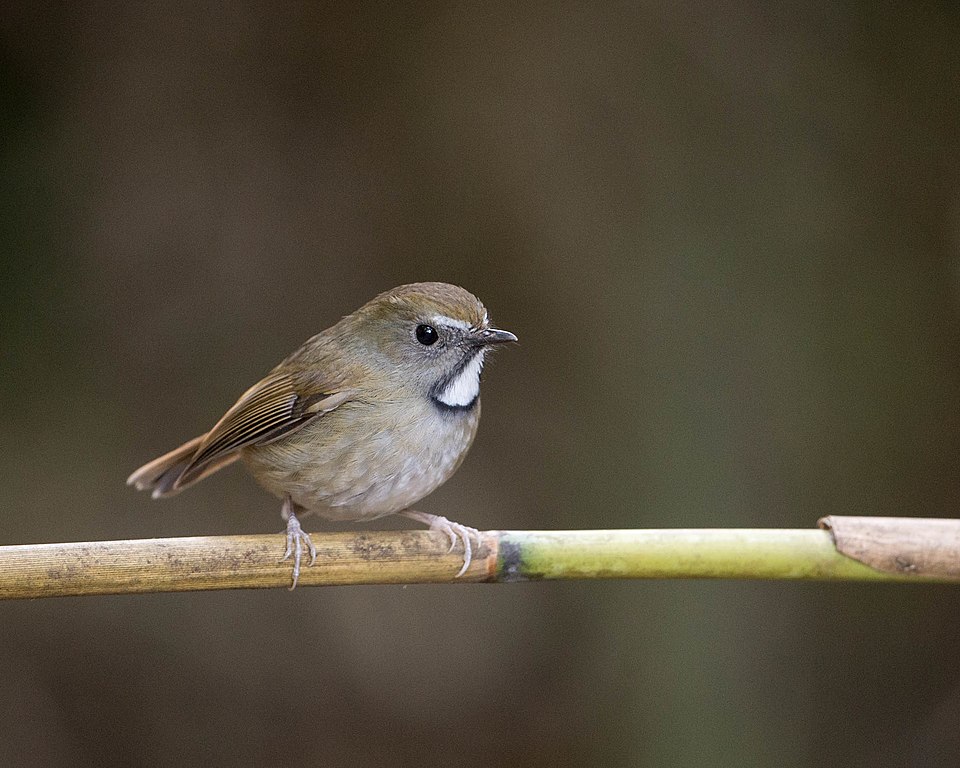
The White-crowned Cliff Chat is easily identifiable in the field thanks to its contrasting plumage. Adult males have a striking white crown and nape that sharply contrast with their glossy black body, wings, and tail. Females, while similar, display a slightly duller black and may have a subtle brownish tinge to their plumage. Juveniles resemble adults but with more muted colors and less distinct white markings, making them slightly harder to identify at a distance.
One of the key identification features is the bird's perching posture. It often sits upright on rocky outcrops, displaying its white crown prominently. When in flight, the White-crowned Cliff Chat reveals its broad wings and short tail, which it uses for agile maneuvering among rocky terrain. The bird's flight is characterized by quick, flapping movements interspersed with short glides.
While the White-crowned Cliff Chat is quite distinctive, there can be confusion with similar species such as the Mocking Cliff Chat (Thamnolaea cinnamomeiventris), which also inhabits rocky environments. However, the Mocking Cliff Chat lacks the stark white crown of Thamnolaea coronata, instead featuring a more uniform coloration.
Having trouble telling birds apart? Upload a photo to our bird identification tool for an instant species match.
White-crowned Cliff Chat Habitat and Range
Preferred Habitat
The White-crowned Cliff Chat favors rocky habitats, primarily found on cliffs, escarpments, and large boulders. It thrives in open landscapes where such features are common. The bird is adapted to elevations ranging from 1,000 to 3,500 meters, often favoring the rugged terrains found in the Ethiopian Highlands, Rift Valley, and similar regions.
While primarily associated with natural rocky outcrops, the White-crowned Cliff Chat can also be found in human-modified landscapes, such as quarries and abandoned buildings, where crevices and ledges mimic its natural habitat. Despite its adaptability to semi-urban environments, it generally avoids densely populated urban areas, preferring locations with minimal human disturbance.
The chat demonstrates some seasonal habitat shifts, primarily in search of food rather than due to climatic changes. During dry seasons, when insect populations might dwindle in its usual locales, it may move to areas with more abundant resources, such as near water sources or lush vegetation.
Geographic Range
The White-crowned Cliff Chat is predominantly found across the eastern and central regions of Africa. Its range includes countries such as Ethiopia, Kenya, Tanzania, Uganda, and Rwanda. In these areas, the bird occupies suitable rocky environments year-round, showing limited dispersal outside its established range.
In Ethiopia, the chat is common in the highlands, while in Kenya, it is frequently observed in the Great Rift Valley and surrounding escarpments. Its presence in Tanzania is notable in the northern and central highlands. The distribution is relatively stable, with the bird being a permanent resident rather than a migrant, thus absent from the major migration corridors that characterize other African avian species.
Population density is highest in regions where rocky habitats abound, such as the Ethiopian Highlands and the volcanic landscapes of northern Tanzania. The White-crowned Cliff Chat's range does not extend into southern Africa's more arid zones, maintaining its presence in areas with suitable geomorphological features.
Want to know which birds visit your area? Browse our backyard birds by location guides for region-specific species lists.
What Does the White-crowned Cliff Chat Eat?
The diet of the White-crowned Cliff Chat primarily consists of insects and other small invertebrates. This bird is an adept forager, employing its keen eyesight to spot prey among rocks and crevices. It hunts throughout the day, with peak foraging activity occurring during the cooler hours of the early morning and late afternoon.
Seasonal changes in diet are minimal, as the chat remains in regions where insect availability is relatively stable year-round. However, during the wet season when insect activity increases, the bird may exploit this abundance by increasing its intake.
Foraging techniques involve a combination of ground feeding and aerial sallying, a behavior where the bird catches insects in flight. Prey items include beetles, caterpillars, ants, and occasionally small vertebrates like lizards. The chat uses its strong beak to extract prey from narrow crevices, showcasing its adaptation to rocky environments.
White-crowned Cliff Chat Behavior and Social Structure
Socially, the White-crowned Cliff Chat exhibits a territorial nature, especially during the breeding season. Males establish and defend territories using both vocal displays and physical posturing, such as wing-flicking and tail-spreading. These displays are accompanied by its melodious song, which serves as both a mating call and a territorial warning.
Courtship involves the male performing elaborate displays that include fluttering flights and presenting food to the female. Once paired, the birds may remain together for multiple breeding seasons, exhibiting a degree of monogamous behavior. They are generally solitary or found in pairs, not forming large flocks.
The chat's response to predators includes a combination of alarm calls and evasive flight. It is most active during daylight, with peak activity in the early morning and late afternoon. During the midday heat, the bird often takes shelter in shaded areas or crevices within its rocky habitat.
White-crowned Cliff Chat Nesting and Reproduction
The White-crowned Cliff Chat constructs its nest in a variety of secluded locations, typically choosing crevices in rocks or cliffs. The nest is cup-shaped and composed of grasses, leaves, and small twigs, lined with softer materials like feathers and animal hair for insulation and comfort.
A typical clutch consists of 2 to 4 eggs, which are pale blue with reddish-brown speckles. The female primarily incubates the eggs, a process lasting about 14 to 16 days. During this time, the male assists by providing food and defending the nesting territory.
Once hatched, the chicks exhibit rapid development, fledging approximately 14 to 18 days post-hatching. Both parents participate in feeding and caring for the young, ensuring their survival in the challenging terrain. The White-crowned Cliff Chat typically raises one to two broods per year, depending on environmental conditions and food availability.
White-crowned Cliff Chat Sounds and Vocalizations
The primary song of the White-crowned Cliff Chat is a rich, melodious series of whistles and trills, often delivered from a prominent perch. This song varies slightly between individuals, adding to its charm. Its pitch ranges from medium to high, with a clear, bell-like quality that resonates across rocky landscapes.
Besides its song, the chat produces distinct call notes used for communication between mates and as alarm signals. These calls are sharp and abrupt, serving as effective warnings against potential predators. During the dawn chorus, the male's song is particularly vibrant, playing a crucial role in territory establishment and mate attraction.
The bird's vocalizations are reminiscent of some other African chats, yet its song structure and rhythm set it apart, making it a delightful species for birdwatchers to identify by ear.
Interesting Facts About the White-crowned Cliff Chat
- 1The White-crowned Cliff Chat can spot prey from remarkable distances, showcasing excellent visual acuity.
- 2Despite its limited range, the White-crowned Cliff Chat has a wide variety of local subspecies across Africa.
- 3The melodious song of the White-crowned Cliff Chat makes it a favorite among birdwatchers and ornithologists.
- 4This bird's nest location is typically so well-hidden that it often goes unnoticed by potential predators.
- 5White-crowned Cliff Chats have been observed using man-made structures as substitutes for natural rocky habitats.
- 6The contrast of the white crown against the black body serves as effective camouflage among rocks and shadows.
- 7In some African cultures, the White-crowned Cliff Chat is considered a symbol of agility and resourcefulness.
White-crowned Cliff Chat Conservation Status
The White-crowned Cliff Chat is currently listed as Least Concern by the IUCN, with a stable population trend. However, habitat disturbance and environmental changes pose potential threats. Urbanization and mining activities in some regions could lead to habitat loss, affecting local populations. Conservation efforts focus on habitat preservation, emphasizing the protection of rocky outcrops and surrounding environments. BirdLife Africa and other organizations work to monitor population changes and advocate for policies that consider the ecological needs of this and other cliff-dwelling species. Historically, the chat has maintained a stable population due to its adaptability and generalist diet. Continued vigilance is necessary to ensure that human activities do not disrupt its natural habitats, allowing it to thrive across its range.
Other Muscicapidae Species


Birds Similar to the White-crowned Cliff Chat
These species are often confused with the White-crowned Cliff Chat due to similar appearance or overlapping range.