
White-masked Antbird
Pithys castaneus
Order: Passeriformes / Family: Thamnophilidae

Wikimedia Commons
About the White-masked Antbird
The White-masked Antbird (Pithys castaneus) is a captivating species that inhabits the dense understories of tropical forests in South America. Known for its distinctive white facial mask, this bird plays a crucial role in the ecosystem by participating in mixed-species foraging flocks, often following army ant swarms to feed on insects and other small creatures flushed from the leaf litter. The presence of the White-masked Antbird indicates a healthy, biodiverse forest, as it thrives in complex ecosystems with a rich abundance of food sources.
This species is endemic to the Amazon Basin, with a range spanning across eastern Peru, western Brazil, and the lowland forests of Colombia. The dense, humidity-laden understories of these regions provide the ideal environment for the White-masked Antbird, which relies on the cover and food resources found in these lush habitats. Seasonal behaviors include slight changes in foraging patterns during the wet and dry seasons, adapting to the availability of prey.
Ecologically, the White-masked Antbird contributes to the control of insect populations, benefiting the forest's overall health. Its interactions with other bird species during foraging highlight the complex social structures and interdependencies present within tropical ecosystems. As human activity continues to threaten these habitats, the conservation of the White-masked Antbird serves as a broader indicator of the ecological status of the Amazon's biodiversity.
The White-masked Antbird belongs to the family Thamnophilidae, within the order Passeriformes. These birds typically live average 5-7 years, with a maximum recorded of 9 years..
How to Identify a White-masked Antbird
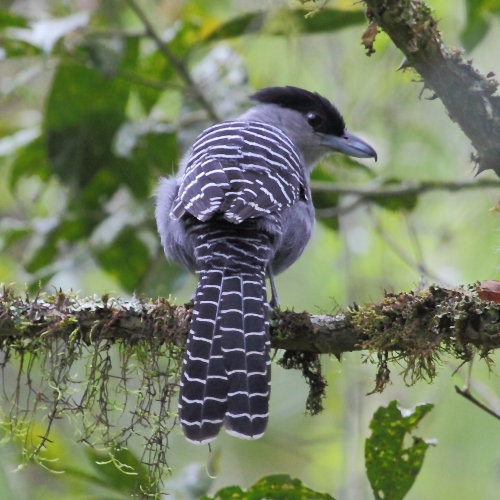
Identifying the White-masked Antbird involves noting the stark contrast between its white facial mask and the rest of its rich chestnut brown plumage. Adult birds exhibit this distinctive coloration, which makes them stand out against the darker foliage of their forest home. Juveniles have a more subdued coloration, with a less pronounced facial mask that develops as they mature.
Sexual dimorphism is subtle in the White-masked Antbird, with males and females appearing similar in plumage. Both sexes share the characteristic white mask, though males may exhibit slightly more vibrant plumage during the breeding season. This species can sometimes be confused with other antbirds or similar passerines, but the combination of its facial mask and habitat preferences aids in accurate identification.
In flight, the White-masked Antbird displays a short, rapid wingbeat pattern, typical of forest-dwelling birds that navigate through dense vegetation. When perched, it maintains a horizontal posture, often seen in the lower strata of the forest where it remains concealed from predators.
Having trouble telling birds apart? Upload a photo to our bird identification tool for an instant species match.
White-masked Antbird Habitat and Range
Preferred Habitat
The White-masked Antbird is primarily found in the lowland tropical rainforests of the Amazon Basin. These forests provide the ideal blend of humidity, dense undergrowth, and abundant insect life that this species requires. It thrives in the understory layer, where it can maneuver through thickets and dense foliage.
Typically, the White-masked Antbird occupies elevations from sea level up to around 500 meters. While it prefers the secluded depths of the forest, it may occasionally venture to forest edges, especially when following army ant swarms. Unlike some more adaptable species, the White-masked Antbird does not inhabit urban areas, remaining closely tied to its forested environment throughout the year.
Geographic Range
The breeding range of the White-masked Antbird includes the extensive lowland rainforests of the Amazon Basin. This encompasses countries such as Brazil, Peru, and Colombia, where it is most commonly observed. It is a non-migratory species, residing in its tropical habitat year-round.
In terms of population density, this antbird is most frequently found in regions with undisturbed old-growth forests, where its main food sources remain plentiful. While it may be locally common in these areas, deforestation and habitat fragmentation pose significant threats to its continued distribution and abundance.
Want to know which birds visit your area? Browse our backyard birds by location guides for region-specific species lists.
What Does the White-masked Antbird Eat?
The diet of the White-masked Antbird primarily consists of insects and other small arthropods, which it captures while following army ant swarms. This bird employs a sit-and-wait foraging technique, perching low in the understory and darting down to catch prey flushed out by the ants.
During periods of high insect activity, the White-masked Antbird may expand its diet to include small lizards and other opportunistic catches. Its feeding schedule aligns with the movement of ant swarms, often foraging most actively in the early morning and late afternoon when ants are on the move.
Seasonal changes in prey availability can influence its diet, with the wet season generally offering a wider variety of insects. This adaptability in foraging reflects the antbird's role in maintaining insect population balance within its ecosystem.
White-masked Antbird Behavior and Social Structure
The White-masked Antbird demonstrates a fascinating array of behaviors, with its social structure revolving around mixed-species flocks. It often joins other birds in following army ant swarms, a behavior that not only aids in foraging but also offers protection from predators through increased vigilance.
Territoriality is mild in this species, with pairs or small groups maintaining loose territories within their home range. During the breeding season, courtship displays are subtle, involving mutual feeding and close proximity between mates. The White-masked Antbird does not typically form large flocks, preferring the company of a few conspecifics or other ant-following species.
In response to predators, this antbird relies on its cryptic plumage and the dense cover of the understory for protection. It exhibits a pattern of daily activity that includes peak foraging times during the early morning and late afternoon, with periods of rest and preening in between.
White-masked Antbird Nesting and Reproduction
The White-masked Antbird constructs its nest from a variety of natural materials, including leaves, twigs, and moss, which it weaves into a cup-shaped structure. These nests are typically placed low in the understory, often hidden among dense foliage to protect from predators.
A typical clutch consists of two to three eggs, with both parents sharing incubation duties over a period of approximately two weeks. After hatching, the nestlings receive care and feeding from both adults, who diligently provide a diet rich in insects to support their rapid growth.
Fledging occurs around two weeks after hatching, with young birds remaining close to their parents for additional support and learning foraging skills. The White-masked Antbird usually raises one brood per year, although favorable conditions may allow for a second.
White-masked Antbird Sounds and Vocalizations
The song of the White-masked Antbird is a series of clear, whistling notes that rise and fall in a rhythmic pattern. The pitch is consistent, with a melodic quality that can carry through the dense forest.
In addition to its primary song, this species emits harsh call notes used for communication between mates or signaling potential threats. Alarm calls are sharp and abrupt, serving to warn conspecifics of nearby dangers. During the dawn chorus, the White-masked Antbird joins the symphony of the forest, its song blending seamlessly with the morning cacophony.
Interesting Facts About the White-masked Antbird
- 1The White-masked Antbird's distinctive facial mask is not just for show, but may help in species recognition during the dim conditions of the forest understory.
- 2Despite its name, the White-masked Antbird does not eat ants; instead, it feeds on insects and small animals disturbed by army ant swarms.
- 3This species is an important part of the mixed-species flocks, helping to flush out prey that other birds in the group can catch.
- 4The White-masked Antbird is known to silently shadow army ant columns for hours, waiting patiently for the right moment to strike.
- 5Its song, resembling a series of clear whistles, can travel up to 100 meters through the dense rainforest, allowing it to communicate effectively despite its secretive nature.
- 6The antbird's reliance on army ants makes it a bioindicator species, reflecting the health of the ecosystem it inhabits.
- 7Unlike many birds, the White-masked Antbird does not migrate, instead remaining in its tropical habitat throughout the year.
White-masked Antbird Conservation Status
The IUCN currently lists the White-masked Antbird as Least Concern, though its population trend is decreasing due to ongoing habitat loss. Primary threats include deforestation and habitat fragmentation from logging and agricultural expansion. Conservation efforts focus on preserving large tracts of intact forest within its range, ensuring that this species and others dependent on these ecosystems maintain viable populations. Historical population changes have mirrored the region's deforestation rates, emphasizing the need for sustainable land use policies.
Other Thamnophilidae Species



Birds Similar to the White-masked Antbird
These species are often confused with the White-masked Antbird due to similar appearance or overlapping range.