
White-rumped Shama
Copsychus malabaricus
Order: Passeriformes / Family: Muscicapidae

Wikimedia Commons
About the White-rumped Shama
The White-rumped Shama (Copsychus malabaricus) is an exceptional songbird from the family Muscicapidae, captivating birders with its rich, melodious song and striking appearance. Native to the dense tropical forests of Southeast Asia, this bird features prominently in avian communities throughout countries like Thailand, Malaysia, Indonesia, and the Philippines. Its affinity for lush, humid habitats underscores its role as both a predator of insects and a seed disperser, making it an integral part of the ecosystem. The bird's preference for dense underbrush and secondary growth aids in controlling insect populations and promoting forest health. The White-rumped Shama's ecological significance extends into human spaces as well, where its song has made it a popular aviary bird, though this popularity has also led to challenges with illegal trapping and habitat loss. Seasonal behaviors of the White-rumped Shama reflect its adaptability; during breeding seasons, males engage in elaborate song displays to attract mates, while females select optimal nesting sites to rear their young. In non-breeding months, their quieter demeanor highlights the changing dynamics of tropical bird life. As deforestation continues to threaten their natural habitats, conservation efforts focus on preserving the remaining forest patches essential for their survival. The White-rumped Shama exemplifies the balance between beauty and ecological function, illustrating the complexities of tropical avian life.
The White-rumped Shama belongs to the family Muscicapidae, within the order Passeriformes. These birds typically live typically 7-10 years, with some living up to 12 years..
How to Identify a White-rumped Shama
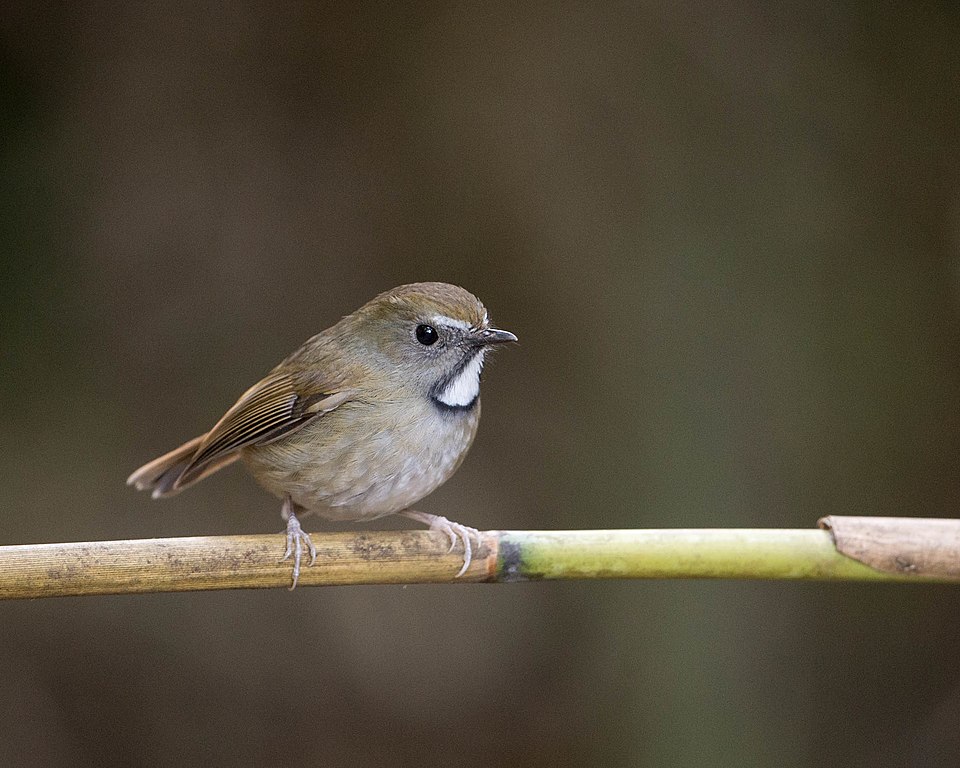
The adult White-rumped Shama is a medium-sized passerine bird, measuring approximately 23-28 cm in length. Its glossy black head, throat, and upperparts contrast vividly with the bright white rump and chestnut underparts. The long, graduated tail is black with white outer feathers, a striking feature when the bird is in flight. Males boast a more vibrant plumage compared to females, whose colors are more subdued with brownish tones on the wings and back. Juveniles resemble females but with more mottling and less defined coloration. The White-rumped Shama's silhouette in flight is characterized by its long tail and rapid wingbeats, while its perching posture, often with tail cocked and fanned, is distinctive among similar species. Although there can be some confusion with the Oriental Magpie-Robin, the shama's more vivid coloration and longer tail help in accurate identification.
Having trouble telling birds apart? Upload a photo to our bird identification tool for an instant species match.
White-rumped Shama Habitat and Range
Preferred Habitat
White-rumped Shamas thrive in the dense undergrowth of tropical forests, favoring areas with substantial foliage and high humidity. They are frequently found in lowland rainforests, but also inhabit secondary growth and woodlands up to altitudes of 1200 meters. These birds are adaptable to various forest types, including bamboo forests and mangroves, though they show a clear preference for environments that offer dense cover. Seasonal shifts in habitat use are minimal, as they are largely sedentary, though some local movements occur in response to food availability. In urban areas, they can occasionally be found in large, mature gardens or parks that replicate their natural habitat conditions.
Geographic Range
The White-rumped Shama has a broad distribution across Southeast Asia, making it a widespread species throughout this region. Its range includes the Malay Peninsula, Sumatra, Borneo, Java, and the Lesser Sundas, extending into the Philippines and parts of southern China. While not migratory, certain populations may undertake local movements to exploit temporary food resources or optimal breeding sites. Within these regions, they are commonly found in forested areas, with population densities varying according to habitat quality and human impacts. Conservation areas and national parks often serve as strongholds for their populations, offering protection against habitat destruction and poaching.
Want to know which birds visit your area? Browse our backyard birds by location guides for region-specific species lists.
What Does the White-rumped Shama Eat?
The diet of the White-rumped Shama primarily consists of insects and other small invertebrates, which it gleans from leaf litter and low vegetation. It forages by hopping along the forest floor, using its sharp eyesight to locate prey such as beetles, grasshoppers, and caterpillars. During the breeding season, the bird's dietary needs expand to accommodate the increased nutritional demands of raising offspring, leading to a higher intake of protein-rich insects. While insects form the bulk of its diet, the White-rumped Shama will occasionally consume small fruits and berries, contributing to seed dispersal in its habitat. Dawn and dusk mark peak feeding times, with brief forays throughout the day.
White-rumped Shama Behavior and Social Structure
The White-rumped Shama exhibits a solitary or territorial nature, particularly during the breeding season when males vigorously defend their territories with song. These territories are crucial for attracting mates and providing resources for raising young. Courtship displays involve a combination of vocalizations and physical displays, such as tail fanning and wing flicking. Outside the breeding season, they may be less vocal and more inconspicuous. Though largely solitary, they sometimes join mixed-species flocks to forage. Their response to predators includes alarm calls and evasive maneuvers, relying on dense cover for protection. Daily activity peaks in the early morning and late afternoon, coinciding with cooler temperatures and optimal foraging conditions.
White-rumped Shama Nesting and Reproduction
White-rumped Shamas construct their nests in natural tree cavities or among dense foliage, typically 1-3 meters above the ground. The nest is a cup-shaped structure made of twigs, roots, and leaves, lined with finer materials to provide comfort for the eggs and chicks. A typical clutch consists of 2-4 eggs, which the female incubates for about 12-15 days. Both parents participate in feeding the chicks, which fledge approximately 12 days after hatching. The fledgling period is a critical time for learning essential survival skills. The pair may raise two or more broods per year, depending on food availability and environmental conditions.
White-rumped Shama Sounds and Vocalizations
The vocal repertoire of the White-rumped Shama is both varied and complex, featuring a rich, melodious song that can include imitations of other bird species. The primary song consists of clear, flute-like notes delivered in a rhythmic pattern, often accompanied by whistles and trills. Call notes are sharp and metallic, used for communication between mates or to signal alarm. The dawn chorus is a particularly impressive display, with males singing to establish territory and attract females. Comparisons to the nightingale's song are often made due to its musicality and complexity.
Interesting Facts About the White-rumped Shama
- 1The White-rumped Shama can mimic up to 20 different bird species, showcasing its impressive vocal abilities.
- 2With its long tail, the White-rumped Shama can maneuver skillfully between dense vegetation, aiding in its insect-hunting prowess.
- 3Despite its popularity as a cage bird, wild populations of the White-rumped Shama remain robust in undisturbed habitats.
- 4White-rumped Shamas are known to engage in anting behavior, where they use ants to cleanse their plumage.
- 5The bird's song has been described as one of the most beautiful and complex of any Southeast Asian songbird.
White-rumped Shama Conservation Status
The White-rumped Shama is currently listed as Least Concern by the IUCN, although certain populations face threats from habitat destruction and illegal trapping for the pet trade. Population trends vary by region, with stable numbers in protected areas but declines in regions experiencing significant deforestation. Conservation efforts focus on habitat preservation and enforcing laws against illegal trapping. Historically, the bird's adaptability to secondary growth has afforded it some resilience, but ongoing habitat loss remains a critical challenge.
Other Muscicapidae Species


Birds Similar to the White-rumped Shama
These species are often confused with the White-rumped Shama due to similar appearance or overlapping range.

