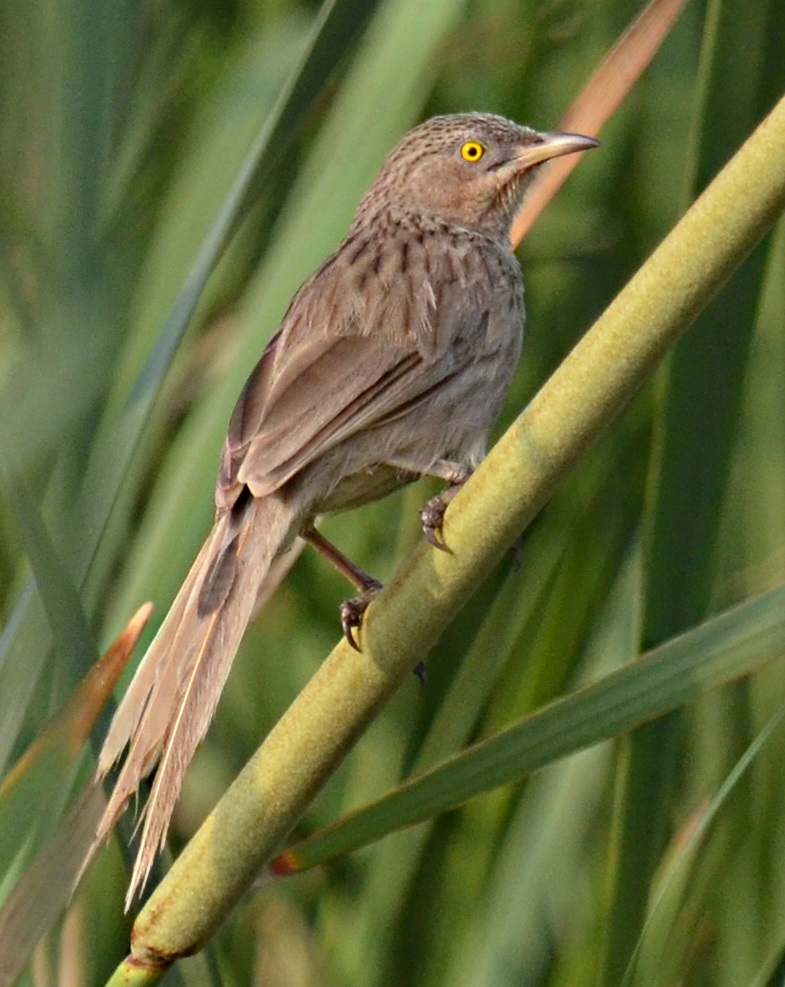
White-throated Babbler
Turdoides gularis
Order: Passeriformes / Family: Leiothrichidae

Wikimedia Commons
About the White-throated Babbler
The White-throated Babbler, Turdoides gularis, is a prominent member of the Leiothrichidae family, known for its gregarious behavior and distinctive vocalizations. This bird primarily inhabits the subtropical regions of Myanmar, thriving in a range of environments from scrublands to open forests. Its adaptability to different habitats underscores its ecological significance as both a seed disperser and insect controller, playing a crucial role in maintaining the balance of its local ecosystems. The bird's presence is especially notable in the Ayeyarwady and Bago regions, where it can often be found foraging in mixed-species flocks. Seasonal behaviors of the White-throated Babbler include a marked increase in activity during the breeding season, which coincides with the onset of the monsoon. During this time, the birds engage in elaborate courtship displays and territorial vocalizations, adding to the dynamic soundscape of their environment. As a resident species, the White-throated Babbler does not typically migrate, maintaining its presence throughout the year. This stability offers a consistent ecological role, contributing to seed dispersal and pest control, which supports plant growth and maintains the health of the forest understory. Furthermore, their social structure facilitates a complex communication network among flocks, enhancing their survival and adaptation in the diverse habitats of Myanmar. The White-throated Babbler's adaptability and resilience make it an essential component of the avian biodiversity in the region.
The White-throated Babbler belongs to the family Leiothrichidae, within the order Passeriformes. These birds typically live average 4-5 years, with some individuals living up to 7 years..
How to Identify a White-throated Babbler
The White-throated Babbler can be easily recognized by its striking white throat, which contrasts sharply with its otherwise brownish-gray plumage. Adult babblers exhibit a uniform gray-brown color on the back and wings, while their underparts are pale with subtle streaking. Juveniles resemble adults but tend to have a slightly duller coloration and less pronounced throat markings. There are no significant differences between males and females in terms of plumage, making visual sex differentiation challenging in the field. Despite this, the species can be identified by its distinctive call and social behavior. Confusion may arise with similar species such as the Jungle Babbler, but the White-throated Babbler's habitat preference and vocalizations are key differentiators. In flight, the bird displays a short, rounded silhouette, with rapid wingbeats and a characteristic undulating flight pattern. When perched, it often appears in small groups, with individuals maintaining close proximity to one another. This perching posture, combined with their vocalizations, makes the White-throated Babbler a conspicuous presence in its native range.
Having trouble telling birds apart? Upload a photo to our bird identification tool for an instant species match.
White-throated Babbler Habitat and Range
Preferred Habitat
The White-throated Babbler inhabits a variety of environments across Myanmar, including lowland forests, dry scrublands, and open woodlands. It is commonly found at elevations ranging from sea level up to about 1,500 meters. These birds are well-adapted to both rural and semi-urban areas, often seen foraging in gardens and farmland adjacent to forested regions. While they primarily stick to lower elevations, they do not exhibit significant habitat shifts throughout the year, given their non-migratory nature. The bird's preference for dense underbrush and open forest edges allows them to forage efficiently and avoid predators. This adaptability to different landscapes aids in their overall survival and makes them a common sight across various habitat types within their range.
Geographic Range
The White-throated Babbler is endemic to Myanmar, with its range extending across much of the country. It is primarily found in the central and southern parts, with notable populations in the Ayeyarwady Delta and the Bago Yoma region. Unlike migratory species, the White-throated Babbler maintains residency throughout the year, adapting to the climatic conditions of its range rather than seeking seasonal migration corridors. The bird's distribution is relatively concentrated, with population density highest in regions that offer a mix of forested and open landscapes. These areas provide the ideal conditions for foraging and breeding. Although its range is limited to Myanmar, within this region, the White-throated Babbler is a fairly common sight in appropriate habitats.
Want to know which birds visit your area? Browse our backyard birds by location guides for region-specific species lists.
What Does the White-throated Babbler Eat?
The diet of the White-throated Babbler primarily consists of insects, small invertebrates, and various seeds. During the wet season, when insect populations are at their peak, these birds capitalize on the abundance of protein-rich prey. Foraging often occurs in the early morning and late afternoon, when temperatures are cooler, and insects are more active. The White-throated Babbler employs a foraging technique that involves hopping along the ground and in low shrubbery, using its sharp bill to probe for hidden insects. In addition to insects, the bird consumes seeds and berries, particularly during the dry season when invertebrate availability decreases. This dietary flexibility allows it to maintain a balanced diet throughout the year, supporting its survival in different habitats.
White-throated Babbler Behavior and Social Structure
The White-throated Babbler exhibits complex social behaviors, often observed in small, cohesive groups that maintain territories year-round. These birds are highly vocal, using a range of calls for communication within the flock. Territorial disputes involve loud, repetitive calls, accompanied by displays of aggression. Courtship behaviors include synchronized movements and mutual preening, strengthening pair bonds. The White-throated Babbler also exhibits cooperative breeding, with group members assisting in rearing young. This social structure enhances survival rates by providing protection and increased foraging efficiency. During the day, these birds spend most of their time foraging and interacting socially, while at night, they roost communally in dense vegetation to avoid predators.
White-throated Babbler Nesting and Reproduction
The White-throated Babbler constructs cup-shaped nests using twigs, leaves, and grasses, securely placing them in dense shrubbery or low trees. Nesting typically occurs during the rainy season, aligning with the abundance of food resources. Clutch size ranges from three to five eggs, which are incubated for approximately two weeks. Both parents participate in incubation and feeding the chicks, showcasing a strong cooperative breeding strategy. After hatching, the chicks fledge within about 14 to 16 days, though they remain dependent on the adults for some time. The species generally raises one to two broods per year, depending on environmental conditions and food availability.
White-throated Babbler Sounds and Vocalizations
The primary song of the White-throated Babbler is a series of melodious whistles and chirps, often repeated in rapid succession. Calls are characterized by a harsh, chattering quality, serving as contact calls among group members. Alarm calls are sharper and more urgent, alerting the flock to potential threats. During the dawn chorus, these birds contribute to the symphony of the forest with their varied vocalizations, which can be compared to the sound of jingling bells. Their vocal repertoire is essential for maintaining social bonds and coordinating group activities.
Interesting Facts About the White-throated Babbler
- 1The White-throated Babbler is highly social, often seen in groups of up to 15 individuals engaging in communal activities.
- 2This species can live up to 10 years in the wild, showcasing strong longevity for a small passerine bird.
- 3White-throated Babblers are known for their cooperative breeding behavior, with non-breeding group members helping to rear young.
- 4Their vocalizations are complex and varied, playing a crucial role in maintaining social structure within the flock.
- 5Despite being non-migratory, White-throated Babblers adapt well to seasonal changes in food availability and habitat conditions.
- 6These birds have a unique way of sunbathing, spreading their wings and tail feathers to soak up sunlight while perched.
- 7The White-throated Babbler's adaptability to urban and rural environments makes it a common sight near human settlements in Myanmar.
White-throated Babbler Conservation Status
The White-throated Babbler is currently listed as a species of Least Concern by the IUCN, with a stable population trend. However, habitat loss due to agricultural expansion and deforestation poses ongoing threats to its habitat. Conservation efforts focus on preserving natural habitats and promoting sustainable land-use practices in Myanmar. Historically, the population has remained relatively stable, benefiting from the species' adaptability to varied habitats. Continued monitoring and habitat protection are essential to ensure the long-term survival of this species.
Other Leiothrichidae Species

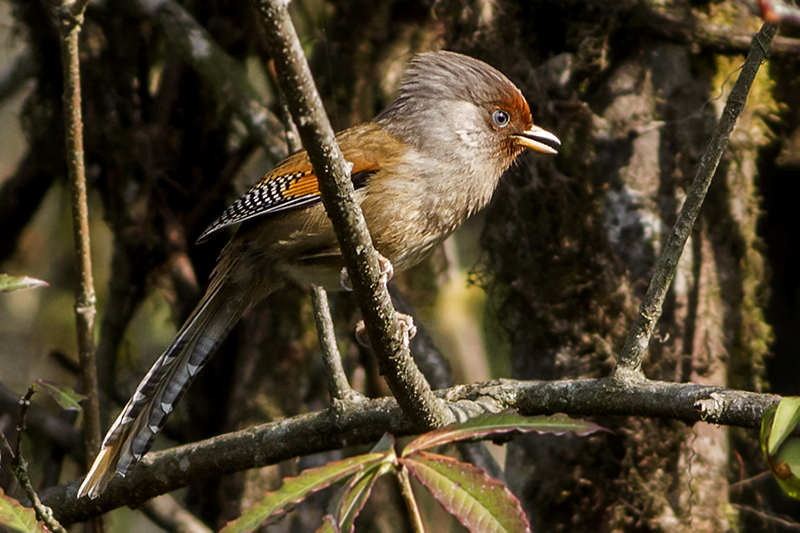

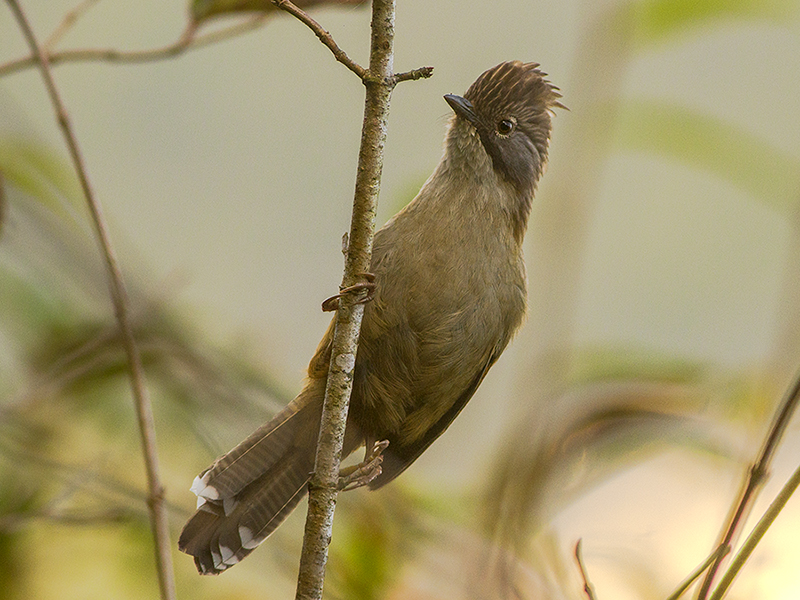
Birds Similar to the White-throated Babbler
These species are often confused with the White-throated Babbler due to similar appearance or overlapping range.