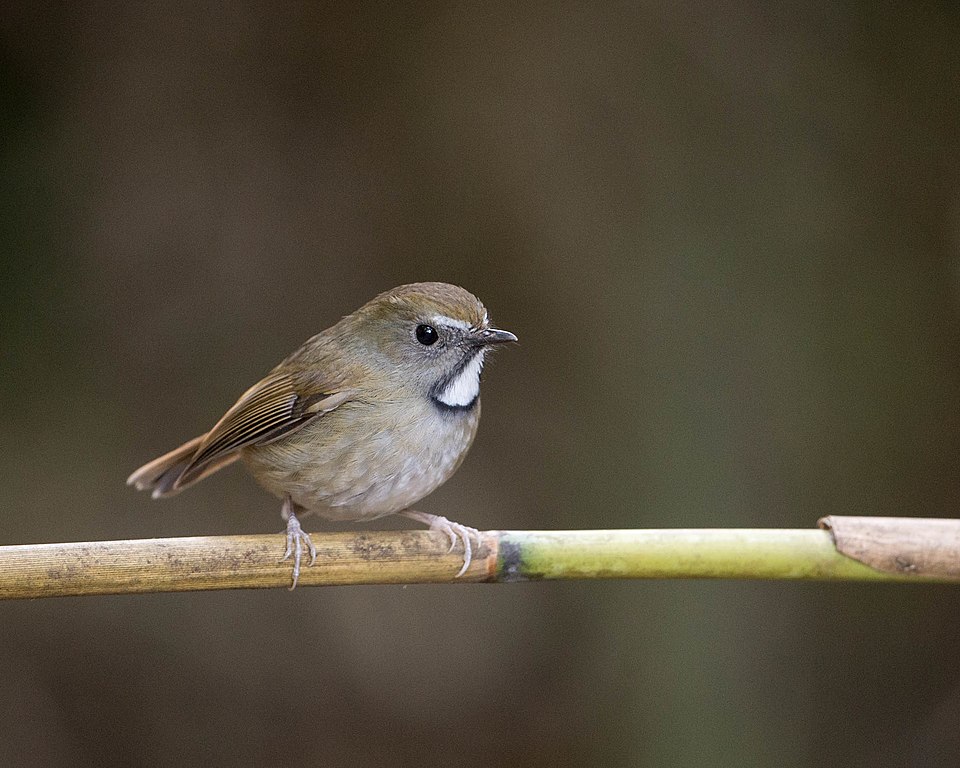
White-throated Bushchat
Saxicola insignis
Order: Passeriformes / Family: Muscicapidae

Wikimedia Commons
About the White-throated Bushchat
The White-throated Bushchat (Saxicola insignis) is a remarkable member of the Muscicapidae family, known for its distinctive appearance and elusive nature. This species, primarily located in the Himalayan region, thrives in the grasslands and scrublands at elevations ranging from 1,800 to 3,200 meters. Its presence is noteworthy due to its rarity, with a limited distribution across specific areas in India, Bhutan, and Nepal. The White-throated Bushchat plays a vital ecological role in its habitat, acting as both a predator of insects and a prey species for larger birds.
This bird is an integral part of the Himalayan ecosystem, involved in the regulation of insect populations and providing a food source for predators such as the Eurasian Sparrowhawk. Its presence indicates healthy grassland ecosystems, which are increasingly threatened by human activities. The White-throated Bushchat's breeding season occurs from May to July, during which it engages in elaborate courtship displays. Post-breeding, it undertakes local movements, descending to valleys in search of warmer climates during the harsh winter months.
The White-throated Bushchat's significance extends beyond its ecological role. As a species classified as vulnerable, it highlights the pressing need for conservation efforts in its native habitats. The conversion of grasslands to agricultural land, coupled with climate change, poses significant threats. Despite these challenges, the White-throated Bushchat continues to captivate birdwatchers and ornithologists with its unique behaviors and striking appearance. Efforts to preserve its habitat will not only aid in its conservation but also support the broader biodiversity of the region.
The White-throated Bushchat belongs to the family Muscicapidae, within the order Passeriformes. These birds typically live average 3-5 years with a max recorded of 7 years..
How to Identify a White-throated Bushchat
The adult White-throated Bushchat is distinguished by its prominent white throat patch, which contrasts sharply with its otherwise brownish-gray plumage. The male typically exhibits a more vivid coloration compared to the female, with a richer brown back and a more pronounced white patch. The female's plumage is subtler, with a more muted brown overall appearance, which aids in camouflage during nesting.
Juveniles resemble females but with a more speckled appearance, especially on the breast and back. This speckling diminishes as they mature. In flight, the White-throated Bushchat displays a distinctive silhouette with broad wings and a relatively short tail. Its perching posture is upright, often on low shrubs or grass stems, where it remains vigilant for insects.
Confusion with similar species, such as the Siberian Stonechat, is possible; however, the White-throated Bushchat's larger size and more pronounced throat patch help in differentiation. Observers should note the bird's behavior and habitat preference, as it is more commonly found in isolated grassland areas compared to other Saxicola species.
Having trouble telling birds apart? Upload a photo to our bird identification tool for an instant species match.
White-throated Bushchat Habitat and Range
Preferred Habitat
The White-throated Bushchat favors open grasslands, often interspersed with shrubs and small trees. These habitats are found at elevations from 1,800 to 3,200 meters, primarily in the Himalayan foothills. During the breeding season, it prefers areas with dense grass cover, which provides both nesting sites and abundant food sources.
In winter, the bird descends to lower elevations, seeking warmer climates in valleys and foothills. This seasonal habitat shift is crucial for survival, as it allows the bird to avoid the harsh conditions of the high-altitude grasslands. Unlike many other passerines, the White-throated Bushchat is rarely found in urban or heavily forested areas, instead relying on the open spaces of natural grasslands.
Geographic Range
The White-throated Bushchat primarily breeds in the Himalayan regions of northern India, Bhutan, and Nepal. Its breeding range is restricted to grasslands and scrublands at high elevations. During the winter months, it migrates to lower altitudes within the same geographic regions, although its precise wintering range is not well-documented.
The bird is considered rare throughout its range, with sightings typically confined to specific locations such as the Dhorpatan Hunting Reserve in Nepal and the Bumdeling Wildlife Sanctuary in Bhutan. Population density hotspots are few, underscoring its status as a vulnerable species. Efforts to protect and conserve these key habitats are essential for maintaining viable populations of the White-throated Bushchat.
Want to know which birds visit your area? Browse our backyard birds by location guides for region-specific species lists.
What Does the White-throated Bushchat Eat?
The White-throated Bushchat's diet consists primarily of insects, which it captures through a combination of ground foraging and aerial sallying. Its diet includes beetles, grasshoppers, and various other arthropods, making it an essential controller of insect populations in its habitat.
During the breeding season, the bird may increase its intake of protein-rich insects to support the demands of raising young. In the winter months, when insect availability decreases, it may supplement its diet with seeds and small fruits. The White-throated Bushchat exhibits a methodical foraging technique, often perching on elevated spots to scan the ground before darting down to capture prey.
Its feeding schedule is mostly diurnal, with peak activity in the early morning and late afternoon. This pattern helps maximize feeding efficiency while avoiding the midday heat and potential predators.
White-throated Bushchat Behavior and Social Structure
The White-throated Bushchat exhibits solitary or paired behavior, particularly during the breeding season, when it becomes highly territorial. Males perform elaborate courtship displays, including song flights and wing fluttering, to attract females. These displays not only signal fitness but also help establish territory boundaries.
Outside the breeding season, the bird tends to be more solitary, although small loose flocks may form during migration. When faced with predators, the White-throated Bushchat employs evasive maneuvers, often taking cover in dense vegetation. It maintains a vigilant watch from high perches, constantly scanning for potential threats.
Its daily activity patterns include foraging during the cooler parts of the day, with periods of rest and preening during midday. The bird remains active throughout the year, adapting its behavior to seasonal changes in its habitat. Its ability to navigate diverse environments underscores its adaptability within its limited range.
White-throated Bushchat Nesting and Reproduction
The White-throated Bushchat constructs its nest close to the ground, often hidden within dense grass or low shrubs. The nest is an open cup made of fine grasses and lined with softer materials like feathers and hair. This choice of nesting site provides both camouflage and protection from predators.
A typical clutch consists of 3 to 4 eggs, which the female incubates for about 12 to 14 days. Both parents participate in feeding the chicks, which fledge approximately two weeks after hatching. The fledging period is critical, as young birds must quickly learn to forage and avoid predators.
The species usually raises one brood per year, although in favorable conditions, a second brood may occur. Parental roles are well-defined, with the male primarily defending the territory while the female focuses on incubation and early chick rearing.
White-throated Bushchat Sounds and Vocalizations
The White-throated Bushchat's primary song is a series of melodious, whistling notes, often delivered during flight or from a prominent perch. The rhythm is varied, with a mix of high-pitched trills and softer warbles.
Its call notes include sharp 'chip' sounds, used to communicate with mates or signal alarm. When threatened, the bird may emit a rapid, chattering call to alert others of danger. During the dawn chorus, the White-throated Bushchat's song can be heard prominently, adding to the symphony of the grassland soundscape.
Comparatively, its song is less complex than that of the Common Stonechat, with a more straightforward melody that carries well over long distances.
Interesting Facts About the White-throated Bushchat
- 1The White-throated Bushchat is named for its striking white throat, a key field mark distinguishing it from other similar species.
- 2With a preference for high-altitude grasslands, the White-throated Bushchat is adapted to life at elevations up to 3,200 meters.
- 3Despite its striking appearance, the White-throated Bushchat is considered one of the rarest bushchats, with limited sightings recorded annually.
- 4The White-throated Bushchat often perches on grass stems, a behavior that allows it to maintain a vantage point for spotting prey.
- 5This species exhibits a unique migratory pattern, moving locally within the Himalayas rather than undertaking long-distance migrations.
- 6The song of the White-throated Bushchat, often heard at dawn, is a blend of melodious whistles that can travel long distances.
- 7Conservation areas like the Dhorpatan Hunting Reserve play a crucial role in the survival of the White-throated Bushchat.
White-throated Bushchat Conservation Status
The White-throated Bushchat is currently listed as Vulnerable by the IUCN, with populations declining due to habitat loss and degradation. The primary threats include agricultural expansion, overgrazing, and climate change, which impact the availability of suitable breeding and foraging habitats. Conservation efforts focus on habitat protection and management, particularly in key areas like the Dhorpatan Hunting Reserve and Bumdeling Wildlife Sanctuary. These efforts aim to preserve the grassland ecosystems essential for the bird's survival. Historically, the White-throated Bushchat was more widespread, but recent trends indicate a contraction in its range. Continued monitoring and research are necessary to ensure effective conservation strategies are implemented.