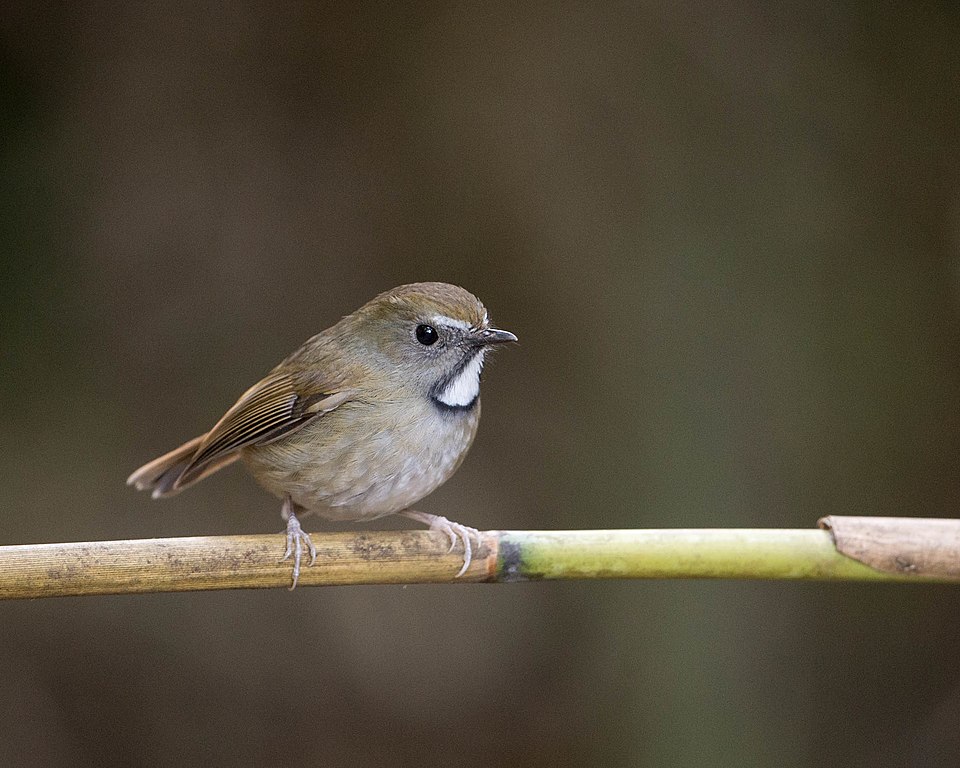
Zappey's Flycatcher
Cyanoptila cumatilis
Order: Passeriformes / Family: Muscicapidae

Wikimedia Commons
About the Zappey's Flycatcher
The Zappey's Flycatcher (Cyanoptila cumatilis) is a captivating bird that belongs to the family Muscicapidae within the order Passeriformes. This bird is known for its stunning blue plumage, which is particularly eye-catching in the dappled light of its preferred forest habitats. It is a medium-sized migratory bird that inhabits a range of regions across Asia, notably breeding in central and southern China and wintering in Southeast Asia, including countries like Thailand and Malaysia. Zappey's Flycatcher plays a significant role in its ecosystem as an insect predator, contributing to the control of insect populations. During the breeding season, these birds are found in deciduous and mixed forests, where their vibrant colors and melodic songs add to the biodiversity of the area. In winter, they shift to lower elevations, often inhabiting subtropical forests and woodlands, where they continue their insectivorous diet. The seasonal movements of Zappey's Flycatcher reflect its adaptability and the changing availability of resources in its habitat. Its role as an insectivore helps maintain the balance of its ecosystem by controlling pest populations, thereby benefiting both the natural habitat and human agricultural areas nearby. The bird's presence is also indicative of healthy forest ecosystems, making it an important species for ecological monitoring. Zappey's Flycatcher’s migratory patterns and habitat preferences demonstrate the connectivity between different ecosystems across Asia. Understanding these patterns helps conservationists assess the health of various habitats and the impact of environmental changes. The bird's survival and migration depend on the preservation of both breeding and wintering habitats, highlighting the need for international conservation collaboration. By studying the Zappey's Flycatcher, researchers gain insights into the effects of climate change and habitat loss on migratory birds.
The Zappey's Flycatcher belongs to the family Muscicapidae, within the order Passeriformes. These birds typically live average 6 years, with a maximum recorded of 10 years..
How to Identify a Zappey's Flycatcher
Adult Zappey's Flycatchers are easy to identify with their brilliant blue upperparts and distinct white underparts. The striking contrast between the blue and white makes them stand out in their forest habitats. Males typically exhibit a more vibrant blue color compared to females, whose plumage may appear slightly duller or more muted. Juveniles can be recognized by their mottled brown and blue plumage, gradually acquiring the adult coloration as they mature. In flight, the Zappey's Flycatcher presents a streamlined silhouette with quick, agile movements, characteristic of many flycatchers. Perched, they often display a confident upright posture, scanning for insects. While the Zappey's Flycatcher is distinctive, birders might confuse it with the closely related Blue-and-white Flycatcher (Cyanoptila cyanomelana) due to similarities in plumage. However, the latter tends to have a slightly darker blue and less contrast between the blue and white. Careful observation of plumage details and vocalizations can help in correct identification.
Having trouble telling birds apart? Upload a photo to our bird identification tool for an instant species match.
Zappey's Flycatcher Habitat and Range
Preferred Habitat
The Zappey's Flycatcher primarily inhabits deciduous and mixed forests during the breeding season. It prefers areas with dense canopy cover and a rich understory, which provide ample foraging opportunities and nesting sites. In winter, it migrates to subtropical forests and woodlands in Southeast Asia, where the climate is milder and food resources are more abundant. While it predominantly occupies forested areas, it can occasionally be found in gardens and parks, especially during migration. Zappey's Flycatcher is generally found at elevations ranging from lowland forests up to 2000 meters, with a preference for montane regions during breeding. Its presence in urban areas is rare but not unheard of, usually limited to green spaces that mimic natural habitats.
Geographic Range
The breeding range of the Zappey's Flycatcher spans central and southern China, extending into parts of northern Vietnam. During the non-breeding season, this species migrates southward to winter in Southeast Asia, including countries such as Thailand, Laos, and Malaysia. Within these regions, the bird follows specific migration corridors, often utilizing forested mountain ranges and river valleys as routes. Population density tends to be higher in the core breeding areas of China, where suitable habitats are more prevalent. The wintering grounds, while more dispersed, remain crucial for the survival of the species. Migration is a pivotal aspect of the Zappey's Flycatcher’s life cycle, and the integrity of these migration corridors is essential for its continued survival.
Want to know which birds visit your area? Browse our backyard birds by location guides for region-specific species lists.
What Does the Zappey's Flycatcher Eat?
Zappey's Flycatcher primarily feeds on insects, making it an essential predator within its ecosystem. Its diet consists of a wide variety of insects, including beetles, flies, and moths, which it catches in mid-air with agile, acrobatic flights. During the breeding season, the flycatcher increases its consumption of caterpillars and larvae, which are abundant in the forest understory. In winter, its diet may expand to include small fruits and berries, supplementing the reduced availability of insects. This adaptability in diet reflects the bird's ability to adjust to seasonal changes in food availability. The bird usually forages alone or in pairs, using a perch-and-pounce technique to capture prey. By controlling insect populations, the Zappey's Flycatcher plays a crucial role in the health of its ecosystem.
Zappey's Flycatcher Behavior and Social Structure
Zappey's Flycatcher exhibits a solitary or pair-based social structure, particularly evident during the breeding season when males establish and defend territories through song and displays. Their territorial behavior includes aerial chases and vocalizations to deter rivals. Courtship involves elaborate displays by the male, showcasing his plumage and singing prowess to attract a mate. Outside the breeding season, these birds become less territorial and may join mixed-species flocks, enhancing foraging efficiency. As a diurnal bird, it is most active during the early morning and late afternoon when insect activity peaks. When faced with predators, Zappey's Flycatcher employs evasive flying techniques and seeks refuge in dense foliage. Its daily activities center around foraging, preening, and resting, with occasional sunbathing observed during sunny days.
Zappey's Flycatcher Nesting and Reproduction
Zappey's Flycatcher constructs its nest in tree branches or forks, preferring locations well concealed by foliage. The nest is a cup-shaped structure made from twigs, grass, and moss, lined with softer materials like feathers and plant down. A typical clutch consists of 3 to 5 eggs, which both parents incubate over approximately 12 to 14 days. Post-hatching, both male and female share in feeding and caring for the chicks, which fledge after about 14 to 16 days. The species typically raises one brood per year, though in optimal conditions, a second brood is possible. Nest predation, primarily by snakes and birds, poses a significant threat to breeding success, influencing nesting site selection.
Zappey's Flycatcher Sounds and Vocalizations
The primary song of Zappey's Flycatcher is a melodious series of clear, whistled notes that rise and fall in pitch. This song is often delivered from a high perch during the breeding season and serves to establish territory and attract a mate. Call notes are short, sharp, and metallic, used for communication between mates and signaling alarm. Alarm calls are harsher and more urgent, alerting other birds to the presence of predators. During the dawn chorus, the song of Zappey's Flycatcher stands out for its clarity and musicality, reminiscent of the flute-like calls of the Black-naped Oriole.
Interesting Facts About the Zappey's Flycatcher
- 1The Zappey's Flycatcher was once considered a subspecies of the Blue-and-white Flycatcher but was recognized as a separate species in 2006.
- 2During migration, Zappey's Flycatcher can travel distances over 2000 kilometers between its breeding and wintering grounds.
- 3This species was named after John T. Zappey, an American ornithologist who contributed significantly to avian studies in Asia.
- 4Zappey's Flycatcher is a canopy dweller, often found singing from high perches where its song can carry across large distances.
- 5Despite its striking appearance, Zappey's Flycatcher remains elusive and is a prized find for birdwatchers and ornithologists alike.
- 6The song of Zappey's Flycatcher can be confused with that of other sympatric flycatchers, requiring careful listening for accurate identification.
- 7Zappey's Flycatcher contributes to forest health by aiding in seed dispersal through its occasional consumption of fruits and berries.
Zappey's Flycatcher Conservation Status
Zappey's Flycatcher currently holds a status of 'Least Concern' on the IUCN Red List, with population trends considered stable. However, habitat destruction and fragmentation pose significant threats, particularly in breeding and wintering areas. Conservation efforts focus on preserving critical forest habitats and maintaining migration corridors. Historically, populations have fluctuated with changes in land use and forest cover. Continued monitoring and habitat protection are essential to safeguard this species against future declines. International collaboration is crucial, given its migratory nature, to ensure the protection of habitats across its range.