
Andaman Shama
Copsychus albiventris
Order: Passeriformes / Family: Muscicapidae

Wikimedia Commons
About the Andaman Shama
The Andaman Shama, scientifically known as Copsychus albiventris, is a captivating songbird endemic to the Andaman Islands. This species belongs to the Muscicapidae family and holds a special place in the ecological tapestry of its native region. It thrives in the dense tropical forests of the Andamans, where its melodious and varied song can be heard echoing through the canopy. The bird plays a crucial role in the ecosystem as both a seed disperser and an insect controller. Its presence indicates a healthy forest environment, as it requires a rich variety of insects and fruits to sustain its diet.
Primarily found in the moist deciduous and evergreen forests, the Andaman Shama favors understory and mid-level canopies. These birds are non-migratory residents, ensuring their songs are a constant in the forests they inhabit. During the breeding season, which peaks from March to June, males become particularly vocal, using their elaborate songs to establish and defend territories as well as attract mates.
The Andaman Shama is significant not only for its ecological role but also as a symbol of the unique biodiversity found in the Andaman Islands. The bird's adaptation to this specific geographic area highlights the evolutionary processes that have shaped the avian diversity of the region. Conservation efforts focus on preserving the natural habitats of the Andaman Shama, ensuring that this melodious sentinel of the forest continues to thrive.
The Andaman Shama belongs to the family Muscicapidae, within the order Passeriformes. These birds typically live average 5-7 years, with a maximum recorded of 10 years..
How to Identify a Andaman Shama
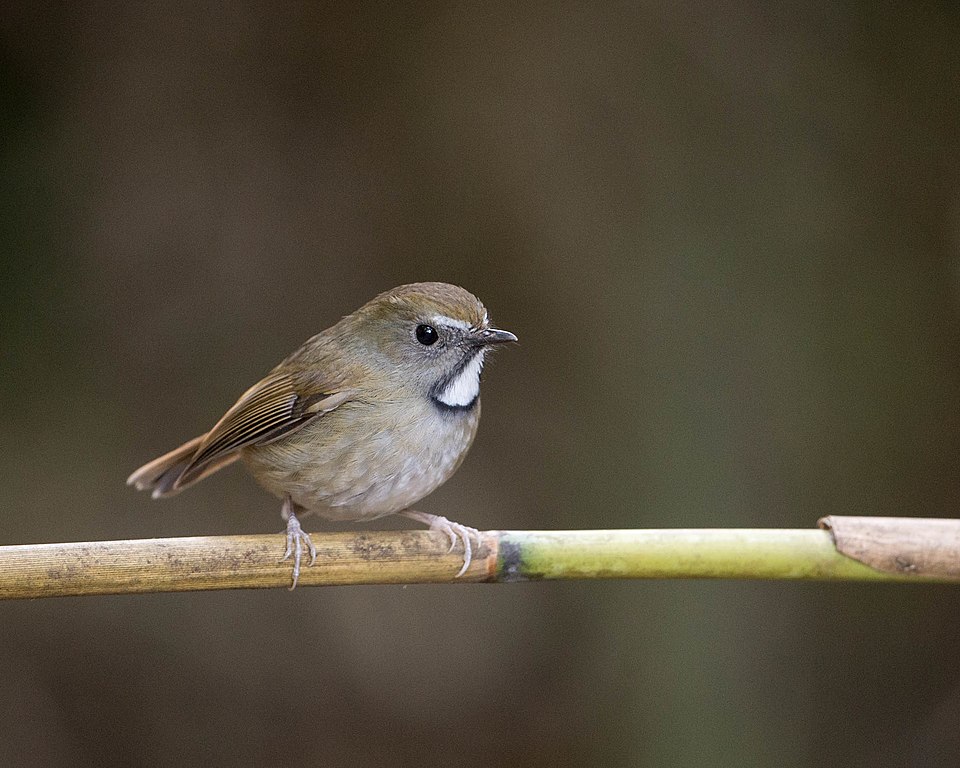
The adult Andaman Shama is a medium-sized songbird with a length ranging from 18 to 28 centimeters. It is easily recognized by its glossy black upperparts and head, contrasted sharply with its white underparts. The tail is long and black, providing a dynamic display during its expressive flight. Males and females are similar in appearance, though females may show slightly duller plumage.
Juvenile Andaman Shamas display a more muted coloration, with brownish tones replacing the black seen in adults. This juvenile plumage provides a form of camouflage within their forested habitats, offering some protection from predators.
When compared to similar species, such as the White-rumped Shama, the Andaman Shama is distinct in its entirely black tail without the white rump patch. Its flight silhouette is characterized by the fan-like spread of its long tail, and when perched, it often flicks its tail up and down, a behavior that can aid in its identification.
Having trouble telling birds apart? Upload a photo to our bird identification tool for an instant species match.
Andaman Shama Habitat and Range
Preferred Habitat
The Andaman Shama inhabits the dense, humid forests of the Andaman Islands, with a preference for deciduous and evergreen forest types. These birds are typically found at low elevations, often below 500 meters, but can also inhabit higher altitudes in montane forest areas. They thrive in both primary and secondary forests, indicating some adaptability to habitat changes.
Unlike many bird species that venture into urban areas, the Andaman Shama remains closely tied to its forested realms. It is rarely seen in open or heavily disturbed environments, emphasizing the importance of preserving natural forest habitats for its continued survival.
Geographic Range
The Andaman Shama is endemic to the Andaman Islands, a group of islands situated in the Bay of Bengal. Its range is restricted to this archipelago, where it occupies both the larger islands and some of the smaller islets. The bird does not migrate, instead residing year-round within these tropical forests.
Population density tends to be higher in undisturbed forest areas where food resources are abundant. Conservationists prioritize these regions for habitat protection and restoration efforts.
Want to know which birds visit your area? Browse our backyard birds by location guides for region-specific species lists.
What Does the Andaman Shama Eat?
The Andaman Shama's diet is varied, consisting primarily of insects and other small invertebrates. Beetles, caterpillars, and spiders form the bulk of its diet, providing essential protein and nutrients. The bird also consumes fruits and berries, especially during periods when insect prey may be less available.
Foraging behavior is active and involves gleaning insects from leaves and branches, as well as capturing prey in mid-air. It frequently feeds in the morning and late afternoon, aligning its activity with the availability of its prey.
Andaman Shama Behavior and Social Structure
The Andaman Shama is a solitary and territorial bird, especially during the breeding season. Males defend their territories vigorously, using both song and physical displays to deter rivals. Their courtship involves elaborate singing battles and tail displays, where the male fans his tail widely to attract a mate.
Outside of breeding, these birds are less territorial, though they remain largely solitary. Their daily activities include regular foraging bouts interspersed with periods of song, which serve to maintain their presence within the forest.
Andaman Shama Nesting and Reproduction
The Andaman Shama constructs cup-shaped nests, often placed in dense foliage or within the forks of trees. These nests are made of twigs, roots, and leaves, providing a secure site for raising young. A typical clutch consists of 2 to 4 eggs, with both parents sharing incubation duties over a period of about 12 to 14 days.
After hatching, the chicks are tended by both parents, who provide a steady diet of insects to fuel rapid growth. Fledging occurs approximately 12 days after hatching, though young birds remain dependent on their parents for several weeks post-fledging. The species typically produces one or two broods per year.
Andaman Shama Sounds and Vocalizations
The song of the Andaman Shama is a rich, melodious series of notes delivered with clear, flute-like quality. It varies in rhythm and pitch, often mimicking the calls of other bird species. Calls include sharp 'tchick' notes used for communication between mates or to signal alarm.
During the dawn chorus, the Andaman Shama's song stands out as a prominent feature of the forest soundscape, marking its territory and attracting potential mates. These vocalizations are an essential aspect of its behavior, particularly during the breeding season.
Interesting Facts About the Andaman Shama
- 1The Andaman Shama's song repertoire includes imitations of other birds, showcasing its vocal versatility.
- 2Unlike many island endemics, the Andaman Shama is well-adapted to both primary and secondary forests.
- 3The bird's long tail, used in courtship displays, can reach up to 14 centimeters, nearly half its body length.
- 4Andaman Shamas are known to have up to two broods per year, a trait that aids in maintaining population numbers.
- 5These birds exhibit cooperative breeding behavior, where previous offspring help in raising new chicks.
Andaman Shama Conservation Status
The Andaman Shama is currently classified as Near Threatened on the IUCN Red List. Its population trend appears to be stable, but it faces threats from habitat loss due to deforestation and land conversion. Conservation efforts focus on preserving forest habitats within the Andaman Islands, with protected areas playing a crucial role in safeguarding its future. Continued monitoring and habitat protection are essential to ensure that the Andaman Shama remains a vibrant and integral part of the Andaman Islands' avifauna.
Other Muscicapidae Species


Birds Similar to the Andaman Shama
These species are often confused with the Andaman Shama due to similar appearance or overlapping range.

