
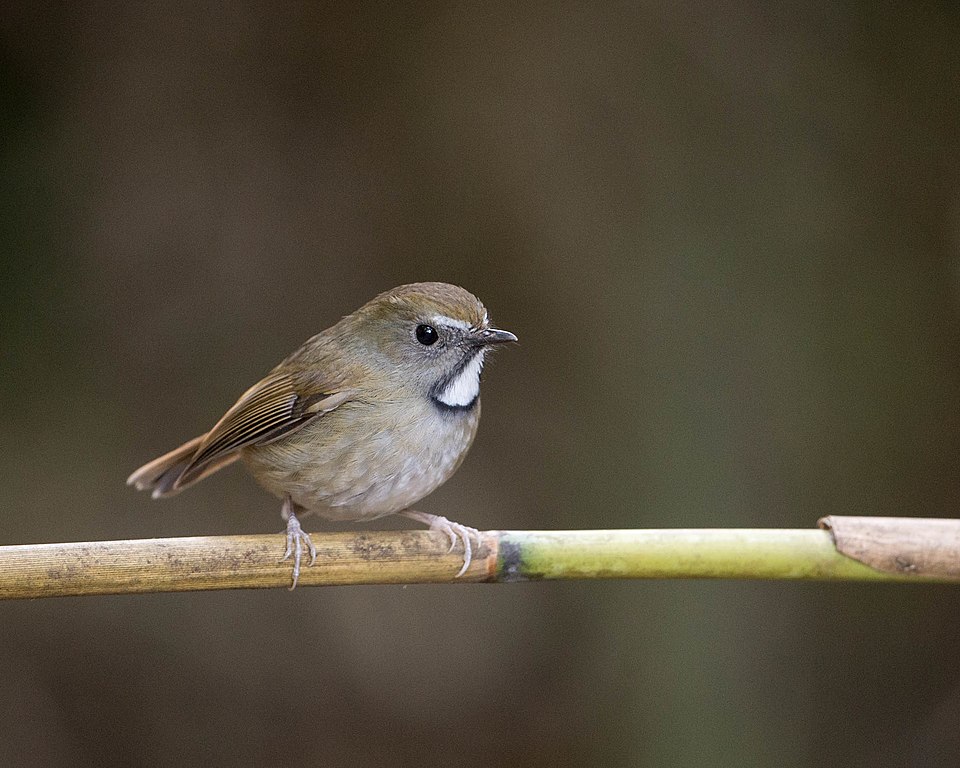
Arnot's Chat
Pentholaea arnotti
Order: Passeriformes / Family: Muscicapidae

Wikimedia Commons
About the Arnot's Chat
Arnot's Chat (Pentholaea arnotti) is a striking bird found across various parts of sub-Saharan Africa. This bird belongs to the family Muscicapidae and is well-loved by birdwatchers for its bold black-and-white plumage, which makes it easily distinguishable against the backdrop of its natural habitat. The bird thrives in the open woodlands and savannas, particularly in countries like Zimbabwe, Botswana, and parts of South Africa and Zambia. Arnot's Chat plays a significant role in its ecosystem by contributing to insect population control, which is crucial for maintaining ecological balance. Its diet primarily consists of insects, which it adeptly captures with its agile movements and keen eyesight. During the breeding season, the chat's behavior becomes even more fascinating as it showcases elaborate courtship displays and territorial songs. Unlike many of its relatives, Arnot's Chat does not undertake long migrations, instead preferring to remain within its established territories throughout the year. However, it may move short distances in response to local conditions such as food availability and weather changes. This bird is an integral part of the African avian community, often seen flitting through the open landscapes and contributing to the rich tapestry of birdlife in the region.
The Arnot's Chat belongs to the family Muscicapidae, within the order Passeriformes. These birds typically live average 5-7 years, with a maximum recorded up to 10 years..
How to Identify a Arnot's Chat
Arnot's Chat is a medium-sized bird, measuring approximately 18 cm in length. The adult male is easily recognized by its striking black plumage contrasted with a prominent white wing patch, making it one of the more visually distinctive members of its family. The female, while similar in overall structure, tends to have a slightly duller appearance, with more muted tones and less pronounced wing markings. Juveniles resemble females but are even less striking, often presenting with a brownish tinge that fades as they mature. In flight, Arnot's Chat displays a distinctive silhouette with its broad wings and slightly rounded tail, often catching the eye with its bold wing markings. When perched, this bird displays an alert and upright posture, often flicking its tail and wings, a behavior that aids in field identification. While there are a few species that share its range, such as the Southern Black Flycatcher, Arnot's Chat's unique wing pattern and behavior are reliable differentiators.
Having trouble telling birds apart? Upload a photo to our bird identification tool for an instant species match.
Arnot's Chat Habitat and Range
Preferred Habitat
Arnot's Chat predominantly inhabits the savannas and open woodlands of southern Africa. These environments provide the ideal conditions for foraging, with ample sunlight and scattered vegetation. The bird is particularly associated with areas where mopane trees or miombo woodlands are prevalent, offering both foraging opportunities and nesting sites. Its presence is noted in regions such as the Kalahari Sands of Botswana and the granitic soils of Zimbabwe's national parks. While it can adapt to various elevations, it is most commonly found at altitudes ranging from 400 to 1,200 meters. Unlike many birds that face habitat fragmentation, Arnot's Chat continues to thrive in both rural and protected areas, although urban sprawl poses a potential future threat.
Geographic Range
The range of Arnot's Chat extends across several African countries, prominently including Zimbabwe, Botswana, and northern South Africa, with sightings in Namibia and Zambia as well. The bird is generally resident throughout its range, showing limited migratory behavior, although it may exhibit local movements in response to seasonal variations and food availability. These short-distance shifts are often between different habitats within the same region, rather than long-range migrations seen in many other bird species. Population density tends to be higher in areas with abundant food sources and suitable nesting sites, such as the well-preserved woodlands of Hwange National Park in Zimbabwe or the Okavango Delta in Botswana.
Want to know which birds visit your area? Browse our backyard birds by location guides for region-specific species lists.
What Does the Arnot's Chat Eat?
Arnot's Chat primarily feeds on insects, making it an insectivore with a penchant for foraging among the leaf litter and understory of woodlands. Its diet includes ants, beetles, grasshoppers, and various larval forms, which it captures with precision using its short, sharp bill. The bird employs a 'sit-and-wait' strategy, often perching on low branches before swiftly darting to the ground to seize prey. During the wet season, when insect populations peak, its diet becomes more varied, incorporating a wider range of arthropods. In drier months, it may also consume small fruits and seeds to supplement its nutritional intake. Arnot's Chat typically forages alone or in pairs, displaying a territorial nature that minimizes competition for food.
Arnot's Chat Behavior and Social Structure
Arnot's Chat exhibits intriguing behaviors, particularly during the breeding season when its territorial and courtship activities are most pronounced. Males engage in impressive displays of song and flight to attract females, often perching conspicuously to deliver a series of melodic whistles and calls. These vocal performances serve both to attract mates and to establish dominance over a territory. Arnot's Chat is generally monogamous, with pairs forming strong bonds that last through the breeding season. Outside of breeding, it is usually seen alone or in pairs, although it may occasionally join mixed-species flocks, particularly in areas with high insect activity. Its territorial behavior is most evident during interactions with conspecifics, where it may engage in aerial chases or displays to defend its area. This bird is primarily diurnal, with peak activity during the early morning and late afternoon, coinciding with periods of optimal insect activity.
Arnot's Chat Nesting and Reproduction
Arnot's Chat constructs its nests in the forks of small trees or shrubs, often utilizing mopane or acacia for the structural support these plants offer. The nest is cup-shaped, meticulously crafted from grass, twigs, and lined with softer materials such as feathers or animal fur to provide insulation and comfort for the eggs. Typically, a clutch consists of two to four eggs, with both parents involved in incubation duties, although the female often takes on the majority of this task. The incubation period lasts about 14 to 16 days, after which the chicks hatch and are fed primarily by the female while the male provides food. Fledging occurs approximately two weeks after hatching, with the young remaining under parental care for a short period before becoming independent. Arnot's Chat typically raises one brood per year, although in favorable conditions, a second brood is sometimes attempted.
Arnot's Chat Sounds and Vocalizations
The vocal repertoire of Arnot's Chat is both varied and distinctive, playing a critical role in its social and territorial interactions. Its primary song consists of a series of clear, melodious whistles that can be heard echoing through the woodlands, often described as a rhythmic and repetitive 'chee-chee-chee' pattern. These songs are typically delivered from a prominent perch and serve both to attract mates and to ward off rival males. In addition to its song, Arnot's Chat also produces a range of call notes, including a sharp 'chak' sound used as an alarm call when predators are near. During the dawn chorus, the chat is particularly vocal, adding to the symphony of sounds that define the African savanna at sunrise.
Interesting Facts About the Arnot's Chat
- 1Arnot's Chat is named after David Arnot, a 19th-century Scottish ornithologist who contributed significantly to African avian studies.
- 2Unlike many other birds in the Muscicapidae family, Arnot's Chat is non-migratory, remaining within its established range throughout the year.
- 3Arnot's Chat is known for its aggressive territorial behavior, often seen chasing away larger birds that encroach upon its territory.
- 4The bird's distinct 'chee-chee-chee' song is not only a mating call but also a way to establish its presence in the dense woodlands.
- 5During courtship, the male Arnot's Chat performs a fluttering display, showcasing its black and white plumage to attract females.
- 6Juvenile Arnot's Chats are more camouflaged than adults, helping them avoid predation during the vulnerable fledging period.
- 7Arnot's Chat's diet adapts with the seasons, primarily insects in the wet season, but includes seeds and fruits during drier months.
Arnot's Chat Conservation Status
Currently, Arnot's Chat is classified as Least Concern by the IUCN, with a stable population trend across its range. Despite this encouraging status, the bird faces threats from habitat loss due to agricultural expansion and urban development. Conservation efforts are focused on preserving its natural habitats, particularly in regions where deforestation and land conversion pose significant threats. Protected areas such as national parks and wildlife reserves play a crucial role in safeguarding the populations of Arnot's Chat, ensuring the continuation of its ecological contributions. Historical data suggests that while populations have experienced fluctuations, the overall numbers have remained relatively stable due to the bird's adaptability to a range of habitats within its core range.
Other Muscicapidae Species


Birds Similar to the Arnot's Chat
These species are often confused with the Arnot's Chat due to similar appearance or overlapping range.
